The Roadster Praised by Musk is Coming: It Could Be the Most Powerful Supercar, But Can't Save Model 3/Y
 03/19 2026
 545
545
What Advantages Does the Roadster Still Have?
"The Best Car in the Era of Human Driving" is Coming?
On March 17, Tesla CEO Elon Musk announced on platform X that the Roadster supercar is expected to be released in late April.
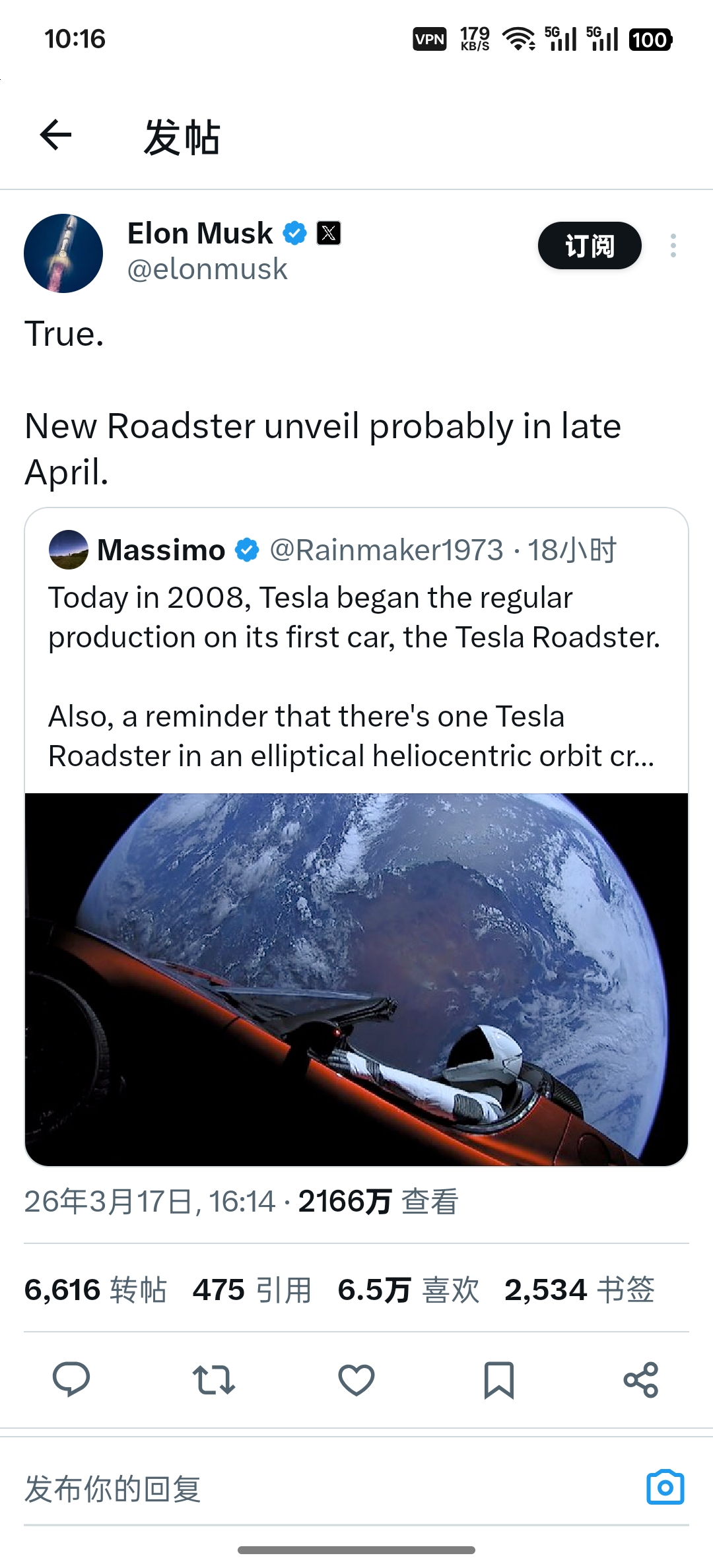
(Screenshot: Platform X)
Musk once bluntly stated that users who buy Ferraris do not prioritize safety, and the same goes for the Tesla Roadster. If safety is your top priority when buying a car, you should not choose the Roadster.
He even said: "The Roadster will be the best among the last batch of cars driven by humans."
The global new energy vehicle industry has developed to where it is today, and Elon Musk and Tesla, as pioneers, deserve much credit. However, whether the Roadster deserves to be called the best model in the era of human driving is still worth discussing.
Roadster: Aiming to Be the Purest Supercar
As early as 2017, Tesla unveiled the second-generation Roadster, originally scheduled for a 2020 release with a starting price of $200,000 (approximately RMB 1.375 million). Due to various factors, the release date was repeatedly postponed.
It wasn't until November 2025 that the US financial media outlet "Business Insider" revealed that Tesla had restarted the Roadster's development in the summer of that year.
Similar to Tesla's electric pickup Cybertruck, although the Roadster has not yet been released, some of its parameters have already been announce (disclosed) on the official website, with possible adjustments to some details in the mass-produced version.
According to the official description, the Roadster is positioned as a pure electric four-seater convertible supercar. Its body posture is lower than that of the Model 3, with a sharp front face, an ultra-small intake grille, and smooth lines, all of which highlight its identity as a pure electric supercar. It is worth noting that the car is also equipped with a lightweight removable glass roof, which can be placed in the trunk after removal to enable convertible driving.
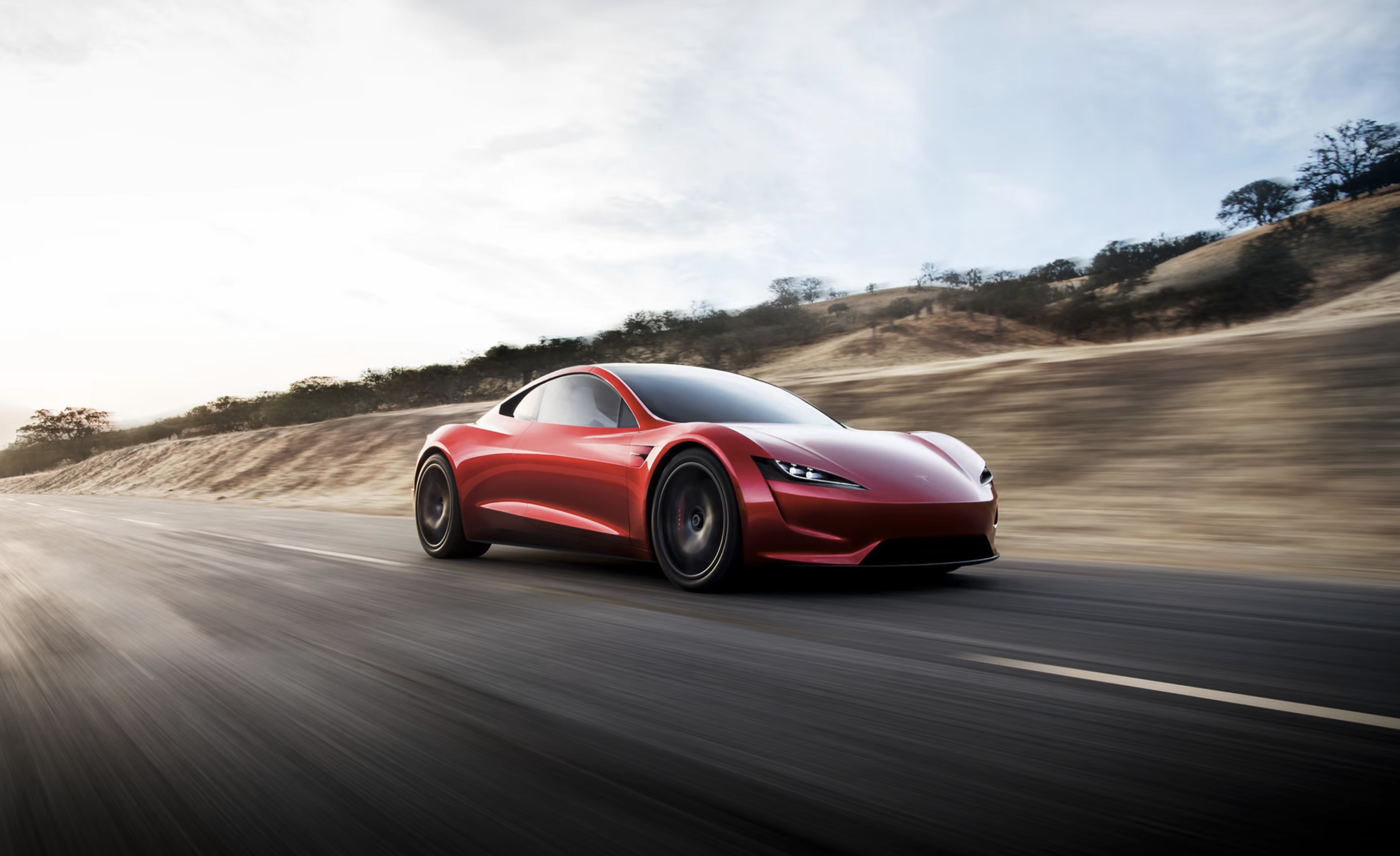
(Image Source: Tesla)
The interior of the Roadster still adheres to a minimalist and tech-inspired design style. The contrast between the black cockpit and white seats, combined with a vertically placed central control screen, maintains Tesla's brand style.
The car's biggest highlight is its super-strong power. The three-motor four-wheel-drive system can provide up to 10,000 N·m of torque, with a 0-100 km/h acceleration time of just 2.1 seconds, a 0-160 km/h acceleration time of 4.2 seconds, a top speed exceeding 400 km/h, and a pure electric range of up to 1,000 km thanks to a 200 kWh large battery.
On Tesla's official website, we can also find the Roadster's pre-sale interface, with a deposit of RMB 332,000.
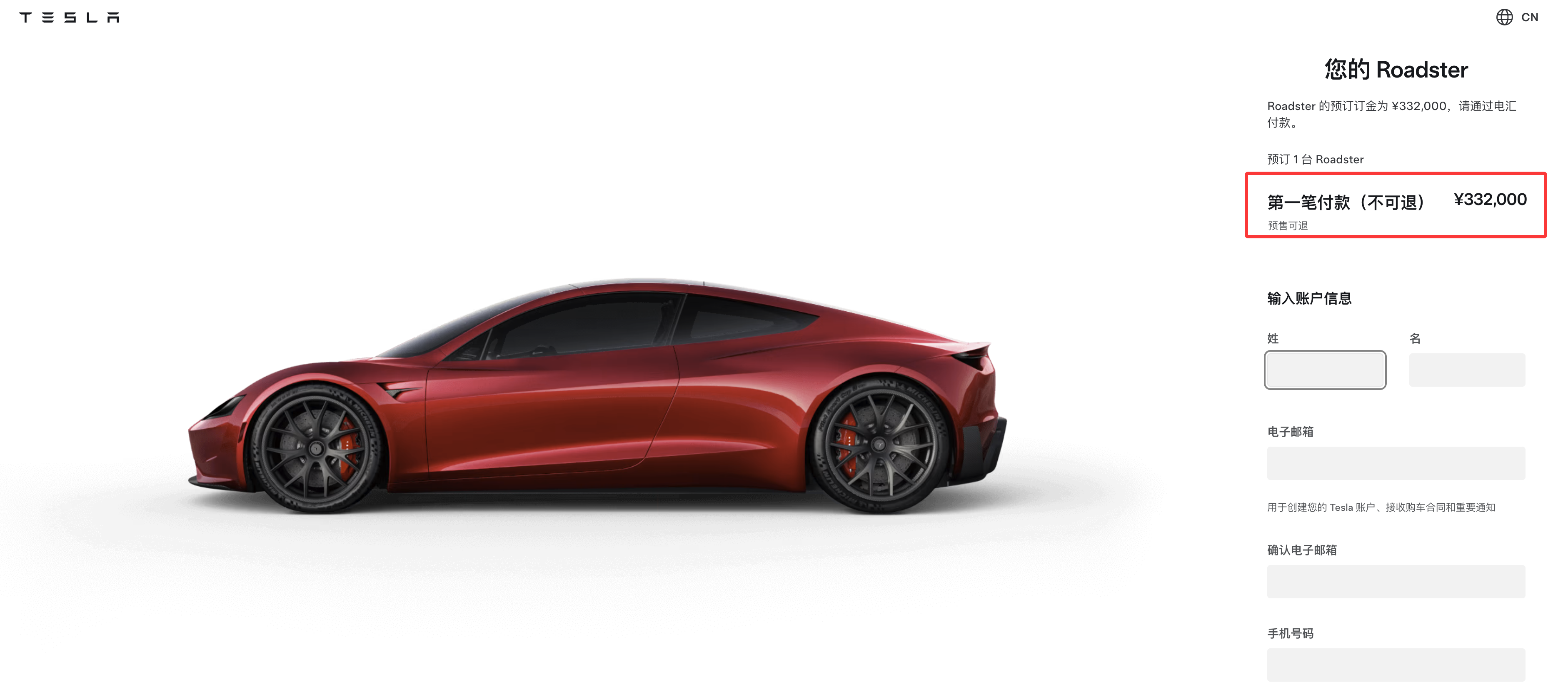
(Image Source: Tesla)
In comparison, domestic high-end pure electric supercars are also quite impressive:
The domestic sports car Yangwang U9, based on the Easy Four platform, has a peak torque of 1,680 N·m, a 0-100 km/h acceleration time of 2.36 seconds, a measured top speed of 391.94 km/h, and a range of 450 km under CLTC conditions;
The Xiaomi SU7 Ultra Nordschleife Limited Edition has a maximum torque of 1,770 N·m, a 0-100 km/h acceleration time of 1.98 seconds, a top speed of 350 km/h, and a range of 520 km under CLTC conditions.
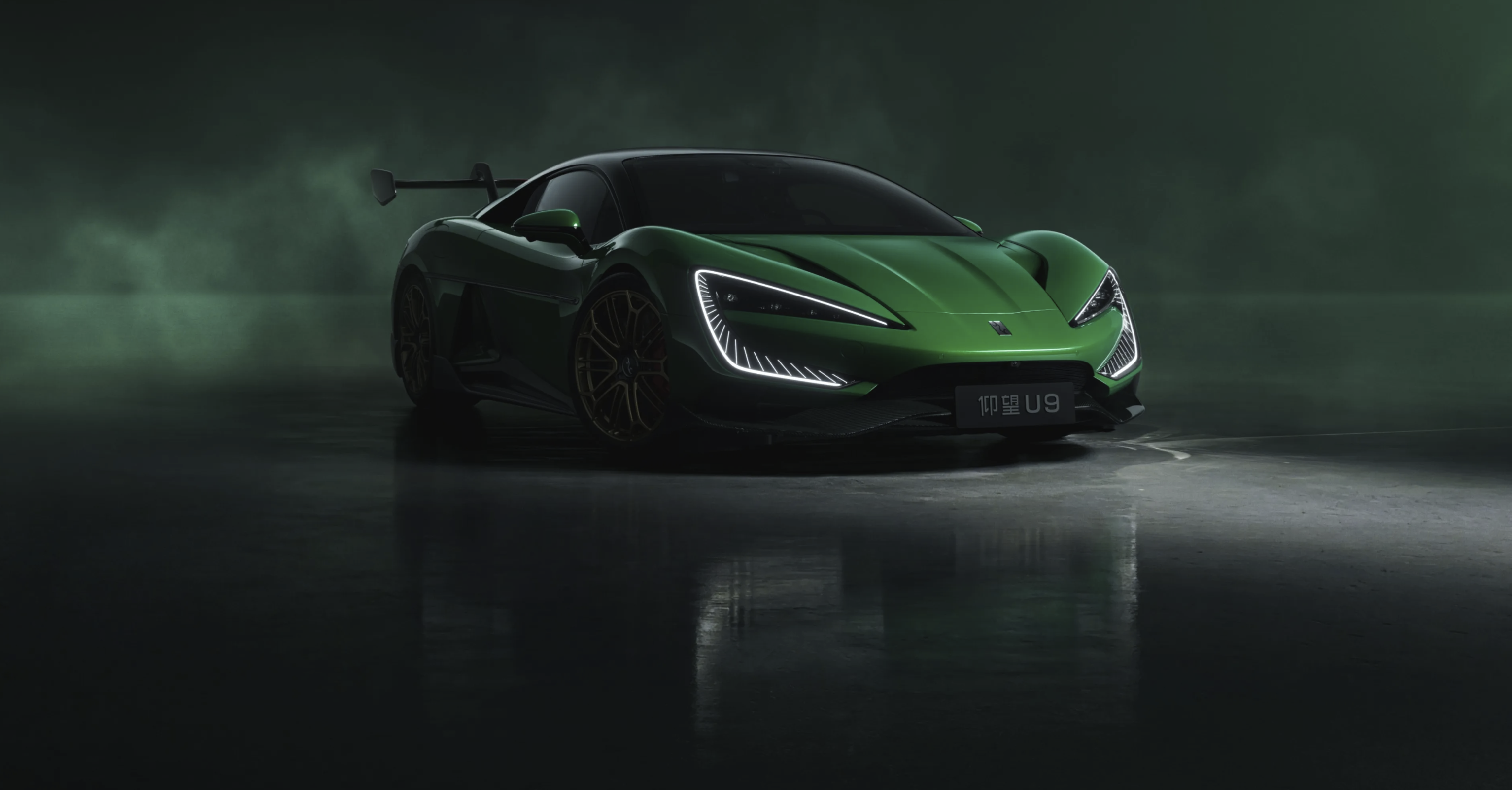
(Image Source: Yangwang)
It is not difficult to see from the comparison that after domestic brands began to make efforts in the supercar field, the Tesla Roadster does not have an absolute lead in straight-line acceleration. The 0-100 km/h acceleration times of domestic pure electric luxury supercars are also around 2 seconds.
The Roadster's real advantages lie more in its convertible design, electronic control experience, and ultra-long range of 1,000 km, which are still unmatched by current domestic supercars.
The advantages of domestic supercars lie in aspects such as interior and comfort. Unlike the Roadster, which emphasizes both minimalism and a tech feel, domestic supercars pay more attention to the driving and riding experience, providing features such as ventilated, heated, and massaging seats, as well as extra large (ultra-large) central control screens and instrument panels.
The Roadster is a pure supercar. To pursue a more excellent and cool driving experience, it even places safety in a secondary position, which is also completely different from the concept of domestic high-end models that focus on comprehensive safety and comfort.
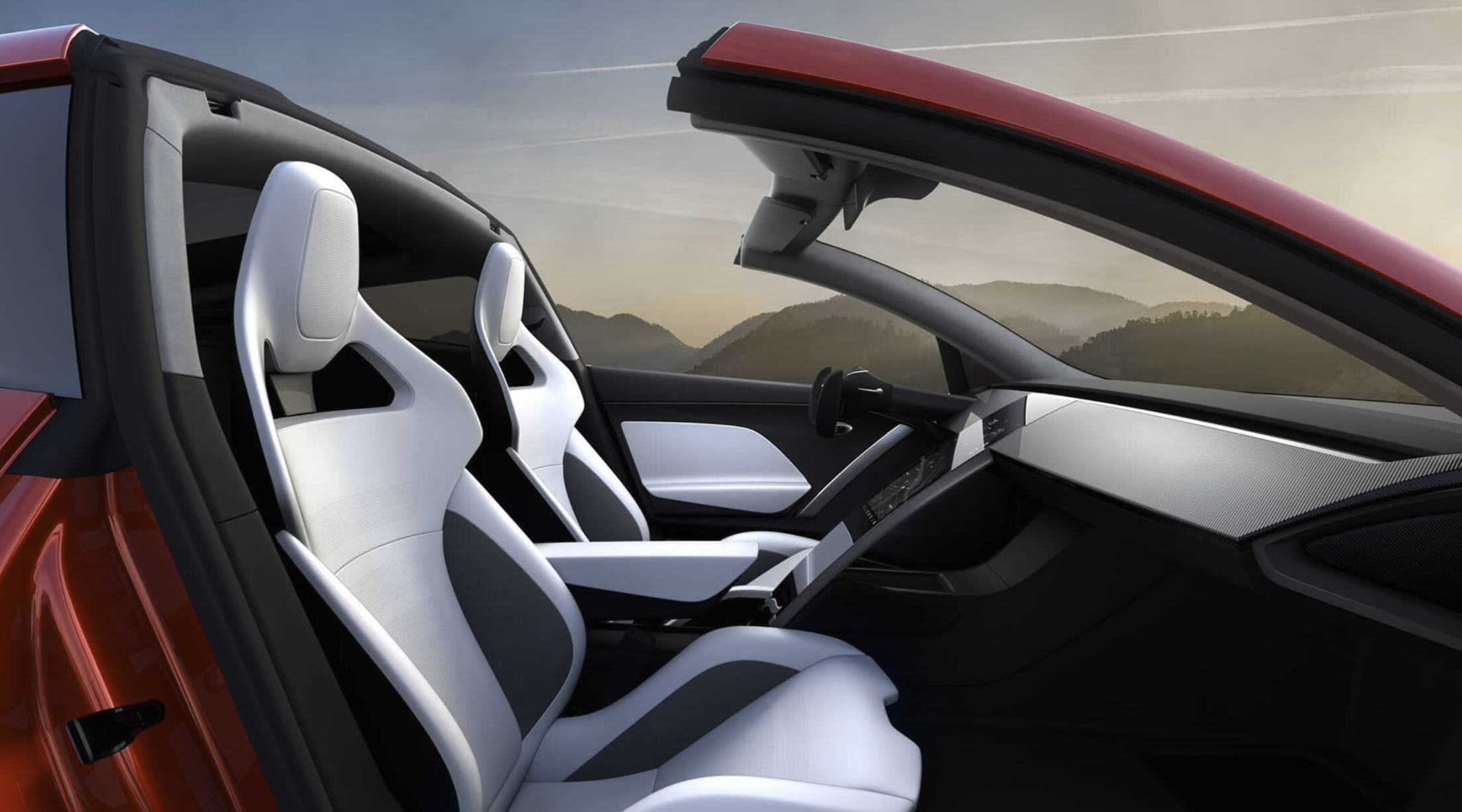
(Image Source: Tesla)
Roadster: The Superior Alternative to the Model S
Tesla's first mass-produced model, the Roadster, was officially delivered in 2008. By the time it was discontinued in 2012, approximately 2,450 units had been delivered. At a time when pure electric vehicles were mainly low-end means of transportation, a few high-end models remained in laboratories, and consumers simply couldn't see them, the Roadster was like a thunderbolt out of a clear sky.
In 2017, Tesla unveiled the second-generation Roadster. At that time, Tesla's cooperation with the Chinese supply chain was not deep, and the Shanghai Gigafactory had not yet started production. Tesla was on the verge of bankruptcy and lacked the capacity to mass-produce the car.
After the Shanghai Gigafactory started production in 2019, Tesla entered a period of rapid growth. At this time, the Model S/X had established a foothold in the high-end pure electric market, and there was not such a high demand for niche high-end supercars like the Roadster in the market. Naturally, Tesla was unwilling to invest too many resources in promoting its research and development and mass production.
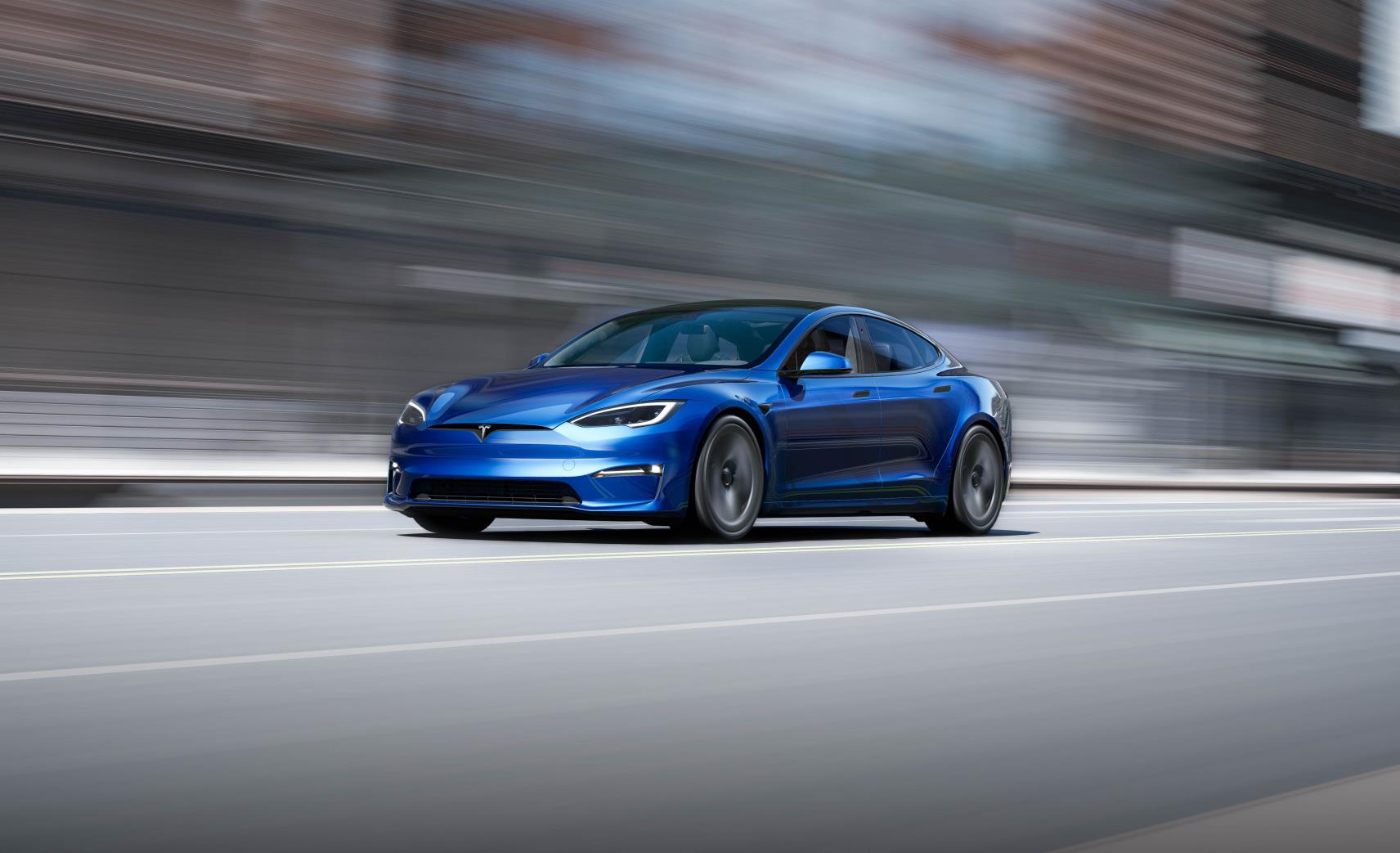
(Image Source: Tesla)
Although Musk claimed at the October 2024 earnings call that the Roadster project was still progressing, five years had passed since the originally promised production time, and it was more likely that the project team had been disbanded. Now, Tesla's electric vehicle business as a whole has hit a growth bottleneck and precisely needs an iconic model to reinvigorate its brand image.
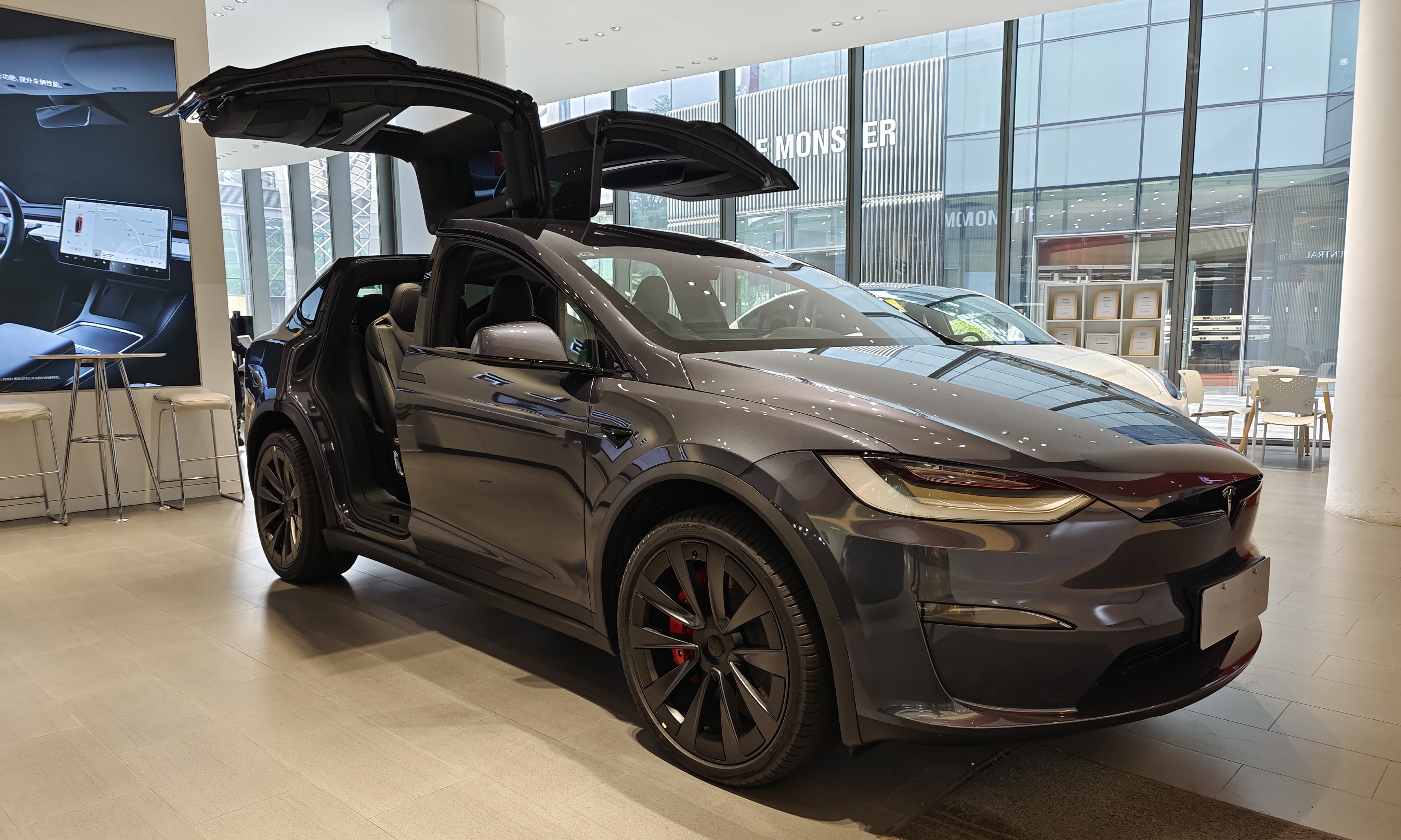
Musk announced at the fourth-quarter 2025 earnings call that production of the Model S and Model X would be discontinued before the second quarter of 2026. The reason for Musk's decision to discontinue the Model S/X is simple: the products are not selling well.
The Model S/X has a designed annual production capacity of 100,000 units, but the actual utilization rate is only 30%. In 2025, sales of the Model S/X accounted for only about 2% of Tesla's total sales. According to Musk's own statement, a capacity utilization rate of 60% is considered a stage of barely maintaining, and a capacity utilization rate of 50% is "extreme pain."
Isn't the Model S/X production line with a capacity utilization rate of only 30% an even heavier burden?
(Image Source: Dianchetong)
Financial report data shows that Tesla's total revenue in 2025 was $94.827 billion, a year-on-year decrease of 2.93%. Net profit attributable to the parent company was $3.794 billion, a year-on-year plunge of 46.79%. The sales side is also under pressure. In 2025, Tesla's global sales were approximately 1.636 million units, a year-on-year decrease of 8.6%, marking the third consecutive year of decline.
To boost sales, Tesla has also abandoned its strategy of not doing traditional advertising in recent years, increasing its advertising on platforms such as YouTube and Facebook, and repeatedly offering price reductions and promotions for its high-volume models, the Model 3/Y. However, these series of actions have had little effect and have further increased marketing costs.
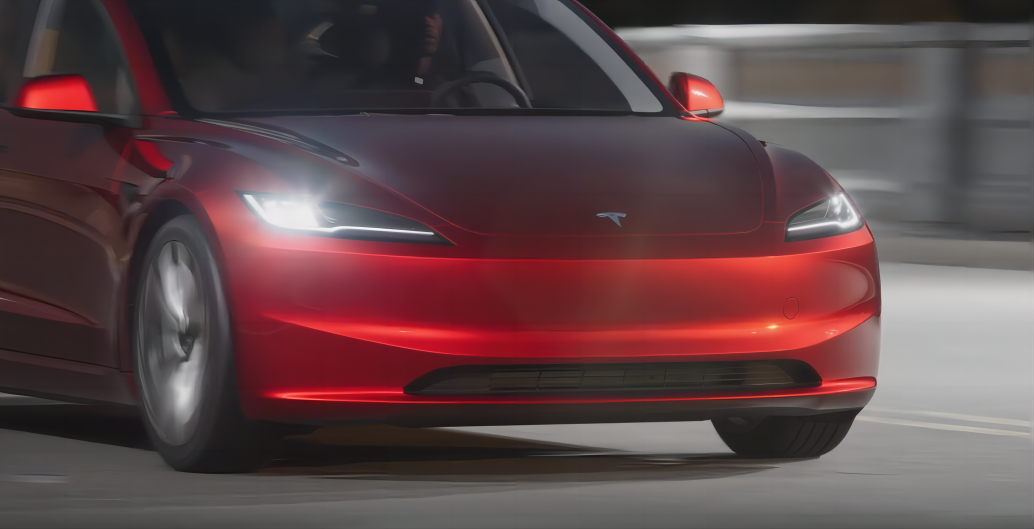
Tesla's expansion in the new energy vehicle market in Europe and the United States has been hindered due to adjustments in environmental protection policies, changes in guidance, and personal controversies surrounding Musk. In China, the world's largest new energy vehicle market, Tesla's sales have declined for three consecutive years, mainly because its brand and product leading advantages are becoming smaller and smaller.
(Image Source: Tesla)
It cannot be denied that Tesla led the development of the new energy vehicle industry before 2023, but domestic manufacturers have never given up on catching up with Tesla. With huge investments in research and development, domestic cars at the same price have caught up with Tesla in terms of space, intelligent driving technology, exterior and interior design, entertainment, and comfort hardware configurations.
Domestic manufacturers continue to make efforts in the high-end market and have gradually gained consumer recognition in this field. According to the 2025 average car price data in the Chinese market announce (released) by Jielanlu, Tesla's average car price is RMB 266,000, surpassed by domestic brands such as NIO, Li Auto, Xiaomi, and AITO.
The strategic value of supercars far exceeds their direct sales revenue. They are essentially the brand's technology laboratory, image amplifier, and magnet for capital and talent. They are a must-answer question for high-endization and long-term competitiveness, rather than a simple sales business. After the discontinuation of the Model S/X, Tesla urgently needs a supercar to showcase its technological strength and enhance its brand value.
As the model that once defined electric supercars and carried Tesla's pioneer identity, the Roadster naturally becomes the best choice to undertake this mission. However, the question now is, can Tesla really reverse its overall declining sales trend with just a niche supercar?
Roadster: Not a Panacea for Tesla
With a starting price of $200,000, the Roadster is destined to belong to only a very small number of people. Perhaps Tesla can showcase its technological strength through this car, but truly valuable technologies are those that can be applied to high-volume models like the Model 3 and Model Y, allowing ordinary users to buy and use them.
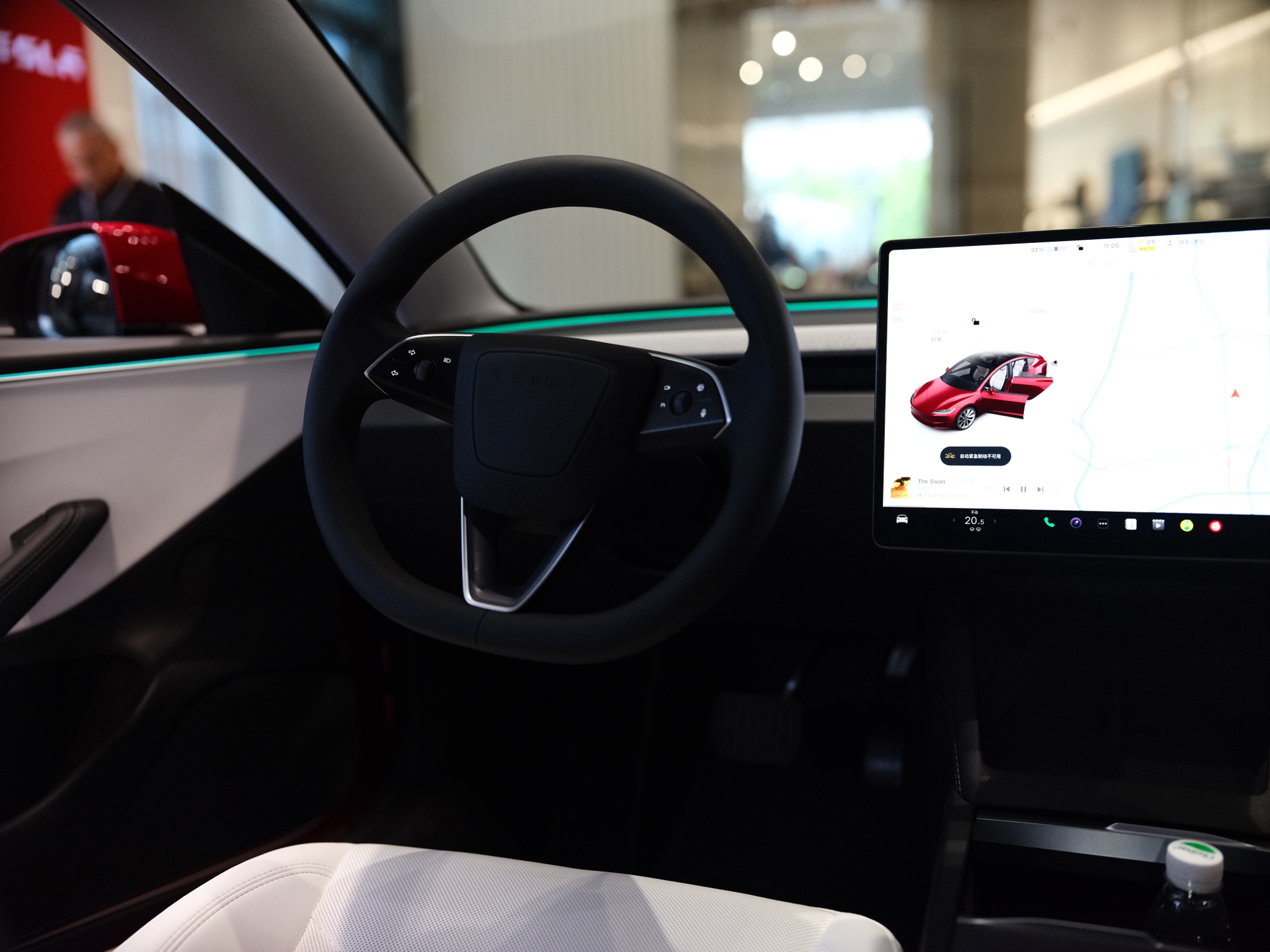
The Model 3 was launched in 2017, and the Model Y was launched in 2020. In the case where domestic new energy vehicles undergo generational changes every two to three years, these two models have never truly undergone a generational change, only minor detail adjustments. Their spatial architecture has remained almost stagnant, and they have been very conservative in terms of comfort configurations.
(Image Source: Tesla)
Domestic new energy vehicles at the same price are crazy (frantically) adding various comfort configurations to their cars. Ventilated and heated seats have almost become standard, massage functions are rapidly becoming popular, more and more models are equipped with rear screens or support rear magnetic flat panels, a few luxury cars are even equipped with projectors and screens, the atmosphere lights are becoming more and more gorgeous, and the sound quality is also getting better and better.
For a long time, the Model 3/Y have often been teased by netizens as "unfinished houses" due to their minimalist interior design and relatively few comfort configurations. When the product strength of domestic new energy vehicles had not yet reached that of Tesla, consumers could still accept some of its shortcomings. Now that the configurations, functions, and quality of domestic new energy vehicles are no less than those of Tesla, and consumers have more and more products to choose from, Tesla is naturally gradually "out of favor."
In the view of Dianchetong, Tesla needs to develop a new platform for the Model 3/Y, optimize the product's exterior and spatial design, and add more entertainment and comfort-related configurations. As for the Roadster, referring to Tesla's Cybertruck, even if it is released in late April, it will probably take more than a year to start mass production and delivery. In the short term, it is just a PPT product.
Once upon a time, Tesla stood at the pinnacle of the new energy vehicle industry and was an object of learning for domestic car companies. The scene of vibrant vitality and all things competing for development is still fresh in our minds. A few years have passed, and the industry situation has reversed. It's time for the student and the teacher to swap roles.
(Cover Image Source: Tesla Official)
Tesla Model 3, Roadster, Yangwang U9, Xiaomi SU7 Ultra
Source: Leikeji
The images in this article come from: 123RF Royalty-Free Image Library
-
![]()
The Unstoppable Rise of 'Optical Progress and Copper Decline': Sunny Optical’s Strategic Vision for the Next Decade
-
![]()
AI + Going Global in the Second Half: No Intermission for Robot Vacuum Cleaners
-
![]()
The Suffering Endured in E-commerce, Walmart Doesn't Want to Repeat in AI
-
![]()
What Does the Doubling of New Energy Vehicle Exports Mean?
-
![]()
Ghosn: 'Only I Can Save Nissan'
-
![]()
Volkswagen Lays Off 100,000 Employees, The Elephant Sits Down
-
![]()
Expanding Production Capacity! Yutong Optics Acquires Approximately 1.5 Hectares of Industrial Land in Chang'an, Dongguan
-
![]()
Why Is Nokia Making a Comeback in the AI Era?