Confirmed: Stellantis' Self-Help Strategy Unveiled! B10 Rebranded as Opel, Leapmotor Also Advances
 04/09 2026
 477
477
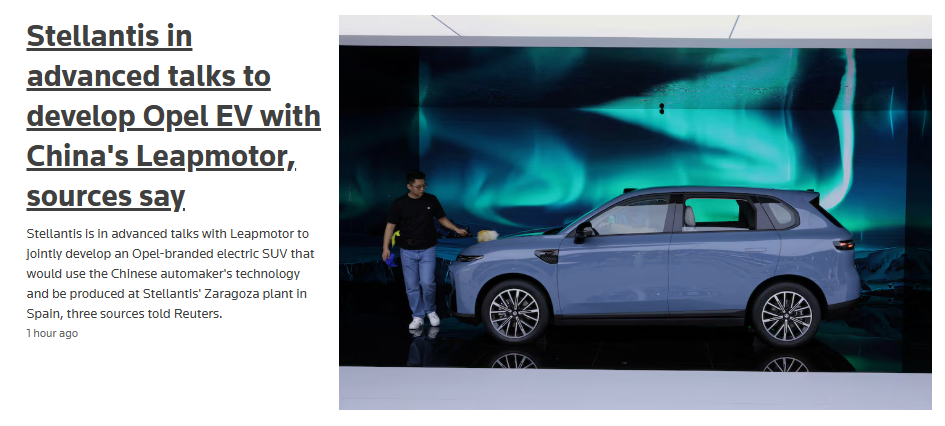
Stellantis' plan to harness Leapmotor's technology for producing electric vehicles in Europe has been finalized. On April 8, Reuters reported that Stellantis is in deep discussions with Leapmotor to co-develop an electric SUV under the Opel brand. This SUV will incorporate Leapmotor's technology and be manufactured at Stellantis' Zaragoza plant in Spain.
Should the agreement materialize, it will enable Stellantis to cut down on both the cost and time needed to develop new electric vehicle models. The French-Italian automaker is now redirecting its focus towards hybrid vehicles.
In 2023, Stellantis acquired a roughly 20% stake in the Chinese company Leapmotor and forged a partnership with it. They also established a joint venture, Leapmotor International, tasked with the sales and production of Leapmotor vehicles outside China. Sources reveal that the new model will share the same platform as the Chinese automaker's B10 compact SUV, which is also set to be assembled at the Zaragoza plant later this year for the European market. Meanwhile, the new Opel model is anticipated to commence production in 2028, with an annual output target of 50,000 units.
According to Reuters, under the terms under discussion, Leapmotor will supply key technologies and components, including electrical and electronic parts, while Opel will handle the exterior design. The majority of the vehicle's R&D efforts will take place in China. Reuters stated that negotiations between Stellantis and Leapmotor for the Opel project, codenamed O3U, commenced in late 2025 and could reach a conclusion as early as this month.
In February of this year, Bloomberg reported that Stellantis NV was contemplating leveraging the electric vehicle technology of its Chinese partner, Leapmotor, to slash costs for its mass-market European brands, such as Fiat, Opel, and Peugeot. However, there has been no further news on whether the other two brands will adopt Leapmotor's technology.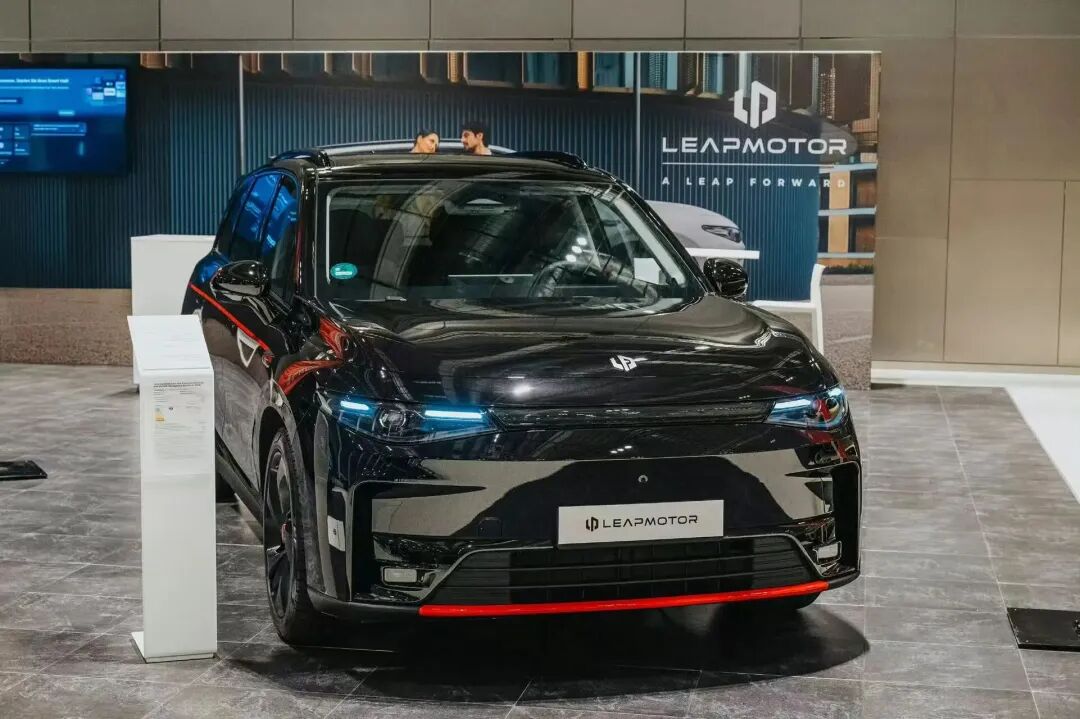
In fact, not only Leapmotor is in the spotlight. Reliable sources indicate that Stellantis is also in talks with Dongfeng, aiming to collaborate with Dongfeng's Mengshi brand and integrate its technology into Jeep. Consequently, Stellantis executives paid a collective visit to Dongfeng Group in early 2026 for discussions. Sources suggest that Dongfeng and Jeep will also set up a joint venture.
Furthermore, in March of this year, Bloomberg reported that the Stellantis Group plans to introduce Chinese capital and technology to revive its struggling European operations while redirecting its investment focus to the American market. Bloomberg cited sources saying that Stellantis executives have engaged in talks with Xiaomi Auto and Xpeng to explore restructuring options for its European business, including acquiring stakes in Maserati or other brands and opening up European manufacturing capacity to Chinese partners.
From Leapmotor to Mengshi, and then to Xiaomi and Xpeng, Stellantis is fully embracing collaboration with Chinese automakers. For those unfamiliar with this strategy, a glance at Stellantis' situation in 2025 will shed light on the matter.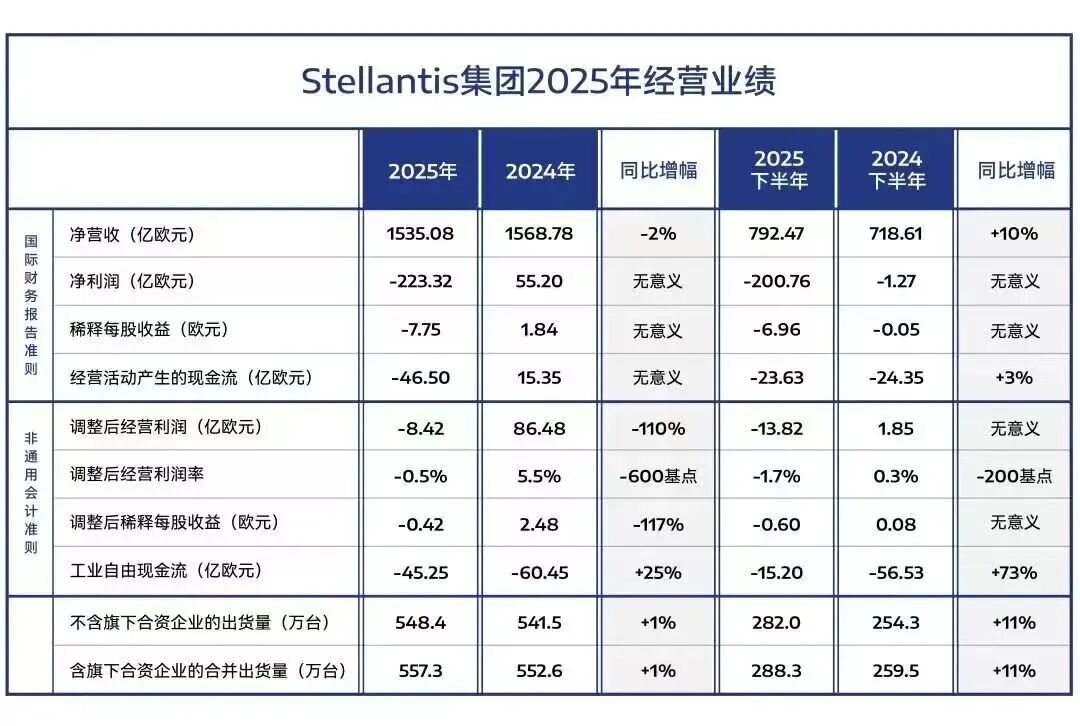
In 2025, Stellantis reported net revenues of €153.5 billion, a 2% decline from 2024, and a net loss of €22.3 billion (approximately RMB 180.27 billion). Although this was primarily due to €25.4 billion in expenses incurred from deep strategic adjustments to align with customer preferences and changes in the regulatory environment and framework, the continuous losses and declining sales since 2024 have placed this once highly profitable automaker under significant survival pressure.
In 2024, Stellantis reported net revenues of €156.9 billion, a 17% year-on-year decrease; net profit plummeted by 70% to €5.5 billion from €18.6 billion in 2023, falling short of analysts' expectations of €6.4 billion. The adjusted operating profit margin was 5.5%, at the lower end of the company's guidance range and significantly lower than the 12.8% recorded in the previous year. From a 70% plunge in net profit to over €20 billion in net losses, Stellantis' long-time CEO, Carlos Tavares, was compelled to resign, and the entire board underwent significant restructuring, highlighting the immense pressure the company is under.
By leveraging the technology platforms and R&D capabilities of Chinese automakers and tapping into China's supply chain, Stellantis can swiftly introduce new energy vehicles that could dominate the European market. Therefore, for Stellantis, this represents an optimal strategy.
-
![]()
Geely and BYD Step Up Efforts: Giants Aren't Willing to Lose in the Breakthrough Battle for New Energy Pickups
-
![]()
From Selling Computers to Selling AI: How Far Has Lenovo Come?
-
![]()
What Enlightenment Does the Successfully Verified Trillion-Dollar Anthropic Bring to SaaS Enterprises?
-
![]()
Li Auto L9 Livis: Caught Between 'Daddy Car' and 'AI'
-
![]()
From 'Flying Machines' to 'Embodied Intelligent Agents': How Embodied Intelligence is Revolutionizing the Commercial Landscape of Low-Altitude Equipment
-
![]()
Launch of the Lynx S10: Why is DeepRobotics Developing a Small Wheeled-Legged Robot?
-
![]()
AI Accelerator: The Powerhouse Behind AI Algorithm Operations and Applications
-
![]()
Ferrari Luce Electric Debuts: Ferrari’s Essence Endures in the Electric Age | On-Site Report