Why Is Intelligent Driving Insurance More Complex for Commercial Vehicles?
 04/15 2026
 438
438
Over the past two years, the adoption rate of intelligent driving technology has surged, and issues concerning intelligent driving insurance have come to the forefront. Notably, vehicle losses from intelligent driving accidents are significantly higher than those from traditional accidents. According to 2025 claims data from PICC Property and Casualty, the average vehicle loss in accidents involving advanced driving assistance systems reached RMB 47,000, which is 35% higher than that in traditional accidents.
Higher losses naturally bring about greater risks. As a result, the domestic passenger vehicle market has witnessed a proliferation of 'intelligent driving insurance' products. From new-energy vehicle startups to traditional automakers, over ten manufacturers have launched various intelligent driving protection plans. Some of these plans are included with vehicle purchases, while others are available for annual subscription, offering coverage ranging from hundreds of thousands to millions of yuan.
However, many vehicle owners have reported that the claims process is highly complex following actual accidents, rendering initial claims commitments nearly ineffective. This is because most so-called 'intelligent driving insurance' products on the market are essentially value-added services provided by automakers or intelligent driving solution suppliers, rather than genuine insurance policies.
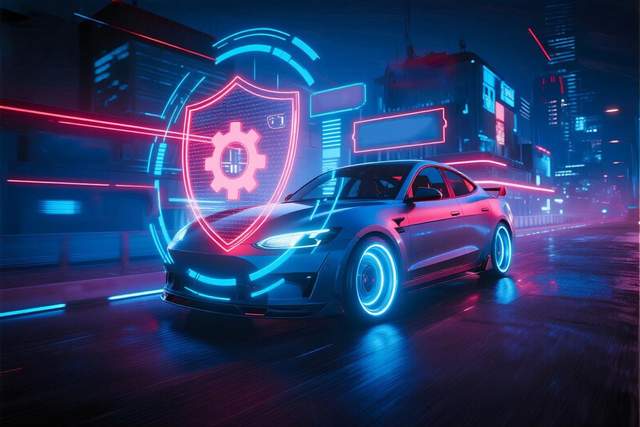
In the absence of exclusive insurance, intelligent driving accidents often lead to a situation where 'vehicle owners struggle to assign responsibility, automakers easily deflect blame, and insurance companies lack a basis for claims.'
Amidst this impasse, Beijing announced the nation's first initiative to develop and apply exclusive commercial insurance for intelligent connected new energy vehicles compatible with L2 to L4 autonomy levels. This news was met with widespread approval in the passenger vehicle industry, which finally has an insurance product specifically tailored for intelligent driving. However, the commercial vehicle sector's reaction has been more nuanced.
While passenger vehicles have also faced the issue of 'pseudo-insurance,' the market remains highly active, with rapid product iterations, user feedback, and data accumulation driving progress. Beijing's intelligent driving insurance pilot provides a compliant outlet for this already vibrant market. In contrast, the commercial vehicle sector lacks genuine exclusive intelligent driving insurance products, with even 'pseudo-insurance' being rare.
Why is implementing intelligent driving insurance for commercial vehicles more difficult and complex? What specific challenges must be overcome?
Three Barriers Preventing Commercial Vehicles from Obtaining Insurance Coverage
Despite the diversity of intelligent driving insurance products in the passenger vehicle sector, no unified, officially launched intelligent driving insurance products exist for commercial vehicles such as autonomous heavy trucks. Current intelligent driving protections for commercial vehicles are either value-added services provided by automakers or simple extensions of traditional vehicle insurance, with no genuine exclusive insurance products tailored to the operational characteristics of commercial vehicles.
Why is the insurance landscape for commercial vehicles, despite both falling under intelligent driving, far more complex than that for passenger vehicles?
The fundamental reason lies in the fact that commercial vehicles are production tools rather than personal transportation vehicles, with fundamentally different accident risk levels, liability subjects, and data accumulation compared to passenger vehicles.
Firstly, the scale of accident damage is not comparable, and commercial vehicles have a complex risk structure with large-scale losses.
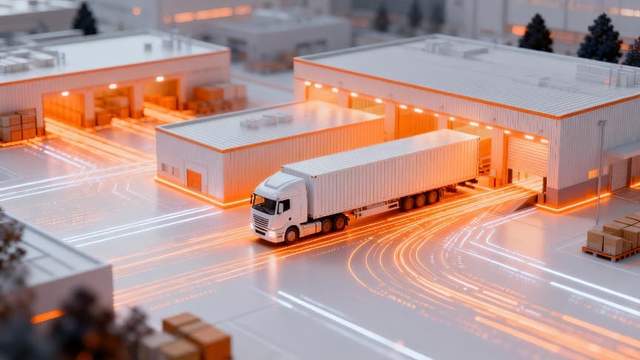
Accident losses for passenger vehicles are relatively well-defined, primarily involving vehicle damage and personal injuries, with relatively limited individual claim amounts. In contrast, commercial vehicles present a different scenario—a single vehicle issue can trigger a chain reaction of accidents. For example, L4 autonomous container trucks in ports and mining areas often operate in convoys. A fully loaded intelligent heavy truck involved in an accident on the highway could simultaneously result in total vehicle loss, cargo damage, road and bridge infrastructure destruction, and multi-vehicle rear-end collisions. The potential claim amount for a single accident can be dozens or even hundreds of times higher than that for passenger vehicles. In extreme cases, collected premiums may not cover claims, necessitating a much higher insurance underwriting capacity for commercial vehicles than for passenger vehicles.
Secondly, the length of the liability chain is entirely different.
The liability subjects for passenger vehicles are relatively clear. For Level 2 and below autonomy, the driver is responsible. For Level 3 and above, responsibility begins to shift toward automakers and system suppliers. The situation is far more complex for commercial vehicles. The operational chain for an intelligent heavy truck involves multiple parties, including the driver, fleet manager, vehicle registration company, cargo owner, and logistics platform. In L4 scenarios within ports or mining areas, an accident is not a matter of 'human vs. machine' but rather 'a group of people vs. a stack of machines.' Insurance companies struggle to identify the responsible party for claims, making them hesitant to pay out promptly.
Finally, differences in data accumulation make it difficult for insurance companies to assess commercial vehicle risks.
Breakthroughs in passenger vehicle intelligent driving insurance have relied on the long-term accumulation of massive real-world driving data from private vehicles. In contrast, intelligent driving for commercial vehicles, particularly Level 4 and above autonomous driving, remains mostly in closed or semi-closed testing scenarios, with insufficient data from real operational environments. Without adequate data support, insurance companies cannot build accurate actuarial models, leaving them trapped in a passive position of 'reluctance to insure and difficulty in pricing.'
The absence of exclusive intelligent driving insurance for commercial vehicles is the result of these three overlapping issues: excessively high accident losses make insurance companies hesitant; overly long liability chains leave everyone believing they should not bear responsibility; and limited data accumulation makes claims pricing difficult.
What Is the Significance of Beijing's Launch of 'Intelligent Driving Vehicle Insurance'?
Although Beijing's initiative to launch exclusive commercial insurance for intelligent connected new energy vehicles initially focuses on passenger vehicles, its institutional design and implementation path hold significant inspirational value for the eventual implementation of intelligent driving insurance for commercial vehicles.
Its value lies in addressing the insurance industry's core concerns through institutional design, transforming commercial vehicle insurance from a 'no-go zone' to a calculable proposition.
A crucial shift is the transition from 'insuring the human' to 'insuring the system.' Beijing's explicit coverage of L2 to L4 autonomy levels means that insurance products will treat intelligent driving as an independent risk unit. This acknowledges that 'machines' assume driving functions in certain scenarios, providing a legal and financial basis for subsequent claims against automakers and suppliers. Commercial vehicle scenarios involve mainline logistics heavy trucks, urban buses, port autonomous container trucks, and mining vehicles, each with vastly different risk points, operational models, and accident consequences. Beijing's graded approach suggests that commercial vehicles do not need a one-size-fits-all insurance solution but can progress gradually by scenario and autonomy level, starting with pilot programs in ports and mining areas—where data is relatively abundant and scenarios are relatively closed—before extending to open roads.
Another key design feature is 'advance payment with subsequent recourse.' Under this new model, insurance companies will make advance payments to ensure fleet operations can continue and cargo can be delivered on time, followed by legal efforts to recover costs from the responsible party. This effectively shifts the cost of rights protection for individual fleets to institutional-level negotiations. For commercial vehicles, an accident involving a heavy truck often involves multiple parties, including logistics companies, individual vehicle owners, automakers, and intelligent driving technology providers, making it difficult for individual fleets to navigate complex liability divisions independently. Insurance companies, with their professional legal teams and negotiation capabilities, can handle interactions with automakers and suppliers more efficiently throughout the recourse process.
Another often overlooked but equally important arrangement is data-driven dynamic pricing. Beijing explicitly requires the establishment of a cross-industry intelligent driving data exchange mechanism. Insurance companies can access data such as system intervention frequency and manual takeover times for each vehicle to inform pricing. Fleets with good safety records will enjoy lower premiums. For example, consider two fleets: one whose intelligent driving system triggers emergency braking three times per month, and another that triggers it ten times. The former clearly faces lower risks and should pay lower premiums. Given the high operational intensity and long driving distances of commercial vehicles, the value of data accumulation is even more pronounced. Fleets with mature technologies will gain a competitive advantage in insurance costs, while those with unstable systems requiring frequent manual intervention will face higher premiums. Market mechanisms will incentivize the entire industry to enhance safety.
In other words, Beijing's launch of intelligent driving insurance primarily demonstrates a problem-solving approach: using institutional design to make the uncalculable calculable and the untouchable touchable. Commercial vehicles need precisely this kind of thinking to be extended and deepened. With clear risk units, advance payment mechanisms, and data support, intelligent driving insurance for commercial vehicles now has a viable framework for implementation.
Three Formidable Challenges After Breaking the Ice
The pilot program sets the general direction, but this does not mean the path ahead will be smooth. For intelligent driving insurance to be implemented for commercial vehicles, at least three challenges must be addressed through practical solutions.
The first challenge: Can data truly be interconnected?
Dynamic pricing's premise (prerequisite) is that insurance companies can access authentic, continuous, and standardized intelligent driving data. This requires deep collaboration among automakers, insurance companies, and data platforms. Currently, cross-industry data standards and interface protocols remain inconsistent, and data formats vary among automakers. While data interoperability has been discussed for years, true implementation reveals that technical issues are just the tip of the iceberg, with commercial interests and data sovereignty posing additional challenges. Are automakers willing to share core data with insurance companies? Are insurance companies willing to pay for this data? These questions remain to be jointly resolved.
The second challenge: Can laws keep pace with insurance developments?
Exclusive insurance can address the issue of 'advance payment,' but 'subsequent recourse' still relies on clear legal liability definitions. If the legal responsibility boundaries for algorithm suppliers in Level 4 accidents remain ambiguous, insurance companies will face obstacles in subrogation. Insurance can move forward proactively, but final legal confirmation cannot be delayed indefinitely. Otherwise, insurance companies may find themselves having paid out claims only to discover no legally defined responsible party to cover the costs. In such cases, advance payment becomes a risk borne solely by the insurance company, making the model unsustainable.

The third challenge: Can the market accept a reasonable price?
The difficulty of commercial vehicle insurance lies not only in technical issues but also in economic ones. Even with exclusive insurance, fleets will not purchase it if premiums are excessively high. Insurance companies must find a balance between risk pricing and market demand. This balance will not emerge automatically but will require repeated adjustments through practice. The first fleets willing to try may incur certain 'learning costs.' Conversely, if pricing is too low, insurance companies cannot afford claims, and the product will not survive.
Any of these three challenges, if not addressed, will impact the overall effectiveness of the model's implementation.
Returning to the question posed at the beginning of this article: When will commercial vehicles have their own intelligent driving insurance? Beijing's pioneering initiative to develop and apply commercial insurance for intelligent connected new energy vehicles demonstrates the direction forward. However, translating this direction into reality requires overcoming at least three major hurdles: data interoperability, legal alignment, and pricing balance.
While the ice has been broken for passenger vehicles, cracks are only just beginning to appear in the ice layer for commercial vehicles. The path ahead has no ready-made answers and can only be navigated step by step through practice.
-
![]()
Jitian Xingzhou: A Pioneer in Optical Payloads Secures Hundreds of Millions in Series B Funding!
-
![]()
Orders Secured Through to the Second Half of the Year! The Rationale Behind the 'Surge' in Demand for This Company’s Optical-Grade Base Films
-
![]()
Beyond Patents: The Retail Rivalry of Insta360 and DJI Unfolds
-
![]()
180 Billion Market Cap Vanished! How Did Seres Fall So Far?
-
![]()
Blockbuster! Domestic storage takes the global double crown for the first time, from an AI company
-
![]()
China Spearheads Formulation! World's Pioneering Global Technical Regulation for Automated Driving Systems Greenlit and Unveiled
-
![]()
Farewell to Pulsed Support Policies: Three Major Auto Policy Directions from Multiple Departments Take Effect on the Same Day
-
![]()
Embercore AI’s Accelerated Funding: The Robot Industry’s Shift Toward ‘Learning Systems’