High-Voltage Power Distribution Box: The New 'Achilles Heel' of New Energy Vehicles | An Industry Report for All
 04/15 2026
 626
626
When discussing new energy vehicles (NEVs), people often first think of batteries, autonomous driving technologies, and even whimsical features like in-car toilets (just a joke!)... However, few notice a low-key yet vital 'supporting player'—the high-voltage power distribution box (PDU, full name: High-Voltage Power Distribution Unit).
While it doesn't directly determine driving range like the battery or power output like the motor, the PDU significantly influences the vehicle's driving performance and safety, earning it the title of the new 'Achilles heel' of NEVs.
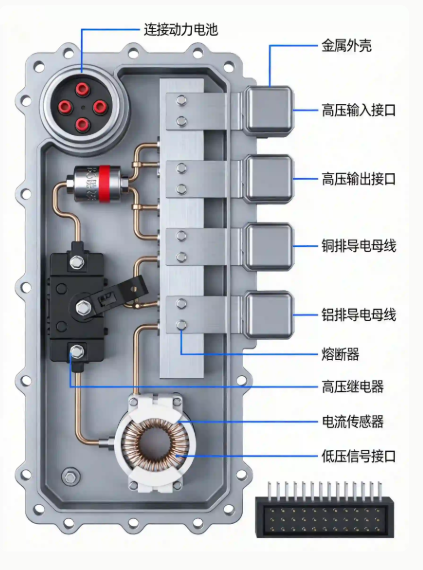
This image serves as a simplified schematic for educational purposes, illustrating the basic appearance of a PDU. It should not be utilized as an engineering blueprint or technical reference.
I. The High-Voltage Power Distribution Box: NEVs' 'High-Voltage Electricity Steward'
Consider a simple analogy: Traditional fuel-powered vehicles generate electricity through the engine, producing low-voltage power (12V). In contrast, NEVs (especially pure electric vehicles) rely on traction batteries with voltages ranging from 300-800V—comparable to industrial-grade electricity.
The HV PDB functions as a 'high-voltage electricity steward,' safely and accurately distributing high-voltage power from the traction battery to all components that require it, while continuously monitoring circuit safety. If any issues arise, it immediately cuts off power to prevent further damage. 
Why must NEV batteries output high voltage? Firstly, to meet the power demands of electric motors driving the vehicle, avoiding line losses and safety risks associated with low-voltage, high-current systems. Secondly, to enhance transmission and charging efficiency, reduce power loss, and support core components like onboard chargers. Using thinner wires reduces costs and vehicle weight, thereby extending driving range.
In essence, without the HV PDB, high-voltage power in NEVs would run amok, causing chaos.
Let's delve deeper.
II. Three Key Functions Ensuring NEV Safety and Efficiency
Despite its compact size, the HV PDB performs three crucial functions:
1. Precise Power Distribution: Delivering the Right Amount to the Right Place
Different NEV components require varying amounts of high-voltage power.
The traction motor, the largest consumer, accounts for approximately 60% of the vehicle's high-voltage output, driving the wheels. The onboard charger converts household 220V power to high voltage for battery charging. The air conditioning compressor, PTC heater (for winter heating), and other components also rely on high voltage.
The HV PDB utilizes customized copper bars and contactors to precisely distribute high-voltage power from the traction battery to each component, ensuring that power-hungry systems like the motor never run short while preventing smaller parts from overloading. Its distribution efficiency exceeds 98% under rated loads, minimizing waste and indirectly boosting driving range. 
2. Safety Protection: The Guardian of High-Voltage Systems
The greatest dangers associated with high-voltage power are overcurrent, overvoltage, short circuits, and leakage. The HV PDB incorporates multiple protective mechanisms, acting as an insurance policy for high-voltage circuits:
(1) Overcurrent/Short Circuit Protection: If current spikes (e.g., due to a short circuit), the PDU cuts the circuit within microseconds or milliseconds to prevent fires. For instance, if current exceeds the rated value by 120% for 2 seconds, it immediately disconnects the main contactor and blows the fuse.
(2) Overvoltage Protection: If the traction battery voltage exceeds safe thresholds (e.g., 20% above rated value), the PDU automatically sheds loads to prevent damage to the motor, charger, and other core components.
(3) Insulation Monitoring: It continuously checks the insulation status of high-voltage circuits. If insulation fails (e.g., due to water exposure during rain), it triggers alarms or cuts high-voltage power to prevent electrocution.
(4) Overtemperature Protection: If internal copper bar temperatures exceed 110°C, the PDU gradually reduces loads until power is cut, preventing heat damage to internal components. 
Critically, it features 'collision-triggered power cutoff'—within 200 milliseconds of a collision, it shuts down the entire vehicle's high-voltage system to prevent secondary hazards from electrical leaks, a vital safety feature for NEVs. This 'mechanical + electronic + software' triple protection extends the mean time between failures (MTBF) of high-voltage systems beyond 30,000 hours.
3. Intelligent Control: Enhancing Efficiency and Convenience
Modern HV PDBs are no longer 'mere distributors'; they integrate intelligent control functions, acting as a 'smart brain' for the 'electricity steward.' Via the CAN bus, they receive commands from the Vehicle Control Unit (VCU) and quickly adapt to different driving conditions:
During charging, they prioritize shutting off non-essential loads like air conditioning and heaters to direct more power to the battery, improving charging efficiency. While driving, they monitor real-time power consumption across components and dynamically adjust distribution strategies—allocating more power to the motor during highway driving and reducing energy use at low speeds, reportedly lowering overall vehicle energy consumption by 5-8%.
Simultaneously, they collect real-time data on current, voltage, and temperature. If anomalies are detected, they alert the VCU to provide early fault warnings (e.g., insulation degradation, overheating), enabling timely maintenance and preventing minor issues from escalating. 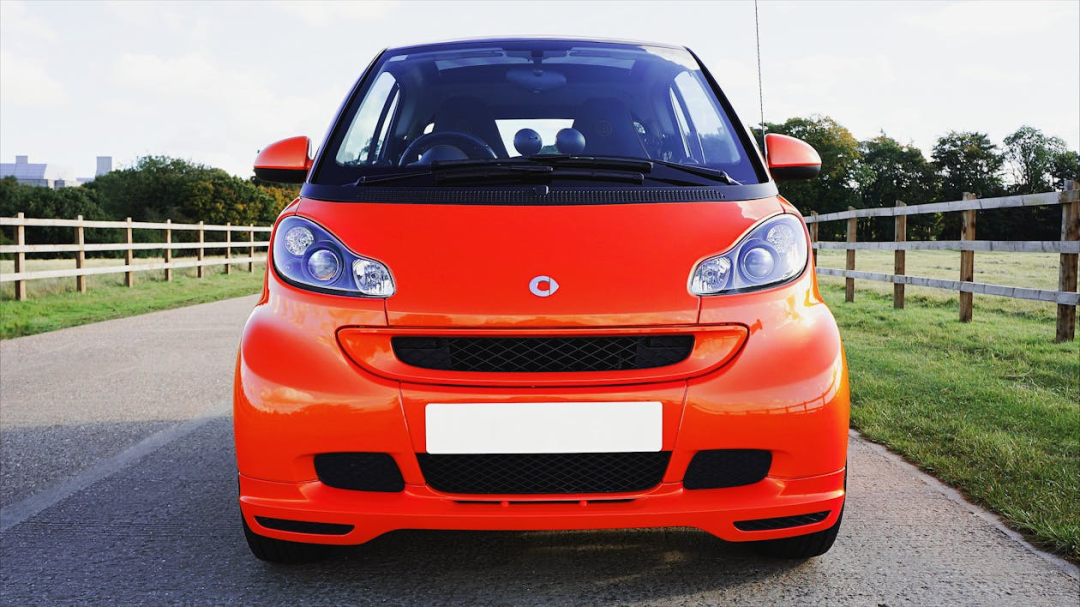
III. Why the 'Achilles Heel'? NEVs Cannot Function Without It
Many consider the battery the 'Achilles heel' of NEVs, but the HV PDB is equally critical.
The battery supplies energy, while the HV PDB serves as the energy channel. Without the channel, even abundant energy is unusable. Moreover, if the channel fails, the entire high-voltage system collapses.
As NEVs evolve toward higher voltages (800V platforms) and greater power, demands on the HV PDB intensify. Higher voltages increase risks, requiring even more precise power distribution. 
IV. Future Trends: Smarter, More Integrated, and Safer
As NEVs advance toward 800V high-voltage platforms, intelligence, and lightweight design, the HV PDB will also upgrade, with three key trends emerging:
1. Greater Integration: From 'Single Distribution' to 'Multifunctional Integration'
Future HV PDBs will integrate more functions, such as battery management (BMS) and motor control, into a high-voltage integrated module. This reduces size and weight (every kilogram saved extends driving range by 3-5 km) while lowering vehicle costs, enhancing NEV affordability.
2. Enhanced Intelligence: From Passive Protection to Proactive Warning
Future HV PDBs will incorporate advanced algorithms and sensors for fault prediction. By analyzing current and voltage fluctuations, they can anticipate issues like insulation degradation or contactor aging and alert owners via the vehicle's infotainment system or a mobile app before failures occur. They will also collaborate with autonomous driving systems to dynamically optimize power distribution based on driving conditions, further reducing energy consumption and improving power response. 
3. Stricter Safety Standards: Adapting to Extreme Conditions with Upgraded Protection
As NEVs expand into regions with extreme cold, heat, or humidity, HV PDB protection levels will rise—achieving an IP67 rating to withstand dust and water exposure. They will use more heat- and aging-resistant materials (e.g., nano-modified ceramic composites), ensuring stable operation from -40°C to 125°C, guaranteeing safety in all environments.
END
-
![]()
Jitian Xingzhou: A Pioneer in Optical Payloads Secures Hundreds of Millions in Series B Funding!
-
![]()
Orders Secured Through to the Second Half of the Year! The Rationale Behind the 'Surge' in Demand for This Company’s Optical-Grade Base Films
-
![]()
Beyond Patents: The Retail Rivalry of Insta360 and DJI Unfolds
-
![]()
180 Billion Market Cap Vanished! How Did Seres Fall So Far?
-
![]()
Blockbuster! Domestic storage takes the global double crown for the first time, from an AI company
-
![]()
China Spearheads Formulation! World's Pioneering Global Technical Regulation for Automated Driving Systems Greenlit and Unveiled
-
![]()
Farewell to Pulsed Support Policies: Three Major Auto Policy Directions from Multiple Departments Take Effect on the Same Day
-
![]()
Embercore AI’s Accelerated Funding: The Robot Industry’s Shift Toward ‘Learning Systems’