Geely, Yin Qi, Mercedes-Benz, Zhao Ming: Why Are They All Gathered at Qianli's Strategic Table?
 04/30 2026
 592
592
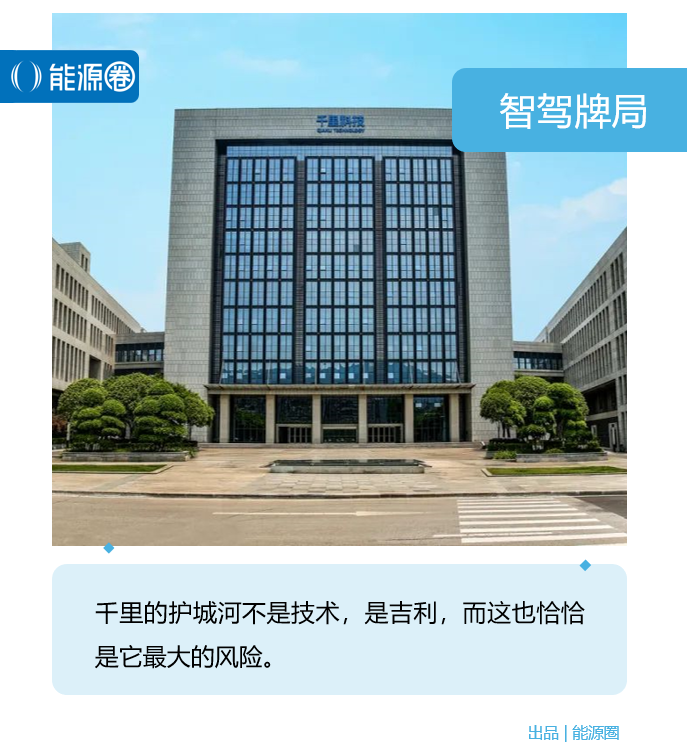
On April 23, 2026, Chongqing Qianli Technology Co., Ltd. (hereinafter referred to as Qianli) once again filed its listing application with the Hong Kong Stock Exchange, aiming to secure dual listings on both the A-share and H-share markets.
Five years prior, Lifan was teetering on the brink of bankruptcy. Now, boasting a market capitalization of 48.5 billion yuan, it thrives with the support of Geely, Mercedes-Benz, Yin Qi, and Zhao Ming.
From a discarded shell to an emerging dark horse in intelligent driving, poised for an IPO, what transformative events have unfolded over these five years?
The Five-Year Odyssey of Qianli
Lifan once held the distinction of being the "first private automobile stock" and a symbol of Chongqing's industrial prowess.
In 2020, Lifan, plagued by mismanagement, suffered a debt crisis and insolvency. The Yin Mingshan family exited the scene, and this once-glorious automaker, now selling just over 2,000 vehicles annually, hung by a thread.
In December 2020, Geely, in collaboration with Chongqing's state-owned assets, took over and rebranded it as Lifan Technology, primarily to assist Geely in producing "RuiLan" battery-swapping vehicles. At this juncture, the shell survived, but it lacked a soul.
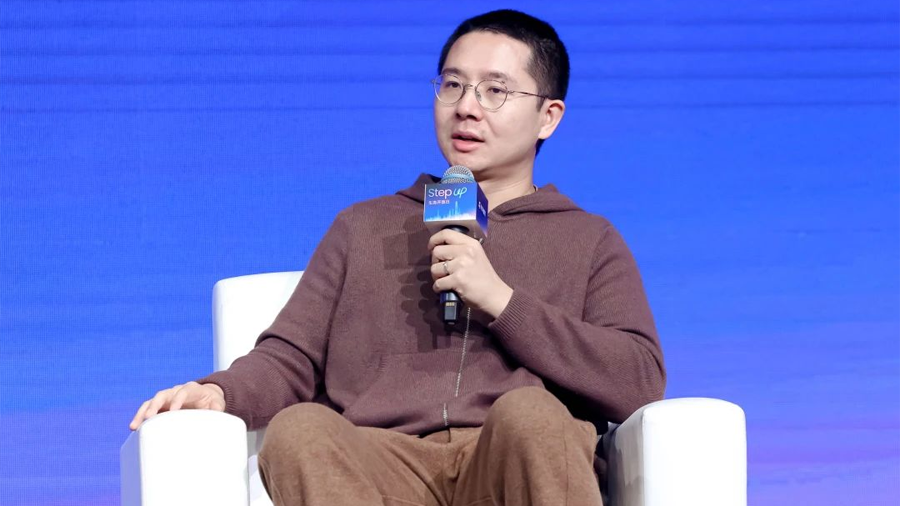
In July 2024, Yin Qi, co-founder of Megvii Technology, acquired a 19.91% stake from Geely for 2.43 billion yuan, becoming the second-largest shareholder. Three months later, Yin Qi officially assumed the chairmanship.
In February 2025, the company was officially renamed Qianli Technology. Yin Qi explained, "'Qianli' signifies importance, echoing the company's roots in Chongqing; 'Zhi Xing Qian Li' suggests that AI represents a long-term trajectory."
In September 2025, Mercedes-Benz made a strategic investment of approximately 1.342 billion yuan in Qianli Technology, acquiring a 3% stake and becoming the fifth-largest shareholder.
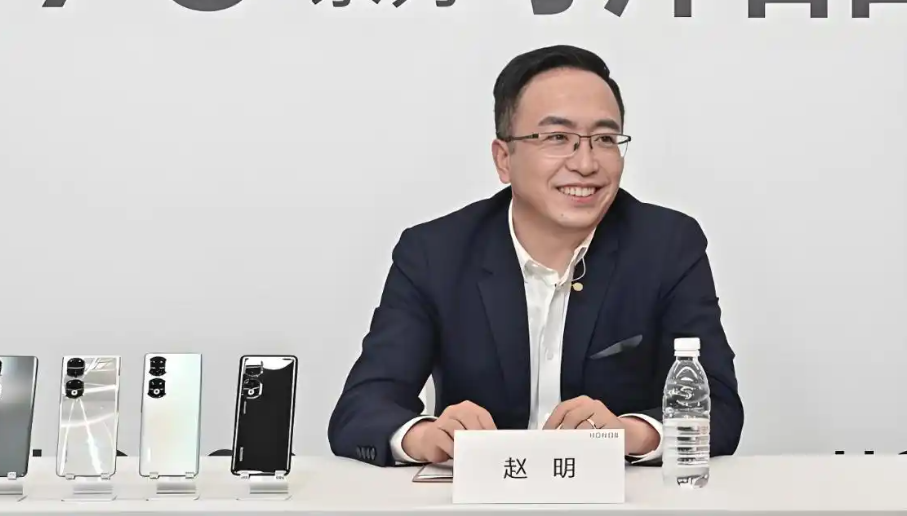
In February 2026, former Honor CEO Zhao Ming joined Qianli as co-chairman, humorously stating that he was enticed by Yin Qi's challenge: "The AI business closed loop is too daunting. Are you up for it?" This seasoned veteran of the mobile phone industry, with over two decades of experience, decided to embark on another decade-long journey.
Thus, a once-moribund shell underwent three transformations: it was on the verge of collapse, then revived, and finally infused with an AI-driven soul.
A Unique Strategic Table
With numerous intelligent driving companies in the market, why did they choose Qianli?
The answer lies not in technology alone but in its unique ecological niche.
Among all intelligent driving players, Qianli stands out as the only entity integrating "automaker, intelligent driving solution provider, AI company, and listed capital platform"—a combination unparalleled elsewhere.
Geely holds a 29.85% stake. As the largest shareholder, Geely provides far more than just financial support.
It injected nearly 3,000 core intelligent driving personnel from Zeekr's intelligent driving team, Geely Research Institute's intelligent driving team, and Megvii's Maichi Intelligent Driving into Qianli, while granting Qianli full access to its orders, supply chain, and factories.
Why did Geely take this step?
Previously, Geely's brands, such as Zeekr, Lynk & Co, and Geely, relied on intelligent driving solutions from various suppliers, resulting in fragmented user experiences and disconnected data, unable to achieve synergy. Geely needed a controlled entity to seize the "soul" of intelligent driving. Qianli emerged as Geely's chosen frontrunner.
Geely views Qianli as a strategic asset to rival "Huawei AITO." Huawei AITO, valued at over 100 billion yuan, exports intelligent driving capabilities across the industry. Geely aims to forge its own "AITO," and Qianli is the key to achieving this vision.
In September 2025, Mercedes-Benz selected Qianli from among numerous intelligent driving companies.
Partnering with Qianli means tapping into Geely's vast automotive ecosystem, comprising millions of vehicles. Qianli's intelligent driving solutions have already demonstrated mass-production viability within Geely's system, offering certainty across the entire chain.
For Mercedes-Benz, investing in Qianli means leveraging a 3% stake to gain deep insights into China's intelligent driving ecosystem.
Yin Qi + Zhao Ming: one brings technological prowess, the other brings commercial acumen.
Yin Qi introduced Megvii's AI expertise and Jueyi Xingchen's large model capabilities, proposing the "Model Containment" theory, which shifts the focus of intelligent driving competition from hardware parameters to model capabilities.
Zhao Ming brought mass-production capabilities and supply chain management experience honed in the cutthroat mobile phone industry. He excels at transforming technology into marketable products.
One focuses on creation, the other on commercialization. This synergy is rare in the intelligent driving sector.
Other intelligent driving companies are either pure solution providers like Momenta or automakers' in-house departments, such as NIO, XPeng, and Li Auto's self-developed teams. Qianli uniquely combines Geely's manufacturing base, Yin Qi's AI capabilities, Mercedes-Benz's brand endorsement, and Zhao Ming's commercial execution.
The convergence of these four entities at one table is no coincidence but a deliberate strategic move by Geely.
A Unique Strategic Table with Inherent Risks
While the cards are strong, risks are evident.
In 2025, Qianli's related-party sales accounted for 36.15% of total revenue, primarily from Geely. In 2022 and 2023, procurement from Geely accounted for 50.4% and 50.1%, respectively.
This deep integration serves as a competitive moat but also poses a potential threat. If Geely adjusts its strategy, what will become of Qianli? Can Qianli survive independently of Geely?
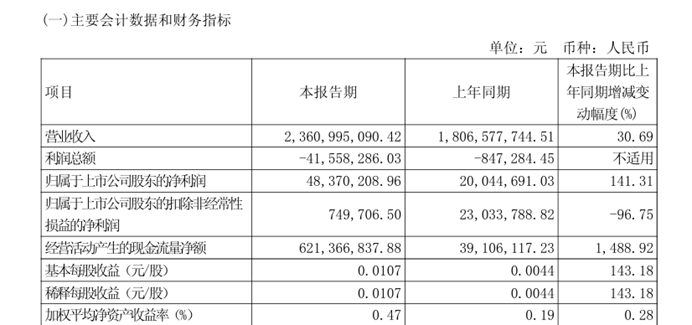
In Qianli's Q1 report released on April 27, revenue reached 2.361 billion yuan, up 30.69% year-on-year; net profit attributable to shareholders was 48.37 million yuan, up 141.31% year-on-year. While the numbers appear promising, the profit quality is questionable.
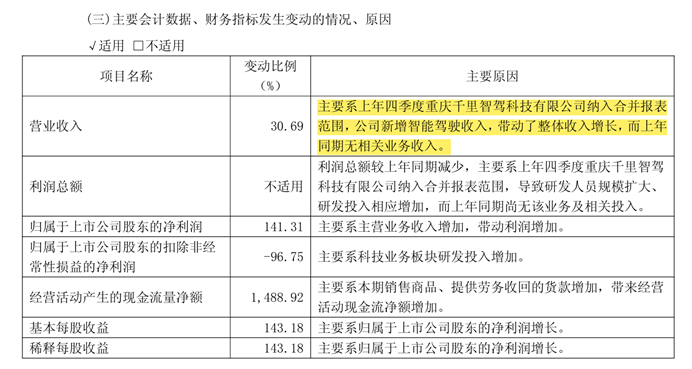
Firstly, the company explicitly stated that revenue growth was primarily due to "the consolidation of Chongqing Qianli Intelligent Driving Technology Co., Ltd. into the financial statements in Q4 last year, adding new intelligent driving revenue." In essence, revenue growth stemmed from accounting changes due to consolidation, not from scaled-up volume of intelligent driving solutions.
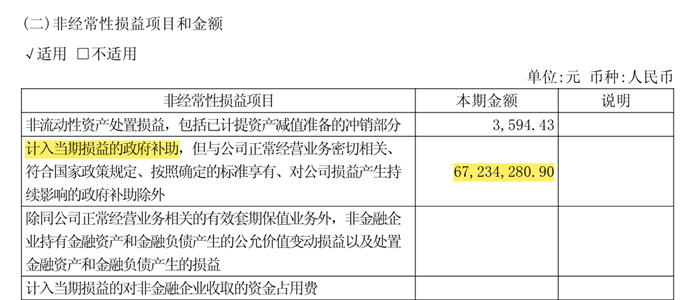
Secondly, government subsidies remain a significant contributor to profits. In Q1 2026, government subsidies included in current profits reached 67.23 million yuan. Without these subsidies, the true net profit figure would be even more paltry.
Qianli's announcement also clearly stated that non-recurring net profit decreased by 96.75% year-on-year, "mainly due to increased R&D investment in the technology business segment." The company is investing heavily to buy time and catch up.
This indicates that Qianli's profitability remains fragile, with soaring R&D investment, government subsidies propping up profits, and the core business yet to achieve sustainable profitability.
Zhao Ming's goal of "equipping 1 million vehicles in 2026" represents the real litmus test.
Without scale, there's no revenue; without revenue, there's no funding for R&D.
Moreover, the IPO window for intelligent driving is narrowing, with Tesla FSD's imminent entry into China.
Compared to Momenta's 61% market share in urban NOA and deployment across 170+ models, and QCraft's 1 million+ deployments, as of end-March 2026, Qianli's intelligent driving system had only 460,000 installations.
460,000 vs. 1 million: this is no minor discrepancy.
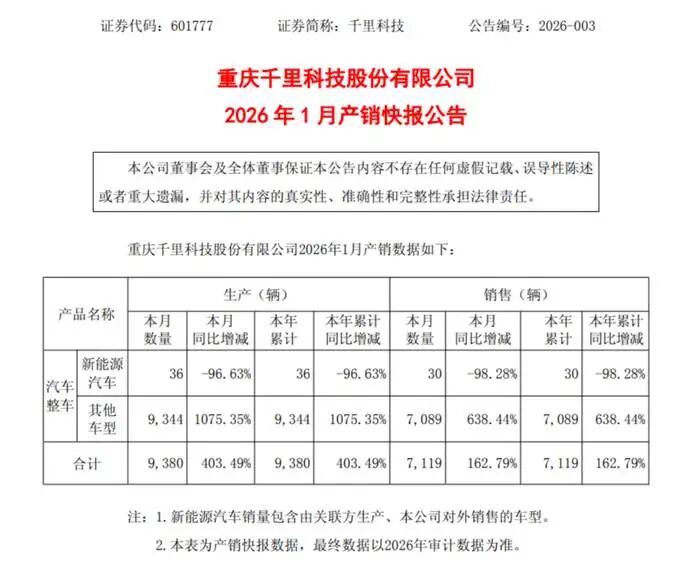
Qianli's new energy vehicle production and sales data plummeted in January, with only 30 vehicles sold. In the short term, this affects data feedback for intelligent driving systems installed in its own models. If external supply progress underperforms, data sources will rely more heavily on Geely's ecosystem, limiting data diversity and ultimately slowing iteration speed.
Qianli's narrative is essentially about "Geely creating another intelligent driving giant." Its uniqueness lies in being the sole vehicle for Geely's internal strategy.
The IPO is not the finish line but the starting point for the next round of the game.
-
![]()
Expert Interpretation of New Policy Combination: Activating the Trillion-Dollar Automotive Aftermarket
-
![]()
Doubao Goes 'Professional', Volcano Rolls the Snowball
-
AI: No Sign of a Bubble!
-
![]()
NVIDIA-Backed AI Unicorn Secures $1.5 Billion Funding: Revenue Soars 2000%
-
![]()
Doubao Pro is Here: How Can Seed 2.1 Be Integrated into Real Processes?
-
"PCB Juice" Sees Four Consecutive Declines: Even Computing Power Material Suppliers Can't Lift This "Old Stock"
-
![]()
Potential 'Seismic Shift' in the U.S. TV Industry: Competition Shifts from Hardware Sales to Traffic Entry Points
-
![]()
Audi A6L's Defense in the Luxury C-Class Market: Following Huawei's Smart Driving Integration, Is Large-Battery HEV the Next Move?