"Big Cars" Are Coming
 04/30 2026
 421
421
A Crowded Breakthrough
A high-stakes "Big Vehicle Competition" is underway among automakers.
At the 2026 Beijing International Automotive Exhibition, several models made their collective debut, including the NIO ES9, all-new Li Auto L9 Livis, next-gen Seres M9, XPENG GX, and Wuling Starlight L. These full-size SUVs and MPVs mostly exceed 5 meters in length and 3 meters in wheelbase, with three-row, six/seven-seat layouts becoming the mainstream configuration. The product lineup extends from luxury flagships down to home-use models priced in the low six figures, covering most consumer segments.
Why are automakers collectively embracing larger sizes? The answer may lie in the subtle shifts within the current industry. On one hand, changes in China's family structure have created a long-term rigid demand for multi-person transportation; on the other hand, the automotive industry is mired in a cycle of thin profits, making high-value, large-sized models a crucial option for achieving profit breakthroughs and brand elevation.
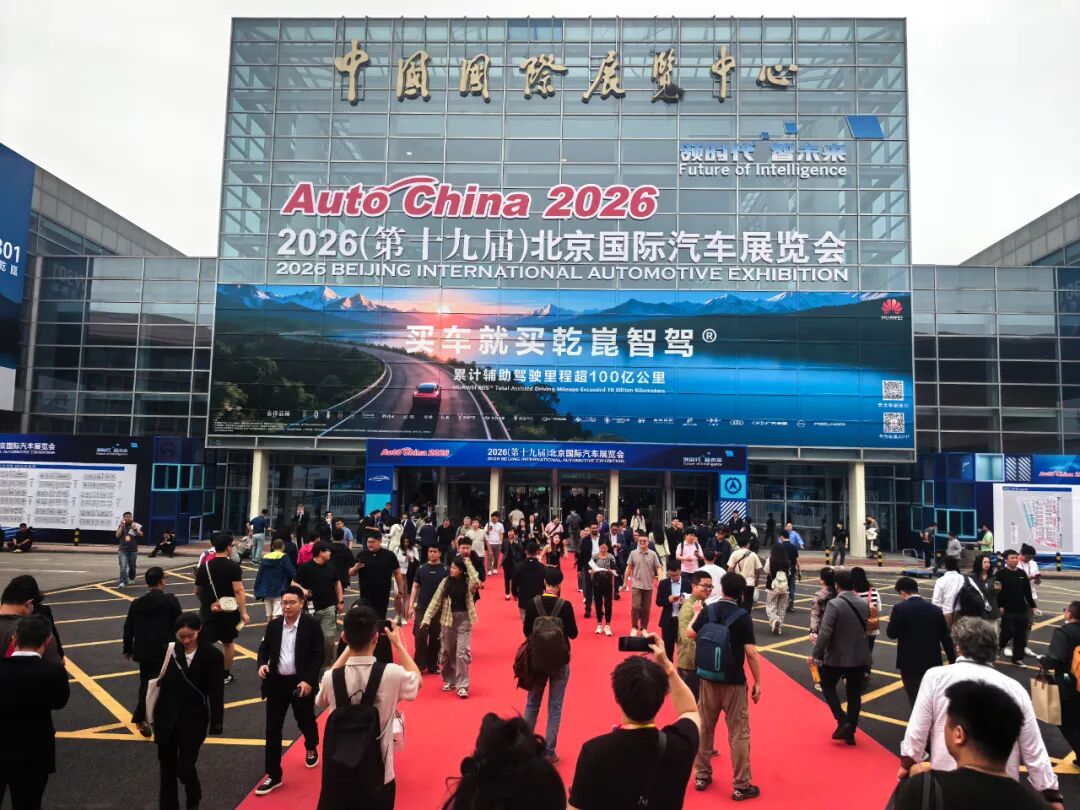
2026 Beijing International Automotive Exhibition (Photo/Liu Shanshan)
Will this industry-wide trend of "bigger is better" become the path to breaking through cyclical challenges in the Chinese auto market, or will it escalate into a fierce "involution" competition marked by growing supply-demand mismatches?
Size Wars Unfold at the Beijing Auto Show
This year's Beijing Auto Show saw the most intense competition in the large vehicle segment in history.
Flagship "9 Series" models underwent collective iterations, with heavyweight products such as the Yijing X9, NIO ES9, Li Auto L9 Livis, next-gen Seres M9, and Zeekr 9X making their debuts. Simultaneously, the "8 Series" models rapidly expanded, with models like the Voyah Taishan X8 entering the market competition . Five-seater models are being upgraded to "large five-seaters," joining the fray by extending wheelbases and expanding space, forming an all-encompassing siege across all price ranges and categories.
The Yijing X9, jointly developed by Dongfeng Motor and Huawei Qiankun, made its debut at the Beijing Auto Show. This new flagship large six-seater SUV is equipped with Huawei Qiankun ADS 5 across all variants, featuring a standard 896-line dual-optical-path image-grade LiDAR and L3-level hardware and software redundancy capabilities. In the view of Zeng Qinglin, General Manager of Yijing Auto, to build a premium brand, one must first create the best product. "The six-seater market currently has significant capacity and is quite competitive because each product has its strengths, but they all have some shortcomings. We aim to excel in both intelligence and hardware, which presents an opportunity," Zeng told China Newsweek. "The market around the 500,000-yuan price point is fiercely competitive. Our strong partnership with Huawei, through full-stack native collaboration, allows us to maximize product strength, giving us the confidence and assurance to compete in this market."
As a large six-seater SUV, the Yijing X9 offers a spatial experience comparable to that of an MPV. In fact, the Yijing X9 is not the only SUV vying for the MPV market; NIO CEO William Li has emphasized on multiple occasions that the NIO ES9, a luxury flagship, can fully replace traditional MPVs. "Forget MPVs," Li said. At this Beijing International Automotive Exhibition, the ES9 also became the focal point of NIO's booth. Prior to this, the NIO ES9 had already made its global debut and opened for pre-orders. This model, with a length of 5.36 meters and a wheelbase of 3.25 meters, offers both six-seat and seven-seat layouts.
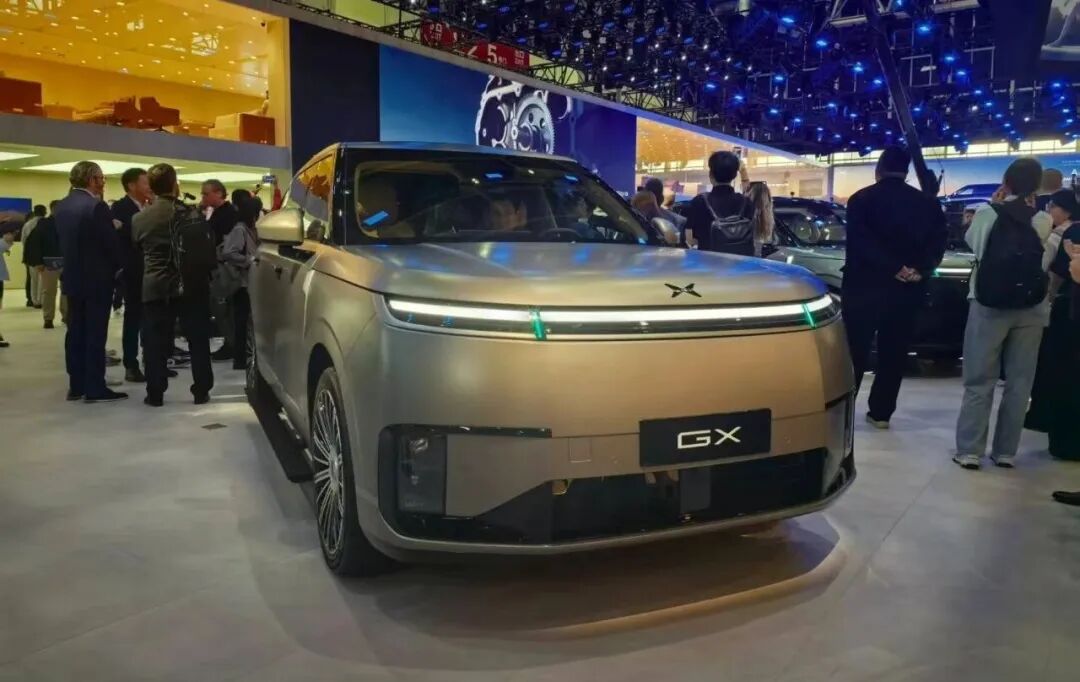
XPENG GX (Photo/Liu Shanshan)
The spotlight at XPENG's booth was on the large six-seater SUV GX, dubbed the "Greater Bay Area Range Rover." This model, with a length of 5265mm and a wheelbase of 3115mm, is equipped with a full-domain steer-by-wire system. The dual-LiDAR version comes pre-fitted with L4-level autonomous driving hardware and 3000TOPS of computing power to support high-level autonomous driving, having already completed L4-level road tests in Guangzhou. Priced starting at 399,800 yuan, it has become a key model for XPENG's push into the high-end market.
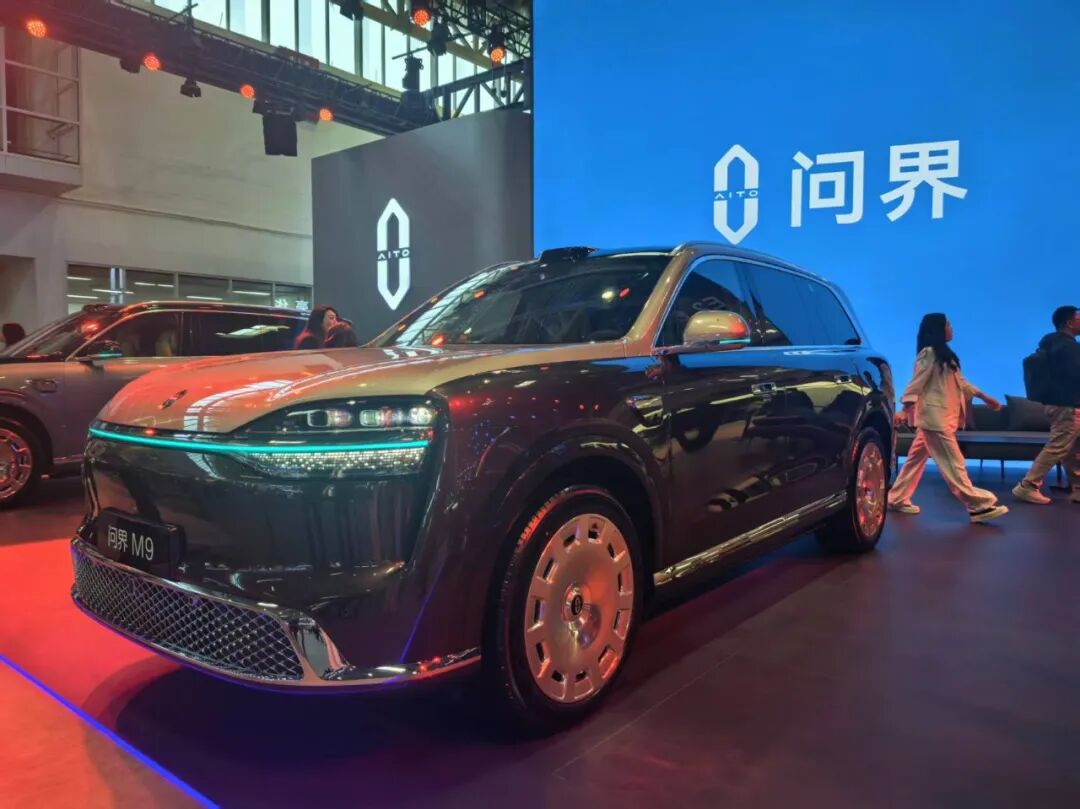
Seres M9 (Photo/Liu Shanshan)
At this year's Beijing Auto Show, the next-gen Seres M9 made its debut. This model achieves a cross-generational lead in assisted driving, being the first to feature the new-gen Huawei Qiankun Intelligent Driving® ADS 5, paired with an innovative 6-LiDAR stereo matrix, delivering a comprehensive upgrade in all-dimensional perception capabilities to meet future higher-level assisted driving demands.
The all-new L9 Livis, occupying the center spot at Li Auto's booth, is also a "behemoth." Official information reveals that the all-new Li Auto L9 Livis is equipped with an 800V active suspension developed specifically for full-size SUVs. Li Xiang, Chairman and CEO of Li Auto, stated that the Li Auto L9, released in 2022, was the first Chinese-branded model priced over 400,000 yuan to achieve monthly sales exceeding 10,000 units, initiating the market for full-size flagship SUVs by Chinese brands. It is reported that the all-new Li Auto L9 Livis is scheduled for an official launch on May 15, with deliveries commencing simultaneously.
Meanwhile, models such as the SAIC Volkswagen ID.ERA 9X, WEY V9X, and Leapmotor D19 have also entered the market. The Leapmotor D19, priced between 219,800 and 269,800 yuan, brings the threshold for full-size SUVs down to the 200,000-yuan level, accelerating the sink of the large vehicle market.
Simultaneously, the long-range large six-seater SUV Wuling Starlight L made its official debut at the Beijing Auto Show, with comprehensive blind orders opening simultaneously. It is understood that the Starlight L aims to become the "people's large six-seater," boasting hardcore strengths such as long range, spaciousness, and high quality, making it the most competitive large six-seater SUV under 150,000 yuan.
In the MPV segment, models such as the Voyah Dreamer, Denza D9, and Zeekr 009 continue to iterate, with features like three-row seating, high-level autonomous driving, and super-fast charging now becoming standard.
Even in the five-seater market, the rich experiences created by spacious interiors are becoming an important selling point for new models. Shao Mingfeng, CBO and General Manager of the Sales Company at Voyah Automotive Technology Co., Ltd., told China Newsweek, "Nearly 50% of Voyah Taishan X8 users come from BBA. They might have previously driven sedans, but this time they chose our SUV, essentially attracted by the comfort of a large-sized SUV."
Behind Automakers' Collective Bet on Large Vehicles
The focus on large vehicles is driven by a combination of family structure changes, consumption upgrades, and evolving travel scenarios.
After the comprehensive implementation of the two-child policy in 2016, the first batch of two-child families has entered a peak travel period with "elderly above and young below," making "2+2+2" six-person households the mainstream. By the end of 2025, the number of two-child families nationwide will exceed 35 million, with 75% concentrated in the core car-buying age group of 28-37 years old, representing the absolute mainstay for car upgrades and replacements.
For such families, traditional five-seater vehicles can no longer meet daily needs: transporting children, family outings, and accompanying elderly family members to medical appointments require sufficient seating and larger storage space. Six-seat/seven-seat SUVs precisely address this pain point: the third row can comfortably accommodate adults, the trunk can fit strollers, suitcases, and outdoor gear, and the independent second-row seats facilitate caring for elderly and children, perfectly adaptation ing family travel in all scenarios.
Consumption upgrades are driving the transformation of cars from "transportation tools" to "mobile living spaces." Today, the proportion of car upgrades and replacements in the market has exceeded 60%, with these users placing greater emphasis on space, comfort, and configuration, willing to pay a premium for high-quality experiences. Cui Dongshu, Secretary-General of the China Passenger Car Association, predicts that the demand for three-row models driven by two-child families will peak around 2036, giving the large vehicle market at least a decade of golden growth. "With consumption upgrades, the market for 500,000-yuan models is still growing," Zeng Qinglin believes. "The demand for large family vehicles and high-end travel is gradually increasing."
Automakers' rush to build large vehicles is essentially a two-way choice driven by market demand and corporate profitability. Against the backdrop of sustained pressure on overall industry profits, large vehicles, with their high premiums and gross margins, have become a key lever for automakers to elevate their brands and improve profitability. Meanwhile, the maturity of new energy and intelligent technologies has made this "bigger is better" competition feasible.
From a profitability perspective, large vehicles have become automakers' "cash cows." High-end large vehicles command significantly higher premium capabilities than compact and mid-size vehicles. NIO's financial report data shows that its Q4 average vehicle price benefited from a more favorable product mix, driving a significant improvement in gross margin. Among them, the gross margin of the all-new ES8 approached 25%, becoming the main profit contributor and boosting NIO's Q4 vehicle gross margin to 18.1%. In an interview, William Li stated that the ES9 is currently the model with the highest gross profit contribution in NIO's SUV lineup, with delivery ramp-up expected from Q2 significantly driving operational profit.
Meanwhile, new energy technologies have fundamentally transformed the viability of large vehicles. In the fuel era, large vehicles meant large displacements, high fuel consumption, and difficult handling; in the electric era, batteries laid flat in the chassis improve space utilization, electric motors offer strong power with controllable energy consumption, and the gradual popularize of 800V high-voltage platforms, fast charging, and long-range batteries have alleviated range and charging anxiety for electric large vehicles. Configurations such as air suspensions, rear-wheel steering, and intelligent chassis are becoming more accessible, allowing models priced between 200,000-300,000 yuan to offer luxury car experiences.
Intelligence has imbued large vehicles with new value. Nearly all large vehicles debuting at this auto show come standard with high-level autonomous driving and intelligent cockpits, with L4-level hardware pre-fitting, multiple LiDARs, and cockpit-driving fusion AI architectures becoming mainstream selling points. Large vehicles have upgraded from "space competition" to comprehensive competition in "space + intelligence + comfort," further enhancing perceived value.
Amid inventory competition, the compact and mid-size vehicle markets are mired in fierce "involution" and thin profits, while the large vehicle market is still growing, making it the optimal choice for automakers to break through. Today, automakers are lengthening vehicles, expanding wheelbases, and increasing seats, with "involution" in size intensifying and the market continuously expanding. However, while a tiered pattern is emerging in the large vehicle track , the underlying concerns of this collective bet cannot be ignored. The total demand for large vehicles is ultimately limited, and when a flood of new models enters the market, "large space" will no longer be a scarce advantage. Many models lacking core technological barriers and relying solely on size may become casualties in this size frenzy, with automakers' hefty investments potentially going to waste.
This "bigger is better" competition is ultimately not a simple size contest but a comprehensive game of technology, experience, and cost control. As the dividends of rigid family demand gradually dissipate and industry profit aspirations encounter market ceilings, how can automakers escape the "bigger" involution and find new differentiated breakthroughs in intelligent experiences, scenario adaptation , and energy efficiency? This is not only a survival test for each participant but also a crucial proposition for China's auto market to transition from scale growth to high-quality development. The true test of this industry transformation sparked by large vehicles has only just begun.
-
![]()
XiaoPai Unveils Home AI Brain, Paving the Way for Smart Homes to First Grasp 'Home Understanding'
-
![]()
Is the Future of Extended-Range EVs Pure Electric or Li Auto’s 5C Extended-Range? A Li Auto Executive Shares Insights
-
Ant Group’s New Board of Directors: Signaling a New Era?
-
![]()
Google Initiates TPU Sales, as Industry Leaders Eye AI Chips for 'Cost-Effective Tokens'
-
![]()
Input Methods: The Rising Star in AI! WeChat, Doubao, and Qianwen Lead the Charge into the Voice Input Era
-
![]()
Struggling to Sell? Cut It Out! Toyota, Volkswagen, and Changan Lead the Charge in Streamlining, Eliminating Non-Core Products in the Blockbuster Model Era
-
![]()
Arm China and Volcano Engine Join Forces to Expedite Cloud Computing and AI Infrastructure Rollout
-
![]()
Total Investment Hits Nearly 3.28 Billion! Goertek Launches Mass Production of 12-Inch Transparent Substrate Wafer for AR Glasses’ Micro-Nano Optical Components