Can Nissan, Betting Big on All-Solid-State Batteries, Reverse Its Fortunes After Losing Market Share?
 05/08 2026
 585
585
Article by Xiaofeng
Source: Bowang Finance
Nissan is making a bold move. What are its prospects this time?
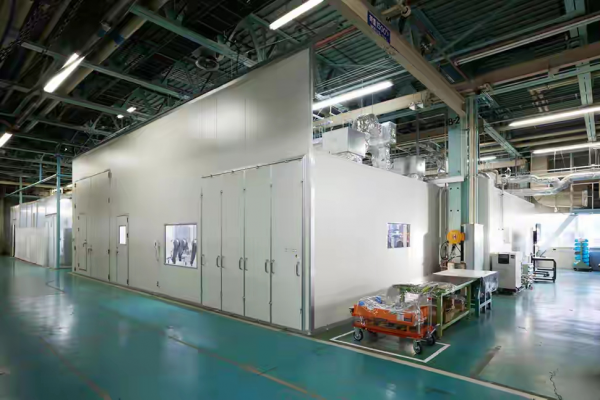
Two Japanese media outlets have reported that Nissan completed prototype testing of all-solid-state batteries for vehicles on its pilot production line at its Yokohama plant in April this year.
Reflecting on the past, as the dominance of the fuel-powered vehicle era wanes, Nissan is grappling with a severe market downturn: years of declining sales in China, a drop in its domestic market share, and a continuous erosion of competitiveness. The once-prominent Japanese automaker is now mired in a sales slump.
In this dire situation, Nissan's innovation in all-solid-state batteries appears to be a clarion call for a counterattack. However, technological advancements do not guarantee market success. Are all-solid-state batteries Nissan's salvation, or merely a mirage?
Further analysis reveals that the rivalry between the Chinese and Japanese automotive industries has long transcended a mere duel over battery technology. It now encompasses a comprehensive competition in industrial chain completeness, cost control, and market responsiveness.
01
Nissan's Market Position Under Siege
Nissan's declining sales in China are attributed to the gradual depletion of the dividends from the fuel-powered vehicle era and an overall lag in its electrification transition. The precipitous drop in market share is merely a visible symptom of this decline.
A few years ago, the three major Japanese automakers—Toyota, Honda, and Nissan—dominated the Chinese market, collectively holding a significant share and positioning themselves as mainstream players. At that time, Nissan, with models like the Sylphy, consistently ranked among the top sellers in the compact sedan segment, with sales in China once exceeding 1.5 million vehicles in 2018, representing "hassle-free durability" in the eyes of Chinese consumers. However, in just a few years, the situation has drastically reversed.
By 2023, five years later, Nissan's sales in China fell below one million vehicles for the first time, reaching only 794,000 units. By 2025, sales had further dropped to 653,000 units, representing a nearly 60% reduction in market share from its peak.
In the eyes of observers, Nissan has long relied on the dividends from fuel-powered vehicles and adhered to the tradition of "small and lightweight" designs, moving sluggishly in its electrification transition. While Chinese automakers were fully committed to pure electric routes and deeply cultivating lithium iron phosphate and ternary lithium battery technologies, Nissan was still hesitating between hybrid and fuel-powered vehicles, missing the transition window. Meanwhile, its product iteration efficiency was slightly lacking, as Nissan had not fully updated its main models, with classic models like the Sylphy falling behind domestic counterparts in intelligent driving and three-electric technologies at the same price point.
Over the past three years, joint-venture brands, to maintain market share, have been forced to adopt a "volume-for-price" strategy, severely sacrificing channel profits. Under the wave of new energy, the brand premium and product strength advantages of traditional fuel-powered vehicles are weakening.
Facing the demand for intelligence and connectivity in the Chinese market, Nissan still relies on its Japanese headquarters for R&D, resulting in a lengthy decision-making chain. Its pure electric model, the N7, has been criticized as a "fuel-to-electric" conversion, failing to meet the needs of local consumers. In contrast, independent brands like BYD and Geely precisely segment the market and quickly iterate products, causing Nissan's cost-effectiveness advantage, on which it once relied, to begin collapsing.
In other words, the market never waits for the hesitant. When the era abandons you, it never says goodbye. Nissan's loss of ground is essentially a tragedy of traditional automakers' path dependency, indulging in past successes and ignoring the wave of industrial transformation, ultimately being swept away by the tide of the times and losing its foothold. Today's Nissan is no longer the mainstream automaker that could easily seize the market but a "laggard" seeking a way out in desperate circumstances.
02
Are All-Solid-State Batteries a New Option?
Nissan still holds significant expectations and goals in the Chinese market.
"Nissan's headquarters has set a very clear milestone for me: domestic sales must reach one million units by the end of 2030. I remember that in 2018, the joint venture sold 1.55 million units, with about 1.2 million being Nissan-branded. We've done it before, and I was here the last time we achieved this, so it's feasible," said Ma Zhixin, a member of Nissan's Global Executive Committee and Chairman of the China Region, in an interview with the media at the Beijing Auto Show on April 24.
In addition to strengthening model iteration and innovation, all-solid-state batteries are also an important technological breakthrough for Nissan to break the deadlock. Their disruptive performance is sufficient to reshape the industry landscape. Public information shows that in April 2026, Nissan completed the world's first prototype testing of all-solid-state batteries for vehicles, with a 23-layer cell-stacked battery pack in real vehicle size passing performance verification. This is Nissan's strongest signal of a counterattack to the market.
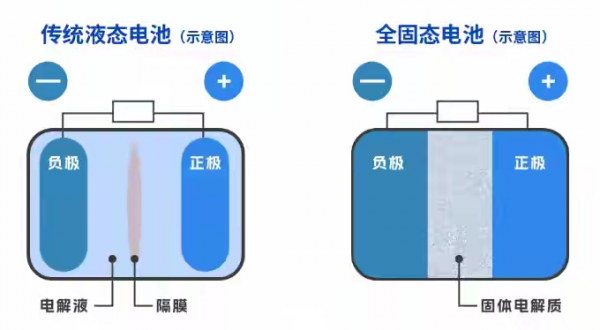
The performance of all-solid-state batteries is indeed sufficient to disrupt the existing electric vehicle market. Compared to traditional liquid lithium batteries, their energy density has increased to 400-500Wh/kg, about double, allowing for a driving range that is easily doubled on a single charge, with over 1,000 kilometers under WLTP standards no longer being a challenge. Charging speed also surpasses traditional lithium batteries, reaching 80% in just 10 minutes, only one-third the time of traditional lithium batteries, completely solving the pain point of "slow charging" for electric vehicles. In terms of safety, all-solid-state batteries, which abandon liquid electrolytes, have almost no risk of fire and no thermal runaway hazards under extreme conditions such as puncture, compression, and high temperatures, perfectly addressing safety concerns for electric vehicles.
Such disruptive technology has the potential to break past monopolies in the battery field and return to the core stage of the industry. Moreover, Nissan's timeline is clear and aggressive: determining the number of cell stacks and completing module design in the 2026 fiscal year; achieving commercial vehicle installation in the 2028 fiscal year.
However, ideals are plentiful, while reality is harshly cruel. The biggest fatal flaw of all-solid-state batteries currently is their prohibitively high cost. Data shows that the current cost of manufacturing a vehicle equipped with all-solid-state batteries is as high as 100 million yen, approximately 4.349 million yuan, a cost that is unacceptable even for the high-end market, let alone the mass market. To achieve commercialization, costs must be reduced to at least 1/20 of the current level, which remains a challenge for the industrial chain.
An immature industrial chain is another major obstacle. The solid-state electrolytes required for all-solid-state batteries are currently only produced at laboratory scale, with the raw material supply chain far from reaching the maturity needed for commercial mass production. It took lithium batteries a full 10 years to go from laboratory prototypes to mass production vehicle installation. All-solid-state batteries involve multiple technological barriers in materials, processes, and equipment, and the road to mass production may be even longer. The industry consensus is that although some automakers are deploying solid-state batteries, they are unlikely to have mass production capabilities before 2027. Nissan's goal of mass production in 2028 is far more difficult than expected.
More critically, Chinese automakers are not bystanders. Domestic leading battery and automakers such as CATL and BYD have also clearly stated their plans to achieve small-batch production or vehicle installation of all-solid-state batteries around 2027. Chinese companies' R&D speed in the solid-state battery field is no less than Nissan's, and they possess a more mature lithium battery industrial chain and lower manufacturing costs. Once they achieve technological breakthroughs, their mass production speed may be even faster.
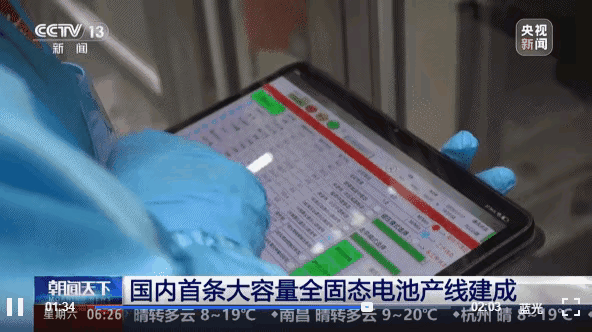
Technological breakthroughs do not equate to market success, and performance advantages do not mean victory is assured. All-solid-state batteries offer Nissan a glimmer of hope for a comeback, but high costs, a lagging industrial chain, and strong competitors make this path full of thorns. Nissan's bet on all-solid-state batteries is essentially a "do-or-die" gamble. If it wins, it can return to the industry's peak; if it loses, it may completely exit the mainstream automaker stage.
03
The Sino-Japanese Automotive Rivalry Goes Beyond Batteries
Looking back, the rivalry between the Chinese and Japanese automotive industries has long surpassed a single duel over battery technology and now involves a comprehensive showdown in industrial chain completeness, cost control ability, market responsiveness, and intelligent ecosystems. All-solid-state batteries cannot change the underlying strength gap between the Chinese and Japanese automotive industries.
Many people believe that one of the cores of the Sino-Japanese automotive competition is battery technology, and if Nissan leads in all-solid-state batteries, it can reverse the situation. However, the reality is far from this. Batteries are just one part of the automotive industry, and the gap between China and Japan has already permeated every aspect of the industry.
Industrial chain completeness is one of the core advantages of Chinese automakers and a chasm that Nissan finds difficult to cross. After years of development, China has formed the world's most complete new energy vehicle industrial chain: from upstream mineral resources such as lithium, cobalt, and nickel, to midstream materials such as cathodes, anodes, separators, and electrolytes, to core components such as power batteries, motors, and electronic controls, and finally to vehicle manufacturing and charging infrastructure, the entire chain is autonomously controllable.
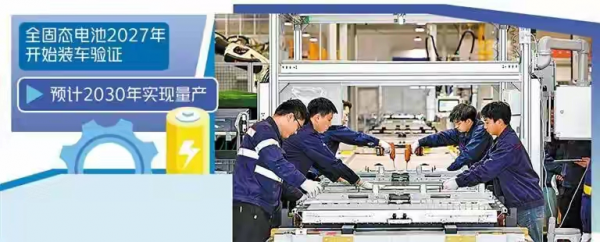
In contrast, Japan's automotive industry is highly dependent on overseas supply chains, with many upstream mineral resources relying on imports and insufficient capacity for core components. Although Japanese companies have technological accumulations in the key materials required for all-solid-state batteries, their capacity is far inferior to China's. Once mass production begins, the supply chain weaknesses will be thoroughly exposed. It's like building a house: China has complete production lines for bricks, cement, and steel, while Japan can only rely on imports, making speed, cost, and stability incomparable.
Cost control ability is another major advantage of Chinese automakers. China has the world's largest automotive consumer market, with significant scale effects. Combined with a mature industrial chain and low labor costs, the manufacturing costs of Chinese electric vehicles are far lower than those of Japanese automakers. The core of all-solid-state batteries is cost reduction, and cost control is precisely a strength of Chinese automakers. Once Chinese companies master solid-state battery technology, their mass production costs are likely to be lower than Nissan's.
Market responsiveness is also a core gap between Chinese and Japanese automakers. The Chinese market is the most competitive and fastest-changing automotive market globally, with consumer demand iterating far faster than the global average. Chinese automakers understand the needs of the local market well, have short decision-making chains, and can quickly adjust product strategies based on market changes, with an R&D to mass production cycle of only 2-3 years. In contrast, Nissan's decision-making headquarters is in Japan, far from the Chinese market, with a slow perception of local consumer needs and a lengthy decision-making chain. A model often takes 5-7 years from R&D to mass production, and by the time it hits the market, consumer demand has already changed.
The gap in intelligent ecosystems makes it even harder for Nissan to catch up. Today's electric vehicles are no longer just "four wheels + a battery" but "intelligent terminals on wheels." Intelligent driving, intelligent cockpits, and vehicle connectivity have become core considerations for consumers when purchasing vehicles. Chinese automakers have deep layouts in the intelligent field, with technology companies like Huawei and Baidu providing strong support. Companies like BYD and Xpeng have achieved full coverage of urban NOA, with intelligent cockpit experiences far surpassing Japanese models. Nissan still has many shortcomings to address in the intelligent field.
Nissan's future remains uncertain in this competitive landscape.
The century-long transformation of the automotive industry has never lacked disruptors or laggards. Can Nissan survive against all odds with all-solid-state batteries? Where will the Sino-Japanese automotive rivalry head in the future? Time will eventually provide the answers.
-
![]()
Total Investment Hits Nearly 3.28 Billion! Goertek Launches Mass Production of 12-Inch Transparent Substrate Wafer for AR Glasses’ Micro-Nano Optical Components
-
![]()
Why Is This Precision Optical Film Leader Worth Reevaluating with a Tens of Millions Procurement?
-
![]()
AI Costs Plummet by 90% Over Nine Years: Key Insights from Davos You Shouldn’t Miss
-
Doubao, Your Late-Night AI Companion, Now Eyes Profitability
-
![]()
SRC Empowers SEER Intelligence to Reach a Market Cap of Tens of Billions, Yet Fails to Sustain Profitability
-
![]()
China’s Embodied AI Industry Faces Fierce Domestic Competition, Making Overseas Expansion Essential for Survival
-
![]()
32.8 Billion Yuan Investment! Goertek’s 12-Inch AR Glasses Optical Wafer Base in Lingang Begins Operations
-
![]()
How Far is the All-New Li Auto L8 from Being the Best Five-Seat SUV with In-House Full-Stack Development?