Global Hydrogen Vehicle Fleet Reaches 115,000 Units: South Korea Leads, China Follows, U.S. and Japan Lag Behind
 05/09 2026
 562
562
Global hydrogen vehicle sales among major countries reversed the declining trend of the previous two years in 2025, growing by 52.6% year-on-year to reach 18,264 units. This growth was primarily driven by strong demand in the Chinese and South Korean hydrogen vehicle markets, which together accounted for 95.8% of the global total. In contrast, sales in other major countries declined to varying degrees. China's hydrogen vehicle sales ranked first globally for the third consecutive year.
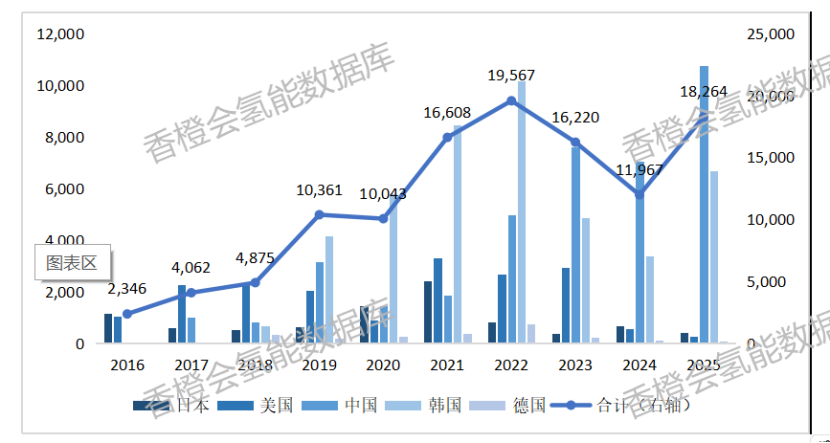
Figure 1: Global Hydrogen Vehicle Sales by Major Countries (2016-2025)
Data Sources: China Motor Vehicle Insurance Data, South Korea's Ministry of Land, Infrastructure and Transport, Japan Automobile Dealers Association, Germany's Federal Ministry of Transport, California Fuel Cell Partnership, Orange Research Institute
1
China and South Korea Dominate: U.S. and Japan Fall Behind
2025 marks the final year of China's fuel cell vehicle demonstration city clusters, with the market concentrating sales at year-end. Hydrogen vehicle sales grew by 51.8% year-on-year to 10,776 units, accounting for 59% of the global total. China now has 494 hydrogen refueling stations, with prices mostly ranging from 25-35 RMB/kg.
South Korea's hydrogen vehicle sales grew by 97.6% year-on-year in 2025, reaching 6,725 units and accounting for 36.8% of the global total. The number of hydrogen refueling stations reached 461, an increase of 75 from the previous year, with an average refueling price of 10,294 KRW/kg (approximately 48 RMB/kg).
This growth was primarily driven by the launch of Hyundai's new-generation Nexo model, supported by government subsidies. The new Hyundai Nexo features a 120 kW fuel cell stack and an 80 kW battery, delivering a maximum system output of 190 kW and a range of 700 km, offering significant advantages over pure electric vehicles. The vehicle's suggested retail price is 76.44 million KRW (approximately 360,000 RMB). After applying a 22.5 million KRW central government subsidy and up to 15 million KRW in local subsidies, the actual price for consumers is around 38.94 million KRW (approximately 180,000 RMB), placing it in the same price range as hybrid and electric SUVs.
In 2026, South Korea will allocate 576.2 billion KRW in subsidies to support the promotion of 7,820 hydrogen vehicles and invest 189 billion KRW in subsidies for the construction of approximately 39 new hydrogen refueling stations, bringing the total number of stations nationwide to 500.
Japan's hydrogen vehicle sales declined by 38.2% year-on-year to 431 units in 2025, affected by the reduction of the purchase subsidy cap from 1.5 million JPY to 1.05 million JPY starting in April 2025, policy shifts favoring pure electric vehicles, severe shortages in hydrogen refueling infrastructure, and high vehicle and hydrogen costs. Japan has 149 hydrogen refueling stations, with approximately 90% of the country falling into service blank areas based on a 15 km accessibility standard. Hydrogen refueling prices in most regions of Japan are around 2,200 JPY/kg (approximately 96 RMB/kg).
U.S. market sales have been declining in recent years, dropping sharply from 2,978 units in 2023 to just 283 units in 2025, a year-on-year decrease of 53.7%. Key factors include high hydrogen prices, limited infrastructure, tightened subsidy policies, withdrawals by major automakers, cancellations of some hydrogen fuel cell projects, and a shift of resources toward electric vehicles, with only limited exploration remaining in the hydrogen commercial vehicle sector. In 2025, hydrogen refueling prices in the U.S. ranged from 29-36 USD/kg (approximately 197-245 RMB/kg), with 52 operational hydrogen refueling stations, 50 of which are in California.
Germany's hydrogen vehicle market continued to decline, with sales falling to 49 units in 2025, a year-on-year decrease of 69%. This was due to batch closures of hydrogen refueling stations, high operating costs, substitution by pure electric vehicles, and strategic shifts by automakers and the government toward commercial vehicles, marginalizing hydrogen power in passenger vehicles. Germany had 79 operational hydrogen refueling stations at the beginning of 2025, but this number dropped sharply to 48 by year-end, a decrease of about 39%. In 2025, hydrogen refueling prices in Germany ranged from 13-15 EUR/kg (approximately 104-120 RMB/kg).
2
Global Hydrogen Vehicle Fleet Reaches 115,000 Units: South Korea First, China Second
Over the past three years, only the Chinese market has achieved double-digit average annual growth. China's hydrogen vehicle market has focused on commercial vehicles (heavy trucks, logistics vehicles) as the main breakthrough, forming a relatively stable, policy-driven growth model in recent years.
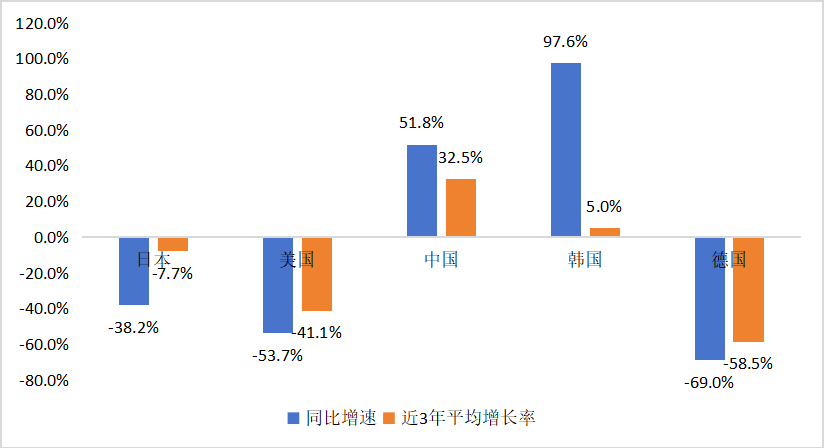
Figure 2: Year-on-Year Growth Rate of Hydrogen Vehicle Sales by Major Countries (2025)
Data Sources: China Motor Vehicle Insurance Data, South Korea's Ministry of Land, Infrastructure and Transport, Japan Automobile Dealers Association, Germany's Federal Ministry of Transport, California Fuel Cell Partnership, Orange Research Institute
In terms of fleet size, as of the end of 2025, approximately 115,129 hydrogen vehicles had been deployed in major countries globally, representing an 18.9% year-on-year increase. South Korea led with 44,655 units, accounting for 38.8% of the global total—a 0.4 percentage point decrease from the previous year but still ranking first globally. China followed with 39,023 units, accounting for 33.9%—a 4.7 percentage point increase—ranking second.
Excluding China, the global market share of other major countries declined. The U.S. fleet stood at 18,851 units, accounting for 16.4%—a 2.8 percentage point decrease. Japan had 10,032 units, accounting for 8.7%—a 1.2 percentage point decrease. Germany had deployed a cumulative total of 2,568 units, accounting for 2.2%—a slight 0.4 percentage point decrease.
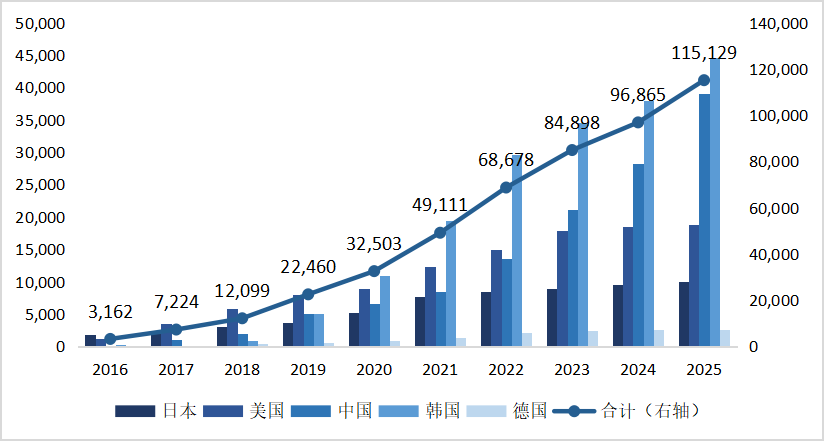
Figure 3: Global Hydrogen Vehicle Fleet by Major Countries (2016-2025)
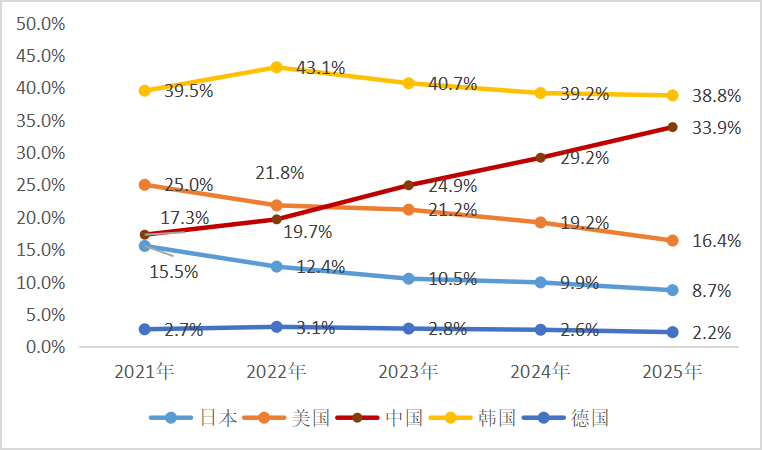
Figure 4: Global Market Share of Hydrogen Vehicle Fleet by Major Countries (2021-2025)
Data Sources: China Motor Vehicle Insurance Data, South Korea's Ministry of Land, Infrastructure and Transport, Japan Automobile Dealers Association, Germany's Federal Ministry of Transport, California Fuel Cell Partnership, Orange Research Institute
In terms of major automakers, Hyundai's hydrogen vehicle sales grew by 58.5% year-on-year in 2025 to reach 7,047 units, including 6,809 units domestically and 238 units overseas, with a cumulative global deployment of 48,324 units—ranking first globally. Toyota's annual sales reached 1,257 units, a 29.3% year-on-year decrease, including 422 units domestically and 835 units overseas, with a cumulative global deployment of 28,913 units.
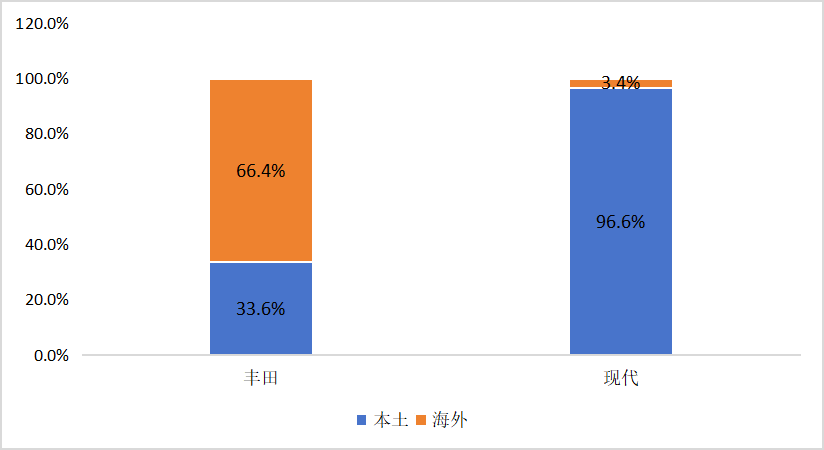
Figure 5: Market Share of Hydrogen Vehicle Sales by Hyundai and Toyota in Domestic and Overseas Markets (2025)
Data Sources: Toyota Motor Official Website, Hyundai Motor Official Website

-
![]()
Total Investment Hits Nearly 3.28 Billion! Goertek Launches Mass Production of 12-Inch Transparent Substrate Wafer for AR Glasses’ Micro-Nano Optical Components
-
![]()
Why Is This Precision Optical Film Leader Worth Reevaluating with a Tens of Millions Procurement?
-
![]()
AI Costs Plummet by 90% Over Nine Years: Key Insights from Davos You Shouldn’t Miss
-
Doubao, Your Late-Night AI Companion, Now Eyes Profitability
-
![]()
SRC Empowers SEER Intelligence to Reach a Market Cap of Tens of Billions, Yet Fails to Sustain Profitability
-
![]()
China’s Embodied AI Industry Faces Fierce Domestic Competition, Making Overseas Expansion Essential for Survival
-
![]()
32.8 Billion Yuan Investment! Goertek’s 12-Inch AR Glasses Optical Wafer Base in Lingang Begins Operations
-
![]()
How Far is the All-New Li Auto L8 from Being the Best Five-Seat SUV with In-House Full-Stack Development?