Auto China 2026: Chinese Brands Lead the Green and Smart Future | Cover Story: In China, for the World – Auto China 2026 Special Report (Part 3)
 05/13 2026
 369
369
Editor's Note
Auto China 2026 has drawn global attention, presenting a vivid picture of the high-quality development of China's automotive industry. The underlying 'code' is systematic innovation. Various technological innovation achievements were showcased at the event, providing an important window into the comprehensive transformation and upgrading of the automotive industry. Chinese automotive companies have entered a new phase of deep cultivation across the entire industrial chain and ecosystem, injecting fresh momentum into the global automotive industry. Multinational enterprises have shifted their strategies in China from 'In China, For China' to 'In China, For the World,' engaging in two-way collaboration with local companies.
Focusing on Auto China 2026, Auto Review presents this special 'Cover Story' report. This series consists of seven articles, with the third installment released today. Stay tuned.
The 'Green Leadership Era, Intelligent Creation of the Future' depicted by Chinese automakers is becoming a tangible reality at this auto show.
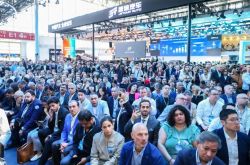
On April 24, 2026, in Shunyi, Beijing, Auto China 2026 (hereinafter referred to as 'Auto China') officially opened its doors.
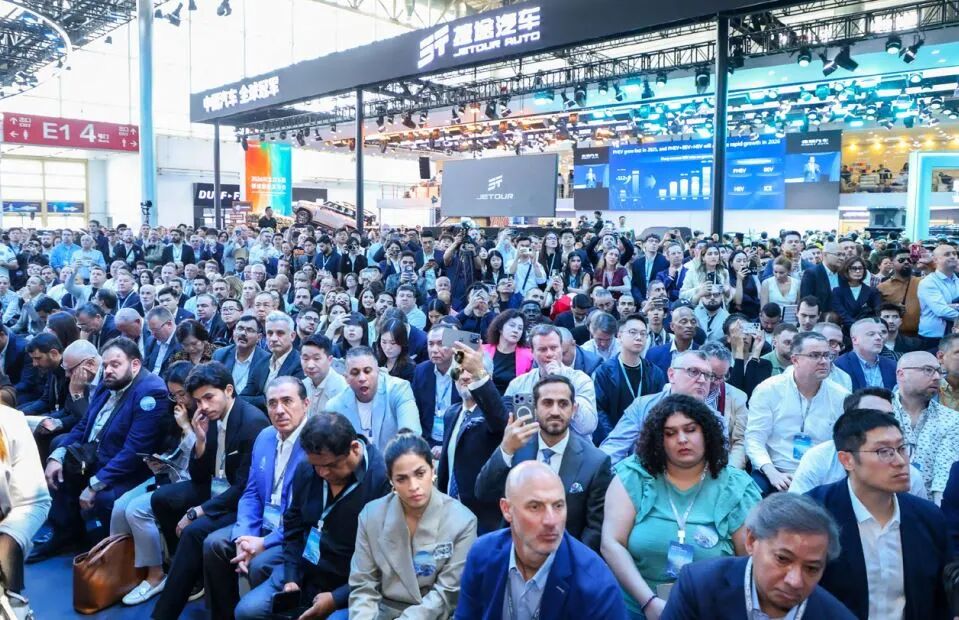
According to public information, this edition of Auto China covers an area of 380,000 square meters, featuring 1,451 exhibition vehicles, 181 global premieres, and 71 concept cars, making it the largest auto show in the world. While setting a new historical record in scale, this year's Auto China also showcases a notable change—the 'home court confidence' of domestic brands is more evident. From a significant increase in booth size, with BYD even 'taking over an entire pavilion,' to the ubiquitous presence of Chinese elements, such as the Hongqi Golden Sunflower National Gift Silk Road Splendor theme-customized model, to the collective push into the high-end market by new automotive forces with their '9-Series Flagship' models, Chinese automakers are demonstrating all-round confidence that spans from products to brands and from technology to culture.
This 'home court confidence' is not blind arrogance but stems from Chinese automakers' firm grasp of the two main technological thrusts: new energy and intelligent connectivity. Additionally, although fewer commercial vehicle manufacturers are participating, they are also using 'digital and intelligent' solutions to announce to the world that the green and intelligent transformation is spreading from passenger vehicles to broader industries such as logistics and passenger transport. The 'Green Leadership Era, Intelligent Creation of the Future' depicted by Chinese automakers is becoming a tangible reality at this auto show.
Rapid Development of New Energy Technology
According to data released by the China Association of Automobile Manufacturers, in 2025, domestic new energy vehicle (NEV) production and sales reached 16.626 million and 16.49 million units, respectively, representing year-on-year growth of 29% and 28.2%. NEVs accounted for 47.9% of total new car sales. Years of rapid growth indicate that China's NEV market has fully transitioned from 'policy-driven' to 'market-driven,' marking the official entry of electrification technology into the 'deep waters.' As the core competition in the NEV industry shifts to topics such as 'drivability,' 'charging speed,' and 'durability,' major domestic brands are not holding back at this year's Auto China, showcasing their 'hardcore trump cards' in the electrification race.
BYD introduced the world's first vehicle series fully equipped with flash charging technology—the Ocean 8 Series Seal 08 and Sea Lion 08, as well as the fully-loaded BYD Fangchengbao Titanium 7 EV Flash Charge Edition. Hardcore all-electric SUVs have traditionally faced two core pain points: short range and slow charging. However, the two-wheel-drive version of the Fangchengbao Titanium 7 EV Flash Charge Edition achieves a CLTC range of 755 km. Combined with second-generation blade batteries and megawatt-class flash charging technology, BYD's technological prowess is fully demonstrated. Notably, to showcase the flash charging technology more intuitively, BYD set up a low-temperature laboratory at the auto show, charging a vehicle at minus 30 degrees Celsius. On-site data showed that the vehicle's battery could be charged from 20% to 97% in just 12 minutes, only 3 minutes longer than at room temperature.
Before the mass production of solid-state batteries, SAIC Motor took the lead in introducing semi-solid-state batteries. During Auto China, the 2026 MG4 from SAIC was officially launched, featuring semi-solid-state batteries and equipped with CTB (Cell-to-Body) battery-body integration technology and integrated thermal management for the entire vehicle. These cutting-edge technologies, previously only found in high-end models, are now being introduced to the mainstream consumer market priced around 100,000 yuan, potentially creating a significant technological advantage in the industry.
As a representative of new automotive forces, Li Auto took a unique approach by showcasing chassis technology. The all-new Li L9 Livis, making its debut at Auto China, is equipped with an 800V fully independent active suspension designed specifically for full-size SUVs. According to reports, this system features an 800V four-wheel fully independent control architecture, eliminating the need for auxiliary anti-roll bars. It includes steer-by-wire, four-wheel steering, and the world's first fully electric mechanical braking (EMB) system, enabling multiple cross-redundancies for steering, braking, and electric drive, allowing full-size SUVs to achieve the agility and composure of a coupe.
Decisive in the Second Half – Intelligence
As the technological foundation of electrification matures, the focus of competition in the domestic market has unsurprisingly shifted to intelligence—a key battleground recognized as the 'second half' by the industry. At this year's Auto China, domestic brands confidently showcased their 'signature skills' in the field of intelligence, vying to become 'definers' of this technological wave. Visitors clearly sensed that the Chinese solution for intelligent vehicles is taking shape at Auto China.
Chery Automobile brought its holistic AI technology system to this auto show, marking its strategic upgrade from leading in powertrain technology to a holistic intelligent ecosystem. According to reports, the system, centered around AI 2.0, breaks down traditional technological barriers across five major domains, achieving cross-domain collaboration in powertrain, chassis, cabin, intelligent driving, and safety. In terms of underlying architectural innovation, platforms like the wire-controlled off-road platform and 48V low-voltage platform provide the hardware foundation for holistic intelligence. At the powertrain technology iteration level, the Kunpeng Tianqing hybrid and DH-T360 ultra-electric hybrid transmission achieve breakthroughs in thermal efficiency and transmission efficiency. In the battery technology matrix, the Rhino Battery family covers full-scenario battery solutions, including solid-state and large cylindrical batteries. For intelligent system implementation, end-to-end large model intelligent driving and S2S real-time voice interaction aim to achieve a holistic intelligent closed loop of 'perception-decision-execution.' Through its holistic AI technology, Chery is upgrading vehicles from 'transportation tools' to 'sustainably evolving mobile intelligent entities,' providing a new paradigm for holistic intelligent technology in the industry.
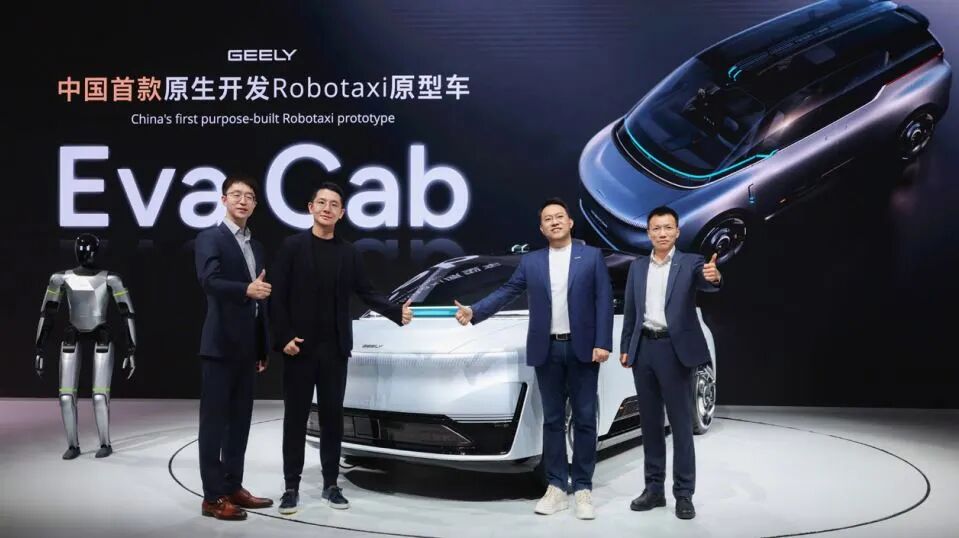
Unlike other automakers, Geely broke away from the traditional 'product display' model at this year's Auto China, adopting 'One Geely' as its core and creating four themed exhibition stands covering its entire brand, product, and technology portfolio. Among them, the 'Geely Dream World' technology ecosystem stand made its independent debut, focusing on the 'full-stack intelligent technology system,' presenting a comprehensive technology ecosystem spanning three electric systems, architectures, chips, intelligent cockpits, assisted driving, and low-orbit satellites. Notably, Geely's first natively developed Robotaxi prototype, the Eva Cab, was officially unveiled at this auto show. Unlike products on the market that are retrofitted from existing models, the Eva Cab was natively developed for L4 autonomous driving in terms of design, hardware, software, and ecosystem, representing the culmination of Geely's holistic AI 2.0 technology system. According to reports, the Eva Cab integrates into Geely's 'ground + low-altitude + low-orbit' integrated technology ecosystem. Cao Cao Mobility has been conducting trial operations of Robotaxi in multiple cities for over a year, verifying the technical reliability. According to the plan, a Cao Cao Mobility-customized version of the Eva Cab will be launched in 2027 to accelerate large-scale deployment.
Notably, this auto show further demonstrates the characteristic of technological democratization, particularly in intelligent connectivity, which is transitioning from a high-end option to a standard feature across all models. The Aito M6, which began its first batch of deliveries at this auto show, is the 'mid-size flagship' of the Hongmeng Intelligent Mobility family and the only large six-seater SUV in the 260,000-300,000 yuan price range equipped with a standard 896-line LiDAR. Changan Automobile promised at the auto show that starting May 1, 2026, all models equipped with Tianshu Intelligent will come standard with a tire blowout stabilization function that prevents deviation and skidding at speeds up to 225 km/h. As one of the first models equipped with Huawei's Qiankun Intelligent Driving ADS 5, the all-new Hongqi H9 announced the adoption of Huawei's 'Three Intelligences, Dual Wisdom' model, featuring the world's highest-specification standard 896-line dual-optical-path image-grade LiDAR.
Chinese-Style Luxury and Global Breakthrough
As the technological moats of electrification and intelligence gradually solidify, Chinese automakers are naturally setting their sights on a higher goal—redefining brand premium with 'Chinese-style luxury' and using it to open the doors to the global market.
At Auto China, a Hongqi Golden Sunflower National Gift Silk Road Splendor theme-customized model was on display, featuring multiple intangible cultural heritage techniques, including Hunan embroidery, cloisonné, ancient gilding, and Chinese lacquer. Inspired by the 'Silk Road Landscape Map,' silk road cultural elements are integrated into the overall design. As Xu Xiandong, Chairman of China FAW Group Co., Ltd., said, 'This car is not just a vehicle but an artwork that embodies cultural confidence.' Today's domestic brands have sufficient cultural and brand confidence when targeting the high-end luxury market. In addition to traditional automakers, new automotive forces are also actively 'pushing upward,' as evidenced by the '9-Series Flagship' models unveiled at this auto show. Besides the aforementioned Li L9 Livis, the NIO ES9, new Aito M9, and Leapmotor D19 also made their debuts at this auto show.
Importantly, this year's Auto China also shows that Chinese automakers are using 'high-endization' as a spearhead to find breakthroughs in the global automotive industry landscape and stand on their own stage.
On April 24, China Changan Automobile Group released the 'All-Encompassing' Plan 2.0, announcing its commitment to four principles: 'long-termization, localization, systematization, and integrated ESG construction.' Focusing on global technology, products, and layout, the plan aims to double overseas sales to 1.5 million units by 2030 and introduces seven major initiatives to bring Chinese automotive wisdom and quality to the world. On the same day, Dongfeng Motor Corporation released the 'Dongfeng Rising 2030' plan, proposing to transform into an intelligent, green, and international Dongfeng, an innovative, transformative, and symbiotic Dongfeng, and a Dongfeng that serves users and creates value. By 2030, the plan aims to achieve global sales of 5 million units, with overseas sales accounting for 40% and R&D investment intensity remaining above 7%. GAC Group also held a dedicated global press conference on the same day, decoding its globalization practice path with four keywords: 'craftsmanship, trust, technology, and ecosystem.' The plan explicitly aims to enter 120 countries and regions worldwide, establish over 2,000 overseas outlets, and achieve annual sales of 1 million units by 2030. Great Wall Motors' WEY brand also announced its overseas expansion plan for the WEY V9X at the auto show, planning to launch in overseas markets covering Europe, Asia, and the Middle East within the year.
Commercial Vehicles: 'Few but Strong'
In contrast to passenger vehicles, the commercial vehicle exhibition area saw the collective absence of mainstream truck manufacturers, with few heavy trucks in sight and only a small number of pickups and light commercial vehicles on display. However, multiple mainstream automakers and autonomous driving solution providers concentrated on showcasing their strengths, clearly sending an important signal: commercial vehicles are no longer simple transportation tools but are evolving into 'mobile terminals + intelligent nodes.'
At Auto China 2026, Changan Kaicheng unveiled its first autonomous logistics vehicle, the Robovan—the Changan Kaicheng V919. This vehicle is the first in the commercial vehicle industry to be fully equipped with wire-controlled braking technology (IBCU), improving pressure-building speed by 50%, optimizing braking distance by 7%, and achieving energy recovery efficiency of 26%, 11% higher than competitors. The maximum range reaches 500 km. In loaded scenarios, the energy consumption is only 9.7 kW·h per 100 km-ton, with an electricity cost of 3.5 yuan per 100 km-ton, resulting in lower operating costs and higher comprehensive returns.
On the first day of Auto China 2026, GAC Lingcheng officially unveiled its new medium- and heavy-duty commercial vehicle brand 'AITRUK Lingcheng' and light commercial vehicle brand 'MONTX Lingyue,' along with an autonomous driving '133 Plan' and multiple core technologies. It also brought two all-domain crossover concept vehicles, the MONTX P10 and MONTX V10.
JAC Group, under the theme 'Technological JAC, Intelligent Global Connectivity,' showcased multiple heavyweight product matrices and cutting-edge technological achievements at this auto show. Among them, the Hantuo PHEV is a new energy pickup truck built on the H-Power Hanxing super electric hybrid architecture, relying on JAC's pioneering 4DHT decoupled electric hybrid system, aiming to become a reliable partner for efficient wealth creation and exploring distant horizons.
From the latest battery technologies to comprehensive upgrades in product platforms, this auto show has become a stage for the centralized display of new energy and intelligent connectivity technologies. Combined with lower-cost technological popularization and richer energy technology routes, the 'green and intelligent future' jointly written by domestic brands is gradually becoming a reality starting from this year's Auto China.
Note: This article was first published in the 'Cover Story' column of the May 2026 issue of Auto Review magazine. Stay tuned for more.
Image: From the Internet
Article: Auto Review
Layout: Auto Review
-
![]()
Auto China 2026: Chinese Brands Lead the Green and Smart Future | Cover Story: In China, for the World – Auto China 2026 Special Report (Part 3)
-
![]()
Can Tencent Music Win This Defensive Battle by Integrating Himalaya?
-
![]()
Volvo Asia Pacific: No More 'Successor' Era!
-
![]()
China's Auto Market in April: A 2.5% Sales Decline, a 74% Export Surge, and Profit Margins Below 3.5%
-
![]()
Toyota's Era of Sky-High Profits Draws to a Close
-
![]()
Can Trump Pave the Way for Chinese Automobiles in the US Market with Musk’s China Visit?
-
![]()
Can the New Unisplendour Group Break Away from Being a 'Huawei Alternative' After Resolving Its Hundred-Billion-Yuan Debt?
-
![]()
What technology enabled XPENG to eliminate LiDAR from its intelligent driving systems?