Has Rising Oil Prices Slowed Fuel Vehicle Sales and Accelerated High-End BEV Adoption?
 05/13 2026
 452
452
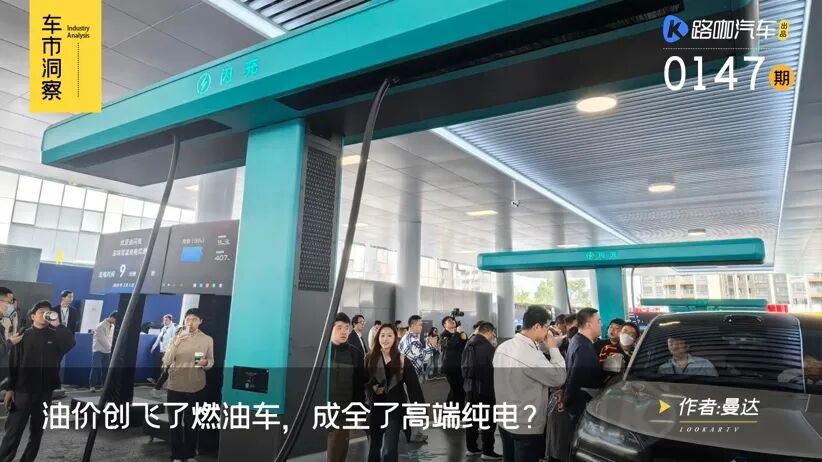
As anticipated, April’s new vehicle sales data failed to reverse the downward trend seen in the previous two months. Cumulative sales from January to April declined by 18.5% year-on-year, with fuel vehicles acting as a significant drag on the market due to surging oil prices.
Since April, some automakers have considered raising prices, with mainstream financing schemes reverting to 3-5 year conventional loans and seven-year low-interest options quietly being phased out. This shift has dampened consumer enthusiasm for vehicle purchases.
The new energy market’s rapid expansion starkly contrasts with the decline of extended-range vehicles, which no longer drive market growth. This trend appears to validate experts’ predictions from two months ago: “Extended-range and plug-in hybrids are entering a downward phase, with the future belonging to BEVs.”
With the benefits of extended-range vehicles diminishing, could their current trajectory foreshadow the future of plug-in hybrids?
Has Rising Oil Prices Slowed Fuel Vehicle Sales and Accelerated High-End BEV Adoption?
According to the China Passenger Car Association (CPCA), the retail penetration rate of new energy vehicles reached 61.4% in April, up from approximately 51.7% in April 2025. This means over six in every ten new vehicles sold are now new energy vehicles.
This growth is partly fueled by rising oil prices, which have also suppressed fuel vehicle demand. The CPCA noted that cumulative retail sales of passenger vehicles from January to April plummeted by 18.5% year-on-year. The primary driver of this decline is the shrinking fuel vehicle market: in April alone, fuel vehicles accounted for 84% of the total drop in passenger vehicle sales.
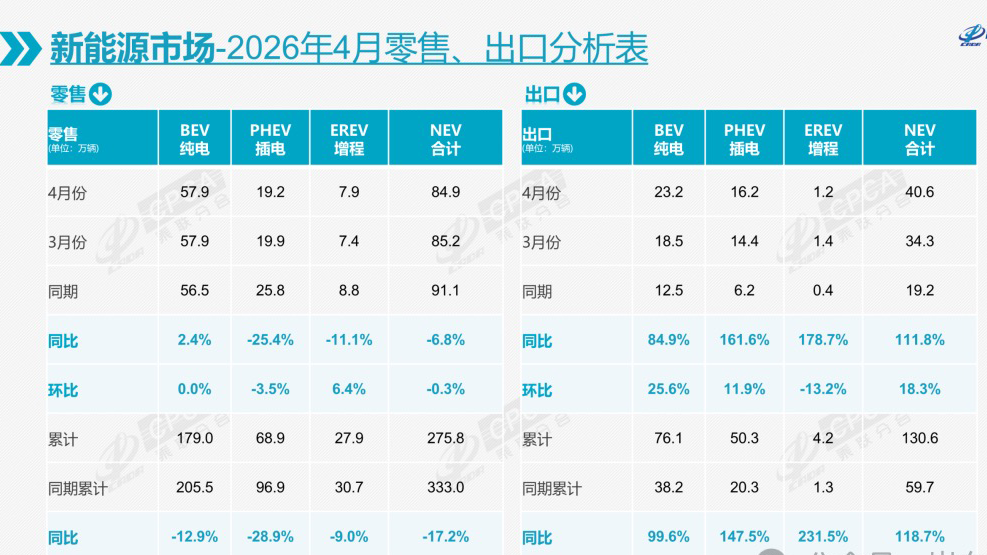
The new energy vehicle market has diverged sharply from the previous year. Plug-in hybrids remain the only segment maintaining robust double-digit growth. In contrast, extended-range vehicles have declined, with their market share dropping from 8.4% year-on-year to 7.1%—marking the first negative year-on-year growth for extended-range vehicles in recent years.
Previously, as major automakers (particularly Huawei-affiliated brands) introduced more extended-range products with similar technical approaches, and better-performing, lower-priced plug-in hybrid models emerged, the market advantage enjoyed by brands like Li Auto and Seres ended prematurely.
Under the trend of large-battery extended-range vehicles, new extended-range models are primarily concentrated in the mid-to-high-end market above 200,000 yuan. Entering 2026, the shift toward pure electric vehicles in the high-end market has become increasingly pronounced. In March, industry insiders reported that orders for the pure electric versions of the Seres M8 and M9 surpassed those of their extended-range counterparts.
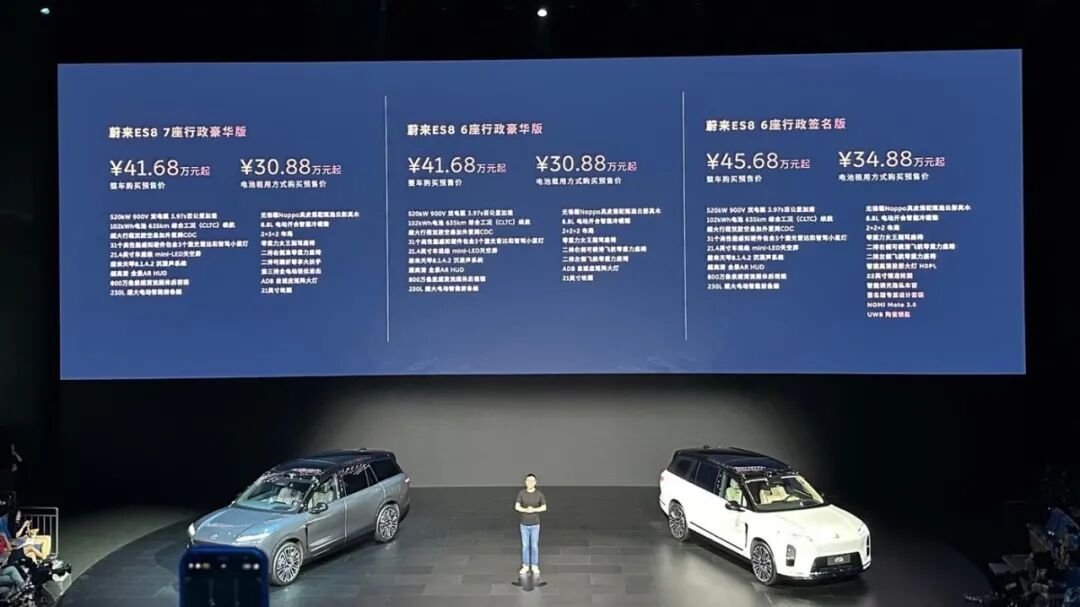
After the 2026 Spring Festival, the NIO ES8 emerged as the best-selling large SUV in the 400,000+ yuan segment for three consecutive months, breaking the former dominance of the Seres M8 and M9.
Mainstream automakers’ upcoming product strategies align with this trend, particularly in the large five-seater/six-seater market. Nearly all major brands have introduced mid-to-large/large SUVs with pure electric variants, such as the Seres M6, ZHIJI LS8, Zeekr 8X, VOYAH Taishan X8, SAIC Audi E7X, and Dongfeng Nissan NX8.
BYD’s flagship pure electric SUV, the Datang EV, which debuted for pre-sale at the Beijing Auto Show in April, starts at 250,000 yuan. In just 13 days, pre-sale orders exceeded 100,000. A Shanghai 4S store even reported over 1,000 orders placed in a single day.
In addition to the EV version, the Datang will launch a plug-in hybrid variant later this year. Shortly after, filing images of the Ocean Network’s flagship SUV, the Haishi 08, were revealed, featuring both plug-in hybrid and pure electric options.
If the high-end new energy market was previously dominated by extended-range vehicles, entering 2026, the “plug-in hybrid/extended-range + pure electric” dual-power strategy has become mainstream in the large five-seater/six-seater SUV segment. However, pure electric models now outpace extended-range vehicles in quantity, technology, and brand appeal, gradually becoming the largest source of market growth.
Could Extended-Range Vehicles’ Fate Foreshadow Plug-In Hybrids’ Future?
Sales data from the first four months appear to validate experts’ earlier predictions that extended-range vehicles have entered a decline. In fact, if these forecasts hold, plug-in hybrids may face a similar fate. “Pure electric drive is the most efficient way to utilize green electricity… Plug-in hybrid and extended-range models have already entered a downward trend,” experts noted.
Recently, reports surfaced that Xiaomi plans to launch an independent brand, “Xuntian” (SKYNOMAD), focusing on the extended-range SUV segment, with a lower brand positioning than its main Xiaomi brand. The inaugural “Kunlun” series will compete with home-use large vehicles from brands like Li Auto, Seres, and VOYAH.
While Xiaomi has not officially confirmed this, Xuntian’s lower positioning suggests the company does not intend to bet heavily on extended-range vehicles, with pure electric remaining its core focus.
Sales data from the first four months also reveal rapid stratification in the pure electric market. Mid-size vehicle sales have grown significantly year-on-year, raising their market share to 31%. In contrast, A00-class (micro) electric vehicle sales plummeted by 55% year-on-year, with their share dropping from 21.3% to 9%.
This shift is driven by advancements in pure electric technology and the expanding completeness of charging infrastructure, as evidenced by recently exposed filing images of new models slated for mass production.
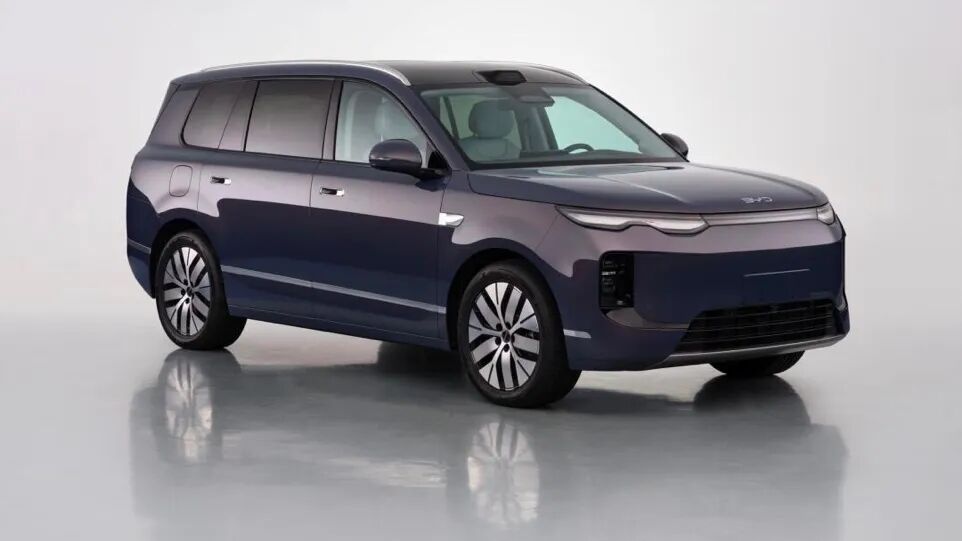
BYD has introduced a lineup of new models equipped with second-generation blade batteries, with ultra-fast charging technology becoming standard for both pure electric and plug-in hybrid models. Flagship models like the Datang EV and Haishi 08 offer pure electric ranges exceeding 900 kilometers. The 100,000-yuan-class Yuan PLUS, featuring a second-generation blade battery, delivers a maximum pure electric range of 630 kilometers and supports ultra-fast charging that fully replenishes the battery in just 9 minutes. This means BYD’s second-generation blade battery and ultra-fast charging technologies, announced this year, will be widely deployed across mainstream-priced models.
After BYD unveiled its second-generation blade battery and megawatt-level ultra-fast charging, the Lynk & Co brand revealed that the Lynk & Co 10, equipped with a 900V Shendun Golden Brick Battery, achieves a 10%-70% charge in just 4 minutes and 22 seconds. During the technical debut of the plug-in hybrid Galaxy M7 in March, Geely showcased its latest Shendun Golden Brick Battery, offering a pure electric range exceeding 200 kilometers. Geely executives disclosed plans to extend ranges to 400KM+ and 500KM+ for plug-in hybrid models.
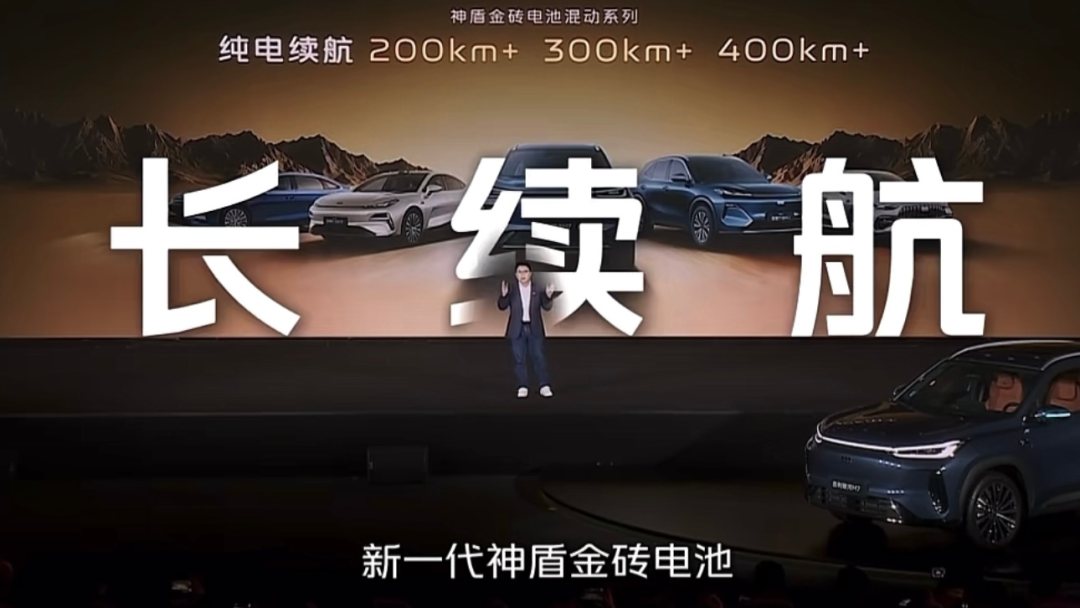
It is evident that in this technological cycle, increasing battery capacity is the next trend for both extended-range and plug-in hybrid vehicles. For years, plug-in hybrids held an edge in the mid-to-low-end market due to cost and pricing advantages. Typically, the plug-in hybrid version of a model was priced lower than its pure electric counterpart. However, once plug-in hybrid models adopt larger batteries, it remains uncertain whether they will retain a clear price advantage over pure electric models.
As plug-in hybrid/extended-range models shoulder increasingly heavier “battery burdens” to alleviate range anxiety, their cost advantages will erode. The current competition is no longer solely about the technological routes of extended-range, plug-in hybrids, and pure electric vehicles but rather a final showdown centered on “range anxiety.” In this battle, “technological pioneers” led by giants like BYD and Geely are addressing pure electric vehicles’ core weakness through 800V/900V high-voltage platforms and megawatt-level ultra-fast charging technologies. When A-class pure electric vehicles offering a few minutes of charging time and a 600-kilometer range enter the market, the dual pressures of technological advancement and price reductions will accelerate the reshaping of the new energy market landscape.
-
![]()
AI Enters the Era of 'Self-Evolution', Li Yanhong First Proposes 'DAA' as the Measurement for the AI Era
-
![]()
Mercedes-Benz China Executive Steps In to Steer Volvo Through Turbulent Waters
-
![]()
She Once Steered OpenAI's Technology, Now Aims to Redefine Its Rules
-
![]()
Porsche Bids Farewell to Bugatti Amid Tears as Mysterious Buyer Stealthily Takes the Helm
-
![]()
60%! Electric Vehicles Surge, Gasoline Vehicles Face Countdown
-
![]()
Decade’s First Leadership Shift: Can Duan Jianjun Revitalize Volvo?
-
![]()
Has Rising Oil Prices Slowed Fuel Vehicle Sales and Accelerated High-End BEV Adoption?
-
![]()
Auto China 2026: Chinese Brands Lead the Green and Smart Future | Cover Story: In China, for the World – Auto China 2026 Special Report (Part 3)