Decade’s First Leadership Shift: Can Duan Jianjun Revitalize Volvo?
 05/13 2026
 525
525
Volvo Greater China has witnessed its first leadership transition in nearly ten years, with Duan Jianjun, who recently departed from Mercedes-Benz on May 11, 2026, stepping into the role previously held by Yuan Xiaolin since 2017. What implications does this hold?
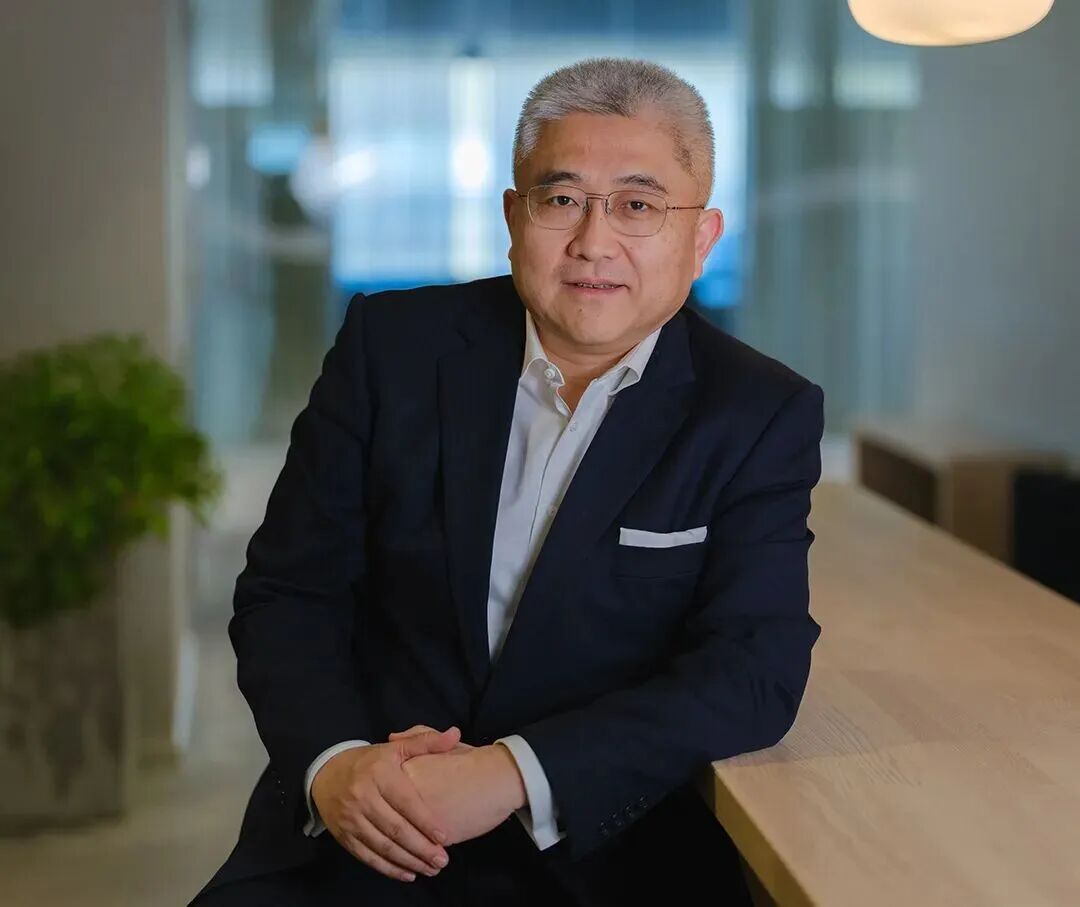
On May 11, Volvo Cars unveiled its latest appointment to the Greater China management team. Yuan Xiaolin stepped down from his operational duties within the company, and Duan Jianjun was appointed as the new President and CEO of Volvo Cars Greater China. He is set to join the group's global core management and global sales management teams, reporting to the China Board.
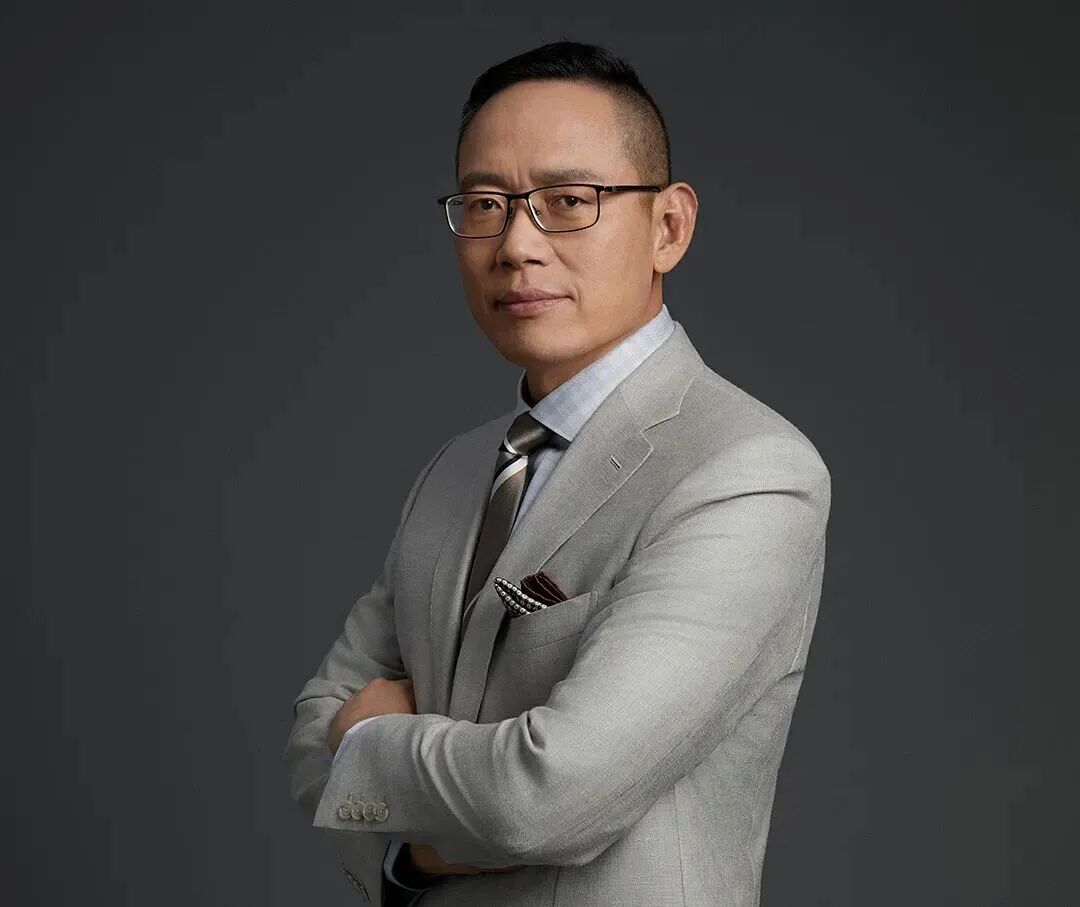
Volvo Cars announced that Duan Jianjun will immediately assume his new responsibilities, overseeing end-to-end operations in Greater China, encompassing the entire value chain from research and production to supply and sales. Yuan Xiaolin will facilitate a seamless transition for the management team in the upcoming period.
In essence, the position of President and CEO of Volvo Greater China has officially changed hands.
So, the question arises: Why Duan Jianjun? And why Yuan Xiaolin?
Before delving into why Duan Jianjun was chosen, let's first explore why Yuan Xiaolin held the position of President and CEO of Volvo Greater China for the past decade.
Yuan Xiaolin played a pivotal role in Geely's acquisition of Volvo in 2010. Public records indicate that Yuan Xiaolin joined Geely Group as an international M&A expert. Prior to Geely's acquisition of Volvo, he was responsible for major M&A projects at BP Group's London headquarters, one of the top three Fortune 500 companies.
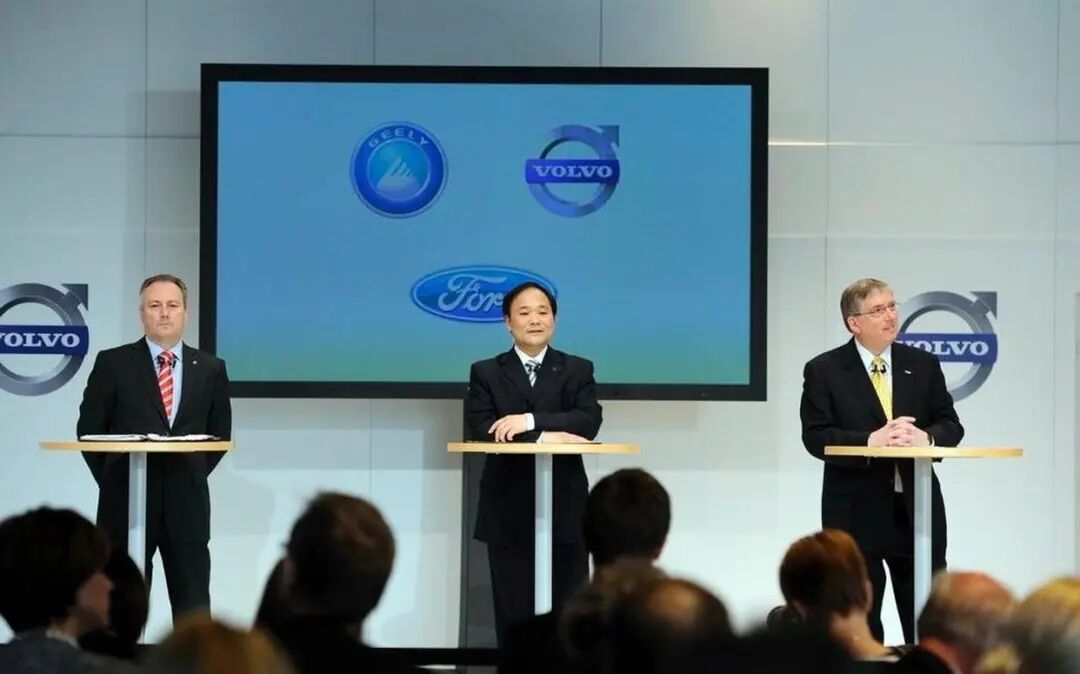
Yuan Xiaolin's connection with Geely came through his former BP colleague Zhang Peng. Initially, when Li Shufu expressed interest in acquiring Volvo, Zhang Peng was leading the relevant work. At Zhang Peng's invitation, Yuan Xiaolin joined Geely Group in early 2009 as Director of Mergers and Acquisitions, specifically tasked with the Volvo acquisition project, eventually becoming a linchpin in the deal. Later, he served as the Director of the Chairman's Office in Gothenburg, Sweden, and Secretary to the Board of Volvo Car Group, playing a crucial role in post-acquisition relations between Geely and Volvo. In 2014, he returned to China as President of Volvo Car Asia Pacific and began serving as Chairman of Volvo Car China Sales Company in 2016.
Two events during the acquisition have been widely lauded in the industry. One is that Volvo Cars was initially priced at $4.2 billion, but Geely Group ultimately acquired it for $1.8 billion. The other is that when representatives from the Volvo Engineers' Union met with Li Shufu, they inquired why Geely was the preferred buyer for Volvo. Li Shufu's response, "I LOVE YOU," greatly impressed the Volvo Union, which was one of the biggest obstacles to the acquisition.
The rest, as they say, is history. After being acquired by Geely Group, Volvo avoided potential bankruptcy and actively transitioned towards intelligence and electrification, achieving explosive growth. At the same time, Geely and Volvo mutually empowered each other. With Volvo's assistance, Geely Group established the later highly popular Lynk & Co brand. Later, Geely's new intelligent electric vehicle brand, Zeekr, although not partially owned by Volvo like Lynk & Co, saw technical intersections and joint development of the SEA architecture, with multiple models from Volvo and Zeekr sharing platforms. In essence, while Geely fully owns Volvo Cars in terms of equity, the two are technically intertwined. Without Geely Group's successful acquisition of Volvo Cars, it would have been difficult for Geely Group to achieve its current market position. As a meritorious figure in that acquisition, Yuan Xiaolin's importance to Geely Group is self-evident.
Because of this, on January 22, 2017, Volvo Car Group announced the appointment of Mr. Yuan Xiaolin as Senior Vice President and President and CEO of Asia Pacific, effective March 1, to fully oversee Volvo Car Group's business in the Asia Pacific region, succeeding Mr. Lars Danielsson, who would retire at the end of February. In the same year, Yuan Xiaolin became President and CEO of Volvo Cars Greater China.
In terms of specific performance, Volvo's global sales were 373,500 units in 2010 and reached a brand-high of 763,300 units in 2024, remaining at 710,000 units in 2025. In the Chinese market, sales were approximately 32,000 units in 2010, reaching a historical high of 180,200 units in 2023 and remaining at 149,100 units in 2025.
Despite the challenges of brand transformation due to electrification and intelligence, Volvo Cars' overall performance since being acquired by Geely Group has far exceeded pre-acquisition expectations.
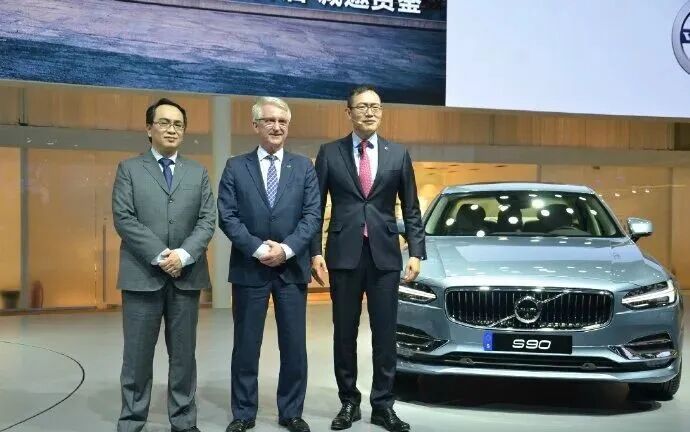
If there are any shortcomings in Volvo's performance, especially in China, the first is that, despite Geely Group's empowerment, it has not quickly achieved BBA-level sales volume in the Chinese market. In 2025, BBA's sales in China averaged around 600,000 units, significantly ahead of Volvo's approximately 150,000 units. Of course, from a brand reality perspective, expecting Volvo to meet such conditions is somewhat demanding.
Second, in terms of intelligence and electrification, as a wholly-owned subsidiary of Geely Group, Volvo has not yet achieved a business level similar to that of Chinese new energy vehicle manufacturers like NIO, Li Auto, and Xiaomi. Similarly, as a former traditional fuel vehicle brand, Volvo faces unprecedented challenges in transitioning from fuel to electric vehicles. Its current performance is similar to that of other traditional fuel brands like BBA, as well as Volkswagen and Toyota, all facing similar difficulties.
In other words, regarding these two points, whoever is in charge would likely face significant difficulties. However, for future market prospects, these are targets and challenges that Volvo must face. Yuan Xiaolin's decision to step down at this time is partly due to his age of 57 and partly because, after 17 years with Geely Group since joining Volvo in 2010, choosing to step aside for deeper reforms and further growth may be the best choice for both parties.
Why Duan Jianjun?
In most cases, introducing a new leader for a brand signifies the formulation of new strategic goals. However, what are Volvo's goals? From our current observations, Volvo has not set relatively aggressive sales targets but appears somewhat conservative.
In recent years, Volvo is most perceived for staying true to itself, emphasizing safety, intellect, and gentleness—a term often used by industry insiders to describe Yuan Xiaolin. In today's fiercely competitive market, this seems somewhat insufficient.
In fact, Volvo has had moments of straying in recent years.
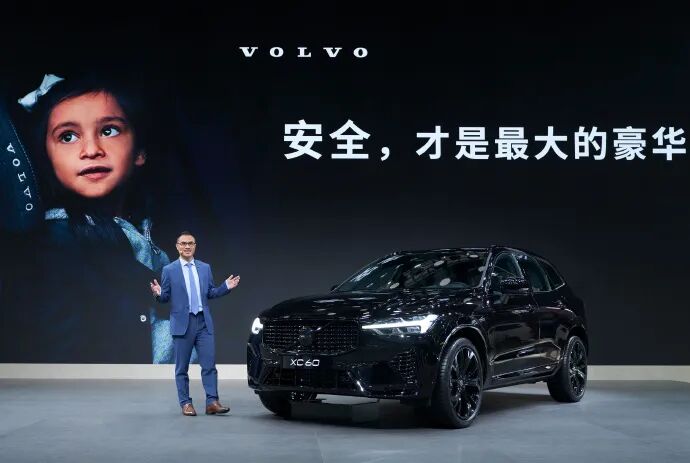
At the launch event of the Volvo EX30 in Gothenburg on May 19, 2024, Yuan Xiaolin publicly called out domestic competitors during his speech, stating, "Competition is almost everyone's most obvious feeling about the Chinese market in recent years. Competing on configurations, the more the better, regardless of whether they meet automotive standards or their effectiveness, the important thing is to maximize the so-called sense of technology; competing on gimmicks, with spotlights shining, a function that has actually been around for a long time is given a new name and immediately dressed in the cloak of so-called innovation; competing on concepts, with phrases like 'far ahead,' 'taking shortcuts,' and 'the best under a certain price range' becoming common topics in capital stories. Especially when supported by traffic, all of this seems to become the norm. Excessiveness has become the so-called market trend; having a louder voice has become the overriding goal."
Yuan Xiaolin's comments sparked a significant uproar in the industry. The market exclaimed: The reserved and modest Volvo has changed. It was precisely Yuan Xiaolin's outcry that brought considerable traffic to Volvo, with many in the industry applauding.
However, after making these remarks, Yuan Xiaolin quickly returned to Volvo's traditional narrative: respecting life, being people-oriented, and returning to the essence of safe, healthy, simple, and enjoyable travel. For the entire industry, Volvo's brand narrative is well-known and deeply appreciated by some senior media members and industry professionals. However, in the face of a fickle market, Volvo's narrative seems somewhat out of touch.
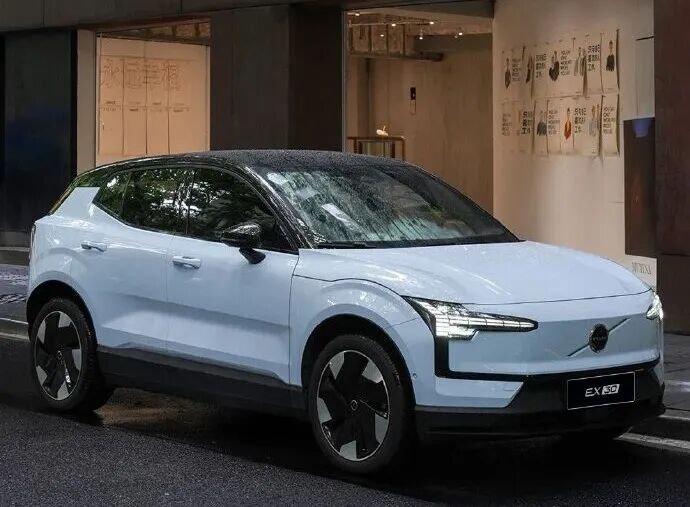
Take the Volvo EX30 as an example. After its launch, sales were dismal, with monthly sales consistently in the range of 100-200 units, and only 81 units in April this year. For a premium volume-selling compact car, this sales figure is far from successful.
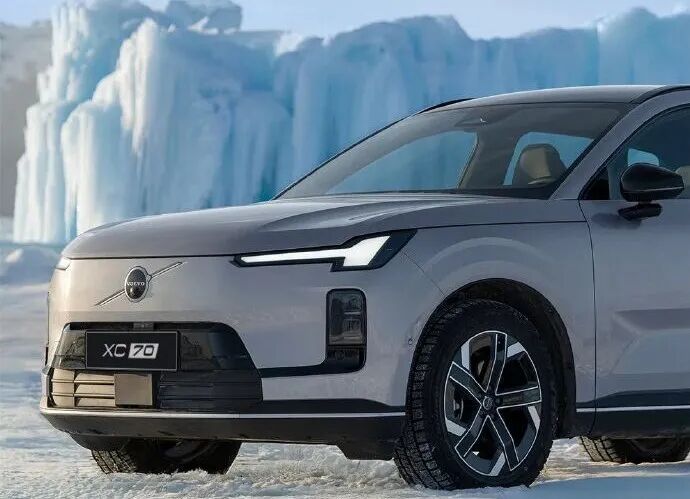
In terms of sales structure, models like the XC60 and S60, older fuel vehicles, firmly occupy the core positions in Volvo's sales. The new Volvo XC70, a plug-in hybrid SUV, has only recently started to climb to the top spot in Volvo's single-model sales. Previously, Volvo's performance in pure electric vehicles was also unsatisfactory.
In contrast, Yuan Xiaolin's brand narrative style, apart from the sudden change in tone that brought some changes to the market, overall still relatively strictly adhered to Volvo's traditional brand attributes. Moreover, even the part with a sudden change in tone was derived from the narrative context of the entire Geely Group.
Public information shows that in the past few years, Li Shufu, Chairman of Geely Automobile, has repeatedly criticized the phenomena of excessive competition and marketing in the Chinese automotive market in public. As a radiation of this narrative, executives from Zeekr, Volvo, and Lotus have all used similar narrative tones at relevant launch events. The most famous example includes both Zeekr and Lotus using Pirelli's classic advertising slogan, "Uncontrolled horsepower is worthless," to express their insights. However, such a narrative approach seems somewhat passive for premium luxury brands like Volvo and Lotus, lowering their stance too much. Furthermore, to this day, how to make brand narratives more proactive seems to elude both Volvo and Lotus.
This results in both Volvo and Lotus, especially Volvo, facing the dilemma of having good products but failing to achieve corresponding sales, leading to market misjudgments. It's hard to say whose fault this is, but in any case, it certainly can't be considered the market's fault.
Volvo needs to change, and Geely Group needs a new Volvo. At this critical juncture, Duan Jianjun arrives.
Public information shows that Duan Jianjun joined Beijing Mercedes-Benz Sales Company in 2013 as Executive Vice President of Sales and Marketing, was promoted to Chief Operating Officer in 2019, and has served as President and Chief Executive Officer since 2023.
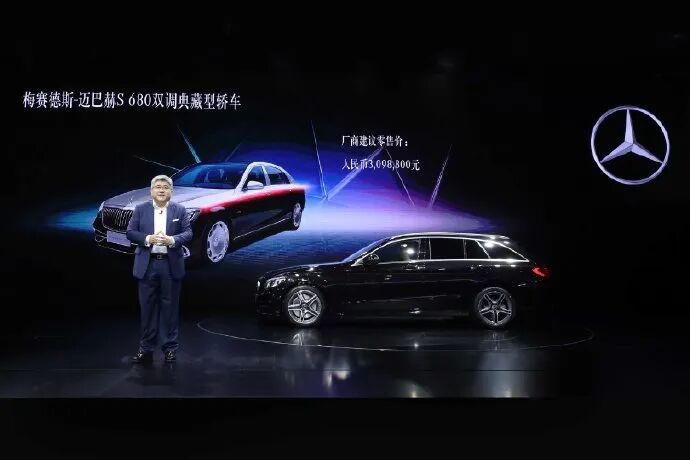
Media reports generally describe Duan Jianjun as follows: Since joining Beijing Mercedes-Benz in 2013, when Mercedes-Benz sales were far behind BMW and Audi, Duan Jianjun quickly brought Mercedes-Benz to parity with Audi and BMW and made the Chinese market the largest global market for Mercedes-Benz.
In 2013, Mercedes-Benz sales in China were 218,000 units, while BMW and Audi sold 326,000 and 488,000 units, respectively. The gap between Mercedes-Benz and its two older rivals was significant. Just four years later, in 2017, Mercedes-Benz caught up with Audi and BMW, with sales reaching 587,900 units, while Audi and BMW sold over 590,000 units each. Until 2025, BBA's sales in China have remained neck and neck.
However, like Volvo, Mercedes-Benz also faces difficulties in transitioning towards electrification and intelligence. In 2022, Mercedes-Benz sales in China reached a historical high of 774,000 units, while Volvo's sales in China peaked a year later in 2023. This means that, from a certain perspective, Volvo's market resilience is even stronger than that of Mercedes-Benz.
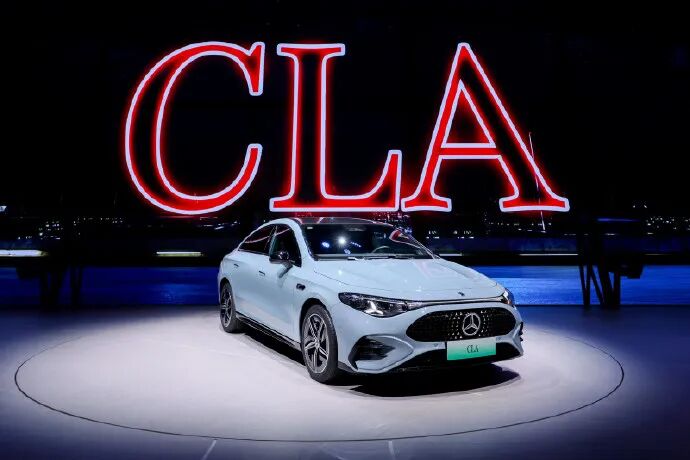
In the following three years, Mercedes-Benz sales in China began to decline annually, reaching 575,000 units in 2025, a significant year-on-year drop of 19.5%. Among the three BBA brands, Mercedes-Benz was the only one in 2025 to see sales fall below 600,000 units. In the first quarter of this year, Mercedes-Benz sales in China plummeted by 27%. Volvo's trend in the past two years has been similar to that of Mercedes-Benz, but its year-on-year decline in the first quarter of this year was smaller, at 17%.
That is to say, whether it is the transformation towards electrification and intelligence, or the shift from growth to decline in the face of an overall market downturn, there is no essential difference between Mercedes-Benz and Volvo. It can even be said that Mercedes-Benz's transformation in the direction of electrification and intelligence, judging from the actual market performance of its products in recent years, provides a completely negative case study of 'the unsuccessful electrification transformation of a luxury brand'.
In stark contrast, Volvo seems to exhibit greater strength, both in its resilience to market downturns and its capacity for transformation, largely owing to the support from Geely Group. Naturally, this can also be attributed, to some extent, to the differences in the actual market positioning and product pricing strategies of the two brands. Nevertheless, it remains challenging to assert with certainty that Mercedes-Benz's transformation journey will inevitably spark any significant changes for Volvo.
The key distinction lies in the fact that Duan Jianjun boasts decades of experience in steering a genuine luxury brand towards success, whereas Yuan Xiaolin, who made the transition to Volvo from a background as a diplomat and M&A specialist, possesses minimal operational experience within the luxury brand sector. From this vantage point, Geely Group or the broader public might harbor higher expectations for Duan Jianjun to usher in a rejuvenated Volvo era.
-
![]()
AI Enters the Era of 'Self-Evolution', Li Yanhong First Proposes 'DAA' as the Measurement for the AI Era
-
![]()
Mercedes-Benz China Executive Steps In to Steer Volvo Through Turbulent Waters
-
![]()
She Once Steered OpenAI's Technology, Now Aims to Redefine Its Rules
-
![]()
Porsche Bids Farewell to Bugatti Amid Tears as Mysterious Buyer Stealthily Takes the Helm
-
![]()
60%! Electric Vehicles Surge, Gasoline Vehicles Face Countdown
-
![]()
Decade’s First Leadership Shift: Can Duan Jianjun Revitalize Volvo?
-
![]()
Has Rising Oil Prices Slowed Fuel Vehicle Sales and Accelerated High-End BEV Adoption?
-
![]()
Auto China 2026: Chinese Brands Lead the Green and Smart Future | Cover Story: In China, for the World – Auto China 2026 Special Report (Part 3)