The Pivotal Gamble of Li Auto L9: Is It Merely a Car or a Futuristic Robot?
 05/25 2026
 454
454
Lead | Introduction
Recently, the brand-new Li Auto L9 made its grand entrance, boasting cutting-edge AI technologies such as the in-house Mach M100 chip and an 800V active suspension system. This marks the inaugural mass production of "embodied AI." Amidst fierce competition from emerging brands, the new L9 is priced starting at RMB 459,800, with an initial discount of RMB 50,000. Can this bold leap from a "family SUV" to embodied AI become the linchpin for Li Auto's revival and the realization of its AI ambitions?
Produced by | This article is a creation of Heyan Yueche Studio.
Written by | Cai Yan
Edited by | He Zi
Word Count: 1,886
Estimated Reading Time: 3 minutes
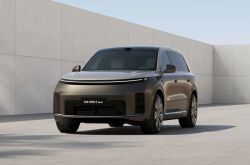
The all-new Li Auto L9 comes in two variants: Ultra and Livis, priced uniformly across the nation at RMB 459,800 and RMB 509,800, respectively. This is no mere model refresh. Li Auto's Chairman and CEO, Li Xiang, hails this vehicle as a "pioneering masterpiece for the era of embodied AI," and for the first time, explicitly outlines a strategic vision: "Autonomous driving represents the first half of embodied AI, while general-purpose humanoid robots signify the second half."
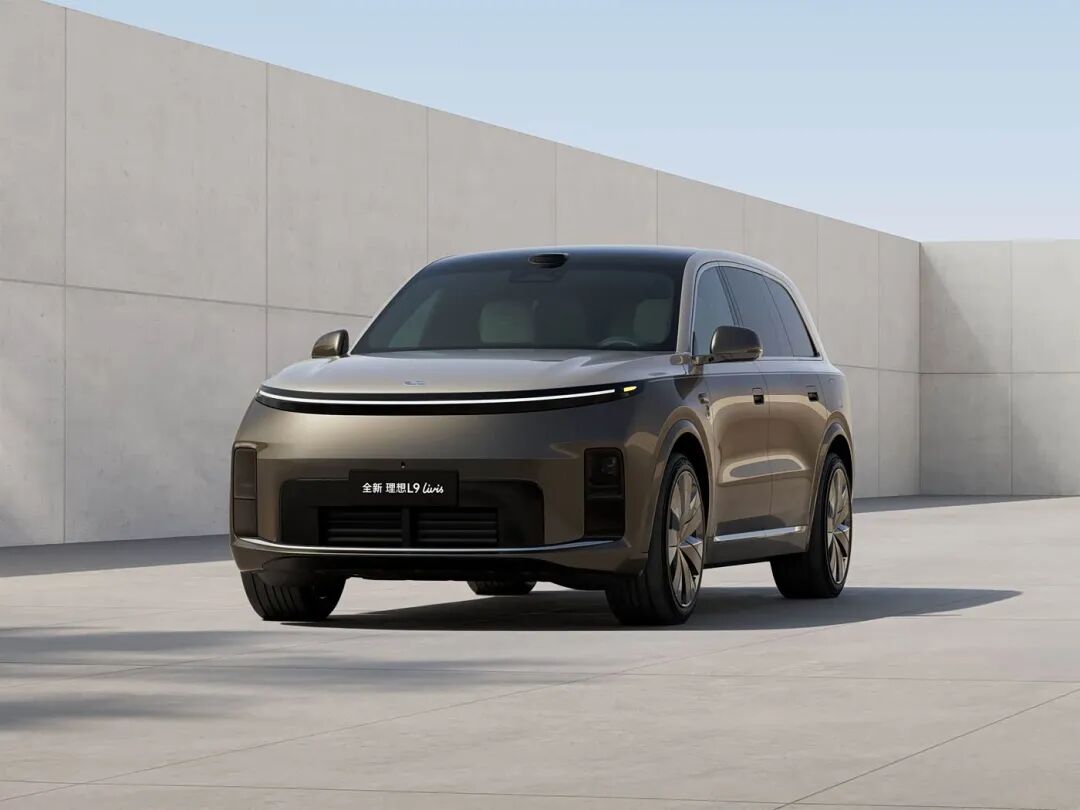
△ The all-new Li Auto L9 is heralded as an "embodied AI robot."
From Smart Car to "Embodied AI Robot"
Li Auto positions the all-new L9 as an "embodied AI robot" because it transcends the traditional role of a vehicle that passively follows commands. Instead, it evolves into an intelligent entity capable of perception, reasoning, decision-making, and proactive action. According to the Ministry of Industry and Information Technology's Equipment Industry Development Center, embodied AI refers to intelligent agents that interact with their environment in real-time through physical forms, integrating perception, cognition, decision-making, and action. Li Xiang simplifies it further: "Any physical machine equipped with sensors, models, and processors—essentially eyes, a brain, and a heart—that can operate autonomously is embodied AI."
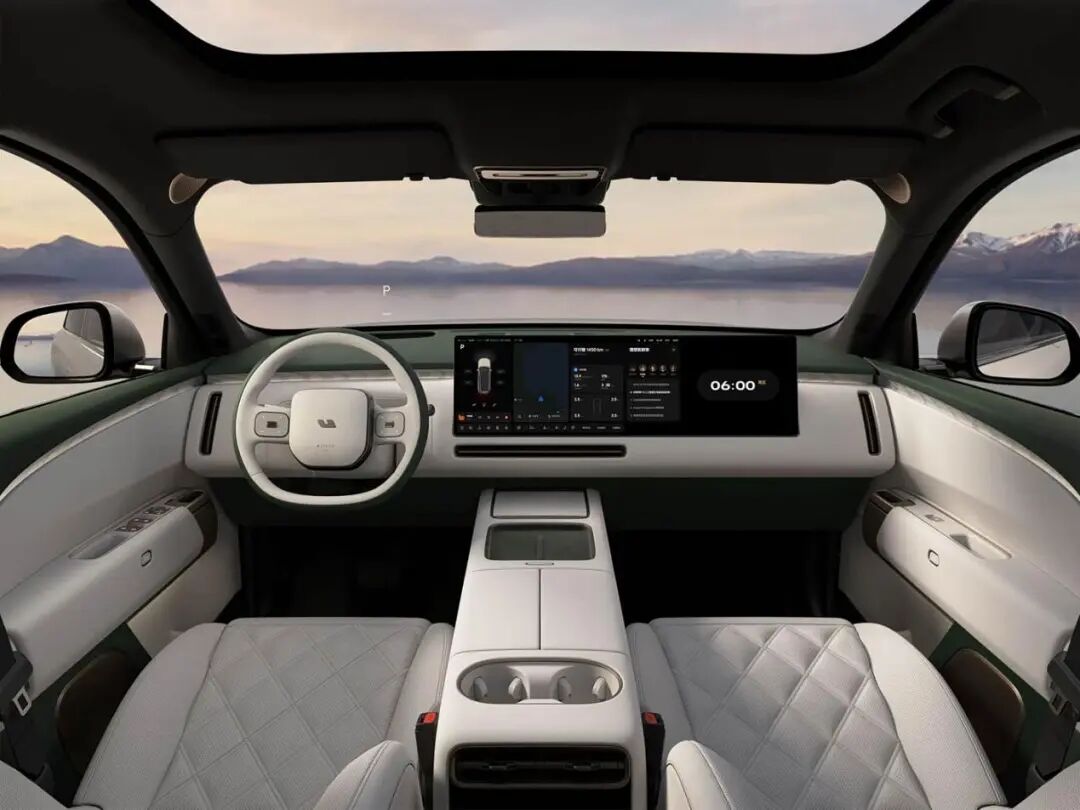
△ Smart vehicles are transitioning into embodied AI robots.
The all-new Li Auto L9 undergoes a comprehensive transformation under this paradigm. At the computational and decision-making level, it is powered by the in-house Mach M100 chip, featuring a 5nm process and dynamic dataflow architecture, delivering 1,280 TOPS of computing power per chip and a total of 2,560 TOPS with dual chips. The chip's core value lies in its "hardware-software synergy" with the Mach VLA large model and Xinghuan OS operating system, enabling unified and efficient underlying scheduling and overcoming the industry's bottleneck of "sufficient computing power but mismatched architecture." The perception system comprises a 3D ViT visual model and four LiDAR sensors, supporting nationwide full-scenario navigation-assisted driving and automatic parking in over 300 complex scenarios.
At the execution level, the all-new L9 introduces the world's first "complete" drive-by-wire chassis, integrating steer-by-wire, rear-wheel steering, and EMB (electromechanical brake) line control, eliminating some mechanical connections and enabling direct response of actuators to algorithmic commands. The EMB system reduces braking response time by approximately 100 milliseconds and shortens the 100km/h emergency braking distance by about 2 meters. The chassis supports OTA updates, ensuring continuous evolution and "growability." The Livis variant features an 800V active suspension, providing over 10,000 N of active support force per wheel via four high-pressure hydraulic pumps, eliminating anti-roll bars, and balancing comfort and handling in a full-size SUV.
In terms of power, the third-generation range-extender system, paired with a 72.7-kWh 5C battery, achieves a pure electric range of 420 km and a combined range of 1,650 km. A 10-minute fast charge can replenish the battery from 10% to 80%, providing 300 km of range. In essence, the all-new L9 earns its moniker as an embodied AI robot because Li Auto has, for the first time, independently developed and integrated all five key components—perception, models, chips, operating systems, and actuators—into mass production, enabling the vehicle to function as a seamless, evolving entity with "eyes" for perception, a "brain" for decision-making, a "heart" for computing power, and "limbs" for execution.
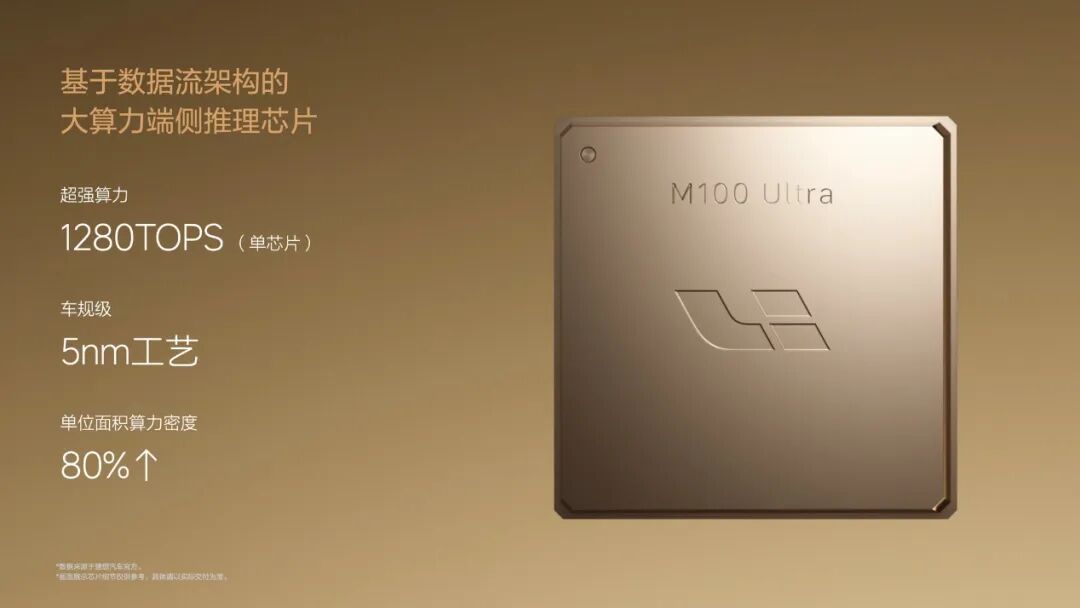
△ The all-new Li Auto L9 is equipped with the in-house Mach M100 chip.
Li Auto at a Crossroads
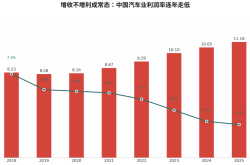
While the all-new L9's "embodied AI" proclamation is striking, this transformation unfolds against a backdrop of severe market challenges. In 2025, Li Auto delivered 406,300 vehicles, an 18.8% year-on-year decline from 500,500 in 2024. During the same period, Leapmotor delivered 596,600 vehicles, a 103% YoY increase; XPeng delivered 429,400 vehicles, and Xiaomi delivered over 410,000 vehicles. Li Auto has relinquished its former top-selling position, with the competitive landscape undergoing a significant shift. Financially, Li Auto's 2025 revenue reached RMB 112.3 billion, a 22.3% YoY decrease; net profit was RMB 1.1 billion, an 85.8% decline. In April 2026, the company delivered 34,085 new vehicles, a 0.4% YoY increase but a 17% MoM decrease. For the first four months of 2026, cumulative deliveries reached 129,000 units, a 1.9% increase from 127,000 units in the same period last year. Li Xiang set a full-year sales target of approximately 490,000 units, representing over 20% YoY growth, while management disclosed a 2026 full-year vehicle gross margin guidance of just 15%.
Against this backdrop, Li Auto maintained its 2026 R&D investment at RMB 12 billion, focusing on AI infrastructure such as chip computing power—a high-intensity strategic investment. The rationale behind betting on embodied AI now is that vehicles represent the largest-scale carriers of embodied AI today, with their accumulated technological capabilities in perception, decision-making, and execution being transferable to the field of general-purpose humanoid robots. Li Xiang predicts that L4 autonomous driving users and home robot users will heavily overlap in the next decade, with user accumulation in the first half naturally extending to the second half. The mass production of the all-new L9, featuring a complete technology stack of in-house chips, the VLA large model, drive-by-wire chassis, and Xinghuan OS, represents the first systematic delivery in Li Auto's transformation from a vehicle manufacturer to an embodied AI enterprise.
While most companies remain preoccupied with deploying L2+ advanced autonomous driving and testing L3-level autonomy, Li Auto has publicly charted an evolutionary path toward general-purpose humanoid robots with this generation of products. The cost of this transformation includes compressed gross margins, short-term profitability pressures, and high R&D intensity. However, if successful, Li Auto will secure the definitional authority in the embodied AI competition of the next decade. Thus, the all-new L9 is not just a flagship model but a pivotal product betting on Li Auto's strategic direction for the next ten years.
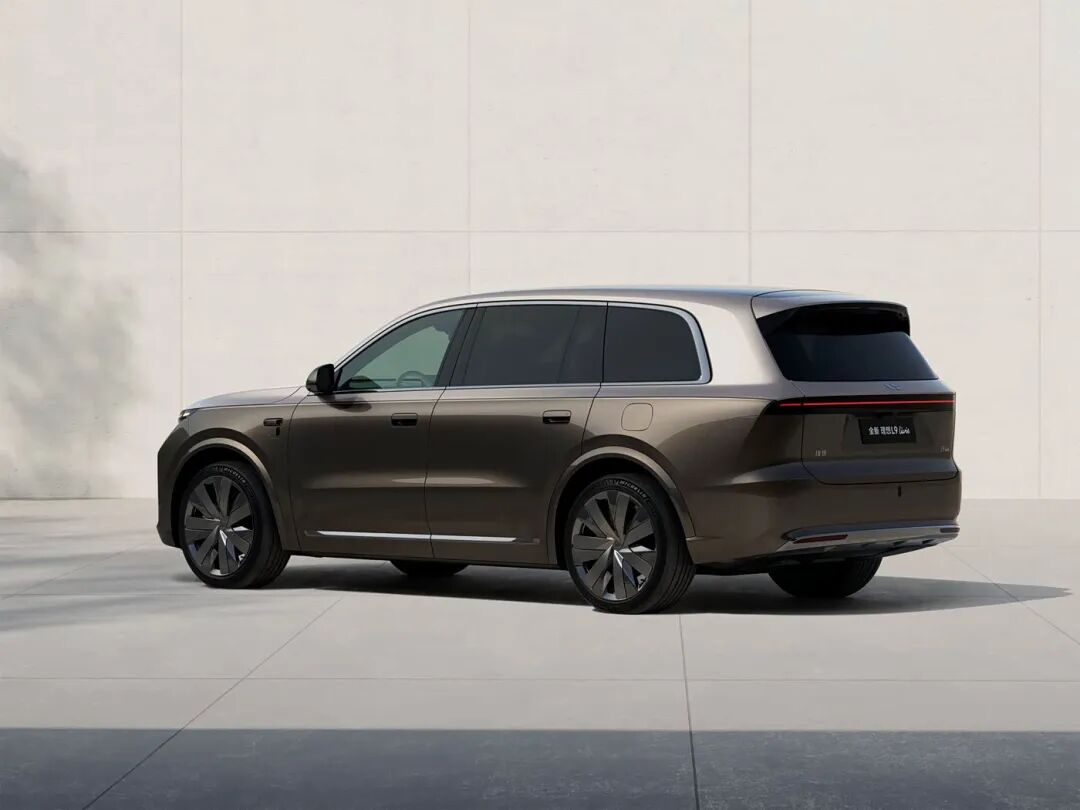
△ The all-new Li Auto L9 is a strategic linchpin for Li Auto.
Commentary
While the industry remains fixated on upgrading from L2 to L3 autonomous driving, Li Auto has redirected its resources toward a more fundamental embodied AI architecture. The all-new L9, with its full-stack technology closed loop of in-house chips, the VLA large model, drive-by-wire chassis, and Xinghuan OS, substantively initiates Li Auto's strategic shift from a vehicle manufacturer to an embodied AI enterprise. Whether this pivot can deliver on expectations amidst dual constraints of sales pressure and declining gross margins remains to be validated by the market.
(This article is original to Heyan Yueche and may not be reproduced without authorization.)
-
![]()
Inside Look at 'RedSkill': Is Xiaohongshu Emerging as the Premier AI App Store?
-
![]()
The Ultimate Showdown in Handheld Smart Imaging: DJI's Ecosystem Moat and Insta360's Risk of Falling Behind
-
![]()
Organizational Groundwork in the AI Age: Time for Enterprises to Reassess DingTalk, Feishu, and WeCom
-
![]()
Ningde Is Being ‘Urged’ by Automakers to Invest in DeepSeek
-
![]()
In-Depth Analysis of the EU's Industrial Accelerator Act: Rewriting the 'Game Rules' for China's Auto Industry Going Global
-
![]()
The Pivotal Gamble of Li Auto L9: Is It Merely a Car or a Futuristic Robot?
-
![]()
What are the ways AI Coding is reshaping the software industry?
-
![]()
What Are the Technical Differences Between XPENG and Tesla in Pure Vision Intelligent Driving?