Final Ruling: The Internet is No Wild West - Auto Social Media Must Operate Within Legal Boundaries
 05/27 2026
 545
545
Recently, certain automotive social media accounts have come under suspicion for disseminating false information and engaging in insulting and defamatory behavior against automotive brands, thereby infringing upon their reputations. Courts have mandated these accounts to issue public apologies and compensate for economic losses. The rising number of such cases underscores the increasing concern across various sectors regarding the current state of disorder in automotive social media.
Dozens of automotive social media accounts face legal consequences
The most recent case involves the video account "Long Ge Talks Electric Cars," which implicated three automakers: BYD, Seres, and XPENG. The court's second-instance ruling confirmed malicious defamation by "Long Ge Talks Electric Cars," including the fabrication and dissemination of false information and staged breakdowns. The total compensation amounts to RMB 2.26 million (RMB 2 million for BYD, RMB 160,000 for Seres, and RMB 100,000 for XPENG), along with a requirement for a public apology. On May 16, "Long Ge Talks Electric Cars" released a public apology video. The blogger admitted to making unsupported and inappropriate remarks in previous videos about repairing BYD's battery, motor, and electronic control systems, fabricating and spreading false information, and causing significant harm to BYD's brand image and business reputation. He expressed deep regret and offered a sincere apology. On May 11, he issued an apology statement to Seres and fulfilled the RMB 160,000 compensation obligation. Last September, he was ordered to compensate XPENG RMB 100,000 and delete all infringing content.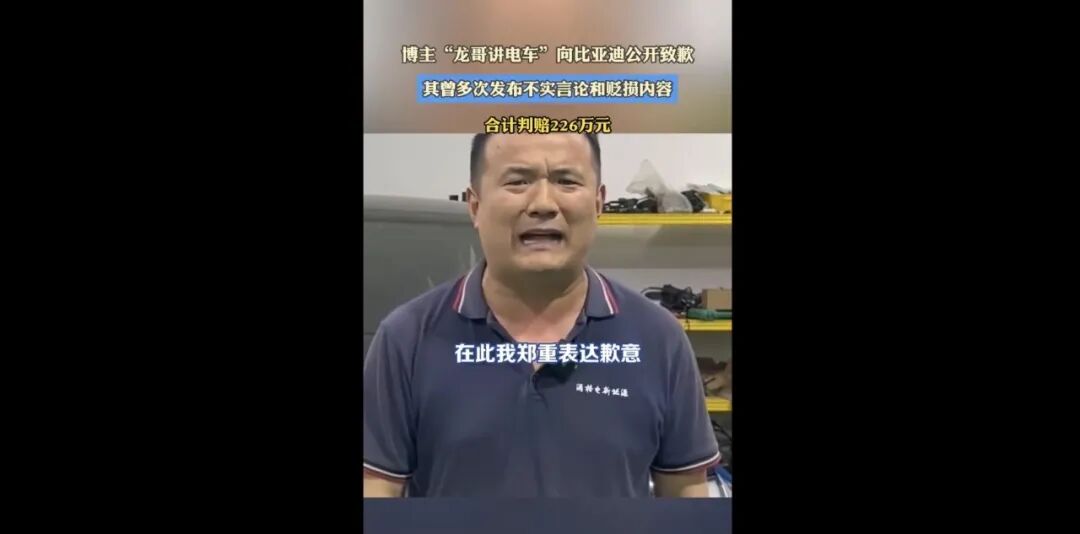
According to incomplete statistics, there have been dozens of similar cases ruled upon by courts in the past year or two.
In the digital age, automotive social media has emerged as a vital link between automakers and consumers. However, when the pursuit of traffic becomes the sole objective and financial interests overshadow professional standards, some automotive social media accounts stray from the right path, treating cyberspace as a lawless frontier and repeatedly overstepping legal boundaries.
A handful of automotive social media accounts overstep legal bounds
The influence of automotive social media extends beyond mere information dissemination. A video from a leading social media account can shape consumers' initial impressions of a new car model. An analytical article from a professional account can spark widespread industry discussion following an automaker's strategic adjustment.
Ideally, this influence should serve as a tool for conveying accurate information and regulating market order. Instead, it has become a means for some social media accounts to seek personal gain. To attract traffic, they fabricate false information, exaggerating an ordinary car model into an "industry benchmark." To cater to financial backers, they deliberately conceal product defects and avoid discussing quality issues that concern consumers. To create controversy, they maliciously smear automotive brands.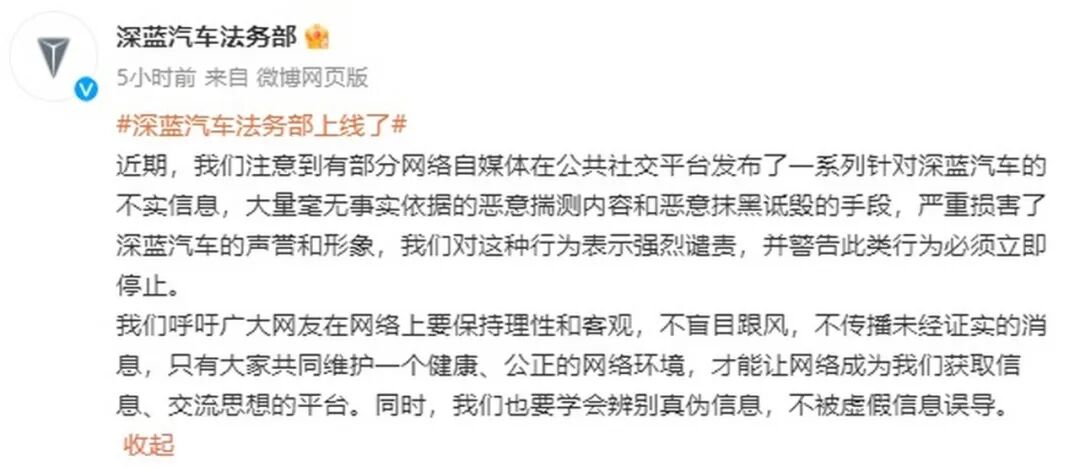
Behind the chaos in automotive social media lies a distortion of values driven by financial gain. Some automotive social media accounts understand the formula for generating traffic, recognizing that negative topics and exaggerated remarks garner more attention than objective and rational analysis. They abandon the rigor and objectivity expected of media, turning content creation into a carefully staged performance. Some social media accounts are aligned with automakers' interests, serving as paid mouthpieces and enforcers. Others fabricate false test drive experiences or maliciously edit videos to distort facts for attention. Even worse, some social media accounts engage in malicious hype of negative incidents involving automakers, extorting them and forming a gray chain of interests.
The reckless behavior of a few social media accounts inflicts multiple harms. For consumers, false information severely misguides car purchase decisions. For automakers, malicious smears and false evaluations not only tarnish the corporate brand image but may also disrupt normal production and operations. For the entire automotive industry, such chaos undermines a fair competitive market environment, making it difficult for automakers genuinely committed to producing quality products to receive due recognition and depriving the industry of a healthy development environment. More seriously, this behavior severely erodes the foundation of trust in cyberspace.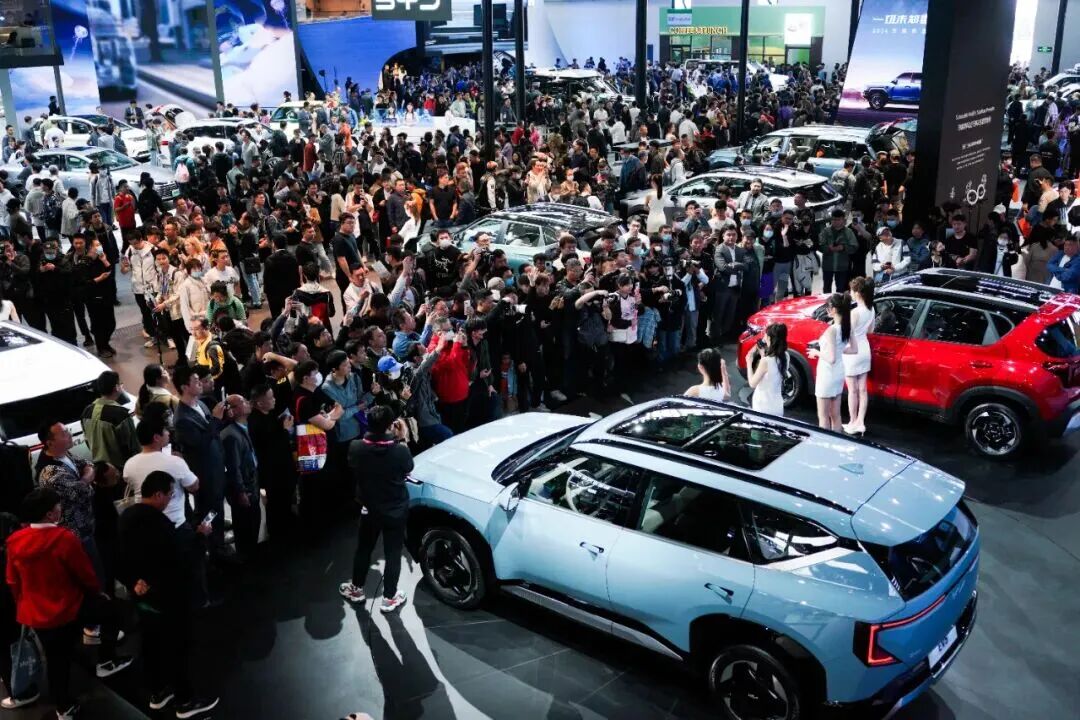
Cyberspace has never been a sanctuary for illegal activities, and the influence of social media does not grant a license for reckless behavior. Every statement and dissemination by automotive social media must occur within the legal framework. The Cybersecurity Law explicitly prohibits individuals or organizations from using the internet to spread false information and disrupt social order. The Advertising Law mandates that advertising content must be truthful and lawful and must not contain false or misleading information. The Anti-Unfair Competition Law imposes severe penalties for malicious defamation of competitors. These laws and regulations provide a solid legal foundation for regulating automotive social media behavior and affirm the principle that violations will be punished.
Regulating automotive social media requires collaboration among multiple stakeholders
In recent years, regulatory authorities have intensified efforts to address chaos in automotive social media. The investigation and handling of a series of typical cases have demonstrated the authority of the law. These cases clearly convey a message: regardless of your influence or the number of followers, if you cross legal boundaries, you will inevitably face severe legal consequences.
Regulating automotive social media requires more than just legal deterrence; it necessitates a collaborative effort from multiple stakeholders to establish a comprehensive regulatory and governance system. Regulatory authorities should continue to strengthen law enforcement, establish a regularized regulatory mechanism, dynamically monitor automotive social media content, and promptly identify and address violations. Simultaneously, they should raise the entry threshold for automotive social media practitioners and impose industry bans on those with serious violations to purify the industry ecosystem from the source.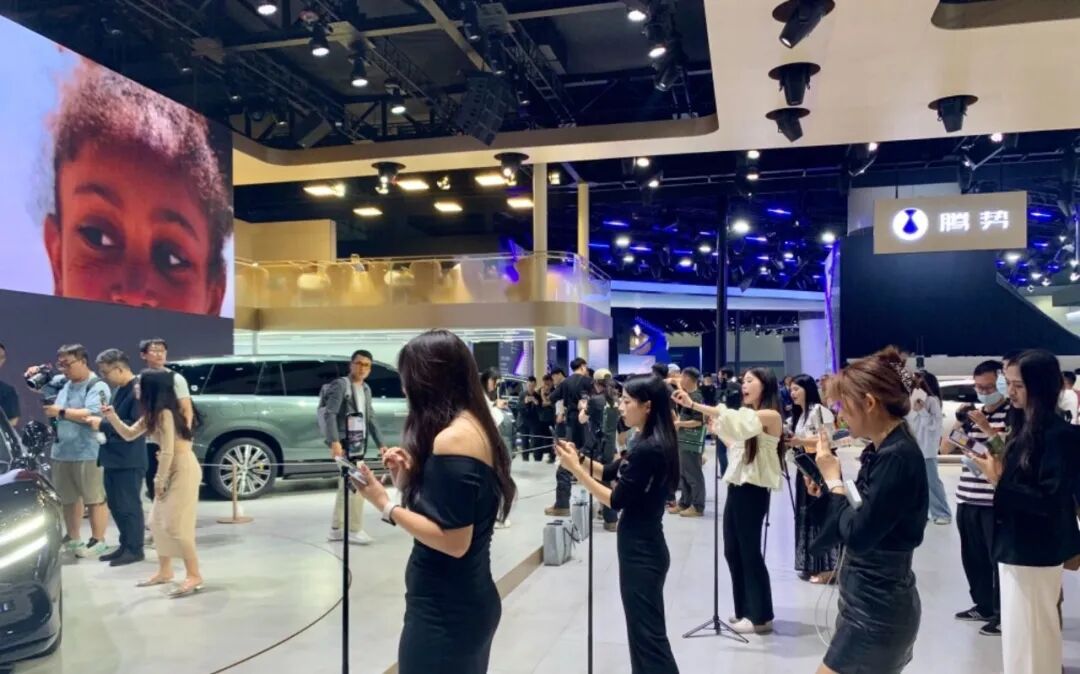
As a crucial platform for disseminating automotive social media content, platforms bear an unshirkable responsibility. Platforms should enhance their content review mechanisms, establish stringent content publishing standards, adopt a zero-tolerance approach to false information, malicious smears, and illegal advertising, immediately remove such content upon discovery, and impose severe penalties on the publishers. Platforms should also facilitate user reporting channels, encouraging consumers to report violations and fostering a culture of public oversight.
Automotive social media accounts themselves must adhere to professional ethics. Traffic should not be the sole pursuit, and financial interests should not override professionalism. The value of automotive social media lies in providing consumers with truthful, objective, and professional information and promoting the healthy development of the automotive industry.
Consumers should enhance their discernment and not blindly trust false propaganda from certain social media accounts. They should actively verify doubtful information and obtain truthful information through official channels and professional institutions. Simultaneously, they should strengthen their awareness of rights protection. When their rights are infringed, they should use legal weapons to defend themselves, report violations by social media accounts, and jointly maintain a clear cyberspace.
The internet is not a lawless land—this is an unshakable principle. Automotive social media cannot act recklessly; this is a fundamental底线 (bottom line). When legal constraints, platform supervision, industry self-regulation, and consumer oversight work together, automotive social media can emerge from chaos, return to the right track, contribute positively to the high-quality development of China's automotive industry, and provide consumers with truly valuable information services. (End)
-
![]()
New Energy Online Taxis: A Smooth Ride, Except for the Non-Stop Vomiting
-
![]()
Alipay Unveils the Globe’s Pioneering Token-Based Payment Service: Will the AI Era Revolutionize How We Pay?
-
![]()
Suzhou AI Unicorn Reinitiates IPO, While Alibaba Continues to Trim Holdings Over Three Years
-
![]()
Navigating the Token Era: How to Lead with Full-Stack Solutions? H3C Unveils Its 'Six-Pulse Swordplay' Strategy
-
![]()
Final Ruling: The Internet is No Wild West - Auto Social Media Must Operate Within Legal Boundaries
-
![]()
Leveraging Smartphones for Profit to Bolster the Auto Business: Is Xiaomi’s Fortune Tied to AI?
-
![]()
Malaysia’s 100-Inch TV Market Booms: Hisense Secures 48% Market Share in Q1
-
![]()
Audi's Price Plunges Over 100,000 Yuan! 'Rock-Bottom Clearance' of Fuel Cars Trends on Weibo—Is the Century-Old Automotive Giant Fading in the New Energy Era?