Waymo's Latest Robotaxi Model: Could It Pave the Way for Chinese Auto Exports to the U.S.?
 06/01 2026
 372
372
Recently, Waymo, a key contender in North America's Robotaxi arena, has officially unveiled its latest vehicle model. Dubbed Ojai (pronounced "Oh-hai"), after the picturesque city of Ojai in California, it will initially roll out to select passengers in San Francisco, Los Angeles, and Phoenix.
At present, Waymo commands a leading position in the U.S. autonomous ride-hailing sector, having successfully completed over 14 million paid trips last year. The introduction of Ojai is poised to propel Waymo towards an even more ambitious expansion target—reaching over 1 million paid trips per week by the end of 2026 and expanding its services to more than 20 cities. Beyond Ojai, Waymo also plans to equip the Hyundai Ioniq 5 with the same sixth-generation hardware, while maintaining approximately 1,000 Jaguar I-Pace models in its fleet. In essence, Ojai is not a standalone venture but a pivotal element in Waymo's multi-platform, multi-source fleet strategy. 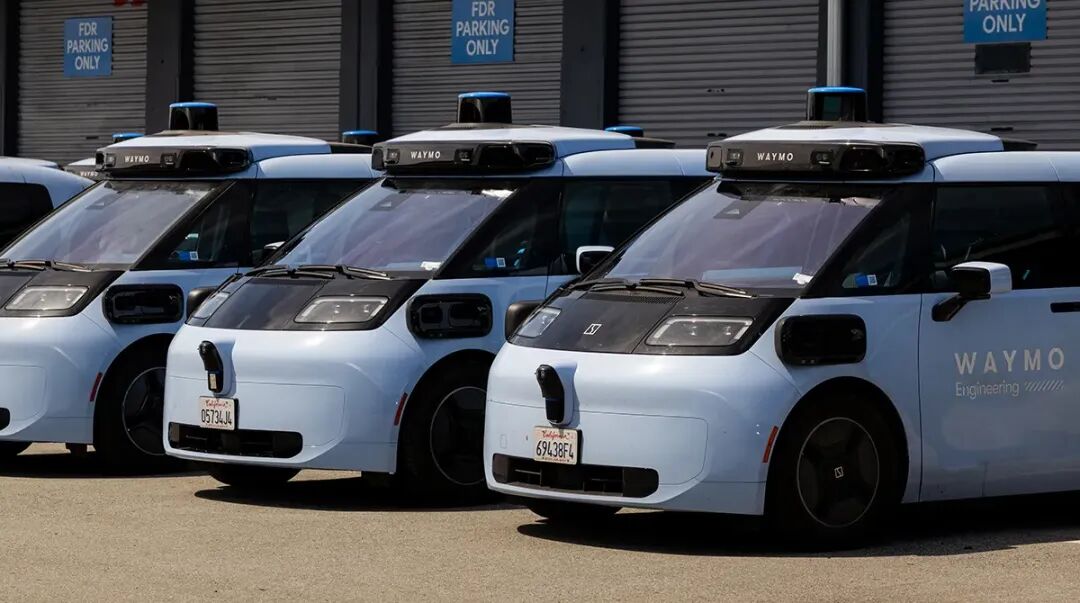
However, a closer look at this new vehicle reveals the Zeekr logo emblazoned on its body.
This begs the question: Is this a Chinese automobile making its way to the United States? Given that the tariff on Chinese electric vehicles has already soared to 100%, does this represent a novel approach for Chinese auto exports to the U.S.?
This article delves into the story behind it, aiming to provide insights and inspiration.
1. From "Retrofitting" to "Co-Design"
Ojai is a four-seat, all-electric compact van co-developed by Waymo and Zeekr, a subsidiary of Geely Automobile Holdings. The partnership between the two companies was officially announced in 2021.
Previously, Waymo's main fleet consisted of Jaguar I-Pace models that were retrofitted with sensors and autonomous driving systems to transform them into Robotaxis. However, this "retrofitting" approach proved to be costly: the base price of an I-Pace was around $75,000, and after being converted into a commercially viable Robotaxi, the total cost skyrocketed to between $180,000 and $200,000.
To tackle the cost issue at its root, Waymo teamed up with Zeekr in 2021. Zeekr specializes in producing purpose-built electric vehicles tailored for ride-hailing scenarios, supplying the chassis, drivetrain (comprising a 268-horsepower motor and a 93 kWh battery with an 800-volt architecture), and body. Waymo then installs its proprietary sensors, computers, and software systems onto this foundation.
This model can be succinctly described as a "two-stage cross-border division of labor": China constructs the shell, and the U.S. installs the brain.
2. Two-Stage Division of Labor: Ningbo Crafts the Bodies, Arizona Installs the Brains
Stage 1: Ningbo Crafts the Bodies
Zeekr manufactures the base vehicles at its factory in Ningbo, Zhejiang Province, China, and then ships them to the United States. What arrives in the U.S. is not a complete consumer-grade automobile but what the industry refers to as a "glider"—a bare vehicle platform devoid of key connected components. Imported in this form, Waymo is subject to tariffs, but it avoids U.S. regulations that restrict the import of Chinese consumer automobiles since these vehicles are not intended for direct sale to retail consumers.
Stage 2: Arizona Installs the Autonomous Driving Systems
Upon arrival in Mesa, Arizona, Waymo completes the integration of the autonomous driving systems. This step embodies Waymo's core competitiveness in a tangible form.
The sixth-generation driving system (Waymo Driver Gen 6) is equipped with 13 17-megapixel cameras (Waymo claims they can identify objects up to 500 meters away, even in darkness), four lidars, and six radars. The sensor housing also includes heaters, wipers, and spray nozzles to actively clean sensor surfaces in adverse weather conditions. This system, along with the entire computing platform, is fully installed within the United States. 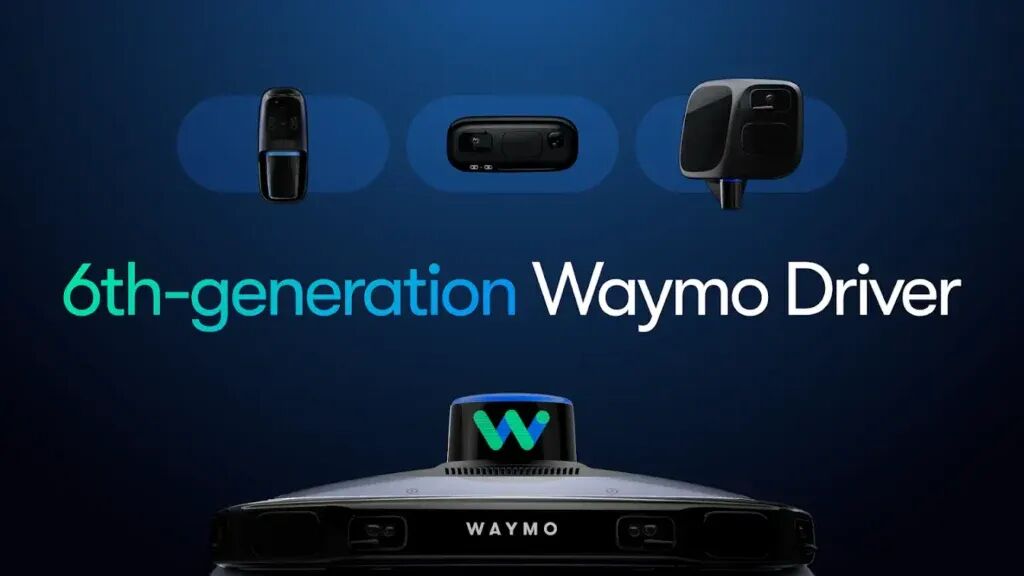
Clearly distinguishing between Chinese-made bodies and U.S.-integrated autonomous driving systems is Waymo's core strategy for reducing costs through global supply chains while adhering to regulatory requirements.
3. Tariff Challenges: 100%, but the Base Is Minimized
Those well-versed in the automotive industry are aware that in 2024, the U.S. government significantly hiked tariffs on Chinese-made electric vehicles from 25% to 100%, imposing a cost burden that would be unsustainable for any company directly importing complete Chinese vehicles.
However, Waymo cleverly minimizes the tariff base through its "glider import" strategy. Since the imported items are stripped-down bare bodies rather than complete consumer-grade vehicles, the taxable base for the 100% tariff is only about $10,000–$20,000 per vehicle, not the full vehicle price. In other words, the actual tariff paid is roughly $10,000–$20,000 per vehicle—a manageable amount compared to the total vehicle cost.
From an overall economic standpoint, Morgan Stanley estimates that each Ojai costs around $125,000, saving nearly $75,000 compared to the I-Pace's approximately $200,000. Among these costs, the base vehicle provided by Zeekr costs about $38,000, while the previous Jaguar I-Pace cost $75,000. The per-unit cost of the sixth-generation autonomous driving hardware is expected to be below $20,000, a reduction of over 50% from the previous generation. Even after factoring in tariffs, the overall cost advantage remains substantial.
4. Is This a New Avenue for Chinese Auto Exports to North America?
On the surface, this is indeed a case of Chinese-made bodies being exported to and operating on North American roads. However, it fundamentally differs from the conventional notion of "Chinese cars entering the North American market."
The core of the value chain remains in the United States. The body is merely a carrier; Waymo's sensors, algorithms, and software are all controlled by the U.S. company and integrated within the United States.
The regulatory pathway diverges from that of consumer vehicles. These vehicles enter the U.S. market as commercial operating assets rather than consumer goods, sidestepping many restrictions targeting consumer-grade Chinese automobiles.
The essence of this model is a meticulously designed supply chain hierarchy: it combines China's manufacturing cost advantages with the software prowess of U.S. tech companies while retaining sufficient operational flexibility at the legal and political levels. It is not merely "Chinese cars exported to North America" but a more intricate form of global industrial division of labor—China builds the hardware, and the U.S. builds the intelligence.
Whether this vehicle manufacturing model can withstand the test of time ultimately hinges on geopolitical developments. However, for now, Waymo has blazed a trail that significantly reduces costs while maintaining commercial viability.
So, can this approach be replicated? Feel free to leave a comment and join the discussion.
*Unauthorized reproduction or excerpting is strictly prohibited-*
-
![]()
Why Did the Former Chairman of Ferrari Get 'Angry' About Its First All-Electric Model, Luce?
-
Exclusive! Gas Leak at SK Hynix’s Cheongju Facility in South Korea Leaves 6 Injured—Could DDR5 Prices Surge Once More?
-
![]()
Leading the Charge in Ensuring Intelligent Driving Safety: Can BYD Outshine Huawei?
-
![]()
Li Auto (1Q26 Highlights): Maintains 20%+ Sales Growth Target for 2026
-
![]()
Ideal: Wanting Too Much Leaves Only 'Daydreams'?
-
![]()
Entering the Japanese Market Requires Learning 'Magic'
-
FTTH installation and maintenance engineer, how many instruments do you carry when you go out?
-
![]()
Is Waymo's Self-Driving Car 'Made in China'? When U.S. Robotaxi Leader Teams Up with Zeekr's 'Baby Bus', a Multi-Billion-Dollar Cross-Border Alliance Emerges