Leading the Charge in Ensuring Intelligent Driving Safety: Can BYD Outshine Huawei?
 06/01 2026
 527
527
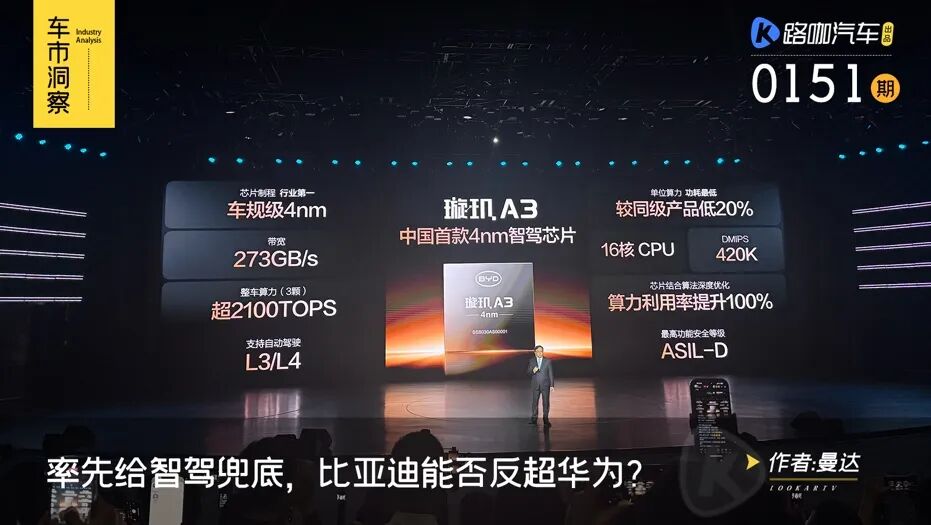
Having just concluded the 'climax' of the first half of electrification, BYD wasted no time in plunging headlong into the wave of intelligence in the second half. When Chairman Wang Chuanfu took to the stage and declared with conviction that 'chips are the heart of intelligence,' the atmosphere instantly became electric. With the unveiling of the brand-new, self-developed 4nm intelligent driving chip and the announcement of the 'City Navigation Safety Guarantee' commitment, May 28th was destined to be a sleepless night for China's intelligent driving sector.
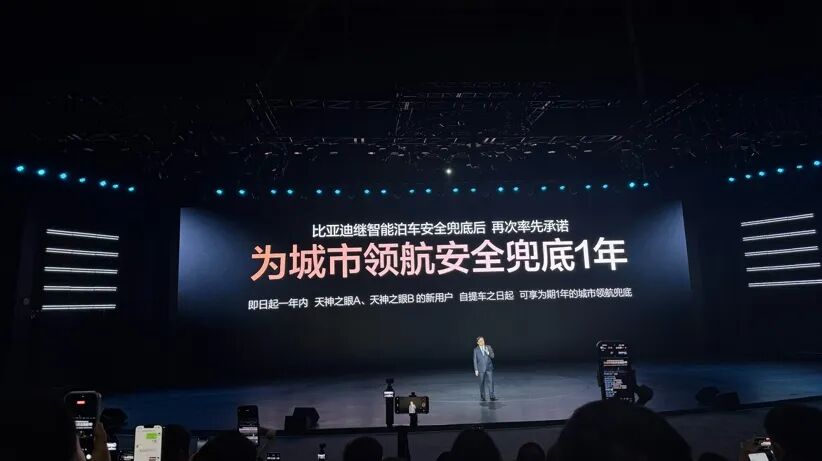
Previously, the so-called 'intelligent driving insurance' was mainly a safety net provided by automakers or intelligent driving solution providers, rather than a genuine exclusive commercial insurance policy. Owners often found the experience unsatisfactory due to a myriad of issues, including compensation limits, processes, and liability attribution. However, BYD's approach this time is refreshingly simple and direct: If something goes wrong, we take responsibility.
A year ago, BYD launched its National Intelligent Driving Strategy (a universal strategy for intelligent driving), prompting mainstream automakers to follow suit. The question now is whether the industry will witness a new round of 'safety guarantee wars.'

Competing in the L3 Era: Will Quality or Quantity Prevail?
When BYD Chairman Wang Chuanfu declared at the launch of the second-generation Blade Battery in March that 'the first half of electrification is perfectly concluded,' the industry already anticipated that a battle centered around 'intelligence' would immediately commence in the second half.
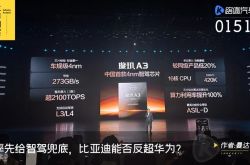
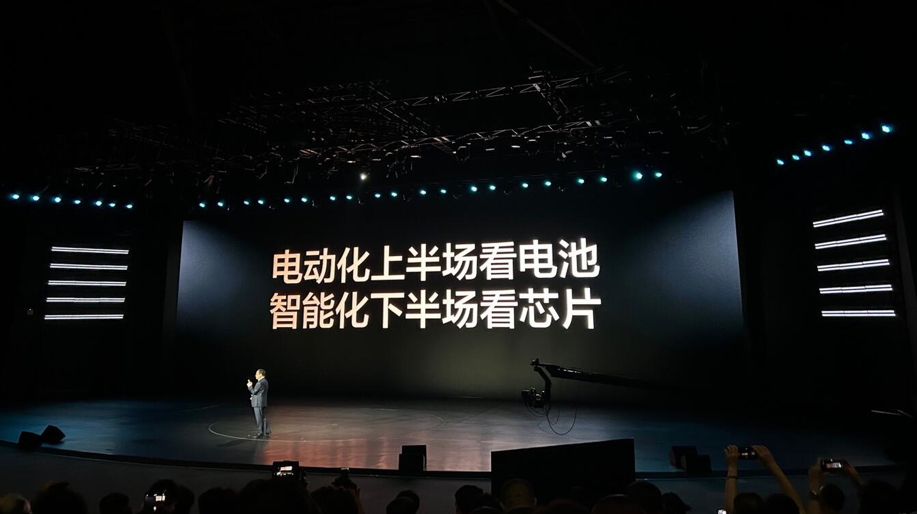
On May 28th, Wang Chuanfu stood at the center stage of the intelligent driving strategy launch event and emphatically stated, 'The first half of electrification revolved around batteries, while the second half of intelligence is all about chips.' With the debut of China's first self-developed 4nm intelligent driving chip, 'Xuanji A3,' boasting a total computing power exceeding 2100TOPS, along with the unprecedented commitment to 'guarantee safety for city navigation,' BYD officially embarked on the second half of its intelligent driving era.
This signifies that BYD is no longer dependent on external suppliers for computing power, which could potentially hinder its progress. Instead, it firmly holds the 'brain' of intelligence in its own hands, providing a unified underlying computing power platform for its extensive vehicle lineup.
Looking back at the first half of electrification, BYD disrupted traditional fuel vehicles by betting on lithium iron phosphate Blade Batteries and vertical integration across the entire supply chain. Now, it is approaching the second half of intelligence with the same determination.
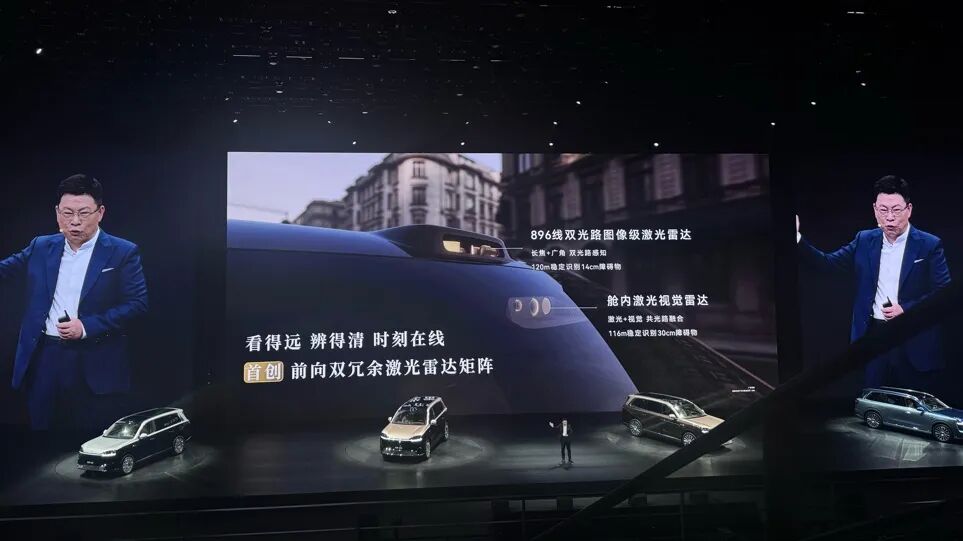
Meanwhile, Huawei is also gearing up to make its move. Just one day before BYD's launch event, the all-new AITO M9 was unveiled. Yu Chengdong, Executive Director and CEO of Huawei's Terminal BG and Intelligent Automotive Solution BU, emphasized that its full-link eight-redundancy design is an 'architectural design for L3 autonomous driving systems,' awaiting only the issuance of national licenses.
Within less than 24 hours, two giants in China's intelligent electric vehicle sector simultaneously revealed their ambitions and preparations for the L3 era in a nearly 'head-to-head' manner.
What truly shook the industry at the launch event was not the hardware specifications but Wang Chuanfu's emphatic commitment: 'BYD takes the initiative to assume L3 and L4 safety responsibilities during the L2 stage and is the first to provide a one-year safety guarantee for city navigation functions.'
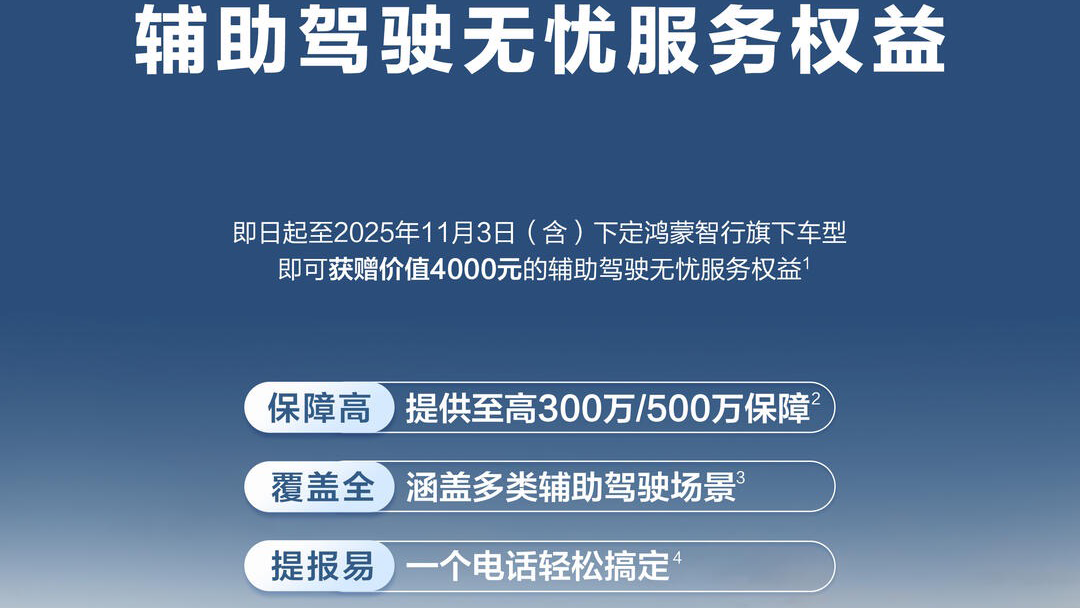
A closer analysis reveals that BYD's 'safety guarantee' rules differ significantly from the 'intelligent driving insurance' previously introduced by brands like XPENG and Harmony Intelligent Mobility.
Previously, the 'intelligent driving insurance' offered by automakers was essentially 'supplementary commercial insurance compensation.' The core logic was that 'if the user has insurance and an incident occurs, the insurance company and the automaker compensate proportionally.' In contrast, BYD's 'safety guarantee' involves direct corporate intervention, telling owners, 'As long as you use my system in compliance, I will cover all losses in the event of a liable accident.' This model not only spares owners the hassle of dealing with insurance companies but also shifts the primary responsibility from 'users' and 'insurance institutions' entirely to the 'automaker.'
Furthermore, BYD had already introduced a 'lifetime safety guarantee for intelligent parking' in July of the previous year. Now, with the addition of a 'one-year safety guarantee for city navigation,' it has formed the world's only 'dual-safety-guarantee' system. This initiative has already yielded results: According to official data, after the introduction of the intelligent parking safety guarantee, usage rates soared from 21% to 93%, with nearly zero accidents. This validates that 'safety guarantees' are the strongest catalyst for alleviating user concerns about intelligent driving safety.
Today, Huawei's ADS has established a strong user mindset in the mid-to-high-end market above 200,000 yuan, becoming the benchmark for intelligent driving. Meanwhile, BYD has taken a different path: Leveraging its fleet of over 3 million vehicles equipped with advanced driver-assistance systems, collecting over 200 million kilometers of real-world data daily, and employing a team of over 5,000 engineers, it has built a moat around 'scale + data + cost.'
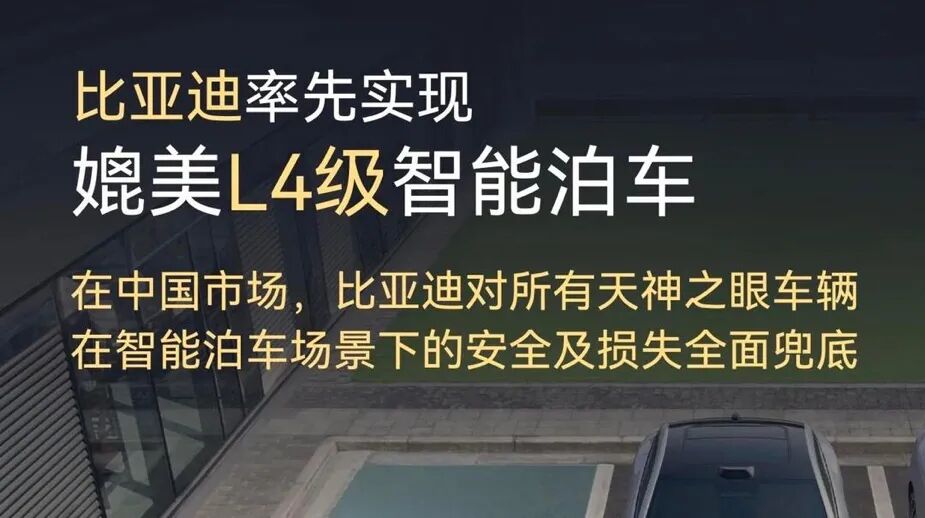
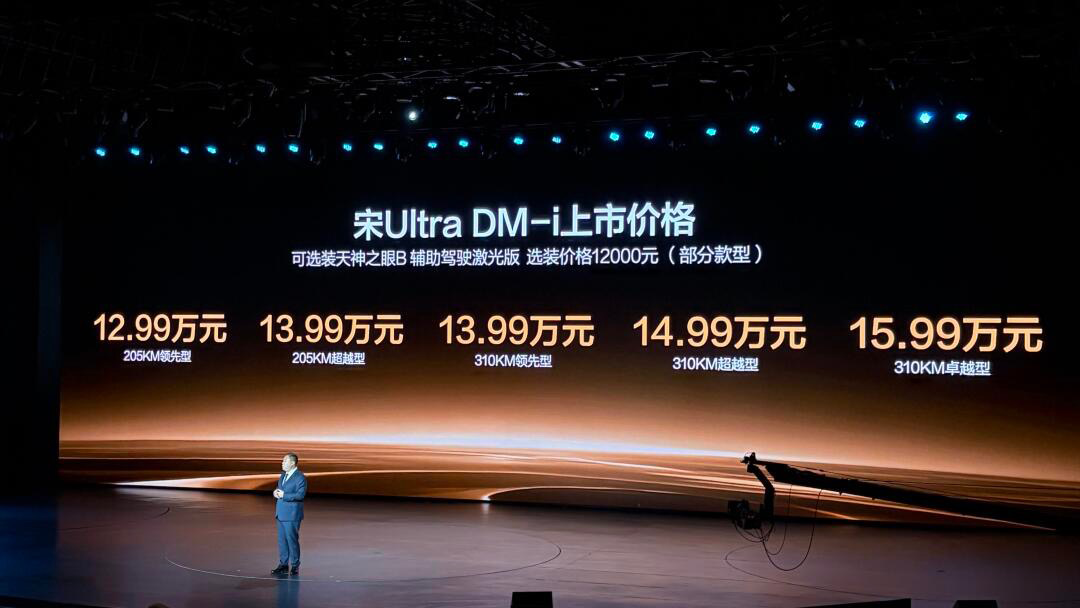
BYD's strategy is 'popularization.' It announced that all models (from the Seagull to the Yangwang) can be optionally equipped with the laser version of the 'Tianshenzhiyan B' city navigation system for just 12,000 yuan. This directly brings the threshold for high-level urban intelligent driving to an unprecedentedly low price. In the future, BYD can collect China's most complex and authentic road data through the widespread adoption of mid-to-low-end models. This data, in turn, can refine its algorithms, creating a positive feedback loop of 'the more it's used, the better it gets, and the more people use it.'
Will Geely and Changan Follow BYD's Lead?
In February 2025, BYD launched its universal intelligent driving strategy, opening the door to 'popularizing high-level intelligent driving.' Now, the commitment to 'guaranteeing intelligent driving safety' and the release of the 4nm self-developed chip at this launch event have fundamentally altered the competitive landscape of intelligent driving, reshaping the development logic of the entire industry.
Over the past few years, high-end intelligent driving chips have been almost monopolized by NVIDIA's Orin series. This dependency not only incurs high procurement costs but also poses supply chain security risks. BYD's 'self-developed + self-produced' model means that Chinese automakers now, for the first time, possess a fully autonomous and controllable top-tier intelligent driving computing power base. This 'de-NVIDIAfication' stance breaks down the hardware barriers to high-level intelligent driving.
BYD has used a single self-developed chip to unify the underlying computing power across its entire model lineup, from the Seagull to the Yangwang. This 'one-chip-fits-all' scale effect forces other automakers to consider: Should they continue purchasing high-priced chips or follow BYD's path of self-development? However, the hundreds of millions of yuan in R&D investment required for self-developed chips means only a handful of giants can afford it.
Looking back, after BYD's 'universal intelligent driving' strategy was implemented in early 2025, mainstream automakers like Geely, Changan, and Chery quickly followed suit, rapidly bringing urban intelligent driving to the 150,000-yuan price range. This 'BYD sets the price, and the entire industry follows' chain reaction is likely to repeat with 'safety guarantees.'
In the future, more and more automakers will likely introduce similar 'intelligent driving liability insurance' or 'corporate supplementary insurance,' but whether they can achieve BYD's 'free and unlimited' model remains to be seen.
Therefore, we are likely to witness a divided landscape: Premium brands like NIO and Li Auto, which build user trust in intelligent driving differently, are more likely to emphasize 'algorithmic leadership' rather than 'safety guarantees,' as they cannot directly replicate BYD's model due to financial and user scale constraints.
Other mainstream automakers may choose to accelerate technology self-development and data accumulation while emphasizing the safety of their systems in marketing. They may also provide 'quasi-safety-guarantee' protection schemes through partnerships with insurance companies as a transitional measure.
In the past, the industry's intelligence competition focused on 'who has more radars, bigger screens, and stronger computing power.' Today, with self-developed underlying chips and guaranteed accident risk coverage, the competition has shifted to 'who dares to take responsibility for users' intelligent driving behavior.' A 'intelligent driving liability revolution' led by BYD is forcing the entire Chinese automotive industry to transition from 'feature stacking' to 'credibility commitments.'
-
![]()
Why Did the Former Chairman of Ferrari Get 'Angry' About Its First All-Electric Model, Luce?
-
Exclusive! Gas Leak at SK Hynix’s Cheongju Facility in South Korea Leaves 6 Injured—Could DDR5 Prices Surge Once More?
-
![]()
Leading the Charge in Ensuring Intelligent Driving Safety: Can BYD Outshine Huawei?
-
![]()
Li Auto (1Q26 Highlights): Maintains 20%+ Sales Growth Target for 2026
-
![]()
Ideal: Wanting Too Much Leaves Only 'Daydreams'?
-
![]()
Entering the Japanese Market Requires Learning 'Magic'
-
FTTH installation and maintenance engineer, how many instruments do you carry when you go out?
-
![]()
Is Waymo's Self-Driving Car 'Made in China'? When U.S. Robotaxi Leader Teams Up with Zeekr's 'Baby Bus', a Multi-Billion-Dollar Cross-Border Alliance Emerges