Why Did the Former Chairman of Ferrari Get 'Angry' About Its First All-Electric Model, Luce?
 06/01 2026
 367
367
For traditional ultra-luxury brands in the era of electrification, the hardest part is no longer technology, but convincing users to continue believing: 'It's still that brand.'
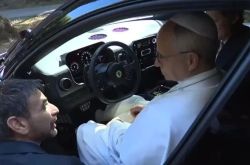
On May 25, in Rome, Italy, Ferrari Chairman John Elkann invited Pope Francis XIV to view a new car—the Ferrari Luce, the first mass-produced all-electric vehicle in Ferrari's history.
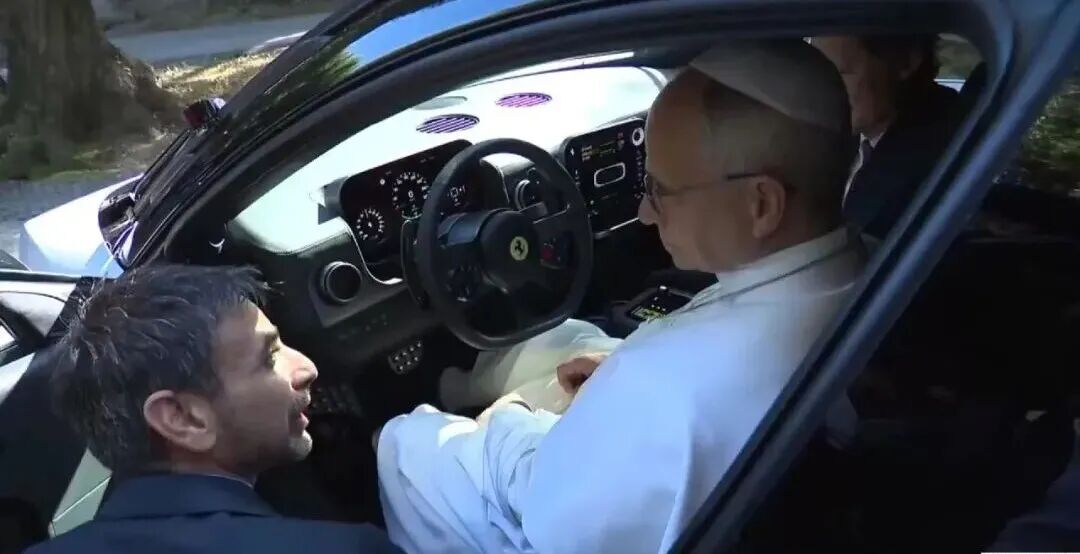
A detail from the on-site footage quickly spread on social media: when the Pope saw the new car, featuring a four-door, five-seat layout, a starting price of approximately €550,000, and a sleek, minimalist overall design, he asked with some surprise, 'Is this the first four-door Ferrari?' This moment quickly became one of the key points of discussion following the Luce's release.
Over the past several decades, Ferrari's brand image has been closely tied to two-door sports cars, high-revving V12 engines, F1 racing culture, and highly aggressive aerodynamic designs. When a brand that has long defined itself by 'speed' and 'mechanical feel' suddenly launches a pure electric five-seat model emphasizing space, tranquility, and digital experiences, market cognitive dissonance is hardly surprising.
To some extent, the controversy surrounding the Luce is no longer just a wave of public opinion following a product launch but rather a microcosm of the 'brand perception misalignment period' traditional ultra-luxury brands face during their electrification transitions.
When Ferrari Starts to Look Less Like Ferrari
After the Luce's release, discussions about its design and positioning quickly escalated.
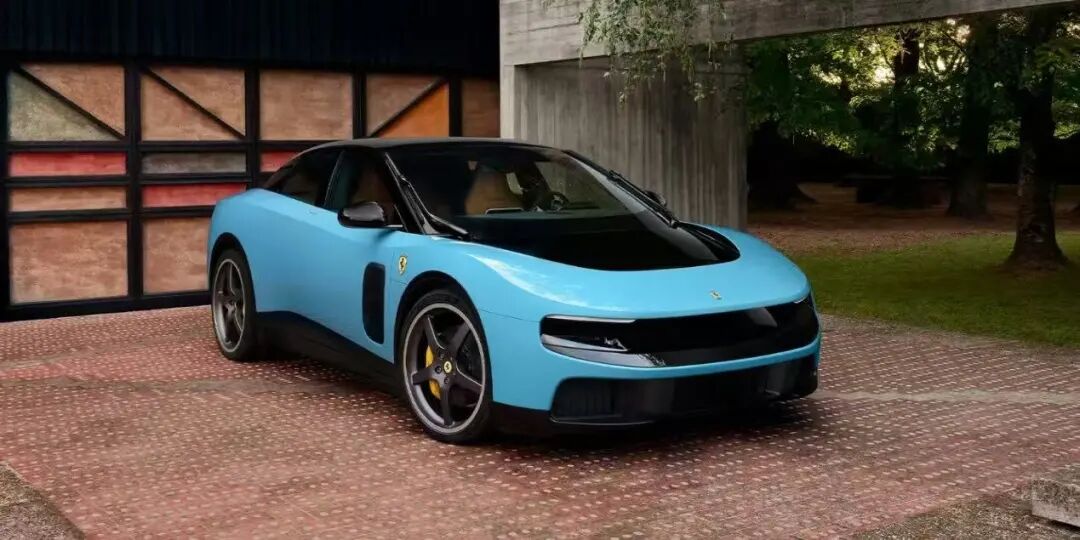
The model was designed in collaboration with LoveFrom, a studio founded by former Apple Chief Designer Jony Ive. The car adopts a 'large teardrop glass cabin' concept, with extensive Corning glass forming the visual centerpiece, while the metallic structures at the front and rear create a 'floating' effect above the cabin. Compared to Ferrari's traditional design language, which emphasizes a low stance, sharp lines, and strong mechanical tension, the Luce's overall style appears more restrained, even bearing a distinct aesthetic reminiscent of consumer electronics.
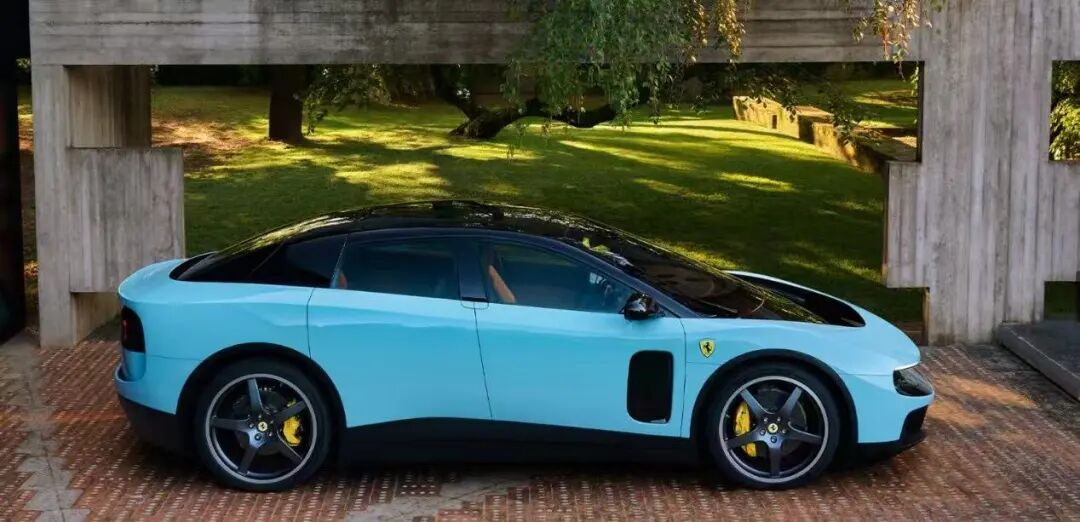
Feedback on social media quickly diverged. Some argued that this design signifies Ferrari's attempt to break free from its reliance on the internal combustion engine era and redefine high-performance luxury cars on a pure electric platform. Others believed it represented a clear disconnect from the brand's long-accumulated visual identity.
Beyond the controversy over its appearance, the capital markets also reacted directly. On the first trading day after the Luce's release, Ferrari's stock price fell nearly 8% intraday and closed down more than 6%. Prior to this, since the second half of 2025, the market had already begun to diverge in its expectations for Ferrari's future growth and the pace of its electrification.
Meanwhile, Luca di Montezemolo, who led Ferrari for over two decades, publicly expressed reservations. In an interview with Italian media asksnews, he said, 'If I said what I really think, I would hurt Ferrari. We risk destroying the myth, and I deeply regret that. I hope they at least remove the Prancing Horse emblem from that car.' In his view, the Luce differs significantly from his understanding of Ferrari, and the brand should emphasize historical continuity and traditional mechanical culture.
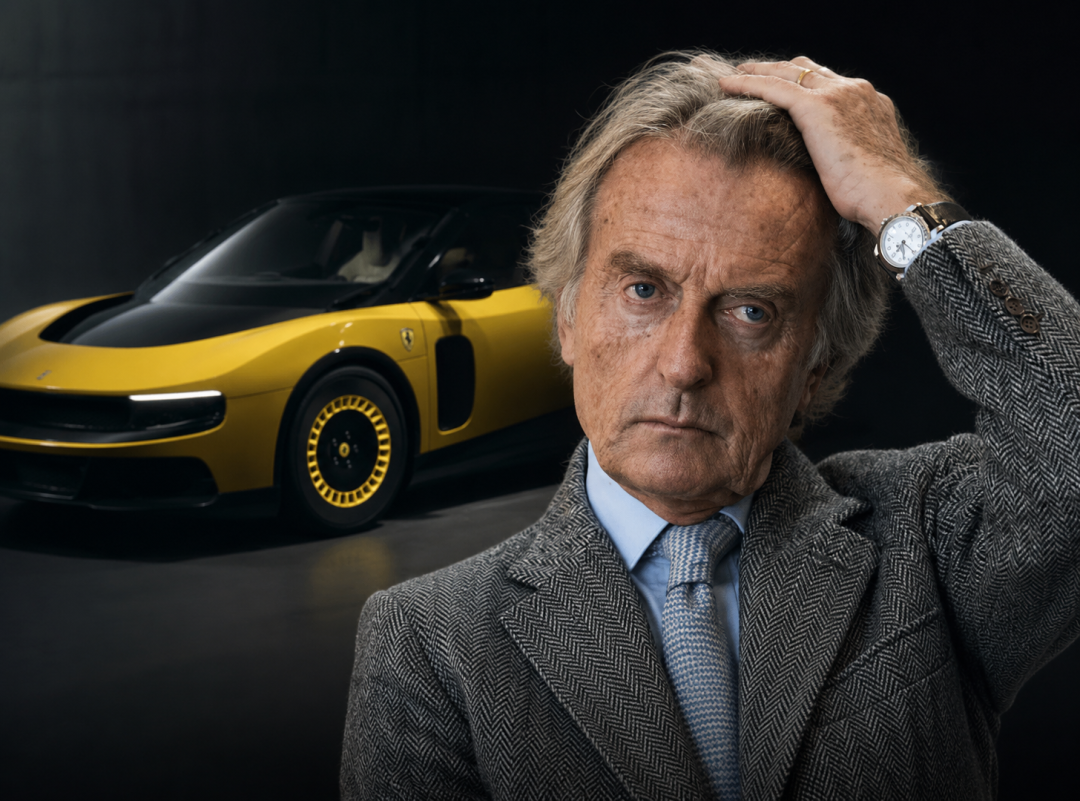
Italian Deputy Prime Minister and Minister of Transport Matteo Salvini commented on social media, 'This doesn't look like a Ferrari at all. Is this supposed to be 'innovation'? I wonder what [company founder] Enzo Ferrari would say.'
Jean-Christophe Babin, CEO of LVMH-owned Bulgari, later stated in public, 'If Western luxury brands want to maintain their unparalleled appeal, they must further build on their DNA, iconic symbols, artisanal craftsmanship, and those legendary stories and histories. This is the direction we've consistently pursued at Bulgari, and it has been validated by the market and our customers. I hope other Italian luxury brands do the same.' Although he did not name names, his reference was clear.
Behind these discussions lies a single question: When powertrains, product forms, and design languages all change simultaneously, how should Ferrari continue to define 'Ferrari' itself?
The 'Ferrari Logic' Established in the Old Era
To understand why the Luce sparked such significant debate, one must first grasp the brand logic Ferrari built over the past few decades.
During Montezemolo's tenure, Ferrari underwent a critical transformation: it evolved from merely a manufacturer of high-performance sports cars into one of the world's most symbolic automotive luxury brands. The source of this high premium was not limited to performance alone but, more importantly, a deliberately reinforced scarcity mechanism. The Enzo was limited to 400 units, the LaFerrari to 499; some models even required long-term brand accumulation and an internal quota system to qualify for purchase. Ferrari has long emphasized not 'accessibility for all' but 'only a select few are allowed in.'
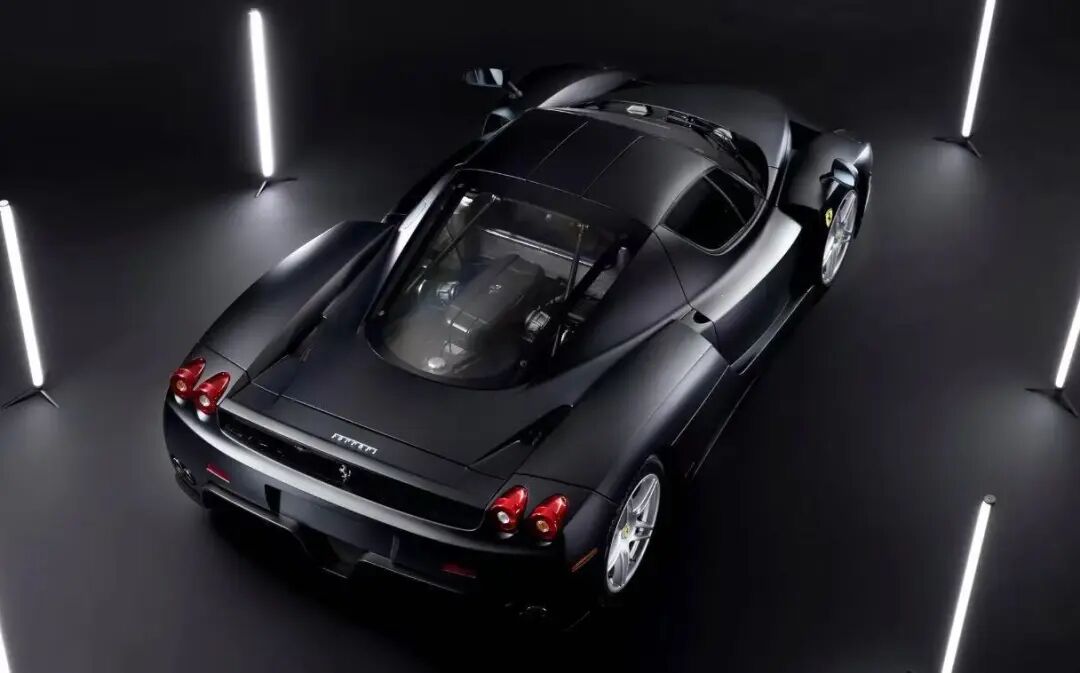
At the same time, each product was woven into a clear historical narrative: the F40 paid tribute to the 250 GTO, and the F50 echoed the 312 T race car. The product itself became the narrative, and the narrative itself became the premium. From classic racing culture and F1 traditions to engine technology roadmaps, Ferrari's product lineup has always maintained strong continuity with its brand history.
Today, however, Elkann, who sits as Ferrari's chairman, faces a different set of challenges. For traditional supercar brands, the impact of electrification extends beyond just powertrain systems.
First is the 'de-scarcity' of performance. In the past, engine technology and chassis tuning capabilities formed key barriers for supercar brands. However, with the rapid proliferation of high-performance electric drivetrains, acceleration performance itself is shifting from a 'brand differentiator' to an 'industry standard.' The Luce is equipped with a four-motor system, delivers over 1,000 horsepower, and achieves sub-2-second zero-to-60 mph acceleration. While still top-tier in terms of parameters, similar performance is no longer rare in the high-end electric vehicle segment.
Second is the reconfiguration of mechanical emotional value. Traditional Ferrari users rely not just on speed but also on engine roar, gearshift impacts, mechanical feedback, and the overall immersion in a racing environment. In the context of electrification, the new generation of high-end consumers increasingly interprets 'luxury' through digital experiences, spatial efficiency, tranquility, and minimalist design language. To some extent, this explains why the Luce exhibits a design orientation markedly different from traditional Ferraris.
Third is the rebalancing of business models. Traditional ultra-luxury brands have long been built on a 'high-margin, low-volume' structure, while electrification requires systemic reconstruction of battery platforms, software architectures, and supply chain systems. For ultra-luxury brands with limited annual sales, this means realigning R&D investment with profitability models. This is also why brands like Lamborghini and Aston Martin have repeatedly adjusted their pure electric timelines in recent years.
These three points constitute structural pressures from within the industry, while external environments are also tightening simultaneously. EU decarbonization policies continue to advance, narrowing the regulatory window for internal combustion engine vehicles. Even more profound changes stem from generational shifts in aesthetics: the next generation of potential Ferrari buyers, raised on smartphones and smart electric vehicles, have a weaker emotional connection to V12 engine roars than previous generations. A notable detail is that Ferrari has lowered its 2030 electrification target from 40% to 20%, reflecting the complexity of its transition path.
Thus, Elkann faces a strategic question with no standard answer: Should he continue the belief system built during Montezemolo's era and wait for its natural contraction over time, or should he proactively intervene to redefine the boundaries of the 'Prancing Horse' before the internal combustion engine era ends? The Luce is clearly a product of the latter choice.
From a product structure perspective, Ferrari has developed a diversification (diversified) powertrain system internally: pure fuel V12 (internal combustion V12), hybrid V8, hybrid V6, F1 race cars, and Le Mans Hypercars form a complete technological spectrum. Within this framework, Ferrari did not simply launch an 'electric Purosangue' but deliberately established an independent pure electric product line to create a clear boundary with its existing internal combustion engine lineup. The Luce's spacious layout, minimalist design language, and more digitally oriented luxury expression all essentially target a new user demographic.
This strategy also implicitly contains a risk isolation logic: by exploring electrification's design and user boundaries through an independent product line, Ferrari minimizes direct impact on its traditional internal combustion engine product system. The Economist recently commented that the Luce is expected to produce a maximum of approximately 9,000 units over its roughly four-year product cycle, with its core significance likely lying not in sales volume but in establishing brand 'presence' early in the electric era.
From a market strategy perspective, Ferrari is also attempting a 'dual-track approach.' On one hand, some traditional users may purchase the Luce for its collectible attributes; on the other, the model clearly aims to attract new consumer groups previously outside Ferrari's audience. According to media reports, a significant proportion of invitees to the Luce's launch event were potential customers encountering the Ferrari brand for the first time. This means Ferrari is attempting to restructure not just its powertrain but its user base itself. While strategically coherent, the execution method and timing have amplified the sense of misalignment during this transition.
The Designer's Apple Dream vs. Enthusiasts' Prancing Horse Faith
Another core source of controversy surrounding the Luce lies in its designer, Jony Ive, and his design philosophy.
Many people's first reaction to the Luce was: 'Isn't this just the Apple car that never got built?' But this intuition isn't entirely accurate: Ive left Apple in 2019, while Apple's car project, 'Project Titan,' continued until its official termination in 2024. Ive did not publicly participate deeply in that project.
However, this association reflects a genuine issue: what Ive brought to the Luce is a complete transplant of the design philosophy he refined over nearly three decades at Apple. The 'glass house' cabin, extensive Corning glass, and the rejection of large screens in favor of precision aluminum physical buttons represent his vision of a 'perfect consumer electronics product' adapted for automotive design. He emphasized that the design's starting point was to rethink what a car could look like from scratch on an electric platform unconstrained by internal combustion engine technology. He even used typically Apple-esque terminology like 'egalitarian' to describe his design ethos.
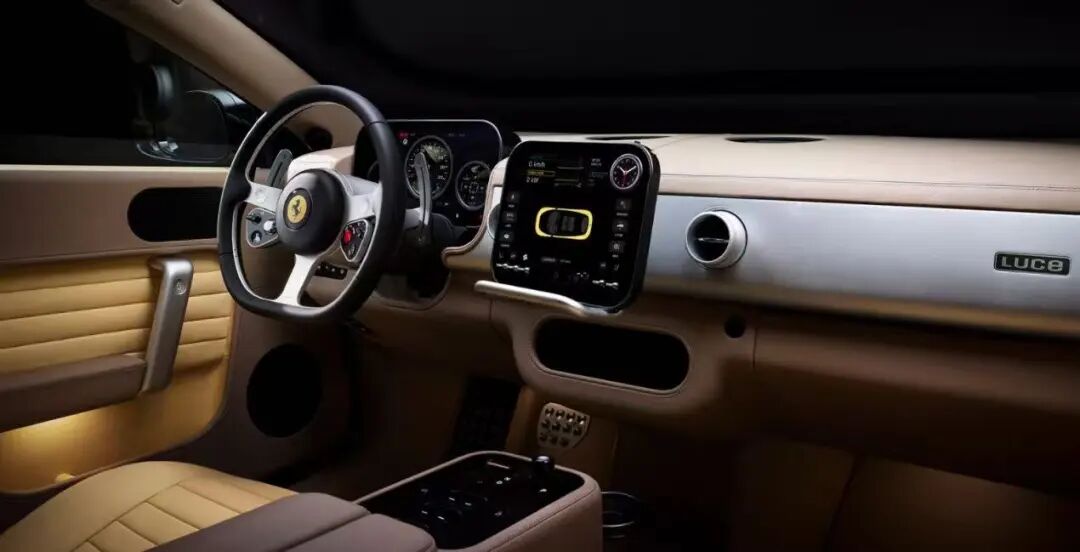
The problem is that Apple's 'egalitarianism' and Ferrari's 'extreme scarcity' are fundamentally opposing brand philosophies. Apple seeks to make the best design accessible to as many people as possible; Ferrari pursues having a tiny elite pay exorbitant premiums for a dream beyond most people's reach.
Ive may have designed a car he believes is good, but its soul is that of a 'top-tier consumer electronics product,' not a 'racing icon.' Traditional Ferrari enthusiasts buy industrial art; the Luce currently offers a fundamentally different luxury experience, one that has yet to find a sufficiently large paying audience.
This sense of misalignment is not a 'design mistake' but rather an inevitable conflict when two distinct logical systems forcibly converge. Ive is answering an automotive question with consumer electronics language, while Ferrari's buyer demographic has historically not been purchasing 'consumer electronics.' This explains why its exterior has been mocked from multiple quarters: while the interior's precision can be rationalized as 'a different luxury language,' the body's silhouette is the brand's most direct identity marker. Once it loses continuity, cognitive dissonance becomes immediately apparent.
Researchers have noted an interesting pattern: when a product diverges too sharply from a brand's historical style, market performance often suffers significantly. However, when a product strongly differentiates itself from competitors, it becomes easier for the market to recognize and remember it. The Luce's dilemma lies precisely at the intersection of these two dynamics—it differs enough from competitors but also diverges sufficiently from Ferrari's own history, placing it under immense pressure on both fronts.
It is sufficiently differentiated but therefore maintains a clear distance from Ferrari's existing brand image.
Thus, revisiting the scene where Elkann showed the Luce to Pope Francis reveals its symbolic significance far exceeds that of an ordinary brand event. 'Luce' means 'light' in Italian. Whether through its naming or its public display in a Vatican setting, Ferrari is clearly attempting to establish a new, more spiritually resonant narrative for this product.
The problem is that the pace of brand narrative reconstruction has not fully kept up with the pace of product change. When the Pope hesitated instinctively upon seeing this four-door, five-seat all-electric Ferrari, this cognitive dissonance was symbolically brought to the fore.
Because for the public, 'Ferrari' has long represented an entirely different image. This is the core issue the Luce truly exposes: Ferrari has already begun entering a new era, but market cognition (perception) of 'New Era Ferrari' is still under construction.
The period of misalignment may have just begun.
The release of Luce occurred during a time when Ferrari was already under 'pressure from multiple fronts,' further amplifying the impact of this controversy.
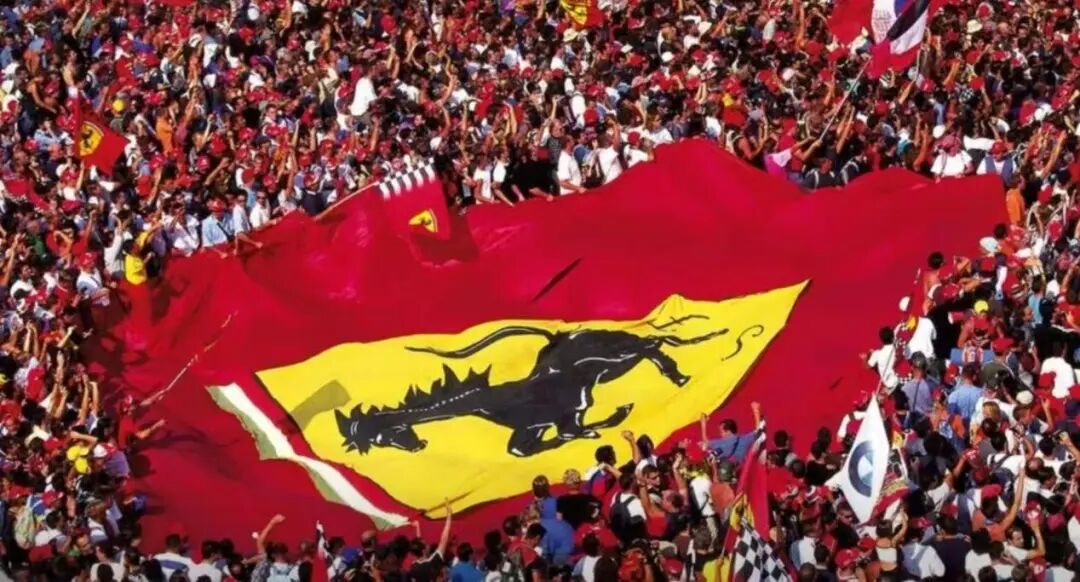
The F1 circuit has always been the core technical source of Ferrari's brand aura. However, in the 2025 season, the Ferrari team slipped from second to fourth place in the standings, trailing behind Red Bull, Mercedes, and McLaren. The racetrack is the spiritual wellspring of Ferrari's premium appeal, and setbacks on the track are not just defeats in a sporting sense but also continuously erode the technical faith of core fans.
On the market front, the large-scale withdrawal of China's dealer Guanghui Group has left some car owners who have paid substantial deposits facing difficulties in obtaining refunds and taking delivery of their vehicles. Throughout this process, the brand has been criticized for its lack of control and communication.
These controversies surrounding electrification transformation, the slump in the F1 arena, and the turmoil in the terminal market have all highly overlapped in time, reinforcing each other and collectively constituting Ferrari's most complex brand stress test in recent years.
However, from another perspective, the issues Ferrari is currently facing are not unique. When traditional ultra-luxury brands enter the era of electrification, they generally face similar challenges: technology can be updated, but the emotional value of the brand cannot be migrated simultaneously. Therefore, what truly deserves observation about Luce is not just its future sales performance but whether it can help Ferrari establish a new brand continuity—a new narrative that can simultaneously connect traditional racing culture with the consumption aesthetics of the electric era.
For the entire traditional ultra-luxury automotive industry, this may be an even more important question. Because the hardest part of the electrification era may not be manufacturing an electric vehicle with sufficiently strong performance but rather, after losing the traditional mechanical style and tone, how to continue making users believe that it is still the same brand.
Image: From the Internet
Article: Auto Review
Layout: Auto Review
-
![]()
Changan Qiyuan Intelligent Driving Accident: A Wake-Up Call for the Entire Intelligent Driving Sector
-
![]()
Toyota Changes CEOs Twice in Three Years Amid Challenges
-
![]()
Why Did the Former Chairman of Ferrari Get 'Angry' About Its First All-Electric Model, Luce?
-
Exclusive! Gas Leak at SK Hynix’s Cheongju Facility in South Korea Leaves 6 Injured—Could DDR5 Prices Surge Once More?
-
![]()
Leading the Charge in Ensuring Intelligent Driving Safety: Can BYD Outshine Huawei?
-
![]()
Li Auto (1Q26 Highlights): Maintains 20%+ Sales Growth Target for 2026
-
![]()
Ideal: Wanting Too Much Leaves Only 'Daydreams'?
-
![]()
Entering the Japanese Market Requires Learning 'Magic'