Is Waymo's Self-Driving Car 'Made in China'? When U.S. Robotaxi Leader Teams Up with Zeekr's 'Baby Bus', a Multi-Billion-Dollar Cross-Border Alliance Emerges
 06/01 2026
 350
350
Introduction
On May 28, Waymo officially opened trial rides of its new self-driving vehicle model, Ojai, to select users in San Francisco, Los Angeles, and Phoenix.
What makes it even more interesting is that its body comes from China—manufactured by Zeekr and shipped to the U.S., where Waymo installs its own 'brain.'
Self-Driving Car Coming (WeChat Official Account: Self-Driving Car Coming) believes: Behind this vehicle stand two companies, two countries, two eras, and two ambitions.
(For further reading, please click:
"Google's Waymo: New Autonomous Robotaxi Named 'Ojai' Replaces Original 'Zeekr RT,' Abandons Steering Wheel-Free Obsession, With 17-City Expansion Reflecting Billion-Dollar Mobility Ambitions?")
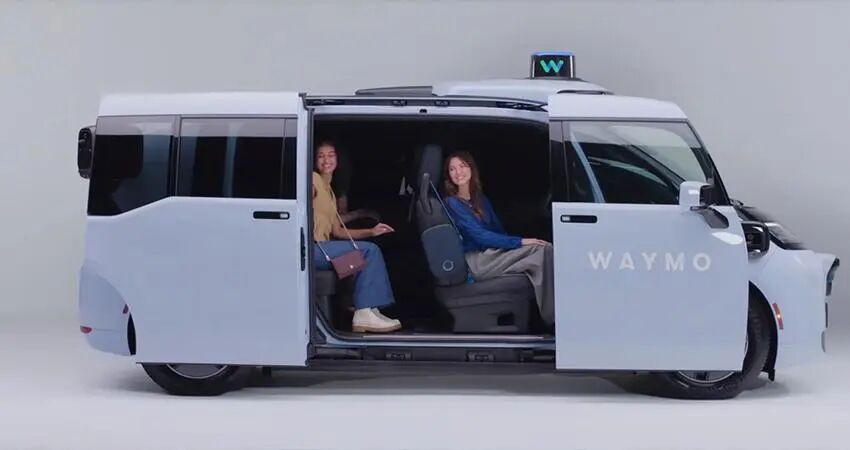
Image Source: CheDongXi
I. Waymo: Google's 'Prodigal Son' and Its Multi-Billion-Dollar Gamble
Waymo's story begins in 2009 when Google launched a secretive autonomous vehicle project.
Seven years later, in 2016, it was spun off as a subsidiary of Alphabet.
How much has Waymo burned through over the years? Alphabet's financial reports have long referred to the "Other Bets" category as its "money-burning column."
But Waymo is indeed the global leader in autonomous driving technology: In 2017, it became the first to test driverless vehicles without safety operators; in 2018, it launched the paid Robotaxi service Waymo One. By 2026, it was handling 400,000 to 500,000 paid weekly rides.
But here's the question—has it made money? Not yet. At least not so far.
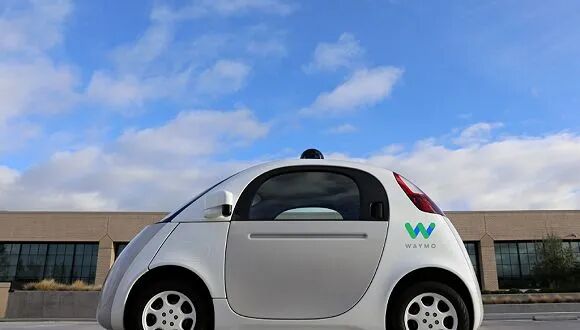
Image Source: CNMO Technology
Waymo's previous fleet consisted of Jaguar I-PACE and Chrysler Pacifica hybrids.
Both were consumer-grade vehicles designed for humans, forcibly retrofitted into taxis. Inefficient passenger boarding and alighting, insufficient luggage space, and high operational maintenance costs—these issues became painfully evident during real-world operations.
By late 2025, Waymo's weekly orders surpassed 400,000. While this seemed impressive, if each ride was losing money, scaling up only meant bigger losses.
So Waymo shifted gears. In February 2026, it secured $16 billion in financing, with its valuation soaring to $126 billion. With the funds in place, the next question was: How to spend it?
Ojai is the answer to that question.
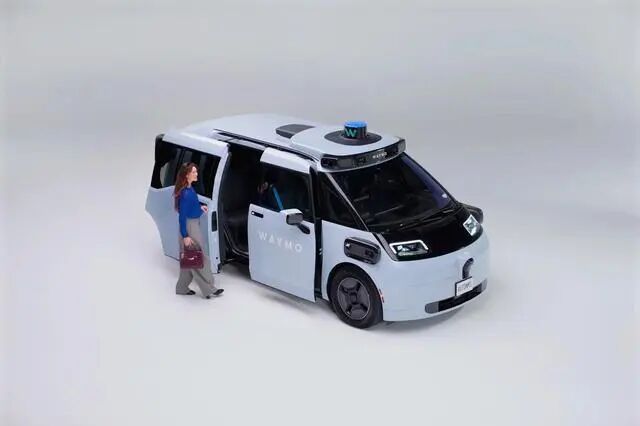
Image Source: CheDongXi
Ojai is Waymo's first model built from the ground up for Robotaxi services. The design focus is on "passenger experience," not "vehicle performance." It features a spacious interior, flat floor, and automatic doors.
More importantly, it's cheaper. Waymo aims to reduce the per-unit hardware cost to below $20,000.
Currently, Waymo covers 11 U.S. cities across more than 1,400 square miles, operating approximately 3,000 self-driving vehicles.
II. Zeekr: Geely's 'Spearhead' for Global Expansion
After Waymo, let's turn to Zeekr.
Founded in April 2021, the company celebrated its fifth anniversary by April 2026.
With over 550,000 deliveries and an average price approaching 300,000 yuan, few Chinese brands have managed to establish themselves firmly in this price range.
Who is Zeekr's parent company? Geely.
Behind Zeekr lies Geely's two decades of automotive expertise: 10 global styling and engineering R&D centers, nearly 40,000 engineering R&D personnel, and cumulative R&D investment exceeding 250 billion yuan over the past decade.
Zeekr's true "secret weapon" is the SEA Sustainable Experience Architecture. Developed over four years at a cost of 18 billion yuan, it is the world's first dedicated pure-electric architecture. This allows every Zeekr model to be built on a pure-electric platform without compromises like "converting gasoline models to electric."
As early as 2019, Geely anticipated the rise of high-level autonomous driving (L4) and decided to invest heavily in a platform optimized specifically for "driverless" scenarios, based on the SEA architecture.
To develop the SEA-M architecture, Geely invested up to 7 billion yuan. Where was this money spent? On redefining a vehicle's fundamental structure.
Traditional cars are designed around the driver's cabin. Driverless vehicles, however, prioritize the "cabin" to maximize space and convenience.
The SEA-M architecture fundamentally disrupts this approach: It adopts a capsule-like shape, minimizes the front overhang, pushes the dashboard forward, and creates astonishing cabin space.
Its most revolutionary design eliminates the B-pillars and features opposing doors. This not only provides an opening width far exceeding that of ordinary MPVs (about 760 mm), enabling "one-step boarding," but also allows passengers to walk in easily while carrying shopping bags.
Zeekr's appeal extends beyond its advanced architecture. It benefits from Geely's mature, efficient, and scalable manufacturing capabilities.
III. An Alliance Born from 'Shopping Bags'
The partnership between Waymo and Zeekr began with a very specific user pain point.
Waymo first engaged with Geely in 2019, and the two sides formalized their cooperation in December 2021.
Why Zeekr? Because only it could simultaneously meet Waymo's two "extreme" requirements: The vehicle had to be compact yet spacious inside, with wide enough door openings for passengers to "walk in" with shopping bags rather than "sit in."
The SEA-M architecture concept perfectly aligned with Waymo's needs at the time. In 2021, Waymo and Geely-Zeekr officially began joint development of a dedicated Robotaxi model, codenamed "Zeekr RT."
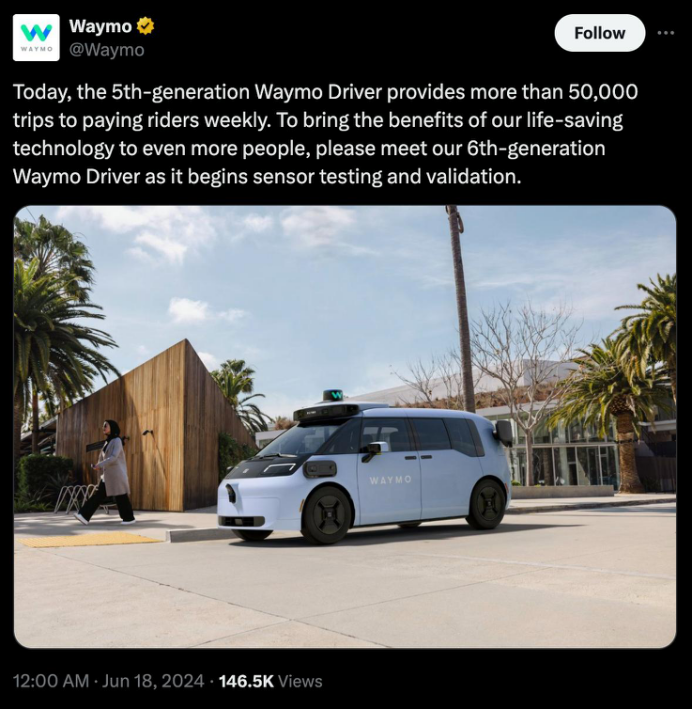
Image Source: Intelligent Vehicle Reference
The collaboration involved deep co-creation. Zeekr's European Innovation Center (CEVT) worked closely with Waymo's engineers, from product definition and engineering design to safety validation.
For example, to meet Robotaxi's high-frequency boarding and cleaning demands, the interior used more durable, easy-to-maintain materials; wiring harnesses and controller layouts were highly modularized for quick repairs and replacements.
The Ojai, unveiled in 2026, is equipped with Waymo's sixth-generation autonomous driving system, with significantly reduced hardware costs—cameras were streamlined from 29 to 13, LiDAR units reduced from 5 to 4. Yet, thanks to more powerful 17-megapixel sensors and advanced algorithms, overall perception capabilities improved.
Ojai's design was completed at Zeekr's European Innovation Center (CEVT) in Sweden, with the chassis manufactured in China. It was then shipped to Mesa, Arizona, for final assembly of the autonomous driving system by Waymo and Magna.
What does this mean? Zeekr made the sale, but not under the "Zeekr" name. This model isn't called Zeekr in the U.S.—it's called Ojai.
But technology doesn't lie—this vehicle's framework, chassis, and manufacturing processes are all Chinese.
IV. Industry Earthquake: Why the 'Ojai Model' Changes the Game
Ojai's debut is far more than just the launch of a new vehicle. It's reshaping the competitive logic of Robotaxi and even the global automotive industry.
First, it heralds the arrival of the "dedicated vehicle era" for Robotaxis.
The old model of retrofitting mass-produced vehicles is now obsolete.
Ojai proves that vehicles designed from scratch for autonomous driving operations offer overwhelming advantages in spatial efficiency, durability, maintenance convenience, and long-term costs.
Second, it validates a new supply chain model combining "Made in China" with global technology.
Amid rising global de-globalization, Ojai offers a clever collaboration paradigm: pairing the most cutting-edge AI "brain" with the most mature, cost-effective manufacturing "body."
This isn't about geopolitics—it's purely an optimization of commercial efficiency.
Just as Apple relies on Foxconn, Waymo may increasingly depend on "smart manufacturing partners" like Zeekr in the future.
The value of China's automotive industry has upgraded from "market" and "manufacturing" to "provider of high-end platform architectures."
Third, it accelerates the arrival of the Robotaxi commercialization tipping point.
With hardware costs below $20,000 and improved operational efficiency from dedicated vehicles, Robotaxi's cost per mile could approach or even undercut ride-hailing services.
Waymo currently handles about 400,000 to 500,000 paid weekly trips, with positive cash flow emerging.
When business models shift from "burning money" to "crunching numbers," capital attitudes and industry expansion speeds will fundamentally change.
Fourth, it opens a "second front" for Chinese automakers' global expansion.
While Chinese passenger cars face barriers like high tariffs and brand recognition when entering European and U.S. markets directly, by providing Robotaxi-dedicated vehicle platforms for giants like Waymo, Chinese automakers can deeply embed themselves in the global future mobility ecosystem as "hidden champions."
For the first time, American consumers may frequently encounter Chinese vehicles not in dealership showrooms, but during rides in self-driving taxis.
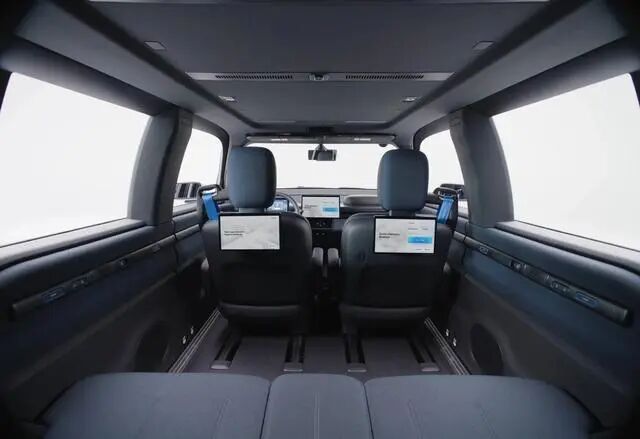
Image Source: IT Home
In conclusion, Self-Driving Car Coming (WeChat Official Account: Self-Driving Car Coming) believes:
The name Ojai is beautiful, but even more compelling is the story behind it.
A vehicle built in Ningbo, China, crosses the Pacific, is equipped with America's most advanced autonomous driving "brain," and then drives through the streets of San Francisco, ferrying passengers who know nothing of its origins.
Technology knows no borders, but the manufacturing capabilities behind it have a homeland.
This is perhaps the truest face of globalization.
What do you think?
References: Reports from CheDongXi, CNMO Technology, Xinhua Net, Intelligent Vehicle Reference, Sina Finance, Global Market Broadcast, IT Home, and other media outlets
#SelfDrivingCarComing #AutonomousDriving #SelfDriving #AutonomousVehicle
We look forward to your follow, like, view, and share!
-
![]()
Why Did the Former Chairman of Ferrari Get 'Angry' About Its First All-Electric Model, Luce?
-
Exclusive! Gas Leak at SK Hynix’s Cheongju Facility in South Korea Leaves 6 Injured—Could DDR5 Prices Surge Once More?
-
![]()
Leading the Charge in Ensuring Intelligent Driving Safety: Can BYD Outshine Huawei?
-
![]()
Li Auto (1Q26 Highlights): Maintains 20%+ Sales Growth Target for 2026
-
![]()
Ideal: Wanting Too Much Leaves Only 'Daydreams'?
-
![]()
Entering the Japanese Market Requires Learning 'Magic'
-
FTTH installation and maintenance engineer, how many instruments do you carry when you go out?
-
![]()
Is Waymo's Self-Driving Car 'Made in China'? When U.S. Robotaxi Leader Teams Up with Zeekr's 'Baby Bus', a Multi-Billion-Dollar Cross-Border Alliance Emerges