Toyota Changes CEOs Twice in Three Years Amid Challenges
 06/01 2026
 371
371
Amid the unprecedented transformation in the global automotive industry, Toyota, the world's top-selling automaker, is facing immense pressure. Behind the 'frequent' CEO changes lies both Toyota's sober (sober) recognition of its own situation and an urgent anticipation for the company's future development.
Looking back at Toyota's development history, it once became a benchmark in the global automotive industry, famous worldwide for its 'lean production' model, and the brand tagline 'Toyota, the Unbreakable' became deeply ingrained in people's minds. Whether it was its dominant position in the era of fuel-powered vehicles or its first-mover advantage in hybrid technology, Toyota has long been at the forefront of the industry.
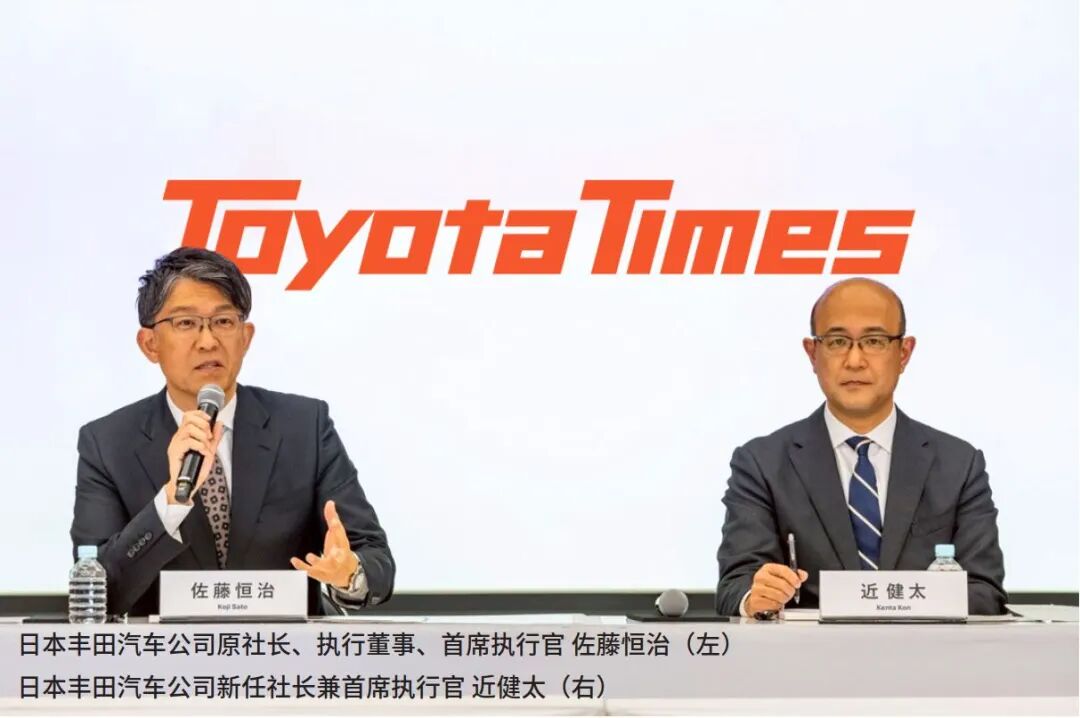
However, while the market was still savoring the scene of Akio Toyoda taking over the reins from his predecessor in 2023 and embarking on a transformation journey, in 2026, Toyota once again announced a major personnel change: Akio Toyoda officially stepped down as CEO of Toyota Motor Corporation, with former Chief Financial Officer Tadaaki Kinoshita taking over the position.
Changing CEOs twice in just three years not only disrupts the long-standing steady management rhythm of this Japanese automaker but also sends a strong signal to the outside world—this industry giant, which still sits firmly at the top of global sales and remains highly profitable, is not resting on its laurels despite its leading position but is instead deeply mired in a strong sense of crisis.
Toyota is Not 'As Stable as Mount Tai'
'The environment we are in is becoming increasingly severe. Some may argue based on financial report data that 'Toyota is still as stable as Mount Tai,' but that is far from the truth.' At the Toyota Global Supplier Conference at the end of March this year, incoming CEO Tadaaki Kinoshita opened with this viewpoint to all of Toyota's supplier partners. He straightforward (bluntly stated) that Toyota's competitive foundation is significantly weakening. Today, Toyota is facing bottlenecks and challenges similar to those during the 2008 Lehman crisis.
This statement may sound somewhat 'arrogant'—after all, Toyota's net profit for just the first three quarters of FY2026 (April 2025 to December 2025) was a staggering 3.03 trillion yen (approximately RMB 129.8 billion), close to the combined annual profits of more than a dozen mainstream Chinese automakers. However, as a financial expert, Kinoshita is clearly more aware than anyone of the hidden concerns behind the financial reports.
According to Toyota's financial report data, in the first three quarters of FY2026, Toyota's operating revenue was approximately 38.09 trillion yen, an increase of about 2.41 trillion yen year-on-year, or 6.8%. However, its operating capacity showed a significant decline, with operating profit for the same period at approximately 3.2 trillion yen, down 13.1% year-on-year; net profit was about 3.03 trillion yen, a decrease of approximately 1.07 trillion yen year-on-year, or 26.1%; meanwhile, Toyota's net profit margin also fell from 17.7% in the same period of FY2025 to 9.34%, a year-on-year drop of 47.3%, nearly halving.
Profit is the foundation of a company's survival and development, while profit margin is a key indicator of a company's operating quality and core competitiveness. Since last year, with the superposition (superimposition) of multiple factors such as intensified market competition, rising transformation costs, and geopolitical impacts, most companies have been hit to varying degrees, with declining profitability and slowing profit growth being the root causes of the sense of crisis felt by Toyota and most automakers worldwide.
What is Holding Toyota Back?
Specifically for Toyota, this awkward (embarrassing) situation of 'increasing revenue without increasing profits' stems from the divergent performance of its regional markets worldwide. From a market distribution perspective, North America is its largest single market, with sales reaching 2.9297 million units in 2025; domestic Japanese sales were 2.07 million units, up 11.9% year-on-year; even in the Chinese market, where new energy penetration exceeds 50%, Toyota's sales reached 1.784 million units, achieving a slight increase of 0.23%.
Among them, the North American market was once the core pillar of Toyota's global profits, contributing over 40% of its global operating profit, but it has now become the largest single market dragging down its overall profitability. In the first three quarters of FY2026, Toyota's North American operations reported an operating loss for the first time, with a loss of 56 billion yen, compared to a profit of over 100 billion yen in the same period last year, forming a stark contrast.
The direct trigger for this dramatic change was the United States' imposition of a 15% tariff on imported vehicles starting in August 2025, which, when combined with existing tariffs, brought the comprehensive tariff on Japanese vehicles to 27.5%. Toyota's North American operations adopt a 'local production + import supplementation' model, and despite having 14 assembly plants in North America, it still relies on imports from Japan for one-fifth of its models.
Among them, high-end Lexus models were the most severely impacted—taking the Lexus LS as an example, its imported version accounts for 65% of U.S. sales, and the tariff increase raised the cost per vehicle by approximately $8,000. To maintain market share, Toyota chose to absorb most of the tariff costs itself rather than passing them on to consumers. In just the first half of FY2026, tariffs had a negative impact of 900 billion yen on Toyota, with full-year profit erosion estimated at 1.45 trillion yen.
To circumvent trade barriers, Toyota was forced to accelerate the localization of its North American supply chain, planning to invest $1.2 billion to expand its Kentucky plant and increase model production concentration and parts (component) localization rates. However, this transformation has pushed up fixed costs in the short term, further compressing profit margins and creating a short-term dilemma of 'increased investment and shrinking profits.' Additionally, growth in the North American market has structural limitations—although sales of electrified models increased by 29.7% year-on-year, 92% of them were hybrid models, with pure electric models accounting for only 1.9%, contradicting the long-term trend of increasing new energy penetration in the U.S. market and putting Toyota under greater pressure to comply with emissions reduction regulations in regions like California.
Continued Pressure in the Chinese Market
As the world's largest single automotive market, China was once an important profit growth driver for Toyota. However, today, a pattern of 'strong domestic brands, weak joint ventures' has emerged, with joint venture models represented by Toyota facing strong 'encirclement and suppression' from domestic brands in the Chinese market.
According to the domestic automaker retail sales rankings released by the China Passenger Car Association in March 2026, BYD took the monthly champion (championship) with 194,000 units sold, capturing an 11.8% market share, while GAC Toyota and FAW Toyota ranked seventh and eighth with 66,000 and 60,000 units sold, respectively. Among them, FAW Toyota saw a year-on-year decline of 15.5%, with a market share of only 3.6%, widening the gap even further.
More critically, Toyota's lagging electrification transformation in China has caused it to miss out significantly on the development dividends of the new energy market. Although its pure electric sales in China reached 199,000 units in 2025, up 42% year-on-year, and its main model, the bZ3X, sold over 80,000 units in its first year on the market, even claiming the pure electric (pure electric) sales champion (championship) among joint venture brands for five consecutive months, there is still a huge gap compared to Chinese domestic brands like BYD and Geely. The proportion of pure electric models in its total Chinese sales remains low, failing to replicate the success of the hybrid era.
Furthermore, although Toyota has initiated localized R&D reforms in China, establishing a unified 'ONE R&D' system, delegating decision-making power for China-exclusive model development to local teams to shorten R&D cycles, and collaborating with Chinese companies like BYD and Huawei to address gaps in electrification and intelligence, it is still difficult to reverse its passive position in the Chinese market in the short term.
It is worth mentioning that in traditional strong markets like Southeast Asia and Europe, Chinese new energy automakers are also accelerating their layout (deployment), challenging Toyota's once-solid market position with cost-effective electric products. Internally, there is sluggish growth in new energy transformation that falls short of market expectations, and externally, there is pursuit and blockade from both old and new competitors. Toyota's once-impregnable market dominance is being constantly shaken.
Why Did Toyota Change CEOs?
Having understood the multiple challenges Toyota faces, let's return to the core question: What is the connection between changing CEOs twice in just three years and these challenges? The answer is clear: Every CEO change at Toyota is deeply tied to its current development challenges and represents an inevitable choice to consolidate its position as the world's top automaker, address transformation pressures, and seek long-term breakthroughs. Behind this CEO change lies both Toyota's sober recognition of its own situation and an urgent anticipation for the company's future development.
From the selection and timing of the two CEO changes, it is not difficult to see that Toyota's personnel adjustments have always revolved around 'solving current dilemmas and adapting to future trends.'
Let's go back to 2023 again. When Akio Toyoda took office, the global automotive electrification wave had already swept across the industry. Although Toyota held an advantage in hybrid technology, its lag in the pure electric field was becoming apparent. At that time, the core task of Akio Toyoda, who had a technical background, was to 'initiate transformation.' During his tenure, he repeatedly emphasized that 'without change, there is no survival' and set about breaking Toyota's long-standing path dependency on hybrid technology, accelerating diversified powertrain layouts, promoting intelligence upgrades, and attempting to seize the initiative in the new energy sector while maintaining the fundamental position of fuel-powered and hybrid vehicles.
During this period, Toyota launched the bZ series of pure electric models, increased R&D investment in solid-state batteries and hydrogen fuel cell batteries, and optimized its global supply chain layout—all concrete implementations of Akio Toyoda's transformation strategy. Under his leadership, although Toyota failed to catch up with the pace of electrification of Chinese automakers, it still achieved a 4.6% sales growth in 2025, holding onto its position as the world's top seller and laying the foundation for subsequent strategic adjustments.
The succession by Tadaaki Kinoshita in 2026 is even more precisely aligned with Toyota's current core pain point of 'increasing revenue without increasing profits'—as a CEO with a financial background, Kinoshita's core mission is to 'improve quality and efficiency.' While continuing the transformation direction, he focuses on profit repair and addressing the dilemmas of high costs and halved profit margins. After taking office, Kinoshita quickly sent a crisis signal at the Global Supplier Conference, essentially to rally consensus among the supply chain and promote cost reduction through upstream and downstream collaboration—a direct reflection of his financial thinking.
Being Vigilant in Peace Time for Sustainable Development
In fact, Kinoshita has already begun to implement a series of targeted measures: In cost control, he optimizes the global production layout, reduces import dependency in high-tariff regions, increases local production capacity investment, and negotiates with core suppliers to compress component procurement costs, aiming to reduce per-vehicle manufacturing costs by 8% by FY2027; in market layout, he scales back investment in non-core markets, focuses on the three core regions of North America, China, and Japan, and emphasizes localized R&D and electrification cooperation in the Chinese market, leveraging BYD's battery technology and Huawei's intelligent cockpit technology to quickly address product gaps and enhance the competitiveness of pure electric models; in technology investment, he adjusts the R&D budget structure, maintains investment in solid-state battery R&D while slowing down investment in some non-core technologies, and focuses on hybrid technology optimization and pure electric platform iteration to achieve precise resource allocation and avoid the dilemma of 'dual-track efforts and resource dispersion.'
Additionally, Akio Toyoda's excessive workload from concurrent positions was also a major incentive (contributing factor) in his decision to step down. After taking office, Akio Toyoda not only managed Toyota's daily operations but also served as Vice Chairman of the Japan Business Federation (Keidanren) in May 2025 and succeeded as Chairman of the Japan Automobile Manufacturers Association in January 2026. These social positions required him to devote significant energy to policy lobbying, industrial collaboration, and external liaison, making it difficult for him to fully focus on Toyota's internal management and transformation reforms.
As pointed out by Mitsushiro Fukao, Chief Economist at Itochu Research Institute, 'As the top leader of Japan's automotive industry, which supports the economy, it is clear that President Toyoda has an excessive workload by simultaneously serving as Vice Chairman of Keidanren and Chairman of the Automobile Manufacturers Association.' Against the backdrop of an increasingly challenging external environment, a leader who can fully dedicate themselves to internal management and profit improvement is more needed. Therefore, Akio Toyoda's resignation and Tadaaki Kinoshita's succession became an inevitable choice.
Akio Toyoda's transformation pointed the direction for Toyota, while Tadaaki Kinoshita's appointment injected a 'profit-oriented' core logic into the transformation, with each successor carrying a clear strategic mission. As Kinoshita stated in his inaugural speech, 'The only thing I must do now is to ensure that none of our suppliers or any stakeholders who trust Toyota suffer losses or disturbances. To achieve this, we must reorganize our current competitive foundation and regain 'Toyota's strength'—Toyota's goal has never been just leading in sales but achieving 'dual leadership in sales and profits,' manufacturing better cars, maintaining its industry position amid the global automotive industry transformation, and achieving long-term sustainable development to support the entire supply chain.'
Looking back at Toyota's development history, it has weathered the impact of the Middle East oil crisis and the global economic depression brought by the Lehman crisis, with each challenge becoming an opportunity to consolidate its advantages and achieve growth. Today, facing a new round of industrial transformation, Toyota once again stands at a new starting point. In the reporter's view, changing CEOs twice in three years is a response to challenges and the beginning of a breakthrough. This 'dynamic adjustment, precise replacement' personnel strategy precisely reflects Toyota's maturity and sobriety as a century-old automaker: It knows that being vigilant in peace time is essential for sustainable development, and that proactive change is the key to long-term leadership.
Note: This article was first published in the 'Hot Topic Tracking' column of the May 2026 issue of 'Auto Review' magazine. Please stay tuned.
Image: From the Internet
Article: Auto Review
Layout: Auto Review
-
![]()
Sales Plummet by 90%! Why Is Dongfeng Peugeot Citroën Automobile Struggling to Maintain Its Foothold in the French Car Market?
-
![]()
How Far Are We from AI Payments When Agents Want to 'Take Over' Our Wallets?
-
![]()
The First Cold Shower for All-in AI: Cost Reduction Hasn't Arrived, But the Token Bill Has
-
![]()
Automotive Market News: BYD Releases China's First 4nm Intelligent Driving Chip
-
![]()
Changan Qiyuan Intelligent Driving Accident: A Wake-Up Call for the Entire Intelligent Driving Sector
-
![]()
Toyota Changes CEOs Twice in Three Years Amid Challenges
-
![]()
Why Did the Former Chairman of Ferrari Get 'Angry' About Its First All-Electric Model, Luce?
-
Exclusive! Gas Leak at SK Hynix’s Cheongju Facility in South Korea Leaves 6 Injured—Could DDR5 Prices Surge Once More?