Changan Qiyuan Intelligent Driving Accident: A Wake-Up Call for the Entire Intelligent Driving Sector
 06/01 2026
 507
507
Today, let's delve into the topic of intelligent assisted driving.
Currently, intelligent assisted driving stands as a pivotal selling point for new energy vehicles.
Automakers are relentlessly boosting their technological investments, spanning from highway to urban navigation, and highlighting the value of intelligent driving systems. They aim to capture market share by showcasing "smarter, more effortless" performance.
Yet, beneath the industry's burgeoning popularity, safety concerns and public misconceptions persist.
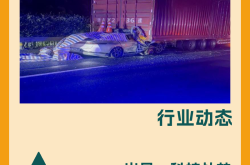
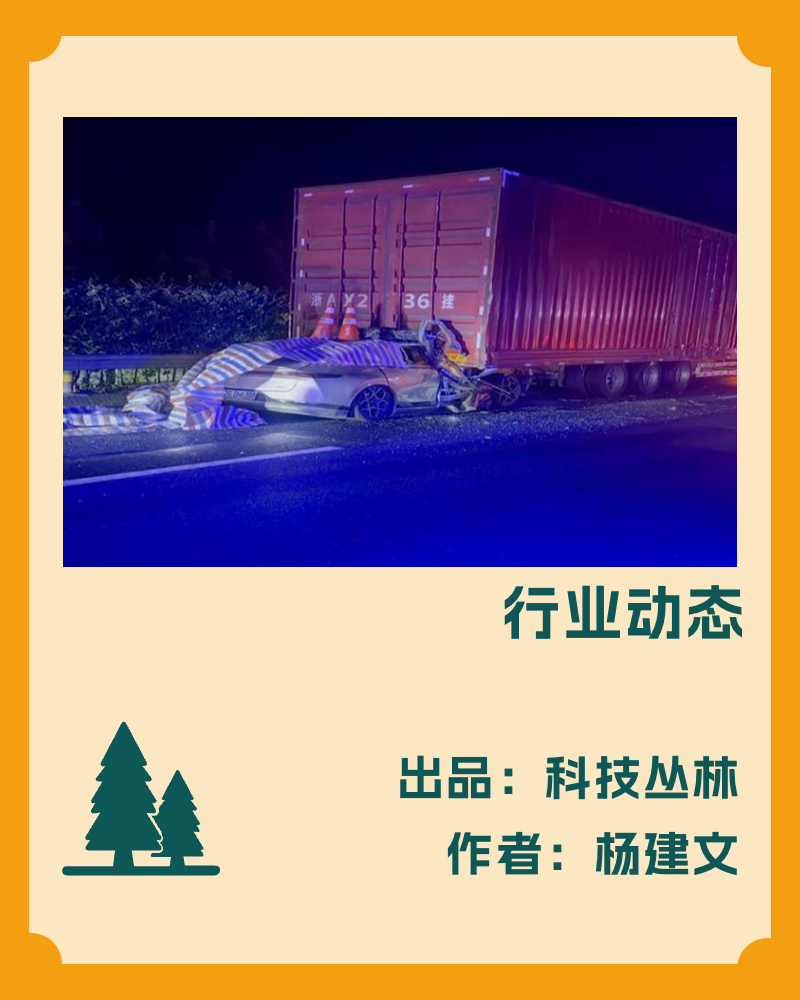
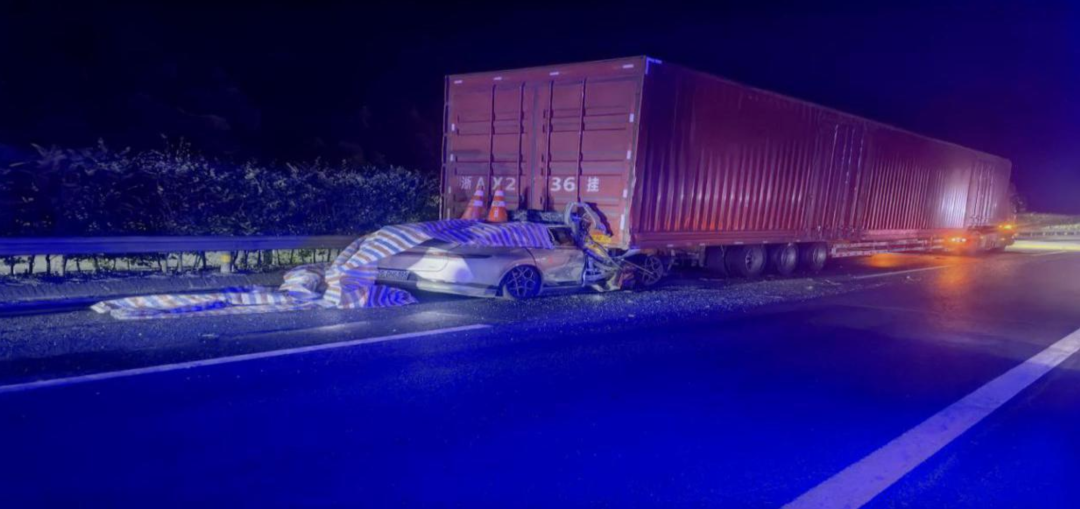
On the morning of October 2, 2025, a tragic accident unfolded: a Changan Qiyuan A07 collided with a semi-trailer, resulting in three fatalities.
Several months later, on May 29, 2026, the Ganzhou Emergency Management Bureau released the "Ganzhou Ruijin Jiguang Expressway '10.2' Major Road Traffic Accident Investigation Report," revealing the full accident details and the official responsibility determination.
This tragedy not only represents a profound loss of life but also serves as a stark reflection of the deep-seated issues within the L2 assisted driving industry, including technological limitations, marketing exaggerations, and safety awareness.
01 Accident Overview
At 3:54 AM on October 2, 2025, Zhang departed from the Ningdu East Service Area on the Jiguang Expressway in the Changan Qiyuan A07. At 3:59:34 AM, he manually activated the IACC function (entering intelligent driving assistance mode).
Around 4:00 AM, in the Ruijin section of the Jiguang Expressway (left fast lane from Ruijin to Guangchang), Zhang's vehicle rear-ended a heavy semi-trailer that had stopped due to a breakdown. Zhang, his wife, and daughter died instantly.
EDR data indicated that from 4:00:00 AM to 4:00:13 AM, the steering wheel was not being held. From 4:00:09 AM to 4:00:14 AM, during the accident, the driver did not press the accelerator or brake pedals.
The Jiangxi Ganzhou Forensic Identification Center ruled out alcohol or drug influence on the drivers, Tan *Bing and Zhang *, at the time of the accident.
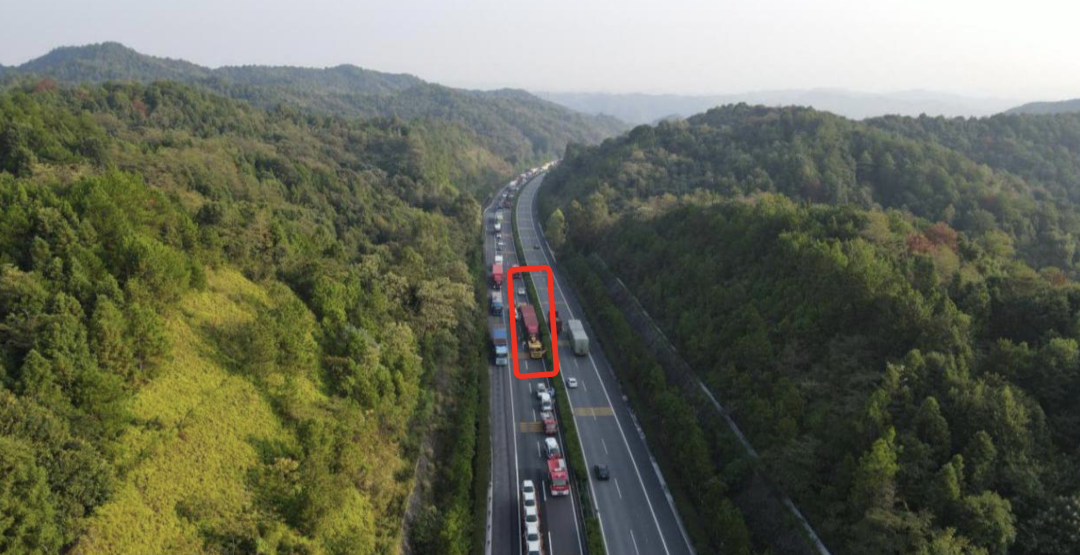
Certainly, the semi-trailer had its share of issues.
Driver Tan Bing failed to switch fuel tanks, causing the vehicle to stall in the left fast lane due to fuel depletion. He neglected to activate hazard lights, call the police, or properly set up warnings, placing only four traffic cones (the farthest being just 45 meters away, contrary to the legal requirement of a 150-meter triangular warning sign). The trailer was illegally extended, the rear lights were non-functional, and the reflective markings were dirty and peeling, rendering it nearly "invisible" at night.
The final responsibility determination was clear: both parties were at fault.
Zhang, the sedan driver, was directly responsible for the accident due to completely relinquishing control of the steering wheel while using intelligent driving assistance on the highway and failing to observe and take over. However, as he died in the accident, he was exempt from punishment.
Tan Bing, the semi-trailer driver, faced criminal detention by judicial authorities for driving a vehicle with mechanical components not meeting technical standards and failing to set up proper warnings after a breakdown.
02 Changan Qiyuan's Darkest Hour
This accident marks a significant crisis of brand trust for Changan Qiyuan and even Changan Automobile, with repercussions far beyond a single public opinion incident.
Firstly, it directly shattered market trust in Qiyuan's intelligent driving capabilities.
The public does not differentiate between IACC (driving assistance) and true autonomous driving. They perceive only one fact: your intelligent driving system was involved in an accident.
The impact on the brand perception of Changan Qiyuan's intelligent driving technology was immediate.
Moreover, once such a perception takes root, the cost of rectification is immense.
It affects not only the Qiyuan sub-brand but also tarnishes the intelligent driving image of the main Changan brand.
More pragmatically, it will directly impact sales.
In the fiercely competitive new energy vehicle market, where users are increasingly safety-conscious regarding intelligent driving, the "intelligent driving accident" label will directly influence potential customers' decisions, leading to increased hesitation and decreased conversion rates.
Competitors will also seize this opportunity to bolster their safety-focused marketing, further squeezing Qiyuan's market share.
03 Sounding the Alarm for the Industry
Let's use this incident to discuss an industry-wide issue: exaggerated marketing claims.
Examining the product launches of various automakers, the scenarios depicted for intelligent driving are strikingly similar: ideal conditions with good weather, clear lane markings, and no sudden obstacles.
Or they only showcase successful clips of extreme scenarios.
This undoubtedly provides consumers with a direct visual impact, elevating the image of their intelligent driving technology.
However, they fail to disclose that achieving these results required numerous attempts; only the successful clips are shown.
"Who cares about our failures? We succeeded, didn't we?"
Thus, this becomes their true "display of strength."
Yet, automakers should question themselves: Is the intelligent driving showcased at product launches the same as what consumers experience on the road?
In reality, many automakers know the answer but choose to ignore it.
Consequently, this misinformation leads consumers to believe that "automakers' intelligent driving is so advanced that they can take their hands off the wheel."
This information asymmetry is the breeding ground for accidents.
Hence, we witness various absurd behaviors online: sleeping while using assisted driving, bypassing intelligent driving detection with auxiliary devices, and moving to the back seat while the system is active.
Furthermore, this incident exposes another issue: some automakers focus on competing over the number of radars/cameras and chip computing power while neglecting core safety shortcomings such as obstacle recognition, nighttime/rainy/foggy low-visibility performance, strong monitoring and Graded takeover (hierarchical takeover) for hands-off/distracted driving, and AEB (Autonomous Emergency Braking) effectiveness.
This accident provides a clear lesson: safety must always be the top priority for intelligent driving technology.
Our entire industry should view this incident as a mirror and a wake-up call.
04 What Should the Industry Do Next?
If the industry does not fundamentally adjust its direction, similar tragedies will recur.
Therefore, automakers, suppliers, and the entire industry must re-examine their marketing claims.
Standardize terminology and prohibit misleading expressions such as "autonomous driving, completely hands-free, driverless" that are easily confused with Level 4 autonomy.
For Level 2 assisted driving, clearly label the level, capabilities, and risk warnings. The key is to define boundaries clearly, avoid exaggeration, and refrain from wordplay or small-print disclaimers.
At product launches, in addition to showcasing the upper limits of capabilities, the lower limits must also be demonstrated to let consumers clearly understand the system's boundaries.
While this may "weaken" selling points in the short term, it protects the brand in the long run.
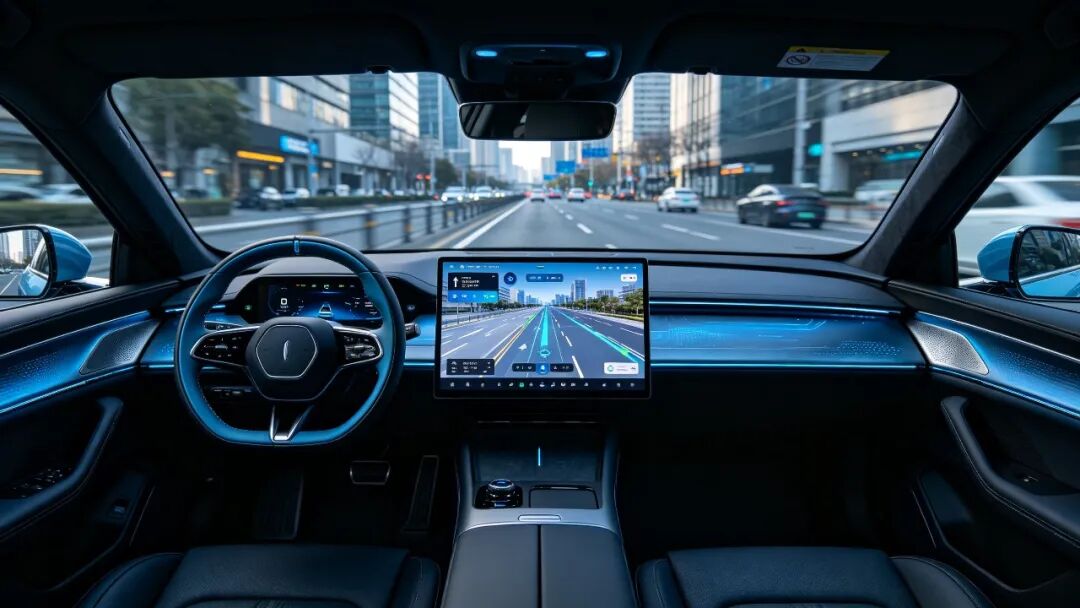
Additionally, it is crucial to reinforce primary responsibilities by placing safety verification at the core of product launches and OTA (Over-the-Air) updates. Research and development priorities should also shift back to safety:
1. Enhance recognition capabilities for stationary obstacles in highway/urban areas, nighttime, and low-light conditions;
2. Strengthen driver attention monitoring systems by incorporating driver detection systems, steering wheel hand-off detection, seat occupancy detection, and other multi-dimensional verification methods. Simultaneously, upgrade from weak reminders to strong alerts, with corresponding mechanisms to technically restrict dangerous user behaviors;
3. Expand testing coverage for extreme scenarios to transform ideal laboratory performance into reliable safety capabilities under real-world conditions, rather than just creating "demonstration-level intelligent driving."
Finally, the industry should jointly promote education to establish the correct understanding that "assisted driving = assistance, with the driver fully responsible at all times. Hands-off and distracted driving are strictly prohibited, and readiness to take over is mandatory," dispelling the notion of "intelligent driving as a panacea."
05 Rationally Viewing Intelligent Driving and Respecting Technological Boundaries
This incident is a heart-wrenching tragedy, but we must not overreact with fear.
We should not deny the value of Level 2 assisted driving, as it can indeed reduce driving fatigue and enhance safety when used reasonably.
However, it also serves as a stark reminder: technology always has boundaries, systems always have limitations, and drivers are always the primary safety responsible parties. We must view intelligent driving rationally, respect technological boundaries, and avoid abuse.
Only with such a mindset can we truly make good use of this powerful tool.
For automakers, less marketing hype and more reverence for safety; fewer parameter stackings and more scenario verifications.
For the industry, abandoning hype and returning to fundamentals, standardizing marketing, addressing safety shortcomings, and properly educating users are essential for intelligent driving to truly serve people rather than create risks.
Technology should be used for good, with safety as the priority. Respect boundaries and remain cautious from start to finish.
Only in this way can the industry progress further.
The end.
-
![]()
Sales Plummet by 90%! Why Is Dongfeng Peugeot Citroën Automobile Struggling to Maintain Its Foothold in the French Car Market?
-
![]()
How Far Are We from AI Payments When Agents Want to 'Take Over' Our Wallets?
-
![]()
The First Cold Shower for All-in AI: Cost Reduction Hasn't Arrived, But the Token Bill Has
-
![]()
Automotive Market News: BYD Releases China's First 4nm Intelligent Driving Chip
-
![]()
Changan Qiyuan Intelligent Driving Accident: A Wake-Up Call for the Entire Intelligent Driving Sector
-
![]()
Toyota Changes CEOs Twice in Three Years Amid Challenges
-
![]()
Why Did the Former Chairman of Ferrari Get 'Angry' About Its First All-Electric Model, Luce?
-
Exclusive! Gas Leak at SK Hynix’s Cheongju Facility in South Korea Leaves 6 Injured—Could DDR5 Prices Surge Once More?