Over 12 Years, the Average Passenger Vehicle Has Gained Nearly 400 kg, Sparking Netizens' Queries: When Will New Energy Vehicles Revert to Their 'Standard Size'?
 06/08 2026
 457
457
Data indicates that by 2024, the average curb weight of passenger vehicles in China had soared to 1,704 kg, marking an increase of nearly 400 kg from 2012. Furthermore, around the year 2000, the typical width of household new energy vehicles on the market was predominantly 1.7 meters. By 2015, this figure had expanded to 1.8 meters. This week, household vehicles nearing 2 tons in weight have garnered significant attention due to their escalating size and heft. 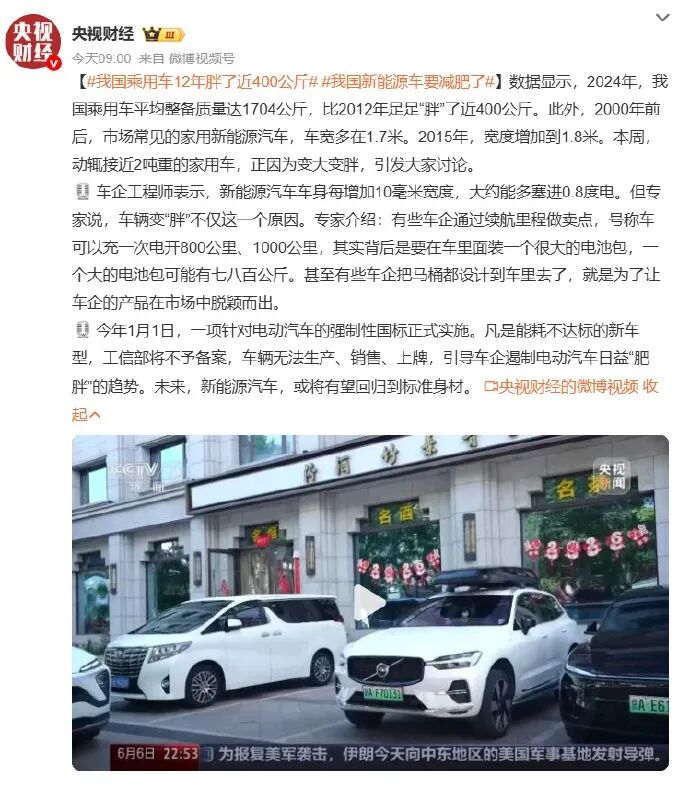
Some netizens have voiced concerns, deeming this a significant issue. An investigation reveals that new energy vehicles are the primary culprits behind this weight gain, with an average curb weight surpassing 2 tons, and certain full-size models easily exceeding 3 tons. 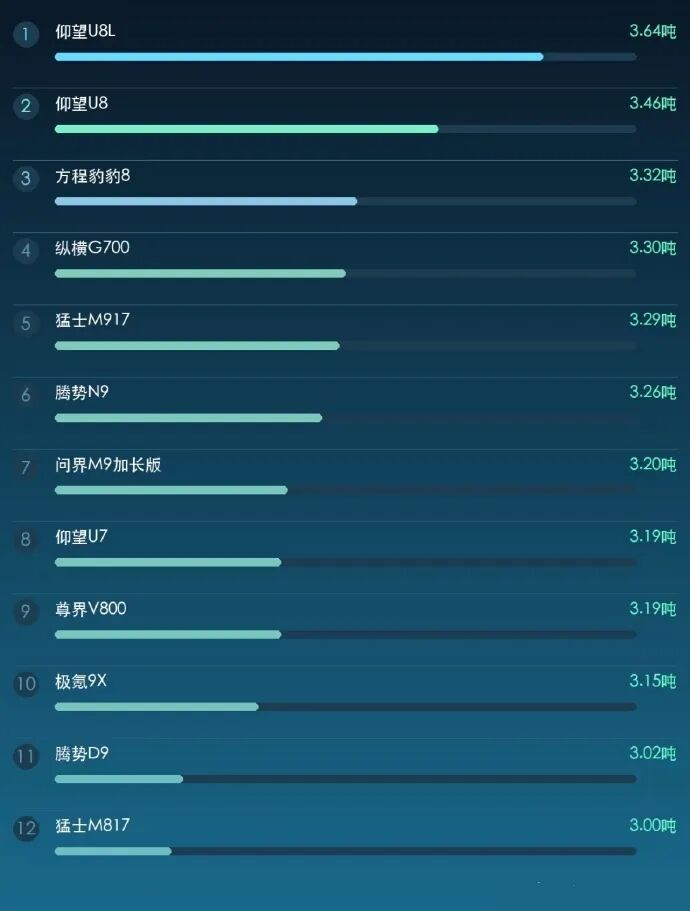
Experts elucidate that some automakers leverage driving range as a key selling point, boasting that their vehicles can travel 800 or even 1,000 km on a single charge. However, achieving this necessitates the installation of a substantially large battery pack, which can weigh as much as 700-800 kg. Some automakers even go to the extent of incorporating extravagant features like toilets in their vehicles to distinguish themselves in the market. Yet, the blind pursuit of increased size and weight directly results in skyrocketing energy consumption (a 7.5% reduction in electricity consumption for every 100 kg reduction in weight), heightened safety risks (a 10% increase in vehicle weight leads to a 5%-8% increase in braking distance), and escalating costs (a 20% reduction in tire lifespan and a 30%-50% reduction in the lifespan of chassis components). 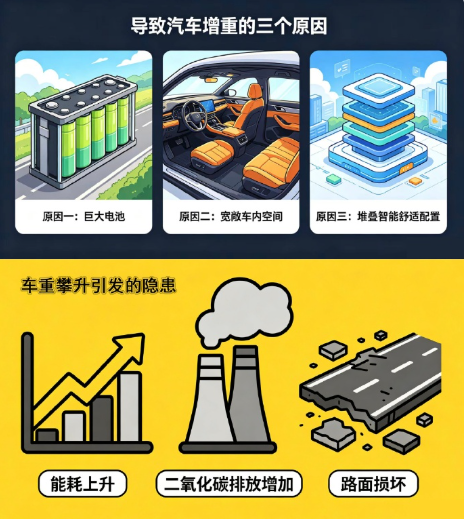
From a technical standpoint, expediting the development and production of semi-solid-state batteries can also contribute to weight reduction. Moreover, integrated die-casting and the utilization of composite materials can effectively achieve weight reduction. Given the recent surge in discussions on this topic, automakers are likely cognizant and will steer clear of homogeneous strategies such as 'stacking batteries for range' in their future R&D endeavors. 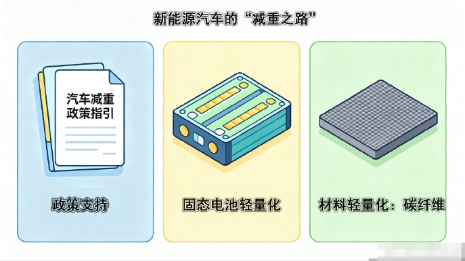
Weight reduction is not as straightforward as it may seem. Truly effective methods often entail material upgrades and structural optimization, which are costly and imperceptible to users. Companies will only invest in these unseen technologies if they yield sufficient profits; otherwise, apart from resorting to cost-cutting measures and using inferior materials, there appears to be no superior alternative. However, on January 1, 2024, a mandatory national standard for electric vehicles was officially enforced. Any new models that fail to meet energy efficiency standards will not receive approval from the Ministry of Industry and Information Technology for production, sales, or registration, thereby guiding automakers to curb the escalating 'obesity' of electric vehicles. In the foreseeable future, new energy vehicles may revert to their standard size.
-
![]()
5 Years, 170 Billion Yuan Wealth Vanishes: Where Did Wei Jianjun Go Wrong?
-
![]()
What Exactly Has Changed with the AI That Automatically Opens a Browser to Search Xiaohongshu?
-
![]()
Over 3,000 Heat-Related Deaths Daily, Yet India Imposes Ban on Chinese Air Conditioner Imports: Unraveling the Underlying Motives
-
![]()
Second-Hand Car Prices Plummet: Are Gasoline Vehicles on the Verge of Collapse?
-
![]()
800V vs. 48V: Which Reigns Supreme? Online Clash Between Executives Intensifies Debate Over Li Auto and NIO's Suspension Systems | MIRROR Pro
-
![]()
Anthropic Files, MiniMax Rushes for A-Share Listing, but What I Really Want to Discuss is the M3 Model
-
![]()
Proceed with Caution Before Entering the Indian Auto Market: Even Musk Faced Challenges, What Makes Chery Think It Can Succeed?
-
![]()
EU Intends to Engage in Trade War with China Amid Chinese Cars Nearing 10% of Monthly Sales in Europe