Why Are New Energy Vehicles Becoming Increasingly 'Bulky'?
 06/08 2026
 564
564
Have you observed that the showrooms for new energy vehicles are now dominated by 'bulky' models? Vehicles that are over 5 meters long, have a wheelbase of nearly 3 meters, and weigh more than 2.5 tons are now commonplace. From compact SUVs to full-sized flagships, it appears that a vehicle must be large to be considered premium and heavy to be deemed safe. The focus of competition in the new vehicle market has quietly shifted from technological innovation to increasing size and weight. Many netizens humorously suggest that new energy vehicles need to 'slim down,' highlighting the industry's collective inclination towards larger and heavier designs.
This trend is driven by domestic consumers' increasing preference for spacious interiors and high-end features. Automakers that recognized this demand early on were the first to market 'large-size, high-configuration' models as key selling points. Subsequently, many competitors followed suit, and the 'race for larger vehicles' quickly spread throughout the automotive industry.
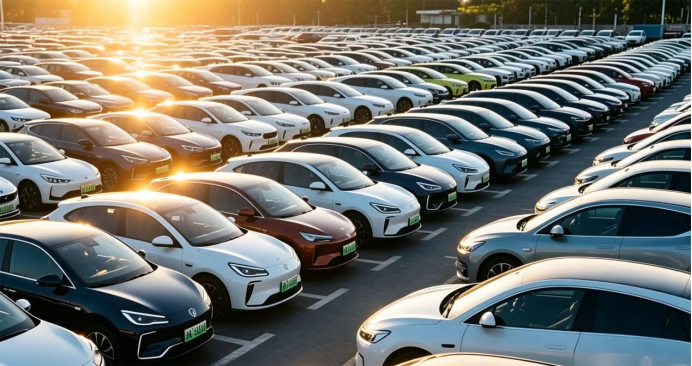
'Big' has become the norm, but are large vehicles truly a 'necessity'? It's undeniable that families with two or three children have practical needs for six- or seven-seater vehicles, and family travel scenarios do exist. However, how many families travel with a full load every weekend? More often than not, these large vehicles, marketed as 'mobile homes' or 'family travel essentials,' end up being cumbersome for daily commuting.
In reality, bigger isn't always better. Larger vehicles are often more difficult to maneuver and park; heavier bodies typically result in less agile handling and higher energy consumption, which to some extent increases the safety risk of being unable to brake in time. Consumers don't inherently prefer heavy vehicles; rather, current technology hasn't yet achieved the ideal state of being 'both large and light while energy-efficient.' To put it bluntly, the trend towards larger and heavier vehicles is a result of automakers passively engaging in competition to cater to current market trends. Not all brands are enthusiastic about this, but with competitors betting on 'large-size, high-configuration' models, no one dares to fall behind easily.
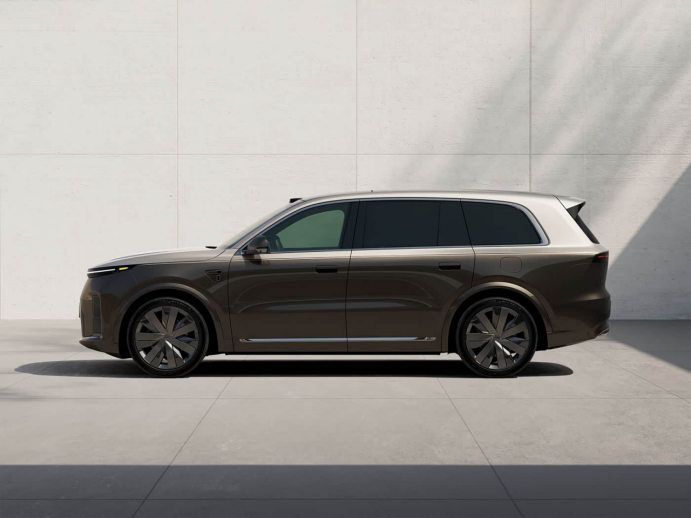
For new energy vehicles, larger body sizes often necessitate fitting larger battery packs to justify their 'large vehicle' positioning. However, larger battery capacities increase the vehicle's overall weight. Many automakers, aiming to make range figures more impressive, tend to equip vehicles with larger batteries. Take extended-range models, for example: can a model with a 40kWh battery double its all-electric range compared to a model with a 20kWh battery? The answer is no. Much of the additional energy is consumed by the increased vehicle weight, failing to translate into a meaningful range advantage. Instead, it wastes battery resources and manufacturing costs, making range improvements increasingly uneconomical.
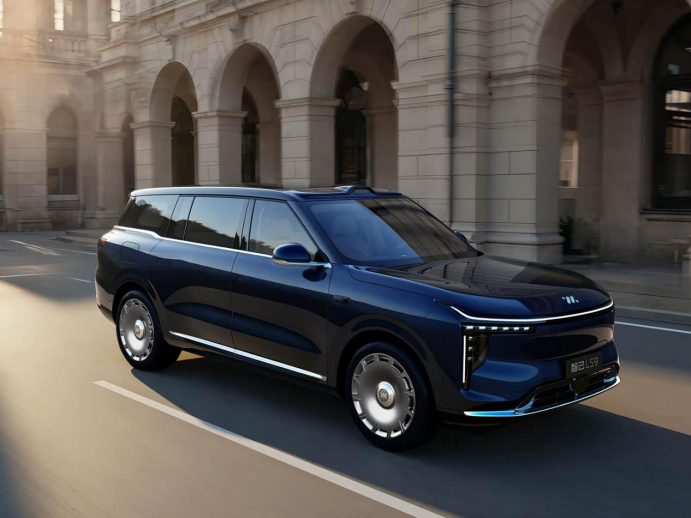
However, the costs of this 'weight competition' extend beyond higher electricity bills for owners and increased manufacturing costs for automakers. When weight gain evolves from an individual model choice into an industry-wide consensus, its impact spreads to social levels, including road maintenance and public resources.
William Li, the founder of NIO, once stated that every 20% increase in vehicle weight raises road damage rates to 2.07 times the original level. A 3-ton new energy vehicle causes roughly eight times more road damage than a 1.5-ton light vehicle.
Cui Dongshu, Secretary-General of the China Passenger Car Association, suggests implementing a tiered vehicle weight tax system to regulate the disorderly expansion of overweight models through market-based adjustments. Simultaneously, he advocates for prioritizing lightweight technology research to guide the industry away from the misconception of weight-based competition.
In fact, the mandatory national standard for electric vehicle energy consumption, set to take effect in 2026, links energy consumption limits to vehicle weight. Once a vehicle exceeds 2.71 tons, the energy consumption limit will no longer be relaxed. Multiple signals indicate that external constraints on the 'weight-gain spree' of new energy vehicles are tightening.
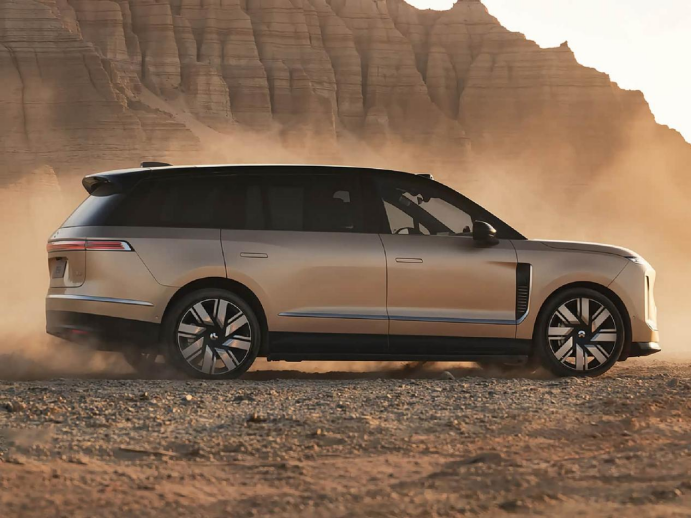
Ultimately, the issue boils down to technology itself. The trend of new energy vehicles becoming larger and heavier is essentially a stopgap solution under current technological constraints. Under existing conditions, automakers struggle to balance long range, low energy consumption, and vehicle handling agility. As a result, stacking batteries and enlarging body sizes have become seemingly stable, cost-controllable competitive strategies. In the short term, this approach can indeed capture market share and appeal to parameter-focused consumers, but in the long run, energy efficiency, handling, parking convenience, and even safety are quietly compromised.
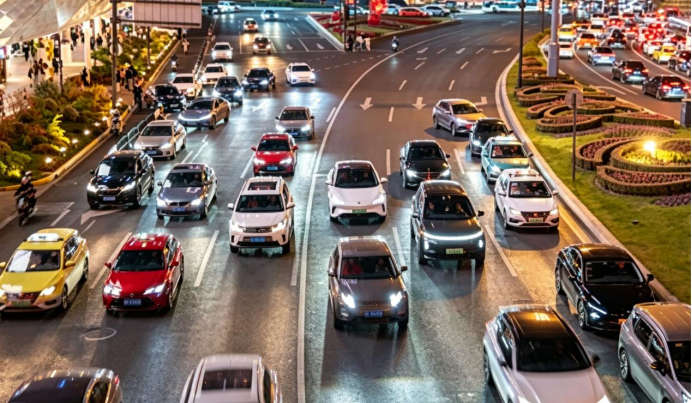
Amid the 'fierce competition' in the new energy vehicle market, some automakers have pioneered 'large-size, heavy-body' models as key selling points, prompting many competitors to follow suit. To gain an edge in this segment, increasing size and weight has become standard practice for numerous automakers.
As a result, the market has fallen into a somewhat 'dysfunctional' intense competition: specifications keep climbing, body sizes keep growing, yet significant advancements in core technologies remain elusive.
Automakers embroiled in this 'weight competition' might want to pause and consider: Does relentlessly increasing size and weight truly benefit the healthy development of the automotive industry? How far can such a strategy go?
(Image sources: Internet. Removal upon infringement notice.)
-
![]()
5 Years, 170 Billion Yuan Wealth Vanishes: Where Did Wei Jianjun Go Wrong?
-
![]()
What Exactly Has Changed with the AI That Automatically Opens a Browser to Search Xiaohongshu?
-
![]()
Over 3,000 Heat-Related Deaths Daily, Yet India Imposes Ban on Chinese Air Conditioner Imports: Unraveling the Underlying Motives
-
![]()
Second-Hand Car Prices Plummet: Are Gasoline Vehicles on the Verge of Collapse?
-
![]()
800V vs. 48V: Which Reigns Supreme? Online Clash Between Executives Intensifies Debate Over Li Auto and NIO's Suspension Systems | MIRROR Pro
-
![]()
Anthropic Files, MiniMax Rushes for A-Share Listing, but What I Really Want to Discuss is the M3 Model
-
![]()
Proceed with Caution Before Entering the Indian Auto Market: Even Musk Faced Challenges, What Makes Chery Think It Can Succeed?
-
![]()
EU Intends to Engage in Trade War with China Amid Chinese Cars Nearing 10% of Monthly Sales in Europe