American Cars: A Move Towards Global Isolation?
 06/15 2026
 510
510

Lead
Introduction
From shutting down its vehicle market to localizing the supply chain, the U.S. market is increasingly treading the path of global isolation.
Under the pretext of safeguarding domestic companies, the U.S. government has recently crafted a series of regulations so preposterous that they defy belief.
One such move is a calculated maneuver against Germany, a key ally. A bill under consideration by the U.S. Congress aims to bar automakers with ties to 'foreign adversarial countries' from entering the domestic market. This would deal a significant blow to Mercedes, which is nearly 20% owned by BAIC and Geely.
Another deceitful tactic targets Canada and Mexico, its immediate neighbors to the north and south. Recently, the U.S. has disregarded their opposition and sought to unilaterally revise the USMCA, mandating that 82% of vehicle components be made in North America, with 50% of the component output value originating from the U.S. itself.
Lastly, the U.S. government has not overlooked China's automotive industry, both upstream and downstream. According to the latest U.S. negotiation demands under the USMCA, all types of components required for vehicle production, including a substantial amount of in-vehicle electronics previously imported from China, must now be sourced within North America. If automakers flout this rule by using Chinese components, their vehicles will no longer be eligible for tariff exemptions.
Fueled by the urgency of ineffective protectionist policies, the U.S. has adopted an increasingly hostile stance towards its 'allies'. After blocking China's automotive access to the U.S., it has now turned its policy-driven attention to squeezing profits from other foreign automakers.
01 Japanese and Korean Automakers Deeply Rooted in North America Also Face Challenges
While towering tariff walls have blocked Chinese automakers, they have enabled foreign automakers from Japan and South Korea to maintain their market share in the U.S. With government support, U.S., Japanese, and South Korean automakers continue to dominate the U.S. automotive market despite global changes.
In the first quarter, while Chinese automakers made strides in Europe, Southeast Asia, and even Mexico, as well as the home markets of Japan and South Korea, the top ten brands and groups by U.S. sales remained divided among these three countries. Hyundai-Kia Group, in particular, sold 431,000 vehicles, a record high. Throughout FY2025, Toyota's global sales surpassed 10 million vehicles, with the U.S. market contributing significantly.
However, under the U.S.'s stringent trade conditions, automakers can only achieve sales in the U.S. by sacrificing a substantial portion of their profits.
Despite record Q1 revenue, Hyundai's operating and net profits plummeted, struggling to stay afloat, with U.S. auto tariffs being the primary culprit.
Toyota reaped substantial profits but paid a hefty price. In FY2025, Toyota's operating and net profits both declined by about 20% year-on-year, with its once-lucrative North American market suffering a rare operating loss. Toyota revealed that U.S. tariffs impacted its operating profit by 1.38 trillion yen. Not only did it fail to 'feast on the meat,' but it also 'gnawed on its own bones'.
Besides using tariffs to coerce Japanese and Korean automakers into surrendering profits, the U.S. has recently sought to 'pressure' other foreign automakers under the guise of 'foreign adversarial countries'.
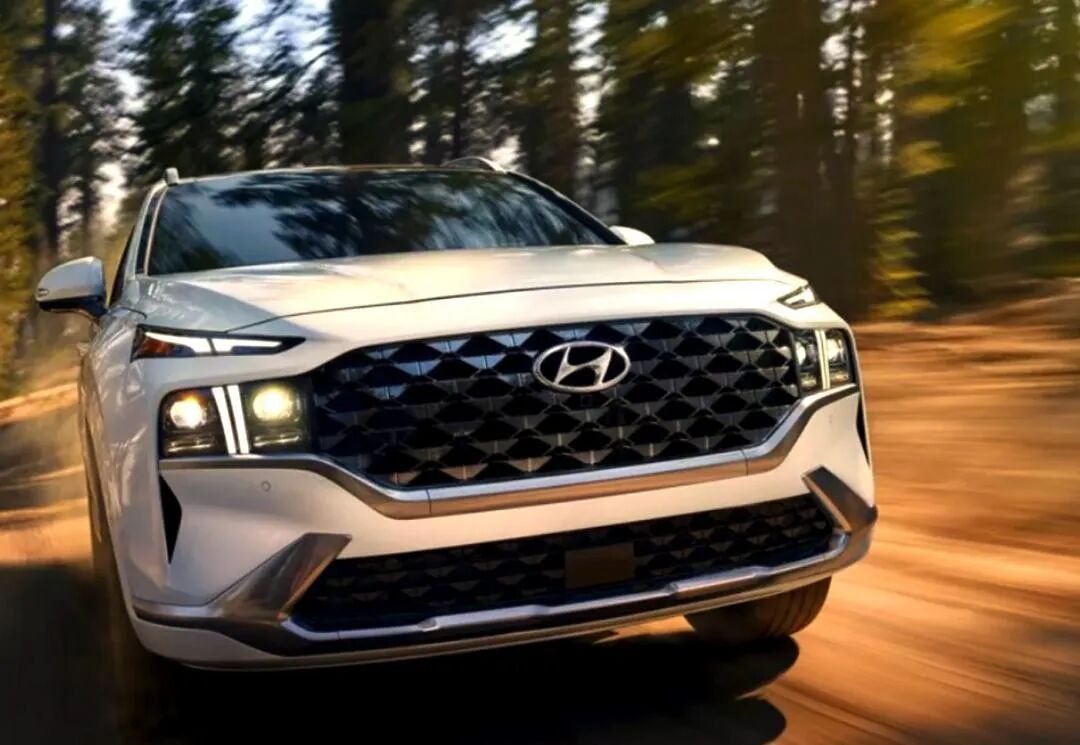
Recently, the U.S. is pushing forward a new bill targeting automakers with equity ties to China. The draft stipulates that any company more than 15% owned by the government or related entities of 'foreign adversarial countries'—a list that includes China—will be prohibited from producing, selling, delivering, or importing any vehicles in the U.S.
Based on this, Mercedes-Benz could be excluded from the U.S. market. BAIC Group is Mercedes' largest single shareholder with a 9.98% stake; Li Shufu, the founder of Geely, holds 9.69%. Combined, Chinese-linked stakes reach 19.67%.
Mercedes is reportedly in discussions with U.S. officials to find a solution. In Q1, Mercedes sold 78,500 vehicles in the U.S., demonstrating market recognition despite a slight sales decline. Even if forced to exit, U.S. consumers would likely resist.
This policy is less about punishing Mercedes and more about the U.S. further extracting profits from existing automotive brands amid stagnant market growth.
A closed market not only restricts foreign automakers but also hinders the development of U.S. domestic brands.
Under excessive protection, U.S. new energy vehicle development has stalled or even regressed. In Q1, U.S. auto sales slightly dipped to 3.684 million vehicles, with only 216,000 pure EVs sold, marking a sharp 5.7% year-on-year decline. The EV penetration rate fell to 5.8%, far below the 10.6% peak in Q3 2025.
Under this policy, Tesla, a U.S. pure EV brand, saw Q1 sales drop 15% year-on-year to 110,000 vehicles.
Even more burdened are automotive consumers. Over the past few years, the average price of new cars in the U.S. has surged from $38,500 in 2019 to $51,000, with few models priced below $30,000. Analysts attribute the decline in U.S. car buyers directly to affordability issues.
02 Localizing the Supply Chain
The soaring prices of new cars are closely linked to manufacturing practices.
Recently, media reported that the U.S. government plans to use USMCA trade talks to completely exclude Chinese components from North America's automotive supply chain. The U.S. aims to significantly raise regional component standards for North American-made vehicles. To qualify for USMCA tariff benefits, the proportion of North American-made components in vehicles must increase to 82%, with 50% of the component output value originating from the U.S. Additionally, in-vehicle electronics previously imported from China must now be sourced within North America, with violators losing tax exemptions.
The previous agreement lured some companies to establish lower-cost factories in Mexico. If the new deal is approved, automakers must relocate their domestic in-vehicle electronics production lines intact to North America, rendering past efforts futile and forcing factories into high-cost U.S. locations. While high U.S. wages may address local employment, the resulting surge in manufacturing costs will ultimately be borne by consumers.
Furthermore, the U.S. imposes a 25% tariff on imported vehicles and components, enabling U.S. parts companies to form a self-contained supply chain under tariff protection. This not only disrupts the global supply chain but also increasingly isolates the U.S. as a 'local species' automotive market.

Amid the wave of intelligentization, Chinese companies like 'DiDaHuaMo' (representing leading intelligent driving and cabin firms) have emerged as industry leaders. However, restrictions on vehicle and component imports leave U.S. consumers unable to directly access Chinese products, relying only on social media for a basic understanding.
U.S. controls on core components also make it difficult for some U.S. suppliers to enter China, with NVIDIA's chips being a prime example.
For U.S. domestic companies, excessive protection, diminishing government subsidies, and setbacks in three-electric system R&D have gradually sapped their vitality for electrification transformation. Since October last year, U.S. new energy vehicle sales have continued to decline year-on-year, with the light-duty vehicle market's new energy penetration rate struggling to surpass 8%.
Due to lagging competitiveness, U.S. domestic automakers have cut EV investments and increasingly resisted affordable Chinese EVs entering the U.S. Meanwhile, the U.S. government hopes to 'stand and profit,' obstructing Chinese automotive market entry while calling on Chinese automakers to build factories in the U.S., aiming to bring technology and localize the supply chain.
From shutting down its vehicle market to localizing the supply chain, the U.S. market is increasingly treading the path of global isolation. However, under the pressure of high domestic car prices, many U.S. consumers now cross borders to buy cars, exposing the false dividends of U.S. trade protection policies.
As the 'isolation plan' stumbles along, U.S. consumer burdens continue to grow, and the survival and development space for U.S. automakers remains constrained. How long will this self-serving trade protection farce continue? Consumers, markets, and automakers have little patience or time left to wait.
Editor: Cao Jiadong Copy Editor: He Zengrong

THE END
-
![]()
The Big Three Telecom Giants Face Accusations of Overcharging Loyal Customers: Why Do Costs Rise with Tenure?
-
![]()
Competitor’s CTO Criticizes Extended-Range Tech; Seres’ Zhang Xinghai Fires Back: It’s Far From “Pointless”
-
![]()
"Football Unites the World," But Not the North American Auto Industry
-
![]()
Electric vehicles are indeed cheaper, but who says gasoline cars are doomed?
-
![]()
The Consensus Between Li Shufu and Li Bin Indicates the Obsolescence of Blockbuster Logic
-
![]()
Used Fuel-Powered Vehicle Prices Plummet, Losing Two Years' Value in Just Two Months
-
![]()
Hidden Presence: Chinese Automakers 'Lurking' in the U.S. Market
-
![]()
BBA Struggles to Keep Pace with Domestic Car Competitors