"Football Unites the World," But Not the North American Auto Industry
 06/15 2026
 355
355
On June 10, just three weeks before the statutory deadline for renewing the United States-Mexico-Canada Agreement (USMCA), U.S. President Trump, when asked about the upcoming review of the agreement at the White House, said, "I don't plan to renew it."
In the same region, at 3 a.m. Beijing time on June 12, the 2026 FIFA World Cup hosted by the United States, Mexico, and Canada officially kicked off. For this sporting event, a common slogan is "Football Unites the World," but now, this slogan seemingly does not include the North American auto industry. While the World Cup highlights the image of cooperation among the three nations in public affairs, on the trade negotiation table, the USMCA review exposes real divisions at the trade and industrial policy levels. The narratives of sports diplomacy and economic competition unfold almost simultaneously, creating a stark contrast.

However, "not renewing" does not mean "immediate abolition" but pushes a negotiation that should have concluded by July 1 into a longer, more ambiguous game. For the entire North American auto industry, this storm means that rules of origin may be redefined, cross-border supply chains may face restructuring pressures, and the "policy predictability" that has been relied upon for decades may no longer exist.
The Bargaining Chip of "Non-Renewal"
According to USMCA provisions, six years after the agreement takes effect, the three countries must make a unanimous decision on whether to extend the agreement to 2042. If the three countries fail to reach a consensus on renewal by July 1, 2026, the agreement does not immediately lapse but enters a rolling annual review mode, meaning the three countries will meet annually to discuss renewal, and the agreement can operate until 2036 under a sunset clause. It is worth emphasizing that even in the annual review corridor, the three countries can still reach a new extension agreement during any annual review, so 2036 is not an absolute endpoint but a fallback deadline under the scenario of "failing to reach a renewal consensus throughout." The agreement will only terminate early if any party formally provides six months' written notice of withdrawal.
In other words, July 1 will be a crossroads: choose renewal, and the agreement continues for another 16 years; miss renewal, and enter a decade-long annual review corridor until the agreement expires in 2036.
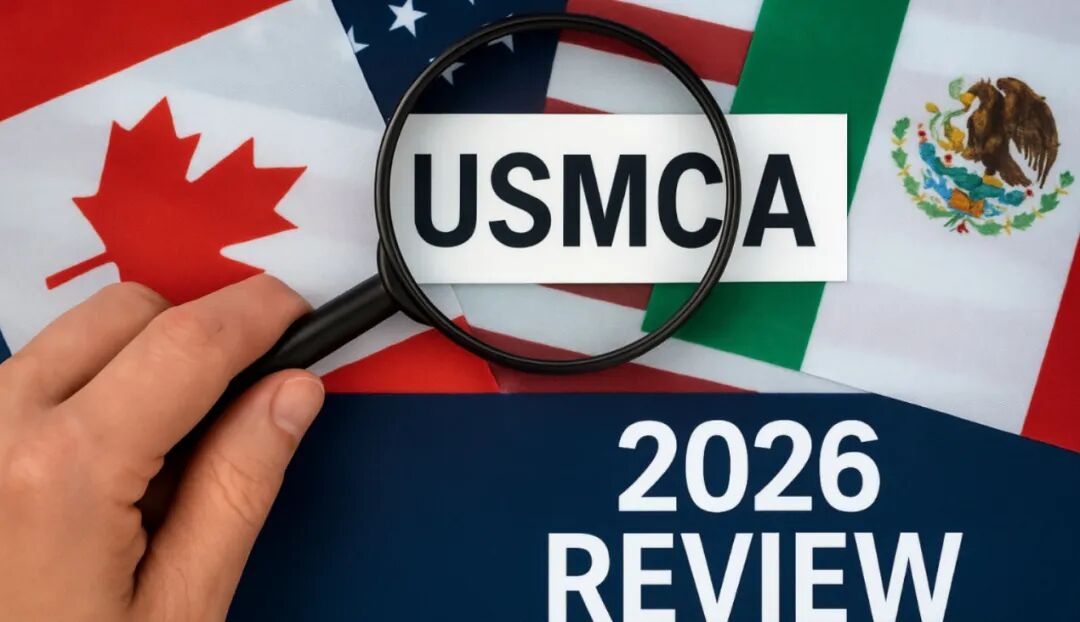
Trump did not indicate an immediate withdrawal but did not rule out the possibility. This deliberate ambiguity is a core part of his negotiation strategy. After all, during his first term, he repeatedly used the threat of withdrawal as leverage to force concessions from Canada and Mexico, and this tactic is clearly being reused.
Of course, Trump's statement did not alter the three countries' arrangements to continue with the review and consultations. The Office of the United States Trade Representative confirmed that the second round of U.S.-Mexico negotiations would be held in Washington on June 16-17, focusing on agricultural issues and a "level playing field"; the third round of consultations is scheduled for the week of July 20 in Mexico City. As for Canada, its trade minister, after visiting Washington earlier this month, hinted that "technical discussions are about to begin," but compared to the intense negotiation pace between the U.S. and Mexico, there is still no publicly available negotiation schedule between the U.S. and Canada.
The focus of this round of negotiations remains highly concentrated on the redefinition of automotive rules of origin. The current USMCA requires a Regional Value Content (RVC) of 75% for complete vehicles, along with requirements for Labor Value Content (LVC) and steel and aluminum procurement ratios, with no specific baseline requirement for U.S. domestic content. According to Reuters and other media outlets citing sources familiar with the matter, the U.S. has discussed significantly raising the overall North American RVC threshold and is considering introducing stronger U.S. domestic procurement requirements during negotiations, with rumors pointing to an RVC increase to 82% and a 50% U.S.-specific content requirement. However, these specific figures and final proposals have not yet been formally included in the official negotiation text as a determined stance and remain strong signals of the negotiation direction rather than concluded policy outcomes.
Even so, the industrial pressure released in this direction is already clear enough. Brian Kingston, president and CEO of the Canadian Vehicle Manufacturers' Association, expressed industry concerns during a parliamentary hearing: "Relocating supply chains is extremely costly, and companies cannot change procurement arrangements overnight." Rogelio Alzate, executive president of the Mexican Association of Heavy Vehicle Manufacturers (ANPACT), was even more blunt, stating that the North American auto industry undergoes multiple cross-border assembly processes, "We just reached 64% North American content in 2024, and 70% is required by 2027—changing the rules now is simply not feasible."
While the content threshold figures have not yet been finalized and the negotiation text has not taken shape, the restructuring pressure on the industry has arrived prematurely, and this is just the surface of the game.
Allies Are Treated No Better Than Competitors
To understand this round of negotiations, they must be viewed within a broader tariff context. In March 2025, Trump signed an executive order imposing a 25% tariff on imported automobiles. Vehicles from Mexico and Canada that comply with USMCA rules of origin can receive exemptions for their U.S. domestic content, with the 25% tariff applying only to non-U.S. domestic content; if they do not comply with USMCA rules, they must pay the full 25% tariff without any exemptions.
This creates a twisted paradox: After the U.S. successively reached bilateral trade frameworks with Japan, the EU, and South Korea in 2025, reducing their complete vehicle import tariffs to 15%, Mexico and Canada—theoretically enjoy higher policy priority within the USMCA free trade framework—actually face complete vehicle tariff costs similar to those of these non-free-trade partners. Allies are being caught up by latecomers at the negotiation table, a reality that is far from "friendly" to the cost calculations of North American automakers and supply chain systems.
The data is more intuitive : According to the latest tariff tracking data released by the Brookings Institution, as of early 2026, under the dual pressure of rule rewrites and punitive measures, the actual average effective tariff rates imposed by the U.S. on Mexican and Canadian goods have surged from an overall average of just 2.4% in 2024 to 12.8% and 8.1%, respectively. This Severe oscillation has directly hit the supply chain's bottom line. According to comprehensive estimates from the University of Pennsylvania's Wharton Budget Model (PWBM) and industry think tanks, the North American auto industry alone bore approximately $35.4 billion in tariff-related compliance costs in 2025. This massive internal system loss is being shared among automakers, parts suppliers, and end consumers in different ways.
Stellantis' response is quite representative. The multinational automaker has written to the Office of the United States Trade Representative, requesting a reevaluation of tariffs imposed on Canadian and Mexican vehicles that comply with USMCA regulations, pointing out that even fully compliant vehicles still face additional costs and ongoing uncertainty. Behind this letter lies a sharp reality: Rule compliance itself no longer provides stable expectations, and a market without predictability is systematically damaging to any manufacturing industry that requires long-term investment decisions.
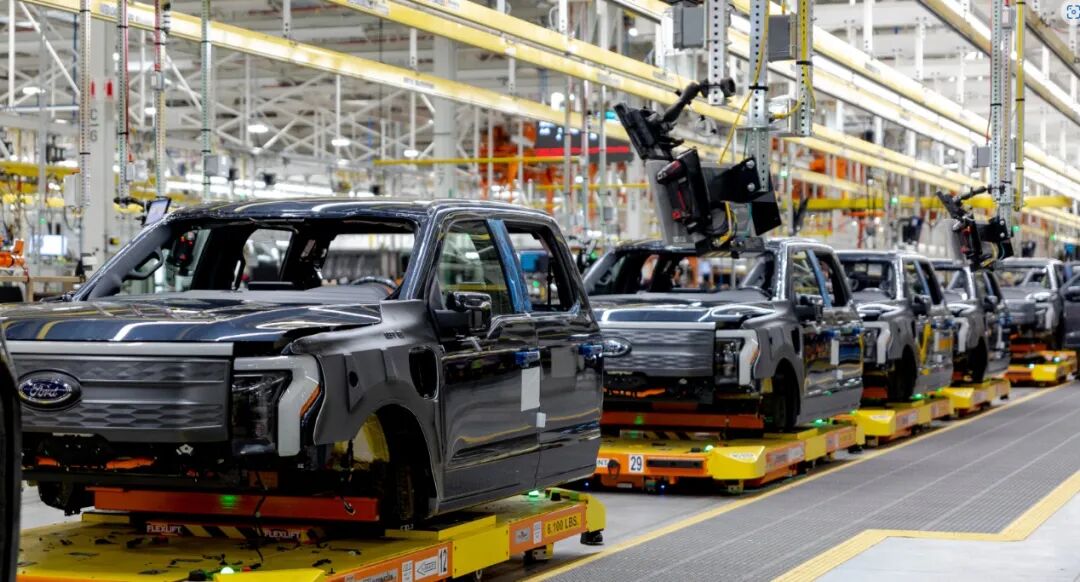
The current high level of integration in the North American auto industry has been gradually built over decades under the framework of the North American Free Trade Agreement (NAFTA, the predecessor of the USMCA) and its derivative agreements. The birth of a vehicle often spans multiple factories across the U.S., Mexico, and Canada. For example, Ford pickups have engines produced in Canada shipped to Mexico for assembly before being sold back to the U.S.; wire raw materials are sent from the U.S. to Mexico for bundling into electronic control harnesses before being shipped back for assembly; most frame components for Toyota's Lexus RX model rely on Canadian suppliers, while the engine and transmission come from Alabama and Kentucky, respectively.
This deeply nested cross-border network is now under unprecedented stress from the dual pressures of tariffs and rule rewrites. For manufacturers highly dependent on cross-border supply chains, restructuring procurement networks often takes years, not months.
Tariff pressures are clearly visible in Ford and General Motors' financial reports: Ford's tariff-related costs for 2025 reached approximately $2 billion, and when combined with massive write-downs from electric vehicle strategy adjustments, the company reported a full-year net loss of $8.2 billion; General Motors faced a $3.1 billion cost impact from tariffs, with full-year net profit falling 55% year-on-year to $2.7 billion. The combined tariff bill for the Detroit Three automakers reached $6.5 billion. Japanese automakers were hit even harder: Toyota alone is expected to bear approximately $9.1 billion in tariff-related costs in the fiscal year ending March 2026. This magnitude of impact far exceeds single-component price increases and directly restructures the entire industry's cost calculations. Every line on the cost ledger is eroding confidence in long-term North American layout .
Uncertainty Itself Comes at a Cost
For companies, the greatest impact is not the agreement's survival itself but the endless uncertainty. This judgment has been confirmed by real-world data. Continuous trade policy shocks have significantly suppressed Canadian manufacturing employment and investment sentiment, with foreign direct investment concentrating at the top while grassroots employment shrinks, reflecting deep-seated corporate doubts about North America's long-term stability.
An industry consensus cited in Prodensa's USMCA analysis report points to the same conclusion: Uncertainty may delay investment decisions or shift projects to other regions if companies believe North America no longer offers long-term stability. This concern is not unfounded—Toyota, Honda, Nissan, Hyundai, and other foreign automakers have explicitly stated that if the USMCA is not renewed or significantly weakened, they may withdraw affordable models from the U.S. market. For American consumers already under inflationary pressure, this means further deterioration in vehicle affordability.
Notably, Toyota and Honda are actively intervening in the USMCA renewal issue through Canadian federal lobbying channels. According to data disclosed by Canada's federal lobbying registration system, Toyota and Honda have repeatedly raised the agreement in their contacts with the Canadian government this year, with the core appeal being to protect North America's integrated automotive industry and supplier networks. The density of lobbying frequency itself is a signal: The strategic value of the USMCA framework for Japanese automakers is no less than that for the Detroit Three, and once the framework shakes, the impact will far exceed Detroit's factory gates.
For Canada, the direction of USMCA negotiations is both an economic and a national strategic issue. Since Prime Minister Mark Carney took office, amid multiple rounds of tariff friction in U.S.-Canada relations, the Carney government has vigorously promoted a "trade diversification" strategy in its core economic agenda. While Canada has increased export expansion efforts toward non-U.S. markets such as Europe and Asia-Pacific as a "backup plan" against geopolitical games, the reality of the automotive supply chain proves that such diversification is difficult to serve as a substitute in the short term: The core assets of multinational corporations investing in Canada remain deeply tied to the stability of the North American framework rather than decoupling from the U.S.
Dominic LeBlanc, Canada's minister responsible for U.S.-Canada trade, stated after visiting the U.S. in early June that July 1 should not be seen as a critical date: "I think we must be careful not to artificially create a crisis that doesn't exist." Notably, public information shows that bilateral U.S.-Mexico consultations are proceeding significantly faster than U.S.-Canada talks. Additionally, reports indicate that the U.S. proposal does not include specific domestic content provisions targeting Canada, heightening discussions in Canada's political and industrial circles about whether the country will be marginalized. U.S. Trade Representative Greer has not yet clarified whether the future framework will maintain a trilateral format or evolve into separate bilateral agreements. This unresolved "stance" may itself be a symptom of the deep oscillation facing North America's integrated system.
However, this preparation is itself part of the cost. A prolonged state of unresolved negotiations will continue to suppress investment decisions, the job market, and consumer confidence. Canada's position is quite delicate: It cannot fully concede to U.S. demands, nor can it adopt a confrontational stance across the board, and it is difficult to proactively set the agenda when U.S.-Mexico bilateral consultations are clearly ahead. Once the U.S. and Mexico frame the main terms first, Canada will inevitably face a passive situation of "accepting the fait accompli."
If Canada's predicament represents internal North American contradictions, the issue of Chinese components is an external catalyst in this game and the most geopolitically charged bargaining chip in U.S. negotiations. The U.S. is pressuring Mexico to exclude Chinese-sourced components from North America's automotive supply chain. The backdrop is that Mexico has long been seen as one of the "primary beneficiaries" of U.S. tariffs on China and became the U.S.'s largest trading partner in 2023, with some U.S. officials continuously hyping Mexico as a "breakthrough" for China to circumvent tariffs.
In response, Mexican Economy Ministry officials counter that Chinese import levels in other North American regions are similar to or even higher than Mexico's, and such accusations are inaccurate. On the action front, Mexico has recently raised import tariffs on certain goods from non-free-trade partners, widely seen as part of releasing cooperation signals to the U.S. before the USMCA review to accumulate goodwill bargaining chips.
The impact of this game will extend far beyond the auto industry itself. China has established a deep presence in the global automotive supply chain, from raw materials to precision components. Systematically excluding the Chinese supply chain from North America's industrial system is a core component of geoeconomic restructuring. In this process, who will fill the supply gap and how to control filling costs will be one of the central challenges facing North American industrial policy in the coming years.
For an industry that requires decade-long factory layout planning and supply chain investment decisions worth billions of dollars, policy predictability is itself infrastructure. When this infrastructure is continuously eroded, the losses will not present immediately in the form of tariff bills but will accumulate slowly through delayed investments, lost jobs, and shrinking R&D budgets—until one day, the North American auto industry finds itself having lost the scale advantages it painstakingly built over decades in global competition.
Historical experience shows that the costs of forcibly restructuring supply chains are ultimately shared by the entire industrial chain: Workers face job losses, consumers bear price increases, and automakers' profits are squeezed on multiple fronts. The real risk may be that while policymakers become enamored with the immediate deterrent power of "tariff big sticks," the scale effects, synergistic efficiency, and investment attractiveness that the North American auto industry has built over decades may not disappear overnight due to a single tariff but could quietly erode amid sustained uncertainty.
Image: From the Internet
Article: Auto Review
Typesetting: Auto Review
-
![]()
Auto Market News: Relief from Vehicle and Vessel Tax! MIIT Announcement
-
![]()
Haiqing Zhiyuan Prepares for HKEX Debut: Revenue Jumps Despite Profit Challenges and Worsening Cash Flow
-
![]()
The Big Three Telecom Giants Face Accusations of Overcharging Loyal Customers: Why Do Costs Rise with Tenure?
-
![]()
Competitor’s CTO Criticizes Extended-Range Tech; Seres’ Zhang Xinghai Fires Back: It’s Far From “Pointless”
-
![]()
"Football Unites the World," But Not the North American Auto Industry
-
![]()
Electric vehicles are indeed cheaper, but who says gasoline cars are doomed?
-
![]()
The Consensus Between Li Shufu and Li Bin Indicates the Obsolescence of Blockbuster Logic
-
![]()
Used Fuel-Powered Vehicle Prices Plummet, Losing Two Years' Value in Just Two Months