Off-Road MPV Makes Its Debut: Will SUVs Still Reign Supreme?
 06/15 2026
 347
347
Lead-in
Introduction
An MPV has arrived, and it's being hailed as the SUV version.
Last September, our platform published an article titled "Third-Row Space Comparable to MPV: Why Opt for an SUV?" signaling the dawn of direct competition between large SUVs and MPVs. When debating the choice between an SUV and an MPV, the responses from many netizens were quite telling.
For instance, numerous individuals expressed that MPVs are unattractive, whereas SUVs exude a sense of style. Some felt that the fusion of SUV and MPV elements seemed somewhat out of place, while others hoped the Lixiang i8 would revert to featuring sliding doors. These responses clearly indicate that when discussing automotive products, apart from functionality, exterior design is a crucial factor that consumers consider.
Speaking of design, Chinese automotive brands have witnessed a surge in innovative ideas in recent years. Lately, the most debated topic has been the originality versus imitation in the designs of various automakers. Prior to this, the focus was on models resembling the Rolls-Royce Cullinan, Range Rover, or Defender. Nevertheless, automakers are exerting tremendous effort in design to drive sales.
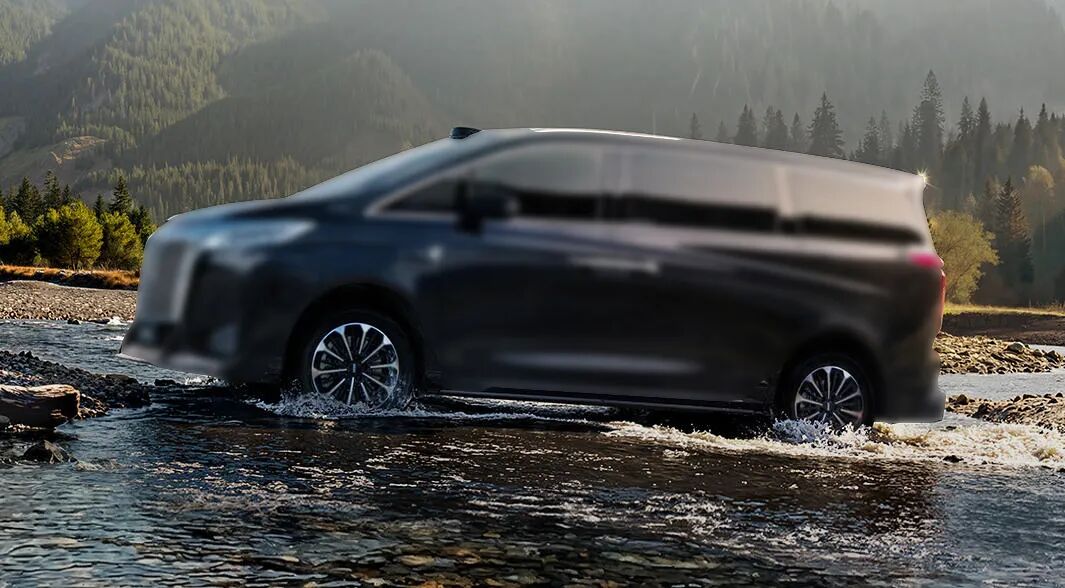
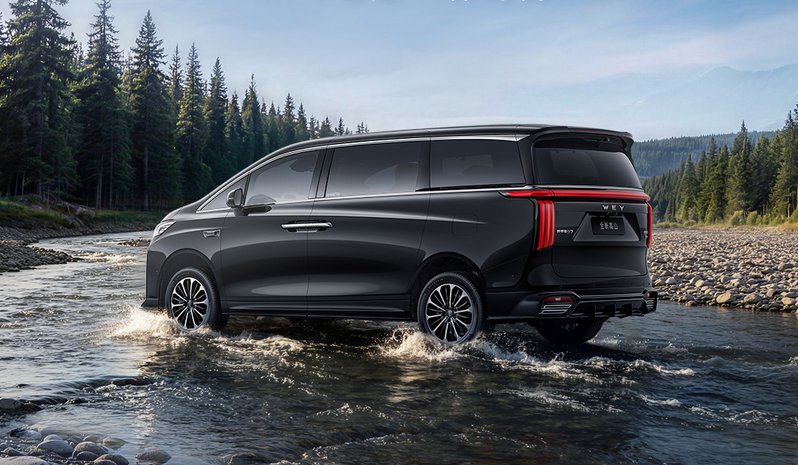
Of course, regardless of how much effort automakers put in, we must return to today's topic. A few days ago, the new model of the Wey Gaoshan 7 was officially christened the Gaoshan 7 SUV version, a name that sounds quite impressive. It's said that the new car has raised its chassis by 30 millimeters based on user feedback, boasting a minimum ground clearance of 185 millimeters, essentially on par with mainstream urban SUVs.
What's even more striking is that the car's body is adorned with a trim that resembles a sport package, a crossover package, and an off-road package all rolled into one. In short, some netizens commented on this car, asking, "Are the front and rear trims too innovative? Will they hinder off-road capability?" From these questions, it's evident that many people do desire an off-road MPV.
So, if an MPV can venture off-road, it signifies the emergence of a perfect model capable of carrying, towing, running, and exploring off the beaten path. Isn't this far more versatile and adaptable than large SUVs? Unless, as mentioned in the previous article, SUVs can genuinely offer third-row space comparable to MPVs, then large SUVs and off-road MPVs would truly be on equal footing.
Because, ultimately, the functions of these two types of vehicles are quite similar, and consumers can only choose based on their preferences for exterior design.
01 The Ambition to 'Dominate All'
On the surface, as automotive configurations become increasingly uniform, major automakers can only concentrate on design. But fundamentally, so-called design innovation is about continuously enriching vehicle categories. The term "new automotive categories" has been frequently mentioned in the Chinese auto market in recent years.
Boxy SUVs, hatchbacks, station wagons, shooting brakes, GT sedans... nearly every conceivable automotive form has been experimented with by various automakers. At this juncture, one might assume that category innovation is nearing its end. Who would have thought that Great Wall's Wey could actually conceive an off-road MPV?
In fact, off-road MPVs are not entirely novel. The Mitsubishi Delica D:5, for instance, features a body-on-frame construction, supports 2H/4H/4L modes, and has a ground clearance of about 225mm, enabling it to handle light to moderate off-roading. There's also the Volkswagen Multivan, an MPV equipped with four-wheel drive, which was once considered to possess some off-road capability.
If having four-wheel drive is deemed off-road capability, then many domestically produced new energy MPV models now also offer four-wheel-drive versions. However, MPVs like the Gaoshan 7 SUV version that emphasize ground clearance are indeed rare. Of course, don't casually assume that the SUV version is merely a response to user suggestions; it actually harbors grander ambitions.
Just last month, on the night of NIO's ES9 launch event, William Li repeatedly exclaimed, "Forget MPVs," attempting to overshadow MPV users with a large SUV. A bit earlier, when the Lixiang i8 was launched, Li Xiang even claimed, "Lixiang i8 = Off-roader + Sedan + MPV," trying to dominate three categories with one product.
It's evident that both NIO and Lixiang aim to capture a share of the MPV market with their SUV offerings. Naturally, competitors disagree. When teasing the Gaoshan 7 SUV version, Wey also stated, "Should you choose an MPV or an SUV for family use? The Wey Gaoshan 7 SUV version offers two ways to enjoy one car." The message is clear: My MPV is also eyeing your SUV market.
Even earlier, when the Volkswagen Talagon was launched, it introduced the "SMV" concept, blending the space practicality of an MPV with the appearance and visibility of an SUV. Many automakers have undertaken similar endeavors, such as the JETOUR Shanhai L7 PLUS dubbing itself a "travel campervan," or the Dongfeng Fengxing Xinghai V6 also taking the SUV+MPV fusion route.
Of course, definitions are one thing, and they don't transcend the original design rules. But fusion vehicles are different; they necessitate additions and subtractions in styling. For example, it's now challenging to distinguish between station wagons, shooting brakes, large hatchbacks, and sedans named GT. Which category do they belong to?
They are crafted with the purpose of "dominating all." After all, every niche market fears having a low ceiling and aspires to expand its reach to grab a slice of the adjacent market's pie. Shooting brakes aim to capture market share from station wagons, GT sedans from sedans, station wagons from SUVs, SUVs from MPVs, and now off-road MPVs are directly counterattacking SUVs.
02 The Tangible Ceiling
Ultimately, automakers' pursuit of these fusion vehicles is an instinctive response to the advent of market saturation and anxiety over stagnant market share growth. Although automakers rack their brains to innovate and break out of the mold, do consumers truly embrace it?
Shooting brakes, station wagons, and GT sedans generate significant online buzz, but their sales and user base remain stagnant. While new models like the NIO ET5T, Zeekr 001, Xiangjie S9T, and Seal 06 Travel Edition have indeed boosted sales for various reasons, the rest of the models haven't been as fortunate.
To put it in perspective, even within the SUV segment, coupe SUVs with a sporty feel or sleek back designs cannot sustain high sales and eventually revert to mediocrity. What becomes of these mediocre models? Isn't it a waste of the enormous R&D costs incurred by automakers? In the end, automakers must bear the consequences.
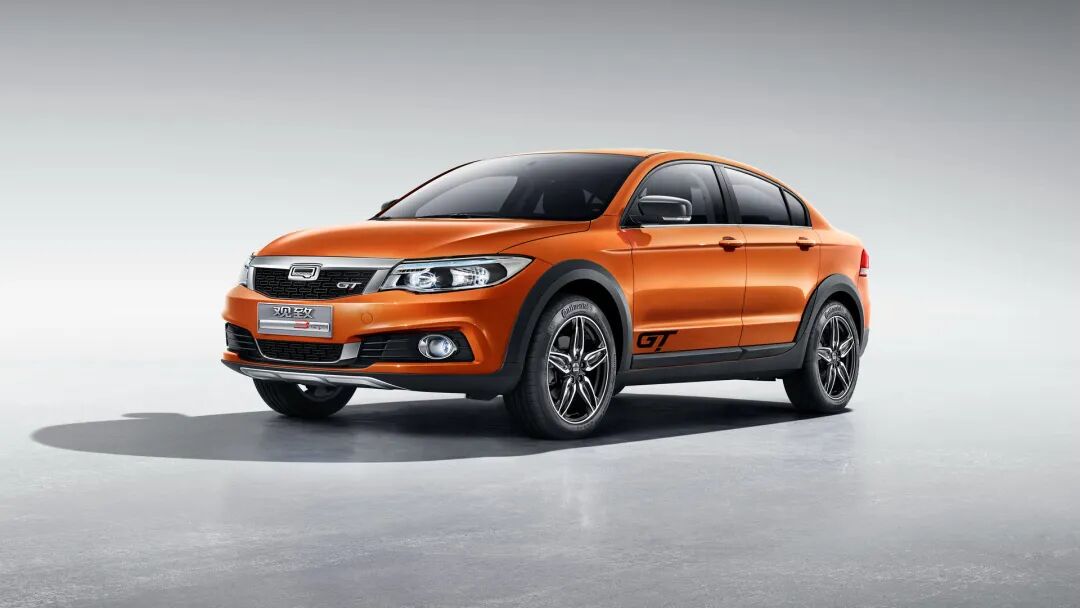
Trying something new is certainly commendable; an industry without companies leading in innovation would likely stagnate. The issue is, trying something new and following the trend are two distinct approaches. Many automakers witness models like the Tank 300, NIO ET5T, Zeekr 001, and Xiaomi SU7 gain popularity and swiftly follow suit with similar products.
But they overlook that after so many years of automotive industry development, categories have largely stabilized, along with consumer demand and aesthetics. Just like the innovative products launched by automakers, the consumers who try them first constitute just a specific group; these products are destined not to be mainstream.
So, sales are the ultimate test of the market. The votes cast by consumers with their wallets always favor brands that honestly craft decent products. The reason SUV sales continue to surge is not because they are fusion models of "SUV+MPV+off-roader," but because they offer spaciousness, good visibility, and robust off-road capability—these tangible selling points address the most fundamental needs of consumers.
Most importantly, consumers today are increasingly brand-conscious. Automakers with weak brand strength or low recognition, even if they honestly craft a mainstream, popular product with full features and a reasonable price, will still make consumers hesitate at the moment of purchase. The big brand next door may be slightly more expensive, but everyone chooses it, so it must not have major flaws.
Conversely, automakers with strong brand strength don't necessarily excel in every category. Even the top five automakers can only guarantee that their mainstream, popular products will sell; when it comes to unique niche models in new or small categories, they may not fare well either.
In other words, category expansion is a highly challenging endeavor. Getting it right definitely adds points, but if sales don't pick up, it can dilute your brand value. Therefore, weak brands should first establish a reputation with a mainstream model before venturing into category innovation. Strong brands should also restrain their impulse to constantly expand and focus on defending their core market.
Editor-in-Chief: Cao Jiadong Editor: Wang Yue

THE END

-
![]()
Controversy Rages On! SpaceX's IPO Unveiled: Is Musk a Visionary or Just a Dreamer?
-
![]()
Weekly Stock Review|SpaceX Goes Public, A-Shares Return to 4000 Points, Market Needs a Bit of 'Magic'
-
AI Smartphone: Apple Hands in Its Answer Sheet
-
![]()
Has the Microcar, Once a Market Pioneer, Now Reached Its Twilight?
-
![]()
Nearly 200 Years of Effort: Humans Finally Drive Electric Vehicles with Greater Proficiency
-
![]()
Will Complaints About BBA Models Decrease Within Three Years? Analysis of BBA Complaint Index for the First Five Months of 2026
-
![]()
IM Motors' CMO Li Weimeng Transfers to AI: Everyone Selling Cars is Now Diving into AI
-
![]()
Lenovo: Best Financial Results Amidst Transformation Dilemmas