Blogger Reports Zeekr 001 High-Speed Speed Loss Incident, Citing 'Abnormal Air Conditioning' Prior to Event; Zeekr Denies Widespread Reports
 07/02 2026
 489
489
A blogger has alleged that driving their Zeekr 001 at high speeds resulted in an unexpected loss of speed, with reports of 'abnormal air conditioning' preceding the incident. Zeekr, however, states that it has not received any reports of speed loss and is currently investigating to ascertain if this is an isolated or widespread issue.
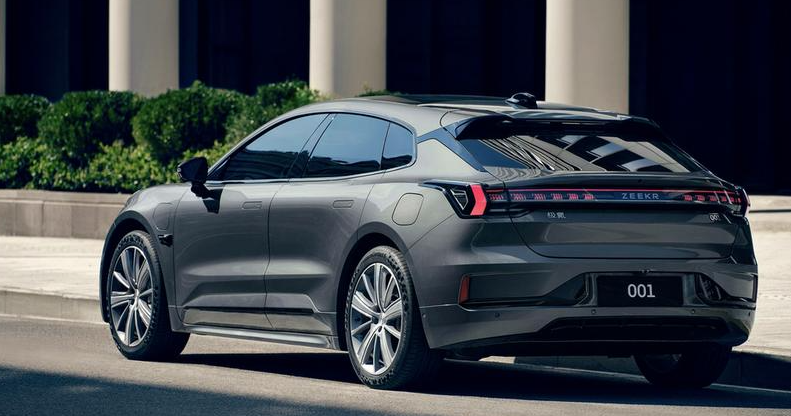
For new energy vehicle owners, the primary concern is not merely range reduction or infotainment system lag, but rather sudden, inexplicable speed loss on highways. On congested highways, a vehicle losing power instantaneously, even for a brief moment, can spell disaster.
According to East Money, a recent account shared by a blogger about the Zeekr 001 has raised concerns among many electric vehicle owners. On June 29, the blogger entrusted her car to a designated driver for parking while she hurried to catch a flight. Before boarding, she received a distressing call from the driver: the vehicle had suddenly lost all power while traveling at high speed and had come to a halt in the middle of the road.
In response to the reported speed loss issue, Zeekr informed the New Identity Research Institute that it had not received any reports regarding speed loss problems with the Zeekr 001. The company stated that it would need to evaluate specific vehicle conditions to determine if there is a broader issue at hand. In the event of a speed loss, the dealership will diagnose the cause and work with the owner to find a solution. During the warranty period, whether to replace or repair the issue will be determined by the dealership based on the actual situation.
According to the blogger, the designated driver reacted swiftly and climbed over the guardrail to safety, averting a potential accident. Nevertheless, the blogger remained shaken: 'If a large truck had been trailing behind, there would have been no time to react.' On highways, where speeds are high and braking distances are long, a stationary, malfunctioning vehicle poses a significant hazard.
What is even more alarming is that the speed loss was not entirely without forewarning. The day before, the vehicle's air conditioning had been malfunctioning; even set to the lowest temperature, the interior remained stuffy, while the outdoor air felt cooler. On the day of the incident, while driving from Panyu to Baiyun Airport, the air conditioning completely failed, necessitating driving with the windows down the entire journey. Just an hour later, the vehicle lost all power on the highway.
The blogger reported that this Zeekr 001 had been in use for two years and had clocked 58,000 kilometers, indicating regular and frequent use. Last year, it underwent an official recall for a power battery replacement, which should have addressed any potential battery-related issues.
Following the incident, the vehicle was sent for professional inspection. However, the blogger emphasized that their primary concern was not compensation but identifying the root cause of the problem: 'I want to know whether it's a battery issue or a malfunction in the system or cooling mechanism,' hoping to determine whether it was triggered by hardware or software protection.
High-speed speed loss strikes at the core of vehicle operational safety. However, at present, the entire incident is based solely on the blogger's account, who only heard the experience from the designated driver, not from their own driving experience. Reconstructing the event requires a thorough analysis of the vehicle's systems, as well as external surveillance and related equipment, rather than relying solely on one party's narrative.
Only with transparent and detailed detection conclusions and identification of the root cause can owners and the public truly feel reassured, enabling automotive companies to dispel external doubts, better establish their brand image, and shape brand value.
-
![]()
MathWorks: Generative AI Holds Great Potential, Yet a Trusted Toolchain is Essential for Flawless Operation
-
![]()
Small Earphones, Big Business
-
![]()
Volkswagen Slashes 100,000 Jobs, Mercedes-Benz Axes Year-End Bonuses: What’s Ailing German Auto Titans?
-
![]()
Doubao Can No Longer Offer Free Services to 345 Million Users: China's Era of Free AI Is Drawing to a Close
-
![]()
How Can Chinese Small Home Appliances Conquer Southeast Asia Through 'Dimensional Competition'?
-
![]()
Why are top intelligent driving players betting on reinforcement learning?
-
![]()
June 2026 Automobile Complaint Index Rankings: Persistent Problems Ignite Grievances Among Long-term Vehicle Owners
-
![]()
Avita Takes Another Stab at HKEX Listing: Facing the Urgency of Sustaining Operations Amid 11.2 Billion Yuan Loss Over Three Years