Three Generations of NIO ES8: A History of Breakthroughs in China's High-End Electric Vehicle Market
 07/02 2026
 490
490
On July 9th, the five-seat version of the NIO ES8 was launched. As the world's first smart EV product to complete three generations of iterations, the NIO ES8 pioneered the golden era of full-electric, three-row vehicles. Now, the new five-seat variant is poised to open a golden era for high-end full-electric large five-seat vehicles with its all-scenario capabilities.
The ES8 is an irreplaceable spiritual totem for NIO, a mainstay throughout its development, and the best embodiment of the company's long-term philosophy in enduring short-term challenges. The three generations of the ES8 represent NIO's core vehicle for 'leading the way from inception,' forging a path for high-end breakthroughs in China's EV market and serving as a key reason for NIO's sustained high growth amid intense competition.
For the industry, the three generations of the ES8 also represent three distinct phases in the development of China's NEV sector, encapsulating the history of Chinese NEV brands: how they progressively emerged from nothingness to challenge and partially surpass premium market monopolies like BBA.
On June 28, 2026, the NIO ES8 Founder's Edition, bearing serial number 0001, was officially inducted into the Beijing Auto Museum. Eight years ago to the day, the first-generation NIO ES8 began deliveries, marking the dawn of China's high-end electric vehicle era.
This highly significant vehicle belongs to Li Tianshu, NIO's employee number 001. When NIO was first preparing to build cars, Li Bin decided that the first production vehicle would be delivered to the earliest and most core employees. After eight years, this car still retains its original appearance and condition, including all the original factory configurations delivered at the time, a custom-engraved plaque, and the first-generation Aspen infotainment system.
On December 16, 2017, a massive crowd gathered near Wukesong in Beijing, with tens of thousands attending the launch event for NIO's first production vehicle, the ES8. That evening, many WeChat Moments posts from users in first- and second-tier cities were dominated by the NIO ES8, leading automotive media to dub it 'the strongest new vehicle launch event on Earth.'
Following the event, the NIO App was flooded with orders, with thousands paying deposits for the ES8. Orders poured in from over 300 cities across China, far exceeding Li Bin's expectations. After that night, many venture capitalists who had previously shown no interest in investing in NIO changed their tune, seeking investment opportunities through acquaintances.
Moreover, the vehicle even became the ultimate talent attraction tool. Shen Feng, the former President of Volvo China R&D, resigned from Geely's Li Shufu just days after watching the ES8 launch event and announced his joining of NIO to oversee quality management.
Today, the vehicle's permanent collection by the Beijing Auto Museum lies in its status as a milestone in the automotive industry: it was China's first high-end mass-produced full-electric passenger vehicle from a new energy brand, marking the transition from 'PPT car-making' to actual production. The vehicle featured an all-aluminum body, air suspension with CDC damping, NOMI voice assistant, Queen's Seat, high-performance dual-motor all-wheel drive, and the first-generation battery swap system. It was also the first globally to use the Mobileye Q4 intelligent driving chip. Not only was it a masterpiece of early NIO technology, but it also showcased numerous pioneering technologies in China's high-end full-electric sector, most of which have now become industry standards.
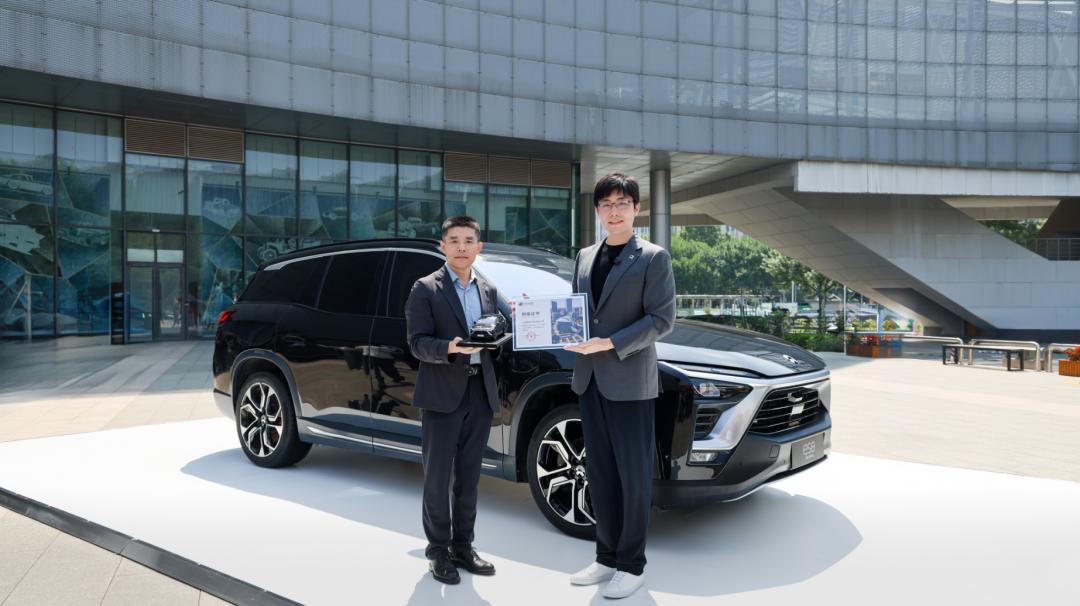
For NIO, this vehicle represents the company's journey from inception to production, dispelling doubts at the time that 'new energy brands cannot achieve mass production and delivery.' Before the first-generation ES8's debut in 2018, the market for domestically produced high-end electric vehicles priced above RMB 400,000 was virtually nonexistent. On one hand, domestic brands lagged significantly behind overseas luxury brands like BBA in terms of brand strength. On the other hand, high-end components such as air suspension and high-power electric drivetrains were largely monopolized by overseas supply chains, with no domestic self-sufficiency capabilities.
NIO was the first to break this mold. This was primarily reflected in its willingness to push hardware limits regardless of cost, bringing configurations typically found in million-dollar fuel cars (internal combustion engine vehicles) to domestically produced EVs. The goal was to redefine standards for domestically produced high-end products and break free from the shackles of 'domestic cars only serving as cost-effective alternatives.'
To achieve this, NIO sought high-specification suppliers globally while refining its products to the highest standards. Faced with overseas suppliers' 'off-the-shelf' approach and refusal to customize, particularly in areas like air suspension, NIO decided to support local enterprises, engaging in joint R&D and mutual growth, and proactively navigating the industry through trial and error.
During this process, NIO endured significant short-term pain. Firstly, R&D costs were extremely high, while market recognition of high-end domestic brands remained low. Although sales were decent, they were insufficient to cover R&D investments, leading to sustained heavy losses. Secondly, immature supply chains resulted in product performance instability and other flaws, leading to subpar early user experiences. Fortunately, these issues were later addressed through OTA updates.
The greatest value of the first-generation ES8 lay in establishing industry confidence that 'domestically produced EVs can also be luxurious.' On one hand, it pressured competitors to continuously evolve in terms of chassis, cabin, and powertrain, raising the bar. On the other hand, it drove the rapid development of China's high-end supply chain, laying a solid foundation for the subsequent explosion in the NEV market.
From the outset, NIO chose a path less traveled, insisting on independent R&D and original design. While this approach was unlikely to drive explosive sales growth in the short term and resulted in financial performance far inferior to brands that took shortcuts in certain areas, the journey was destined to be arduous. NIO even teetered on the brink of collapse in the second half of 2019.
When the second-generation ES8 debuted at NIO Day in late 2022, the industry was entering a period of flourishing competition, with players like Li Auto, XPeng, and Zeekr successfully entering the RMB 300,000-500,000 price range. The high standards established by NIO early on were becoming industry norms. When mere hardware configurations no longer provided differentiation, NIO once again led the new competition, focusing on a comprehensive comparison of powertrain systems, vehicle platforms, advanced intelligent driving, cabin experiences, and aesthetic design.
Behind the evolution of the second-generation ES8's NT2.0 digital architecture platform, sentinel-style layout, and supercomputing platform, NIO began driving the transition of EVs from 'hardware and configuration stacking' to all-around intelligence.
Technological accumulation from full-stack in-house R&D became the main theme during this period for NIO. This included the development of in-house high-voltage architecture platforms and Integration of software and hardware (hardware-software integration), with self-developed teams established for chassis, intelligent driving, and operating systems, gradually reducing reliance on external solutions.
NIO upgraded its hardware standards from merely 'having it' to whether it was self-developed and 'how good it was,' particularly evident in advancements in intelligence, such as chip self-development, the ICC intelligent chassis domain controller, steer-by-wire technology, and fully active hydraulic suspension.
Meanwhile, NIO continued to uphold original design, user service, and battery swap networks, forming an ecosystem of 'vehicles + services + energy' that differentiated itself from competitors focused solely on vehicle manufacturing.
However, this generation of the ES8 came at a steep cost for NIO. Massive R&D investments and infrastructure construction for the battery swap network became profit-draining black holes, while multiple innovative technologies further escalated costs. The second-generation ES8's price range in the RMB 500,000 tier made it difficult for the vehicle to become mainstream, and NIO's growth became unsustainable.
In Li Bin's words, the second-generation ES8 lost its way slightly, but it further accumulated and explored technological innovations. It failed to align with user needs in terms of experience and overinvested in areas with low user perception, a phenomenon the industry refers to as 'hiding the meat in the rice.'
Overall, while the second-generation ES8 boasted many technological innovations, it fell short in terms of user experience. From a results perspective, it was difficult to label it a successful product. In the following years, teaching Li Bin how to be a CEO online gradually became a trend among some users.
Nevertheless, the NIO team was willing to confront these issues and learn from them. They fully recognized the importance of 'spending money where it matters.' When defining subsequent products, the team prioritized user experience and value, calculating whether each yuan of investment could enhance user experience and whether the benefits were high-frequency or low-frequency, evaluating the ROI of user experience across various dimensions. This laid the groundwork for NIO's subsequent scaling (scale-up), multi-brand matrix, and systematic cost reduction.
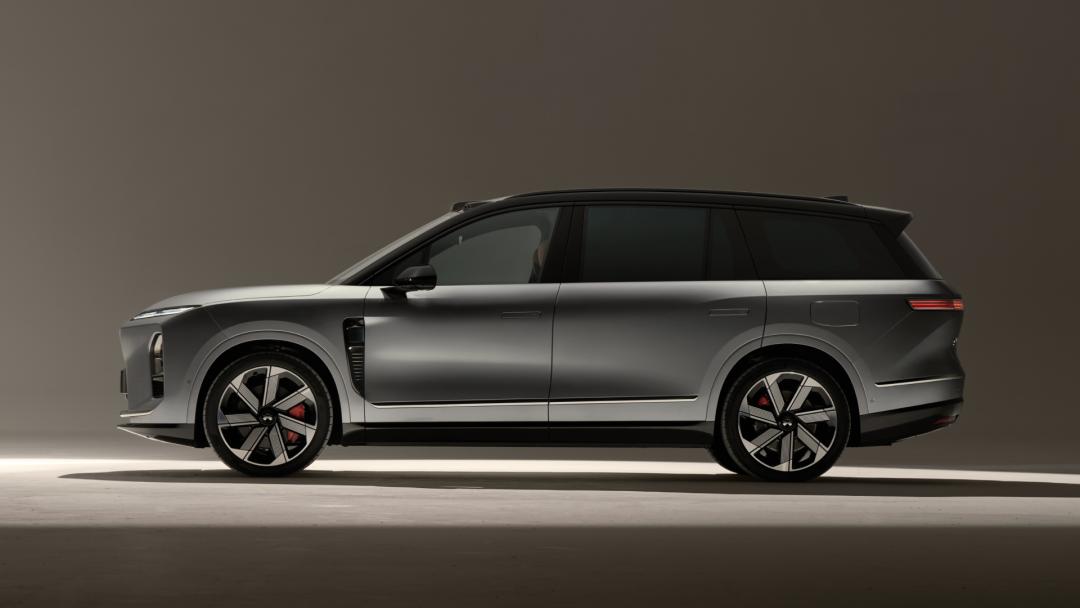
By the time the third-generation ES8 was released in 2025, China's NEV industry had entered a saturated, highly homogeneous 'red ocean' phase: 800V high-voltage architectures, air suspension, advanced intelligent driving, LiDAR, and large batteries had become widespread. Product differentiation was minimal, and price wars intensified as a competitive trend.
According to Greenwald's theory of competitive advantage, when an industry has too many players and lacks significant barriers like scale cost advantages or customer lock-in, operational efficiency becomes the key differentiator. NIO's systematic capabilities aligned perfectly with this theory.
The third-generation ES8's emergence as a best-selling benchmark during this period was primarily due to the first-ever manifestation of 'value-for-money quality' in NIO's offerings. Despite prolonged market skepticism that NIO was 'trading margins for volume,' the company's two consecutive quarters of profitability provided a resounding rebuttal. NIO demonstrated that its accumulated technological and engineering capabilities from past stages had formed a comprehensive, end-to-end systematic capability, directly reflected in cost reduction and efficiency improvement.
Thanks to the reuse of platformized components, the third-generation ES8's costs dropped significantly. NIO passed these cost savings onto users, creating a 'non-predatory' price advantage. The sales momentum generated by this price competitiveness further created economies of scale, continuously diluting R&D and production line costs. Meanwhile, NIO's technologies began accelerating their migration to brands like LEAPMOTOR and Firefly, while the three brands shared supply chains, manufacturing, services, and battery swap infrastructure, enabling NIO to quickly establish a broader and more complementary brand matrix.
This efficiency improvement trend became even more pronounced this year, including the widespread adoption of the Shenji chip across product lines. Today, NIO's new vehicle launch cycles have shortened significantly, production capacity is no longer a major issue, and battery swapping is showing promise, with some urban stations already achieving profitability. Previous bottlenecks are now being systematically dismantled.
The success of the third-generation ES8 represents a concentrated release of NIO's decade-long systematic capabilities, as well as a triple breakthrough in high-end market value, scale, and profitability. This success extends beyond the third-generation ES8 to products like the ES9, forming an irreplaceable new moat.
The rapid launch of the five-seat ES8 variant also reflects NIO's systematic efficiency capabilities. Built on the same NT3.0 flagship platform as the six-/seven-seat versions, the new vehicle reconfigures cabin storage space to meet the travel needs of five-seat users. While maintaining the ES8's market-proven product and systematic competitive advantages, it refines the large flagship SUV segment, forming a complete product matrix that covers multi-seating requirements.
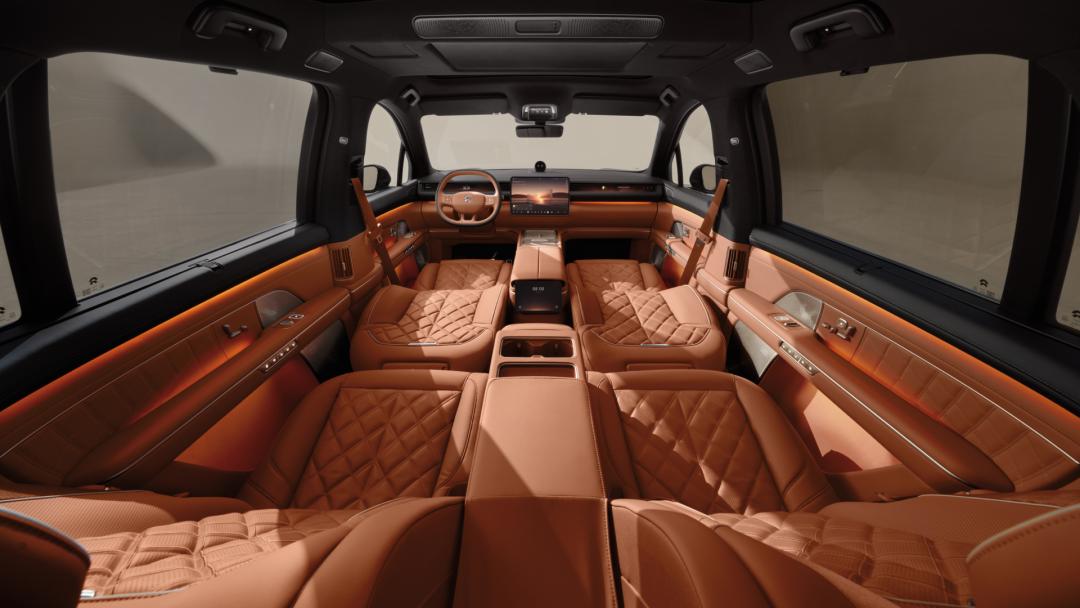
Following the full-electric three-row segment, the five-seat ES8 opens up a new 'blue ocean'—high-end full-electric large five-seat vehicles. It not only offers the largest five-seat space in its class but also enables elegant separation of passenger and cargo space, ensuring grace and composure on every journey.
With over 210,000 users in eight years, the NIO ES8 perfectly embodies 'pioneering new frontiers.' When the ES8 debuted eight years ago, the market universally considered BBA the answer for high-end SUVs. Eight years later, the ES8's monthly sales surpass the combined sales of BBA's equivalent models.
The 'valley of death effect,' a major concern for many automakers today, seems to have no impact on the NIO ES8. While the three-row ES8 continues to sell strongly, the five-seat ES8 is poised to open up new growth avenues.
Affected by imbalanced supply and demand and the phase-out of national policy subsidies, the difficulty of the NEV market this year is undeniable. While most players are experiencing negative growth, NIO's counter-trend growth provides a new paradigm for healthy industry development: China's high-end EVs do not rely solely on premium pricing for survival, nor must they sacrifice short-term profits to gain market share.
Such systematic capabilities did not emerge overnight. They stem from NIO's innovation and leadership over the past decade, as well as its adherence to 'long-termism' amid short-term challenges. When others dared not venture into high-end hardware or doubted whether domestic brands could create luxury vehicles, NIO boldly entered the 'uncharted territory,' defining domestic luxury standards and filling supply chain gaps. When competitors began stacking hardware and configurations, NIO proactively invested in full-stack in-house R&D, establishing multi-dimensional technological and ecological barriers.
Looking at today's domestic auto market, where various energy sources coexist and all target the three-row SUV segment, why does the full-electric NIO ES8 maintain strong market performance? This question may puzzle many, but Li Bin's answer can be summed up in three words: values.
He said that buying a car reflects your core values more than wearing a piece of clothing. 'During the technological explosion phase, people might pay for a specific feature or function. Now, as technology converges, users increasingly focus on brands. Whether they like and recognize you becomes crucial when choosing a brand.'
In reality, every major choice we make is driven by our values. Even every significant purchase represents a vote for the world you want.
Looking back at the history of China's smart EV industry, we may see that brands that are highly competitive, aggressive, adept at hype, or take shortcuts can achieve tremendous success. However, the sustainability of such success is questionable. NIO's success follows a different path: as long as a brand consistently treats users with sincerity, even if it stumbles in the short term and faces obstacles, the market and users will ultimately stand by it and cast their votes accordingly.
-
![]()
MathWorks: Generative AI Holds Great Potential, Yet a Trusted Toolchain is Essential for Flawless Operation
-
![]()
Small Earphones, Big Business
-
![]()
Volkswagen Slashes 100,000 Jobs, Mercedes-Benz Axes Year-End Bonuses: What’s Ailing German Auto Titans?
-
![]()
Doubao Can No Longer Offer Free Services to 345 Million Users: China's Era of Free AI Is Drawing to a Close
-
![]()
How Can Chinese Small Home Appliances Conquer Southeast Asia Through 'Dimensional Competition'?
-
![]()
Why are top intelligent driving players betting on reinforcement learning?
-
![]()
June 2026 Automobile Complaint Index Rankings: Persistent Problems Ignite Grievances Among Long-term Vehicle Owners
-
![]()
Avita Takes Another Stab at HKEX Listing: Facing the Urgency of Sustaining Operations Amid 11.2 Billion Yuan Loss Over Three Years