Leapmotor's Monthly Sales Soar to a Record 93,000! Mid-Year Review of New Energy Vehicle Brands: Some Excel, While Others Lag
 07/02 2026
 485
485
New forces emerge, traditional brands expand globally.
The start of each month marks the peak activity period for the new energy vehicle (NEV) sector.
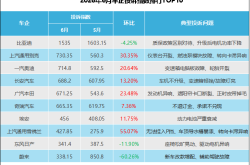
As automakers release their June delivery figures, the sales performance for the first half of 2026 is officially tallied. This is not just a monthly report but a comprehensive assessment of each brand's performance over the past six months.
Some brands continue to sustain their growth momentum, concluding the first half with remarkable achievements; others experience slowing growth or even declines, pinning their hopes on new models and strategies for the second half.
Behind the delivery numbers lie not only sales fluctuations but also shifts in market dynamics, product competitiveness, and consumer preferences.
So, who is leading the charge? And who has fallen short of market expectations? Let's delve into the June delivery data for major NEV brands.
Among the new force brands, one stands out with June delivery numbers that defy typical expectations for a new entrant. That brand is Leapmotor.
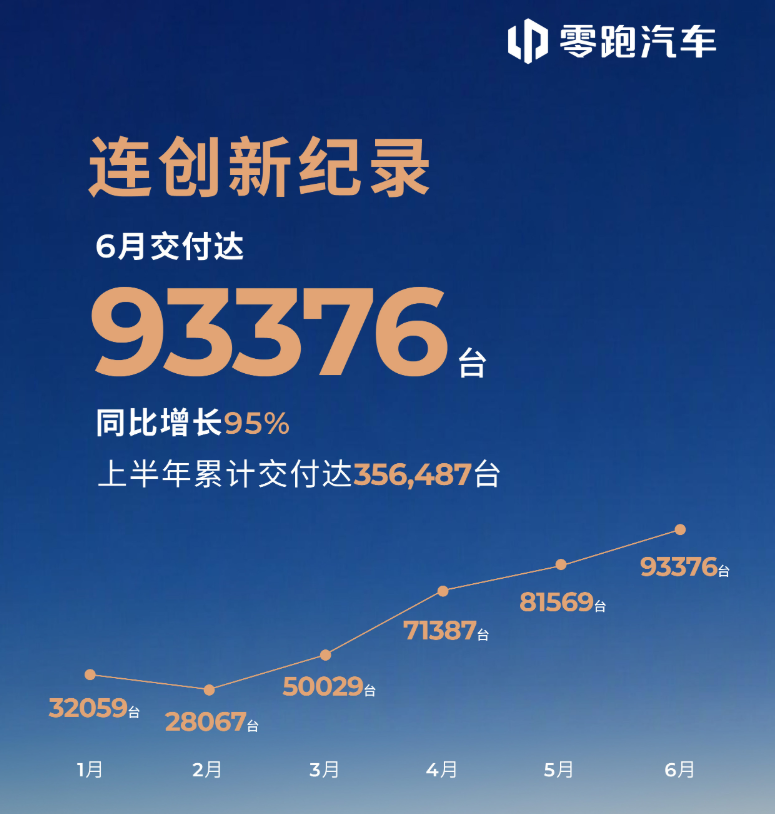
In June, Leapmotor's deliveries reached 93,376 units, marking a year-on-year increase of 95%.
(Image Source: Leapmotor)
This figure is approximately three times that of Li Auto and positions Leapmotor within striking distance of surpassing Great Wall.
From February to June this year, Leapmotor's monthly deliveries have consistently risen, with monthly growth ranging from 10,000 to 20,000 units.
Currently, Leapmotor boasts four product lines—A, B, C, and D—forming a comprehensive product matrix that spans entry-level models priced under 100,000 yuan to flagship models exceeding 200,000 yuan. Leveraging its product strengths, Leapmotor has successfully attracted a broader consumer base.
However, for Leapmotor, this delivery figure may still fall short of expectations.
At the beginning of the year, Leapmotor set an ambitious sales target of 1 million units. In the first half of the year, its total deliveries reached 356,487 units, achieving a completion rate of 35.6%.
This means Leapmotor needs to average 107,000 units per month in the second half to meet its annual target.
Given its current growth trajectory, Leapmotor still harbors hopes of reaching the million-unit milestone.
Ranking second among the new forces is HiMo, with 50,624 units sold, including 30,199 units from AITO. In the first half of the year, AITO drove steady sales growth with the launch of the M6 and facelifts for the M7, M8, and M9, emerging as HiMo's top performer.
Additionally, Shangjie reported that the Z7/Z7T delivered over 10,000 units in June.
This indicates that both Zhijie and Xiangjie had relatively modest performances in June. It is hoped that the launches of the Zhijie RX and Xiangjie G9 will further boost their delivery volumes.
Among NIO, XPeng, and Li Auto, NIO and XPeng have moved beyond the "30,000-unit club," with deliveries of 40,597 and 40,126 units, respectively.
Let's begin with NIO. The June deliveries for NIO's three brands were as follows: NIO brand 21,908 units, Ledo 11,743 units, and Firefly 6,946 units.
Leveraging the product strength and price advantage of the ES8, NIO has consistently delivered strong sales data since its launch, driving growth for other models in the NIO brand. Models like the Ledo L80, L90, and Firefly also demonstrate robust competitiveness in their respective segments, collectively contributing to NIO's sales growth.
Next is XPeng, whose June delivery growth was fueled by the hot sales of the GX. According to XPeng's official data, 6,739 GX units were delivered in June. Given the current wait times exceeding 30 weeks, the XPeng GX is expected to be a significant contributor to XPeng's deliveries in the second half of the year.
Additionally, the XPeng MONA L03 will make its debut and open for pre-sale tomorrow. As the first SUV and second model under the MONA brand, it may also become a key growth driver for XPeng's deliveries in the second half.
Among NIO, XPeng, and Li Auto, only Li Auto's deliveries remain at 30,000+, with 30,895 units. Currently, Li Auto is in the process of upgrading its L-series models. The new generation L8 officially launched last month, and this month will mark its first full month of deliveries. It is hoped that Li Auto will deliver an even stronger performance this month.
Finally, let's discuss Xiaomi. Xiaomi still does not disclose specific delivery numbers, only stating that deliveries exceeded 30,000 units.
For an automaker with only two models on sale, monthly deliveries exceeding 30,000 units is an impressive feat.
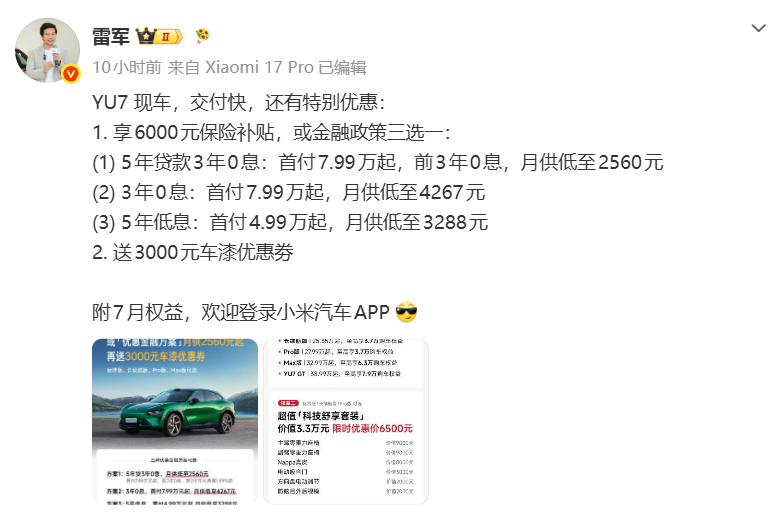
However, it is worth noting that Xiaomi announced several purchase incentive policies for the YU7, SU7, and SU7 Ultra this month, including free configuration upgrades, discounted optional features, insurance subsidies, and financial policies such as interest-free, low-interest, and interest-only payments.
(Image Source: Weibo)
In other words, Xiaomi is employing these purchase policies to attract more users and increase its order volume.
Currently, Xiaomi's challenges no longer revolve around production capacity or backlogged orders. Before the launch of the Xuntian series models, Xiaomi's focus is likely on maintaining a steady influx of new orders.
For traditional brands, overseas sales data is becoming increasingly pivotal.
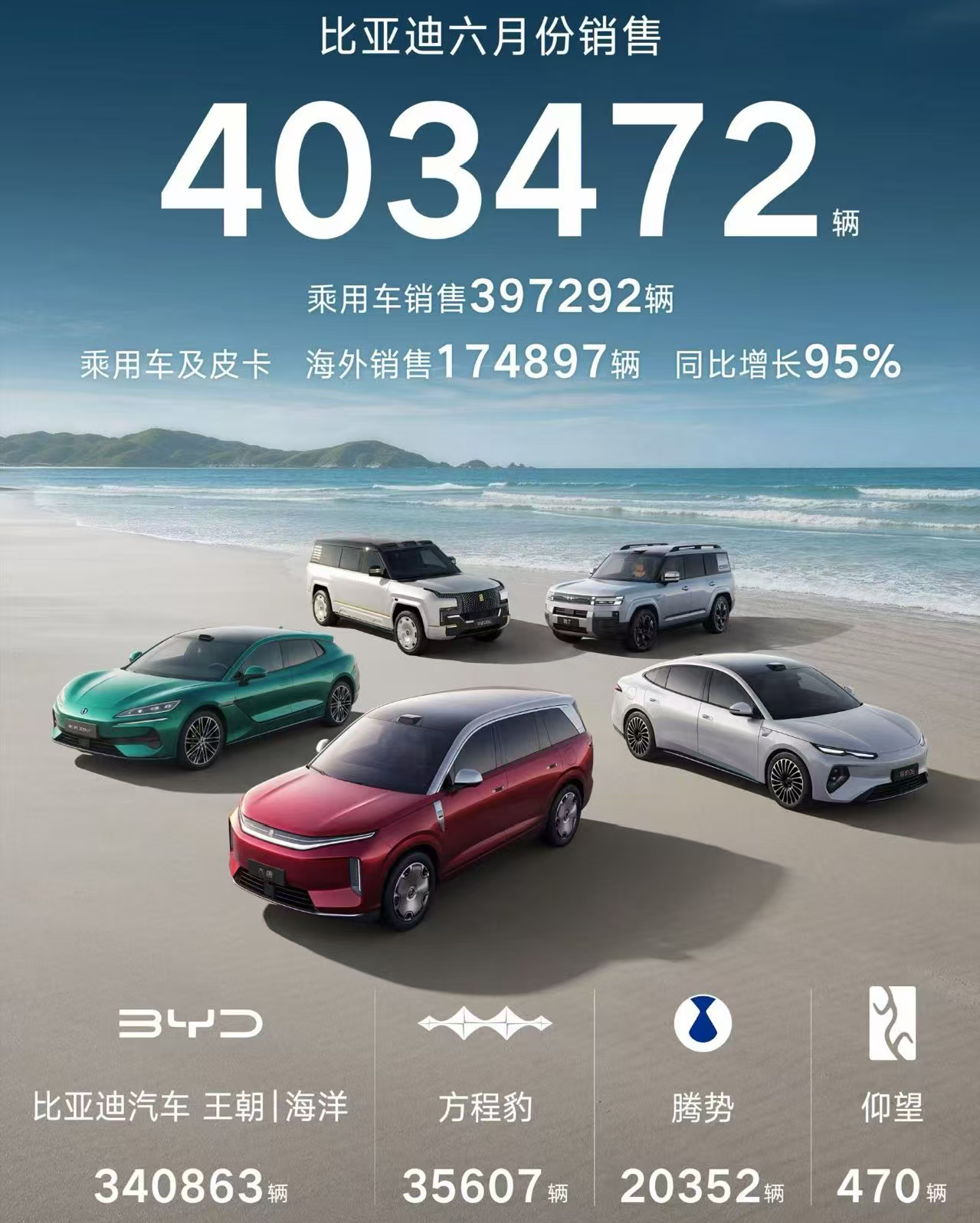
Take BYD, the top seller in June, with total sales of 403,742 units, including 397,292 passenger vehicles and 174,897 overseas sales of passenger vehicles and pickups.
(Image Source: BYD)
This means that BYD's overseas sales now account for 43% of its total sales!
Last June, this proportion was only 23%. In just one year, BYD's overseas sales share has surged by 20 percentage points.
Regarding the sales of BYD's various brands, the Wangchao/Ocean series sold 340,836 units, the Fangchengbao series sold 35,067 units, the Denza series sold 20,352 units, and the Yangwang series sold 470 units.
Next is Geely, with total sales of 240,799 units, including 161,449 new energy vehicles, accounting for over 67% of total sales, an increase from last year.
Among them, the Galaxy brand sold 108,206 units, Lynk & Co's new energy models sold 15,414 units, and the Zeekr brand sold 35,169 units.
Geely's overseas export sales in June reached 102,874 units, a year-on-year increase of 157%, accounting for 42% of total sales.
Chery, which has long focused on overseas markets, sold a total of 240,585 units in June, including 103,428 new energy vehicles and 185,220 export units.
Compared to BYD and Geely, Chery's overseas sales share is significantly higher, at 76.9%!
Great Wall Motors sold a total of 108,080 units, including 34,659 new energy vehicles and 60,168 overseas sales. Overseas sales accounted for 55.7%.
Overall, a substantial portion of traditional Chinese brands' June sales originated from overseas markets, reflecting two trends:
First, the competitiveness of Chinese brands in overseas markets is strengthening. Since the beginning of the year, ongoing international turmoil and rising fuel prices have led more consumers in various countries/regions to recognize affordable Chinese new energy models, driving sustained growth in overseas sales.
Second, domestic sales have declined. The total sales of these four Chinese brands have not seen significant changes compared to the same period last year, but the proportion of overseas sales has increased significantly, indicating a decline in their domestic market sales.
In the post-price war era and with the increasingly fierce competition for intelligence in the automotive industry, traditional brands with slower intelligence transformations are likely to lose market share to new forces. The sales growth of brands like Leapmotor, HiMo, NIO, and XPeng reflects this trend.
For these Chinese brands, expanding into overseas markets has naturally become a preferable solution.
Subjectively, this helps stabilize brand sales and further boost profits. Objectively, it enhances the competitiveness and market share of China's automotive industry in the global market, creating a win-win situation.
Standing at the beginning of July, a pivotal juncture that connects the first and second halves of the year, it is clear that the domestic automotive industry is entering a new cycle of competition.
Competition remains fierce, but its direction is evolving.
First, the price war is gradually subsiding. Over the past two years, "competing on price" has been the industry's main theme. However, since 2026, market competition has shifted from purely price-based to focusing on technology, products, and experience.
This year, many new and facelifted models have not continued to slash prices but have instead focused more on enhancing product strengths such as intelligence configurations, charging efficiency, and driving experience.
For the entire industry, this shift from "price competition" to "value competition" is undoubtedly more conducive to long-term healthy market development.
Second, the competition for intelligence is further accelerating. With the penetration rate of new energy vehicles surpassing 60% in April this year, new energy models have become the mainstream choice for consumers.
As electrification becomes an industry consensus, intelligence has become the new competitive focus. From advanced driver-assistance systems to intelligent cockpits, from AI large models in vehicles to full-vehicle intelligence, automakers are accelerating their deployments.
In the first half of the year, NIO, XPeng, Li Auto, Xiaomi, and Huawei-affiliated brands all announced new advancements in the field of intelligent driving; BYD continued to promote the popularization of high-level advanced driver-assistance systems and introduced "intelligence assurance" policies for features like intelligent parking and urban navigation assistance, further lowering the barrier to entry for consumers.
As the price war cools down and the competition for intelligence heats up, the industry has entered a new phase of competition.
For automotive brands, the core challenge in the second half of the year is who can consistently deliver truly competitive products and technologies, establish a firm foothold in the new competitive landscape, and achieve a transition from "surviving" to "thriving."
Leapmotor, Xiaomi, BYD
Source: Leikeji
The images in this article come from the 123RF licensed image library. Source: Leikeji
-
![]()
MathWorks: Generative AI Holds Great Potential, Yet a Trusted Toolchain is Essential for Flawless Operation
-
![]()
Small Earphones, Big Business
-
![]()
Volkswagen Slashes 100,000 Jobs, Mercedes-Benz Axes Year-End Bonuses: What’s Ailing German Auto Titans?
-
![]()
Doubao Can No Longer Offer Free Services to 345 Million Users: China's Era of Free AI Is Drawing to a Close
-
![]()
How Can Chinese Small Home Appliances Conquer Southeast Asia Through 'Dimensional Competition'?
-
![]()
Why are top intelligent driving players betting on reinforcement learning?
-
![]()
June 2026 Automobile Complaint Index Rankings: Persistent Problems Ignite Grievances Among Long-term Vehicle Owners
-
![]()
Avita Takes Another Stab at HKEX Listing: Facing the Urgency of Sustaining Operations Amid 11.2 Billion Yuan Loss Over Three Years