No More Empty Promises! Tesla's Robot Officially Enters Mass Production, and the Trillion-Dollar T-Chain Market is Just Beginning
 07/06 2026
 468
468
After multiple delays and public controversies, Tesla's Optimus has finally entered the substantive phase of mass production. The strong rally in the T-chain sector on the A-share market is driven by capital sentiment on the surface, but fundamentally signals a turning point as the humanoid robot industry transitions from a conceptual phase to an engineering implementation phase. Can China's supply chain, which has risen through cost, craftsmanship, and large-scale supporting capabilities, replicate the all-round boom of the new energy vehicle era? The answer lies in the rhythm of capacity iteration and core technological barriers.
01 Going Viral! Musk Shares Production Line Photo, T-Chain A-Shares Strengthen Collectively
On July 3, the A-share humanoid robot sector was in full swing, with Tesla's Optimus supply chain (T-chain) concept stocks leading the rally and becoming the most prominent theme.
In terms of individual stock performance, Tuopu Group and Shuanghuan Drive directly hit their daily limits, while core stocks such as Sanhua Intelligent Control, Zhejiang Rongtai, Wuzhou New Spring, and Moons' Electric followed suit with significant gains. The capital concentration effect was quite evident.
The direct trigger for this market rally came from a post by Musk. 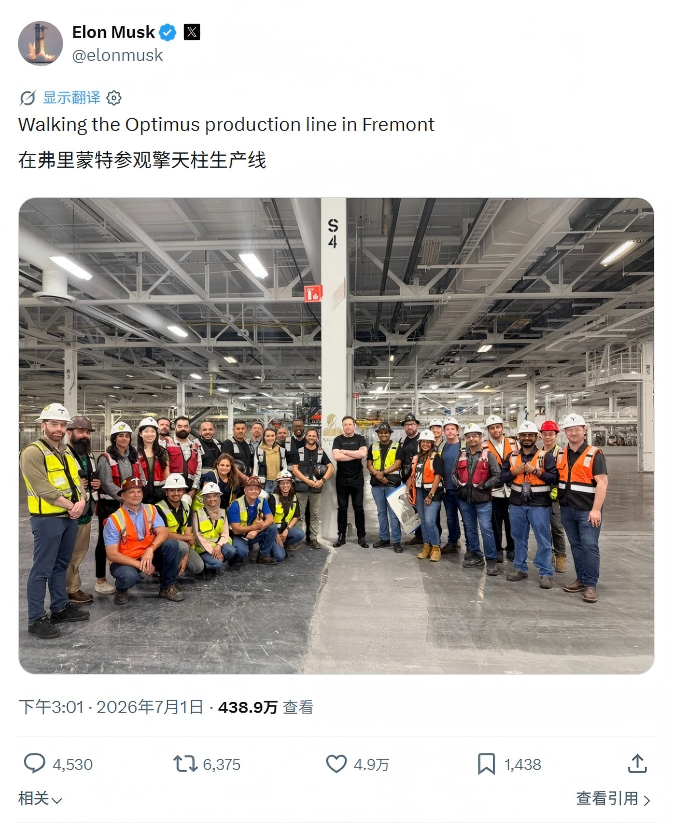
On July 1, Musk posted a group photo of the Optimus robot production line at the Fremont factory on social media, officially announcing the progress of the production line's implementation. More critically, Tesla executives confirmed that the installation of the first official mass production line for Optimus has commenced, with plans to gradually expand to 40 production lines in the future.
Unlike the familiar 'technology vision announcements' in the past, the core logic behind this round of market pricing is clear: Tesla has completed a closed-loop layout from technology verification and prototype iteration to production line infrastructure, with the industrialization process entering a deterministic channel.
As a landmark project in the global humanoid robot sector, Optimus has long been constrained by engineering challenges, with its mass production timeline repeatedly delayed and its iteration progress surpassed by later entrants. External doubts about the commercialization value of its humanoid robots have never ceased.
However, the initiation of the dedicated production line installation signifies that all technical verification processes are essentially concluded, marking the official end of the industry's Observation period (observation period) and ushering the global humanoid robot industry into a new phase of valuation and pricing.
02 No More Empty Promises! Production Line Reconstruction and Implementation, Mass Production Enters the Final Sprint
The core industry question cuts to the chase: After multiple rounds of mass production delays, why has the capital market formed a high degree of consensus on this implementation?
Mechanical industry analysts provide a core judgment that separates fact from fiction: Previous delays were attributed to immature underlying technological solutions, while the commencement of this production line represents the official start of the engineering mass production process. 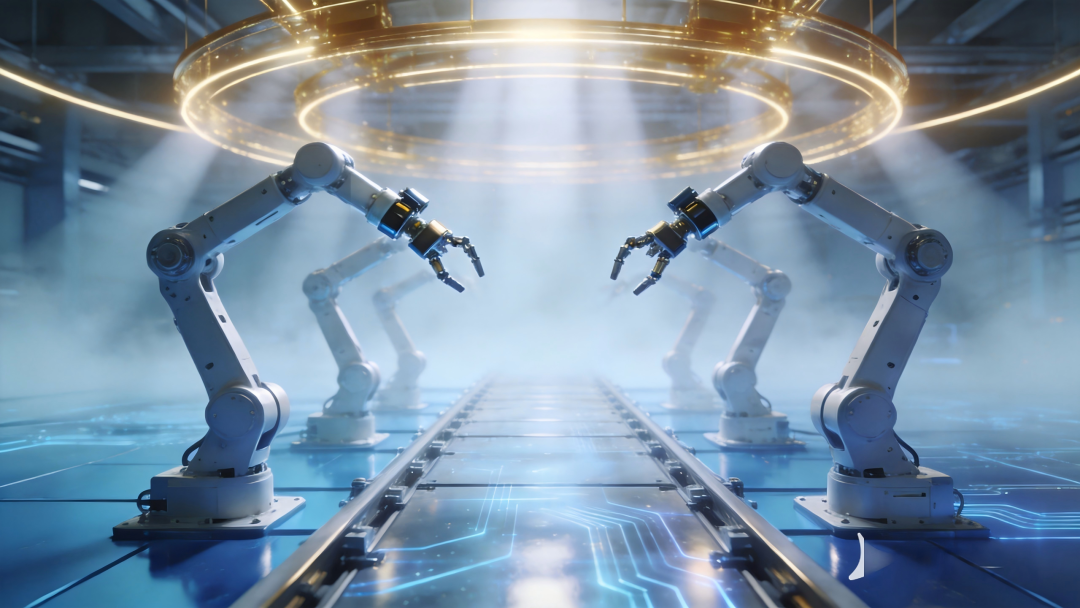
Recalling the core issues behind each delay, Optimus has long been stuck at two major engineering bottlenecks: the force control and bionic performance of the humanoid dexterous hand falling short of standards, and the incomplete closed-loop optimization of the electromechanical coupling technology solution for the entire machine, with hardware and software collaboration unable to support large-scale mass production. The newly implemented first dedicated production line has a highly industry-specific positioning.
This production line does not aim for large-scale shipments as its core goal; instead, its core functions are process verification, full-link quality calibration, and closed-loop confirmation of the final technical solution. It represents the last round of full-process engineering refinement before humanoid robots move towards large-scale commercialization.
Top-level capacity reconstruction actions have been fully implemented:
On May 20, the last batch of Model S/X vehicles officially rolled off the line at Tesla's Fremont factory. This factory, which has long produced high-end passenger vehicles, will complete the dismantling and reconstruction of its original automotive production lines within four months, fully transforming into a dedicated production base for humanoid robots, with a long-term planned annual capacity of up to 1 million units.
Combining Tesla's officially disclosed product iteration roadmap, the Gen3 version will commence small-batch engineering production in July-August 2026, enter full-scale capacity ramp-up and large-scale mass production in 2027, and be available for C-end sales by the end of the year. This precise timeline has definitively ended the industry's ultimate debate on whether Optimus will enter mass production.
03 Capacity Starts Slow, Then Accelerates! Musk 'Cools Down' in Advance, Releasing Key Signals
While mass production certainty has landed, Musk has released a rational industry forecast, precisely defining the medium- to long-term capacity iteration rhythm for Optimus: 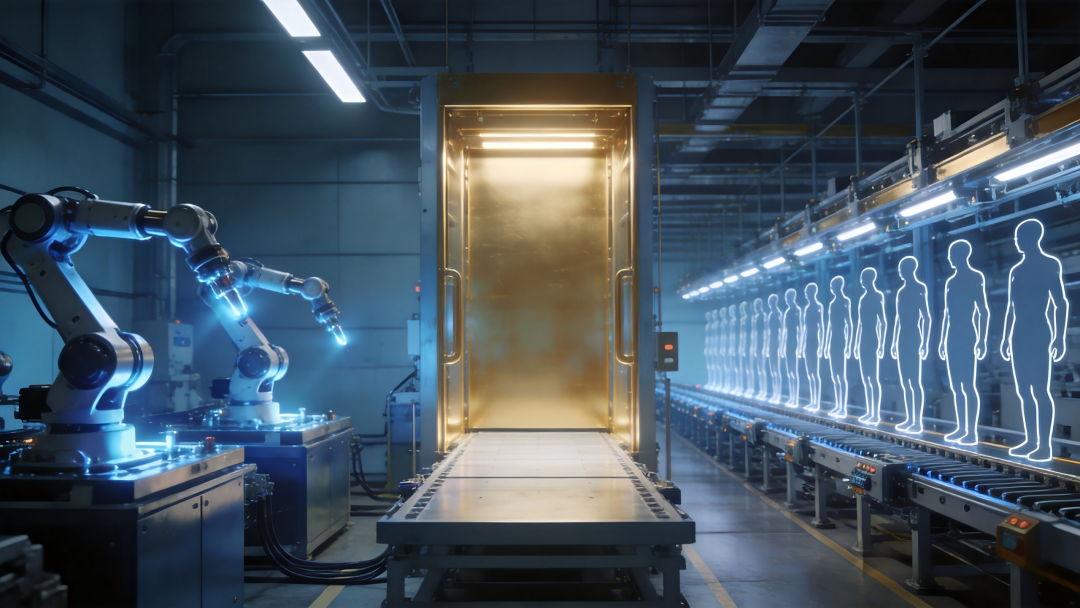
'The production of Optimus will be extremely slow at first because everything is new; this is not like manufacturing cars.'
This statement accurately anchors Optimus's capacity model: a gradual ramp-up, with verification preceding volume expansion, completely distinct from the mature assembly line manufacturing logic of new energy vehicles.
Short-term (2026): The first production line will focus on refinement, with limited weekly production scale. Domestic suppliers will primarily engage in small-batch orders and sample delivery for iteration.
Medium-term (2027): After process verification is completed, 40 production lines will gradually be implemented, with the Texas factory increasing production investment and capacity entering a rapid ramp-up phase.
Long-term: Million-unit capacity will be released, and humanoid robots will enter the commercialization popularization phase.
Executives from leading robot companies Supplementary analysis and judgment (provide supplementary analysis): The completion of production line hardware setup does not mean processes can be quickly replicated. Iteration of the entire machine's collaborative solution, refinement of precision component processes, and establishment of a full-link quality control system all involve long cycles. Only when the three major indicators of process consistency, overall machine yield rate, and delivery stability all meet standards will the industry truly witness capacity expansion.
Based on this model, it is clear: The industry is unlikely to see explosive order growth in the short term, but the deterministic turning point for industry upward momentum has irrevocably arrived.
04 Hidden Champions Emerge! China's Supply Chain Deeply Integrated with the T-Chain
The underlying industrial logic of this round of T-chain market rally points to a replicable growth path: China's precision manufacturing supply chain will replicate the historical process of the new energy vehicle industry's full-chain rise.
Currently, Tesla has issued targeted orders to domestic leading suppliers for core motion control components such as actuators, precision lead screws, and planetary reducers, with chain enterprises already entering the pre-stocking phase. Constrained by strict confidentiality agreements from terminal manufacturers, most listed companies cannot publicly disclose their cooperative identities, creating an industry-specific pattern of 'confirmed orders, silent information.'
Integrating industry research, institutional reports, and corporate publicly disclosed technical caliber (standards), three core T-chain supply entities have clearly emerged:
1. Sanhua Intelligent Control
A core stock for humanoid robot electromechanical actuators, deeply involved in the full-cycle product definition, prototype trial production, and multiple iterations of terminal customers. Focusing on the development of materials, structures, and control algorithms for key actuator components, it simultaneously advances overseas capacity layout and serves as a core infrastructure-level supplier for the T-chain's actuator segment.
2. Tuopu Group
Using linear actuators as the cooperation entry point, it quickly passed verification by leveraging its long-term engineering accumulation in the vehicle chassis electronic control (IBS) field. Its business scope extends to core motion components such as rotary actuators and dexterous hand drive motors, having completed multiple rounds of sample delivery calibration and entered the pre-mass production verification pool.
3. Xinjian Transmission (IPO Pending)
A hidden leader in the precision transmission sector for humanoid robots, deeply embedded in Optimus's overall machine transmission link. Focusing on the R&D of high-precision, low-noise, and lightweight transmission components, it is an irreplaceable precision manufacturing supplier for the T-chain and is currently in the IPO capitalization process.
In addition, multiple A-share companies have confirmed deep binding relationships with the humanoid robot business through compliant disclosures such as 'North American leading clients, T-series terminal manufacturers,' forming a second-tier supply matrix for the T-chain:
Longsheng Technology: Supplies rotor and stator products to Company T, continuously expanding its humanoid robot client base.
Changying Precision: As a Tier 1 supplier, directly interfaces with leading robot brands at home and abroad, with a client structure covering North America, Europe, and domestic leaders.
Joyson Electronics: Launches core assemblies such as brain and cerebellum controllers, energy modules, and fuselage armor materials, continuously delivering samples for iteration to major North American clients.
05 Industry Separates Fact from Fiction! Two Core Logics to Grasp Post-Market Opportunities
After years of capital enthusiasm, the humanoid robot industry is officially bidding farewell to the conceptual hype cycle and entering a phase of technology implementation, order fulfillment, and capacity matching to separate fact from fiction. Driven by technological iteration, production line infrastructure, and global industrial policies, the industry's turning point has been established, with core post-market opportunities concentrated in two structural logics. 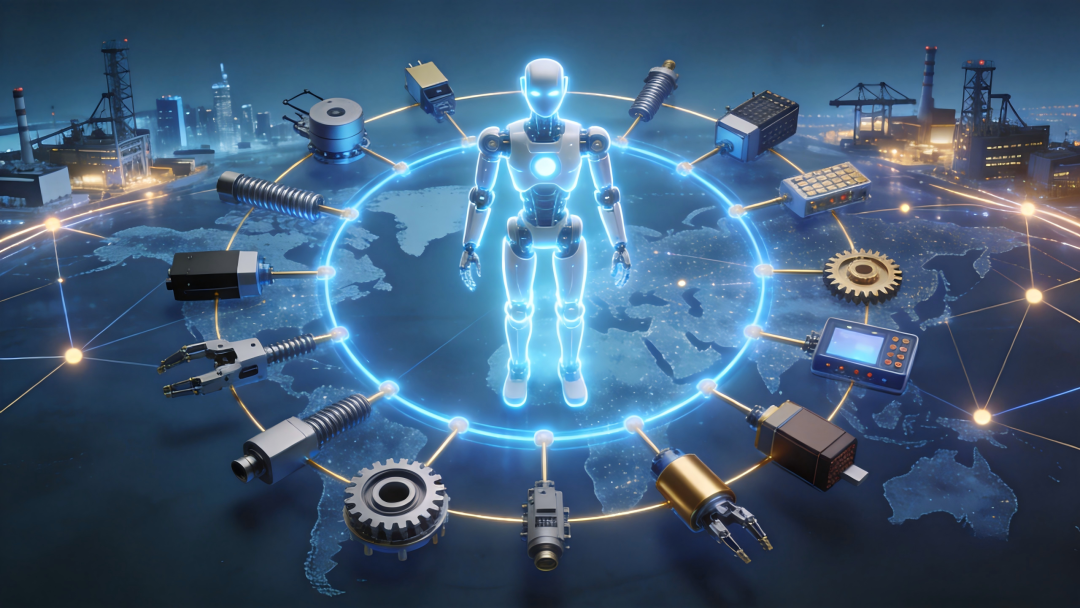
Logic 1: Closely follow the T-chain's mass production rhythm to grasp deterministic dividends.
CITIC Construction Investment forecasts that the core theme of the robot industry in 2026 will be anchored to the T-chain's mass production iteration rhythm + the capitalization process of domestic OEMs. The implementation of the Fremont factory's production line reconstruction and the mid-year production of the Gen3 model signify that the humanoid robot sector, which has been fermenting for nearly five years, has officially crossed the industry's critical point.
Logic 2: Enterprises with overseas capacity layout possess long-term competitive advantages.
Changjiang Securities points out that whether an enterprise can penetrate Tesla's core supply chain depends on three dimensions: strategic alignment, global channel capabilities, and core technological barriers. However, the ability to deliver large-scale orders + overseas localized capacity support are the core decisive factors at this stage.
Based on the requirements for localized layout of the global supply chain, Tesla mandates that core supporting manufacturers follow up with overseas factory construction in North America. Enterprises that have already completed overseas capacity layout or have clear overseas construction plans will form first-mover barriers in the subsequent expansion of 40 production lines and global order expansion, creating a generational gap with peers.
06 Epilogue: The Next New Energy Era is Unfolding
From repeatedly delayed prototypes to mass-produced terminals with full-link production lines, Tesla's Optimus has completed the ultimate leap from a technological concept to an industrial product.
Looking back a decade ago, the market could not have predicted the global dominance of China's new energy supply chain; looking at the present, humanoid robots are standing at the exact same industry starting point.
While short-term capacity will gradually ramp up, the long-term upward trend remains unchanged. Relying on precision manufacturing accumulation, comprehensive cost advantages, and global capacity layout, China's robot supply chain is poised to replicate the rise of new energy vehicles, fostering a group of globally competitive leading technology manufacturing enterprises.
This is not merely a simple sector sentiment hype but the core signal that the trillion-dollar humanoid robot sector is officially entering the industrialization era.
-
![]()
Volkswagen's Market Share in China Drops to 9.7% in a Decade, U.S. Brands Down to 5%: Chinese Automakers Take the Offensive to Competitors' Doorsteps
-
![]()
In the AI-Driven Office Era, Is WPS Becoming a Hidden Threat to Hard Drives?
-
![]()
When AI Begins to Reshape Infrastructure: A Reshuffle in the U.S. Cloud Market
-
![]()
Tencent’s Strategic Maneuver: Selling Kuaishou, Investing in Kling
-
Has the Semi-Annual Achievement Rate Dipped Below 40%? Can AIVA Circumvent the 'Multi-Shareholder Death Spiral'?
-
![]()
Stepping Out of the Humanoid Robot Concept: Why is Autonomous Driving the First Large-Scale Implementation Track for Physical AI?
-
![]()
WPS: Criticism Warranted, Yet Open to Improvement
-
![]()
Farewell to Image-First: Robotic Vision is Undergoing a Fundamental Reconstruction