Elon Musk's 'Money-Burning' Spree: All Car Sales Profits Poured into AI
 07/24 2026
 518
518
Entering a Prolonged Money-Burning Phase
”
Author|Wang Lei
Editor|Qin Zhangyong
Tesla has released what may be its most contradictory quarterly financial report to date.
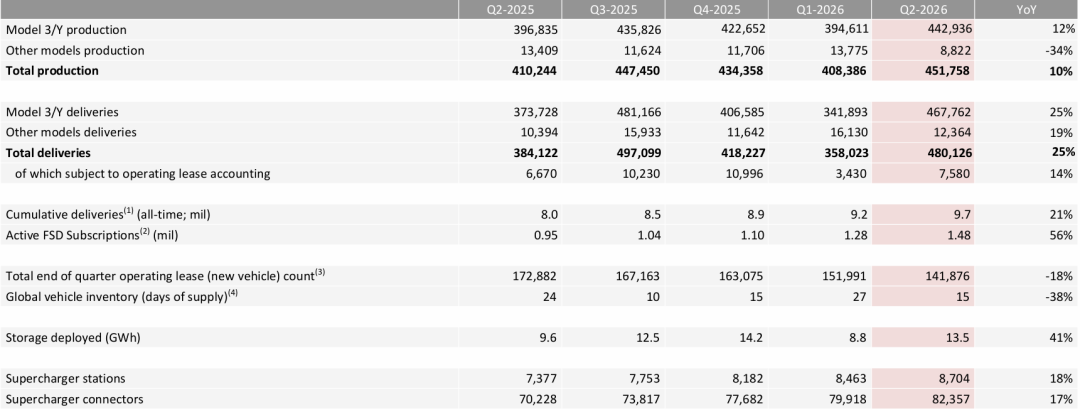
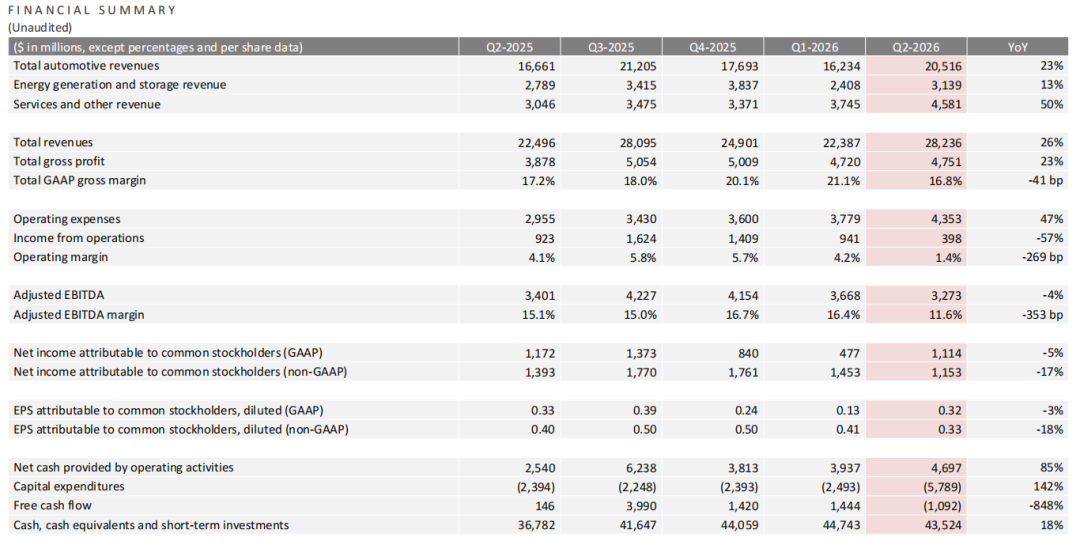
From an income perspective, nearly every metric set a new record: revenue reached $28.24 billion, surpassing Wall Street expectations by nearly $3 billion. Global deliveries hit 480,000 units, a Q2 historical high, up 25% year-over-year.
Energy storage deployment reached 13.5 GWh, up 41% year-over-year. Service and other business revenues soared to $4.58 billion, up 50% year-over-year, with record-high gross profit margins. FSD active subscriptions grew 56% year-over-year to 1.48 million, and production of Optimus and Cybercab commenced.
Yet, profits were nowhere to be seen.
Behind the various data growths, the operating profit margin plummeted from 4.1% in the same period last year to 1.4%, net profit fell 5% year-over-year, and free cash flow turned negative by $1.1 billion.
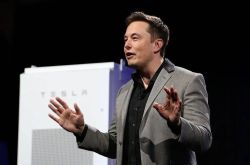
Despite this, Musk stated, 'I've never been more optimistic about Tesla's future than I am now.'
The reason is not hard to understand: Tesla is beginning to pay costs for the future, but future businesses have not yet generated corresponding revenues.
In Musk's view, what defines Tesla is not how many cars it sold or how much money it made in Q2, but what will drive growth over the next decade. He believes that the projects currently being invested in will ultimately yield 'astonishing returns.'
This also means that Tesla is entering a phase of extreme money-burning, with uncertain timelines for returns.
01 Record-Breaking Revenues
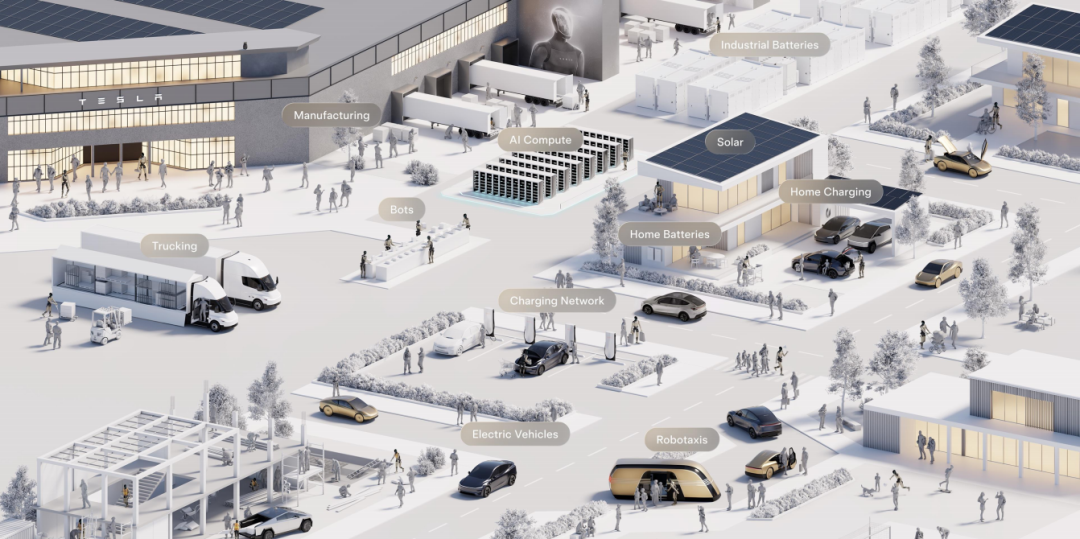
Musk has said that Tesla is transitioning from an automotive company to an AI company, with future growth primarily coming from robotics, autonomous driving, and AI infrastructure.
Although Tesla no longer sees itself as just an automotive company, the automotive business remains its core revenue driver.
According to the financial report, Tesla's revenue reached $28.2 billion, its best Q2 performance ever, up 26% year-over-year. Automotive revenue alone hit $20.516 billion, up 23% year-over-year, exceeding analysts' expectations of $18.68 billion.
Delivery volume was the core driver of revenue growth.
In Q2, Tesla delivered a total of 480,126 vehicles, up 25% year-over-year, far exceeding Wall Street's expectation of 397,466 units. The Model 3 and Model Y remained the absolute mainstays, accounting for 97.4%, with a combined delivery of 467,762 units, up 25% year-over-year.
This achievement was supported by record-breaking deliveries in various new markets, particularly in Europe, where registrations surged nearly 108% in May, offsetting a roughly 20% sales decline in the U.S. market due to the expiration of federal electric vehicle tax credits.
Meanwhile, with the Model S/X officially discontinued in May 2026 and production lines dismantled, sales of these models accounted for less than 3%, with only 12,364 units delivered in Q2.
Among the three major business segments, the most eye-catching was the previously under-the-radar Services and Other Businesses segment, which generated $4.581 billion in revenue in Q2, up 50% year-over-year. Gross profit reached $648 million, up $302 million quarter-over-quarter, with the gross profit margin rising from 9.2% last quarter to 14.1%. Both metrics set historical records.
This segment includes the Supercharger network, after-sales maintenance, parts, used cars, and insurance. The Supercharger network added over 2,400 new charging stalls this quarter, with a 17% year-over-year increase in scale; the global fleet grew to 9.7 million vehicles, driving after-sales and parts growth.
Additionally, the Energy and Storage business performed well.
In Q2, revenue reached $3.139 billion, up 13% year-over-year. Energy storage deployment hit 13.5 GWh, up 41% year-over-year and over 50% quarter-over-quarter, marking the second-highest quarterly record and the highest deployment over the past twelve months.
Capacity expansion underpins this growth, with the California Megapack factory having an annual capacity of 40 GWh and the Shanghai Megafactory at 20 GWh, both continuously ramping up production.
Moreover, the new Megafactory in Texas is nearing completion, with plans to start producing next-generation products, Megapack 3 and Megablock, this year, setting the stage for higher-margin growth in the future.
All these growths also propelled Tesla's revenue to surpass $100 billion for the first time over the past 12 months.
02 Gross Margin Declines, Burning $460 Million Daily
Now that the positives have been covered, it's time to look at the other side. Despite nearly flawless revenue performance, profits have collapsed across the board.
The financial report showed that net profit attributable to ordinary shareholders was $1.114 billion, down 5% year-over-year. Under non-GAAP accounting, net profit attributable to ordinary shareholders was $1.153 billion, down 17% year-over-year.
GAAP operating profit plummeted from $923 million in the same period last year to $398 million, a 57% year-over-year drop, less than 30% of market expectations. The operating profit margin narrowed significantly from 4.1% last year to 1.4%.
This means that revenue growth did not translate into a synchronous increase in overall profits, primarily due to the collapse of gross margins across all business segments.
While more cars were sold, the growth in deliveries did not fully translate into improved profitability. Tesla's overall gross margin fell from 17.2% in the same period last year to 16.8%. The automotive business's gross margin dropped nearly three percentage points from 19.2% last quarter to 16.3%.
The reason is the discontinuation of high-margin models. According to the financial report, the 'decline in average vehicle selling price' was one of the main factors dragging down gross margins, as the product mix shifted toward more cost-effective models.
This was an inevitable outcome, as the Model 3 and Model Y accounted for 97.4% of deliveries in Q2, with the two cheapest models dominating. Naturally, average revenue per vehicle was hard to lift.
The overall average selling price is being pulled down by lower-end models. While this expands the user base, it inevitably puts pressure on short-term profit margins.
A simple calculation: dividing automotive revenue of $20.516 billion by deliveries yields an average revenue of approximately $42,300 per Tesla vehicle sold, compared to $43,600 in Q1, a drop of about $1,300 per vehicle.
Based on gross margin calculations, Tesla's gross margin per vehicle fell from $8,057 last quarter to $6,645. In one quarter, Tesla earned $1,412 less per vehicle sold. With sales revenue declining and costs remaining unchanged, gross margins can only thin out.
It's not just car sales dragging down profits; carbon credit revenue, which has supported automotive business profits for years, has also shrunk significantly. Carbon credit revenue fell to $146 million from $380 million in Q1 and $439 million in the same period last year, a 66.7% year-over-year drop, accounting for only 0.5% of total revenue.
Additionally, in the energy storage business, although deployment volumes are rising, gross margins have also declined. Q2 energy storage gross profit was $640 million, down from $846 million last year. Despite a 41% increase in deployment, gross profit fell by nearly a quarter. The gross margin dropped from 30.3% last year to 20.4%, nearly halving from 39.5% in Q1.
Of course, a slight decline in gross margins alone wouldn't cripple Tesla. The root cause of Tesla's profitability pressure is its official entry into a 'money-burning cycle.'
The financial report showed a significant increase in capital expenditures in Q2, reaching $5.789 billion, up 142% year-over-year and $3.3 billion more than Q1. On a daily basis, Tesla is burning approximately $64 million, or about 430 million yuan, per day.
Broken down, the main expenditures are in three areas: R&D expenses reached $2.371 billion, up $782 million year-over-year; selling, general, and administrative expenses were $1.982 billion, up $616 million year-over-year.
Additionally, equity incentives embedded in these two expense categories amounted to $1.151 billion in a single quarter, up 81% year-over-year, accounting for 4.1% of total revenue.
Tesla stated that the 2025 CEO performance incentive plan was one reason for this spike in expenses, which were paid through additional share issuances, ultimately diluting shareholder equity and directly suppressing current book profits.
Meanwhile, operating cash flow was only $4.697 billion in the same period, directly causing Tesla's free cash flow to turn negative by $1.1 billion, marking Tesla's first quarterly negative free cash flow in over two years.
03 Continuing to Burn Money
Burning so much money daily requires a perfect explanation for shareholders.
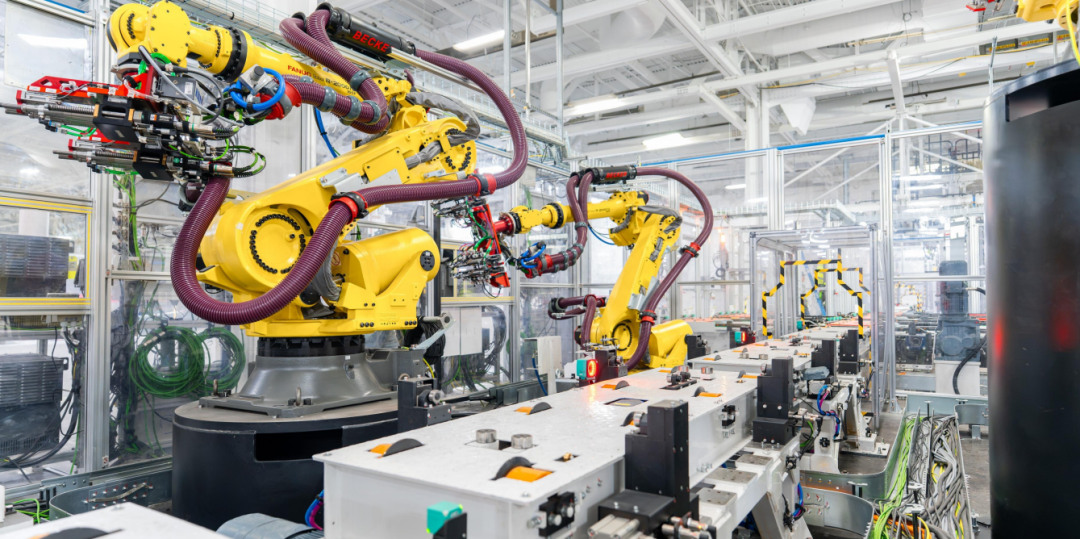
During the earnings call, Musk provided an answer: this money has been transformed into visible robots, factories, computing power, and Robotaxi fleet expansion. He referred to this investment frenzy as 'the fastest industrial-scale expansion phase in the U.S. since World War II.'
Although these investments do not generate revenue in the short term, Musk stated that the returns on these investments will be incredible. 'I believe this will be our highest-returning round of capital expenditures ever,' he said.
'Our principle is to spend money as fast as possible without excessive waste. There needs to be a balance between speed and efficiency, but I would rather err on the side of speed.' This implies that Musk intends to continue 'burning money at breakneck speed.'
Indeed, during the earnings call, Tesla CFO Vaibhav Taneja emphasized that capital expenditures will exceed $25 billion in 2026, with continued growth expected over the next two to three years. If insufficient, debt financing will be arranged, targeting a borrowing capacity of up to $30 billion.
With $8.282 billion already spent in the first half of the year, at least $16.7 billion remains to be invested in the second half, averaging over $8.3 billion per quarter, 40% higher than Q2's record-breaking $5.789 billion. On a daily basis, Tesla will need to spend at least $90 million per day in the second half of the year.
To prove how worthwhile this spending is, Musk disclosed at length during the earnings call the substantive progress of various projects. Let's review them one by one.
Subscription Rate Exceeds 55%
First is FSD, which already has substantive data to validate its performance.
Musk stated that in markets where FSD has been approved, user adoption rates are high; he believes that consumers will not just buy a Model 3 or Model Y in the future but a suite of autonomous driving capabilities. As FSD becomes available in more regions, he expects Tesla car demand to continue growing.
By the end of Q2, global active FSD subscriptions reached 1.48 million, a net increase of 200,000 quarter-over-quarter and up 56% year-over-year, setting a single-quarter net increase record. The attachment rate for new car subscriptions in North America exceeded 55%, also a historical high.
Overseas expansion fulfilled the commitments made last quarter. Following the Netherlands, Lithuania, Estonia, Denmark, and Belgium were added this quarter. As of July, cumulative FSD driving miles in these markets exceeded 50 million kilometers. Software-wise, Tesla began rolling out the FSD v14 lite version to AI3 hardware customers in the U.S. and South Korea in July.
Unfortunately, Musk still did not disclose a specific timeline for FSD's entry into China, stating, 'We cannot predict the exact approval timeline, as it depends on regulatory review progress. However, our technical preparations are ongoing.'
Cybercab Hits the Road
Next is the Robotaxi, considered the best carrier for FSD.
Ashok Elluswamy, Tesla's AI software lead, stated that the Robotaxi has completed approximately 380,000 miles of unsupervised driving without any 'noteworthy incidents.'
Musk announced that Cybercab has achieved small-scale mass production at the Texas factory, with engineering test vehicles already on the road. The Austin factory has begun offering Park ride (campus rides) to employees.
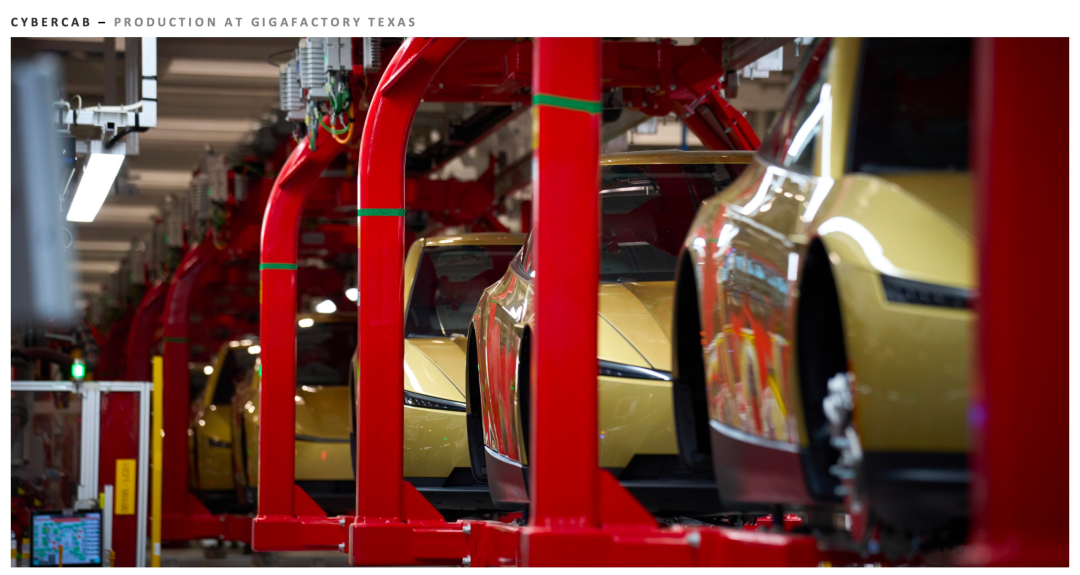
Regarding production rhythm, he admitted that it is still in the early ramp-up phase, with low volumes. 'This year is mainly about producing engineering validation vehicles and initial operational vehicles; mass production ramp-up will happen next year.'
Regarding Robotaxi expansion speed, Musk stated that Tesla will continue to grow, with 'weekly driving mileage set to increase by over 10%.'
In Q2, Robotaxi entered seven U.S. metropolitan areas. Austin, Dallas, Houston, and Miami, Orlando, and Tampa, added in July, are in unsupervised operational ramp-up, while the California Bay Area still has safety operators. Meanwhile, Cybercab test vehicles are already equipped with the initial version of FSD V15, with 40% of the seven core upgrades implemented.
However, Musk emphasized that safety remains the biggest constraint on Robotaxi expansion.
'We need to be cautious and avoid any accidents. If even one person is harmed, it will become global headline news. We are advancing at the fastest pace humanity can achieve, but at the same time, we must ensure that no one is harmed at all.'
Additionally, Musk confirmed that Tesla will not partner with ride-hailing platforms like Uber or Lyft to operate Robotaxi. He stated that Tesla will connect users directly through its own Robotaxi app, as it expects sufficient demand on its own platform.
A Long Initial Phase
Regarding the humanoid robot Optimus, Musk reiterated once again that Optimus will ultimately become Tesla's most important product, possibly even the most significant product in human history. He stated, 'Optimus will be the first robot capable of completing general-purpose tasks.'
Now, a substantial step forward has been taken. With the retirement of the Model S/X production line at the Fremont factory, the installation of the first-generation Optimus production line has commenced, with production expected to begin later this year.
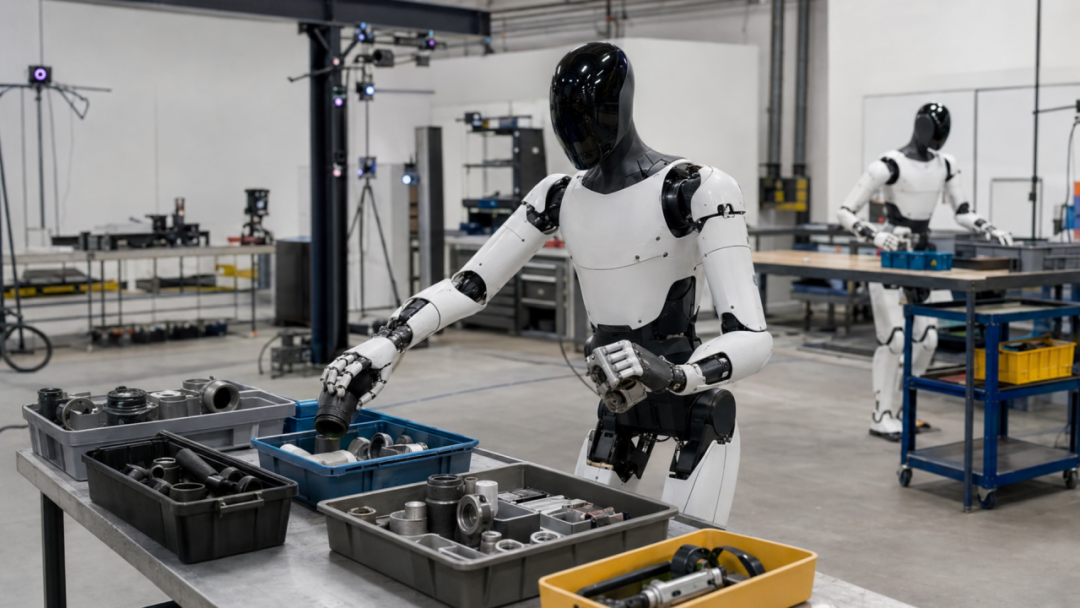
Tesla stated that the first batch of produced Optimus robots will initially be used within Tesla's internal factories for tasks such as material handling and simple assembly, serving to collect training data and further develop functionalities. They will not be immediately available for external sales.
However, Musk also admitted that this is the most challenging product Tesla has ever attempted to mass-produce, 'because nearly every component of the humanoid robot is brand-new, with no mature, off-the-shelf supply chain. Numerous joints, actuators, and components all require redevelopment.'
This also indicates that the production volume of Optimus may ultimately experience S-shaped growth, but the initial phase will be 'gradual and lengthy.'
Computing power is also a major expense that burns money. The training computing power at Tesla's Texas headquarters more than doubled in the first half of 2026. Cortex 1 and Cortex 2 are running simultaneously, totaling over 205 megawatts, and expansion will continue in the second half of the year, 'to ensure we don't slow down due to insufficient computing power.'
Moreover, from a return on investment perspective, Musk believes that AI computing power and Optimus offer the highest long-term ROI, followed by Robotaxi.
'Although automobiles and energy storage have a larger base and are also important, the true products that can elevate Tesla to the next level are AI-driven automation products.'
However, the question remains: How long will it take for these endeavors, which burn through over 160 billion yuan annually, to translate into real commercial returns?
This is a challenge Musk will inevitably face sooner or later.
-
![]()
Focus | CCCC’s Takeover of Greentown Comes to Fruition: Why Did the 11-Year ‘Control Without Authority’ Era End?
-
![]()
Final Verdict: The 2026 China Auto Forum Shines with Unique Characteristics at a Pivotal Moment
-
![]()
Tencent Maintains Matrix Approach, Alibaba Merges Entry Points: Tech Titans Initiate AI Agent Consolidation
-
![]()
Geely Secures Portion of Ford’s Spanish Production Capacity
-
![]()
Tesla Stalls This Second
-
![]()
Elon Musk's 'Money-Burning' Spree: All Car Sales Profits Poured into AI
-
![]()
Why Did Tesla’s Profits Drop and Cash Flow Go Negative?
-
![]()
AI Titans Are All in the Red: Time for Intelligent Driving Car Buyers to Reassess?