Ford and Geely Forge New Joint Venture in Spain, Sidestepping Changan and JMC
 07/24 2026
 535
535
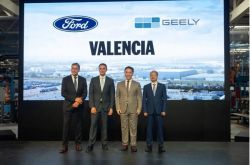
On July 23, Ford Motor Company and Geely Auto officially inked a joint venture agreement at Ford's Almussafes plant in Valencia, Spain. This plant, one of Europe's largest automotive factories with a history spanning nearly five decades and an annual production capacity of roughly 500,000 vehicles, served as the backdrop for this significant partnership.
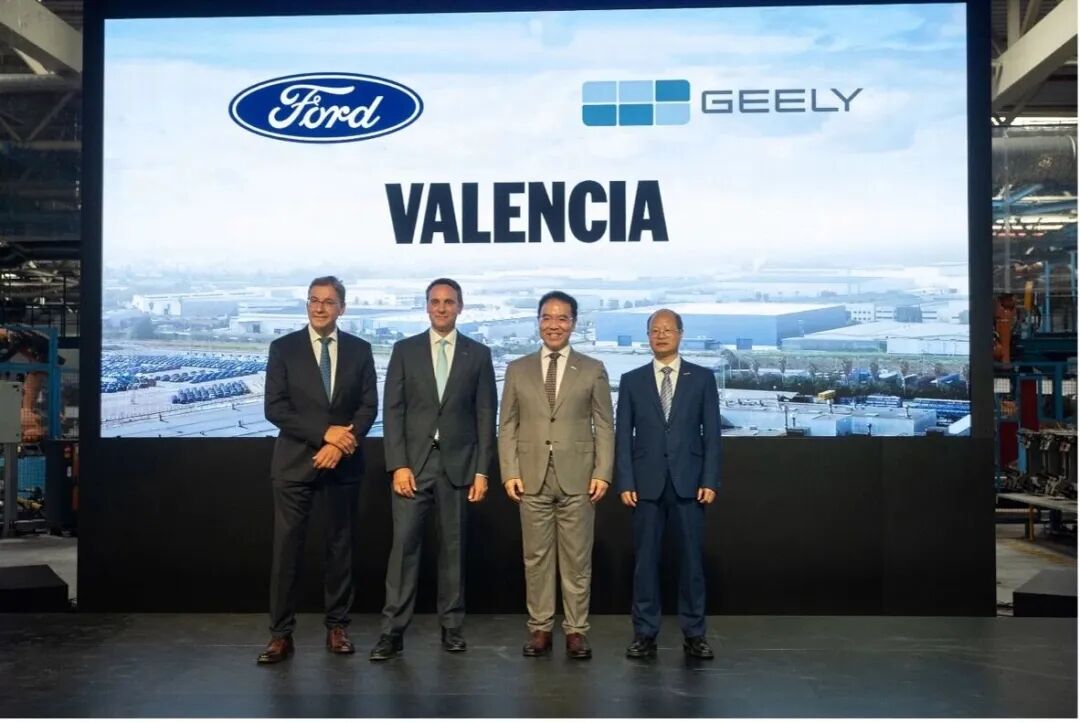
According to insiders, Geely snapped up a 34% stake in a Ford subsidiary for €221 million, with Ford retaining a 66% share. This move marks a reunion for the two “old partners,” who first joined forces in 2010 through Volvo's acquisition, after a hiatus of 16 years.

A Factory's Ordeal and Two Automakers' Strategic Moves
The Almussafes plant has grappled with considerable challenges. Since 2024, Ford has been phasing out legacy models like the Mondeo, S-Max, and Galaxy, leaving the Kuga as the sole production line at this sprawling facility. At one point, capacity utilization plummeted below 25%. Amid Europe's automotive sector overcapacity, the plant's future hung in the balance.
Ford's woes extend beyond this single factory. In 2025, Ford's global wholesale volume reached approximately 4.395 million units, a 2% year-on-year decline, causing it to slip out of the top five global automakers for the first time, surpassed by BYD. In Europe, Ford is under pressure to slash fixed costs, activate idle capacity, and speed up its electric transition.
Geely's strategy, on the other hand, is crystal clear. In the first half of 2026, Geely Auto's overseas sales soared to 474,000 units, a 158% year-on-year increase, establishing it as one of China's fastest-growing automakers in global markets. However, the looming EU tariffs on Chinese electric vehicles pose a constant threat. Securing a production base within the EU would enable Geely to circumvent trade barriers and gain logistical and supply chain advantages.
Thus, the deal was a perfect match.
Ford's New Energy Transition Fully Embraces Geely's Expertise
The most captivating aspect of this joint venture lies not in the equity ratios but in the exchange of technology and products.
Under the plan, the joint venture will produce five models: Ford will manufacture three multi-energy vehicles, including the continued production of the Kuga, a new compact hardcore SUV from the Bronco family set to launch in 2028, and an all-new Crossover model jointly developed with Geely under Ford's design leadership. Geely will produce two new energy models, with the first one rolling off the line in 2028.
A deeper implication has surfaced. Spanish media reports that all four of Ford Europe's planned pure electric models from 2027 to 2030 will be based on Geely's GEA architecture. Geely will handle R&D, manufacturing, and quality control, while Ford focuses on design and sales. Essentially, Ford's century-old badge will grace vehicles built on Geely technology for European consumers.
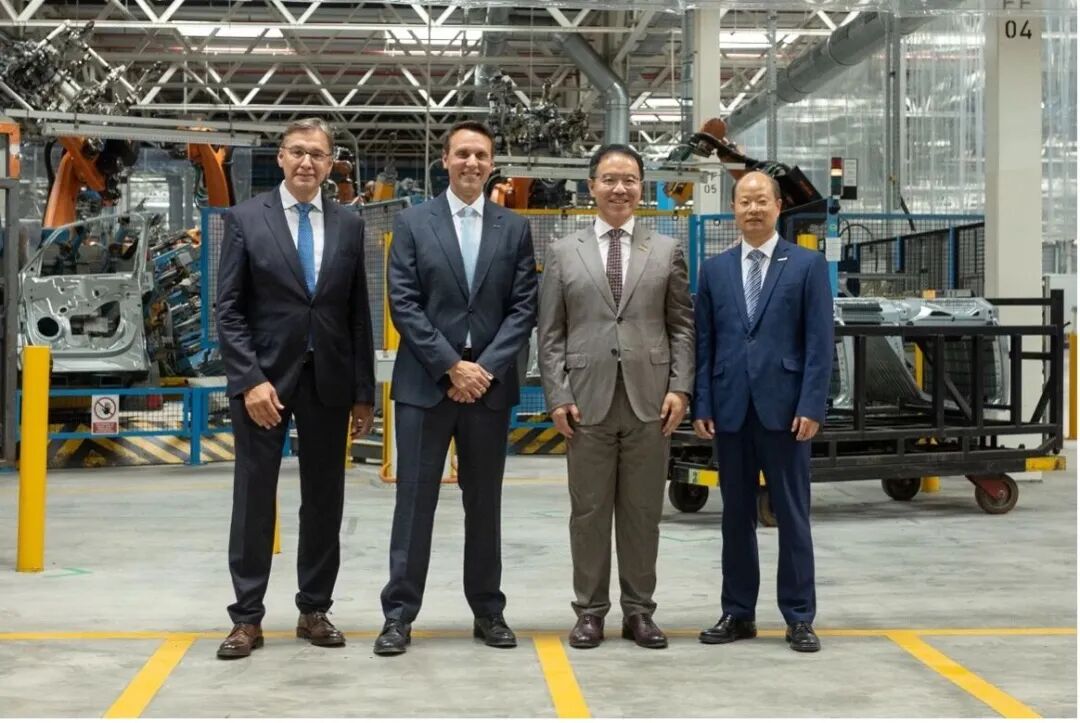
“Geely and Ford have long maintained mutual respect and trust, adhering to principles of high-quality manufacturing, efficient supply chain management, and continuous improvement,” said Nan Shengliang, Vice President of Geely Auto Group. Ford Europe President Jim Baumbick bluntly remarked, “We think Geely is very special.”
International research reports note that given Ford's successful Volvo acquisition deal with Geely, Ford's factories may well produce mid-to-low-end Geely models for export, further cementing Geely's local production footprint in Europe. Industry insiders observe that from acquiring Volvo to buying Proton and Lotus, and now deep collaboration with smart, Geely has emerged as “one of the most cross-border integration-savvy Chinese automakers with strong technology and supply chain export capabilities” in the eyes of overseas peers.
Ford's 'Global Chess Game' and the Predicament for Changan and JMC
Ford described the collaboration as “a global move, not a regional market decision,” adding that “domestic plans will be announced at the appropriate time.” This statement carries significant weight.
As Ford and Geely sealed the deal in Spain, Ford's Chinese joint venture landscape underwent seismic shifts. In April 2026, Jiangling Ford Automobile Technology (Shanghai) Co., Ltd. officially ceased operations and entered liquidation. Changan Automobile also divested its stake in Changan Ford New Energy. Ford China's experimental joint venture strategies of recent years appear to be winding down.
Ford currently maintains joint ventures with Changan Automobile and Jiangling Motors in China. But as Ford deepens its European partnership with Geely—even allowing Geely's platforms to shape its electric future—how will Changan and Jiangling respond?
One fact is crystal clear: Ford's partner selection has transcended geographical and brand boundaries. Ford CEO Jim Farley previously stated that Ford would seek partnerships to bolster its global operations. With Ford forming European JVs with Geely, proposing US factory partnerships with Chinese automakers, and “shopping around” globally, the strategic value of other international automakers' Chinese JV partners will inevitably be reassessed.
New Signals from the New Joint Venture
Ford and Geely's partnership is not an isolated incident but the latest chapter in China's automakers' large-scale European expansion.
BYD is forging ahead with a passenger vehicle plant in Hungary; Chery's JV with Spain's Ebro has revitalized Barcelona's former Nissan factory; SAIC has announced an EV production base in Galicia; and Leapmotor co-manufactures with Stellantis in Zaragoza.
In May 2026, Chinese automakers' sales in 31 European countries surpassed Japanese brands for the first time, capturing 5% of the European market share.
Amid this wave of global expansion, the Ford-Geely collaboration represents a novel model: “capacity-sharing global expansion,” where foreign partners provide production capacity and brands while Chinese partners supply technology and products. This approach proves faster, more cost-effective, and less susceptible to trade barriers than building factories from scratch.
Nan Shengliang, Vice President of Geely Auto Group, hailed this collaboration as “a milestone in Geely's global development.” This milestone signifies that Chinese automakers' global expansion has evolved from “selling products” to “selling production capacity” and now “selling technology.”
The signals from this joint venture extend far beyond the two companies involved.
For Ford, it's a pragmatic survival strategy—activating idle capacity, reducing fixed costs, and preserving around 4,000 jobs. For Geely, it's a crucial move in its global layout.
Geely aims to produce one-third to half of its European sales locally within five years. Spain is emerging as a “magnet” for Sino-European automotive cooperation, and Geely has secured the most advantageous position.
This perhaps represents the industry's greatest lesson from Spain's chess game: in the era of electrification and intelligence, companies that adapt swiftly and avoid rigid single partnerships will dominate the next phase.
-
![]()
From Energy Conservation and Carbon Reduction to AI Decision-Making: GECON East Intelligence and Chery Group Explore a New Green and Smart Paradigm for Automobile Manufacturing
-
![]()
WAIC 2026 Observation | AI Accelerates Towards the Core of Industries, Industrial AI Enters a Critical Phase
-
![]()
Volkswagen China Fires the First Shot in Foreign-Funded 'White Box Delivery'!
-
![]()
AI Agent Smartphones: The Next Competitive Edge Transcends Large Models
-
![]()
Over 880 Million Yuan Worth of Orders Unveiled, Bidding Launched for Shenzhen Eastern Public Transport
-
![]()
Tesla's Robotaxi Hits the Road: A Monumental Gamble with an Uncertain Future
-
![]()
Ford and Geely Forge New Joint Venture in Spain, Sidestepping Changan and JMC
-
![]()
199 RMB! Godox's First Camera Review: Subpar Photography, Transparent Viewfinder Frame is the Highlight