Tesla’s Q2 Revenue Rises, Yet Profitability Slips; Energy Storage Margins Take a Dive
 07/28 2026
 468
468
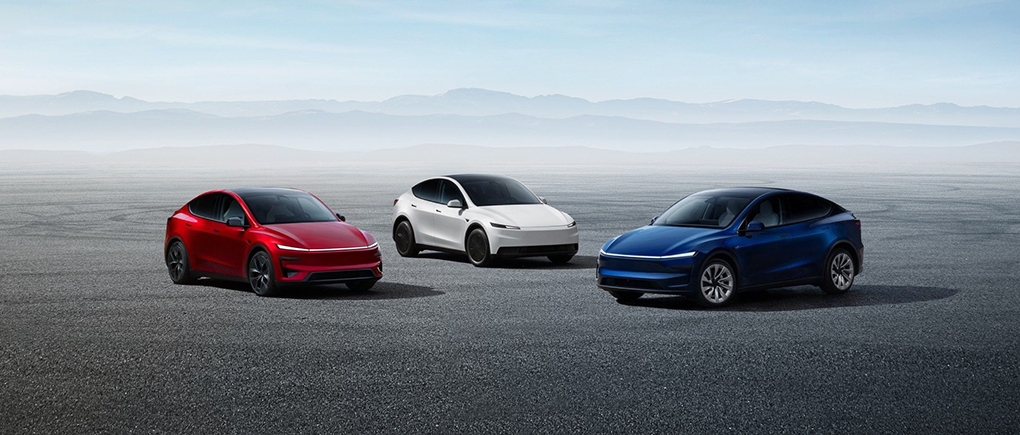
On July 22, Tesla unveiled its Q2 2026 financial results. The company reported total revenue of $28.236 billion for the quarter, marking a 26% year-on-year increase and setting a new all-time high. Over the past 12 months, Tesla's revenue has surpassed the $100 billion milestone for the first time. However, its profitability fell short of expectations, with net profit at $1.128 billion, down 5.2% year-on-year, and operating profit at just $398 million, a 57% decrease. The operating profit margin narrowed from 4.1% a year ago to 1.4%.
Following the release of the financial report, concerns over Tesla's profitability grew among investors. The company's overall gross margin declined to 16.8% from 21.1% in the first quarter, hitting one of its lowest points in recent years. This profit squeeze can be attributed to Tesla's period of extensive investment. In Q2, operating expenses surged 47% year-on-year to $4.35 billion, while capital expenditures skyrocketed 142% to $5.79 billion, primarily earmarked for artificial intelligence infrastructure, robotaxi services, humanoid robots, and other cutting-edge ventures. 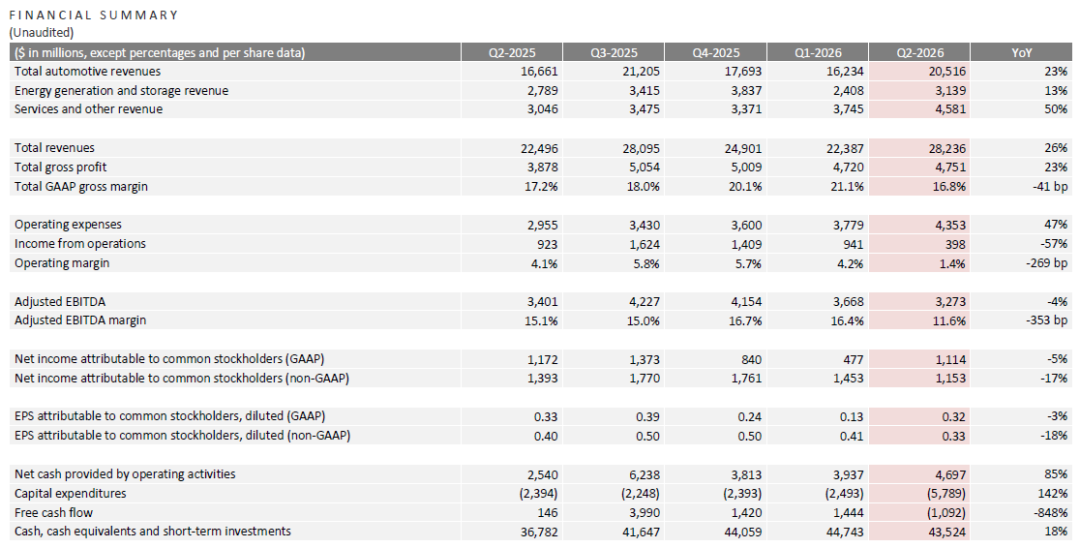
As Tesla's core business, the automotive segment generated $20.516 billion in revenue during Q2, up 23% year-on-year. The company delivered 480,100 vehicles globally in the quarter, a 25% year-on-year increase and a new quarterly record. Sales of the Model 3 and Model Y, its two flagship models, reached 468,000 units, up 36.8% sequentially. Despite the growth in deliveries, the automotive business's gross margin stood at 19.2%, still under pressure from pricing competition. Regulatory credit revenue also took a significant hit, dropping from $439 million a year earlier to $146 million, a nearly 70% decline. 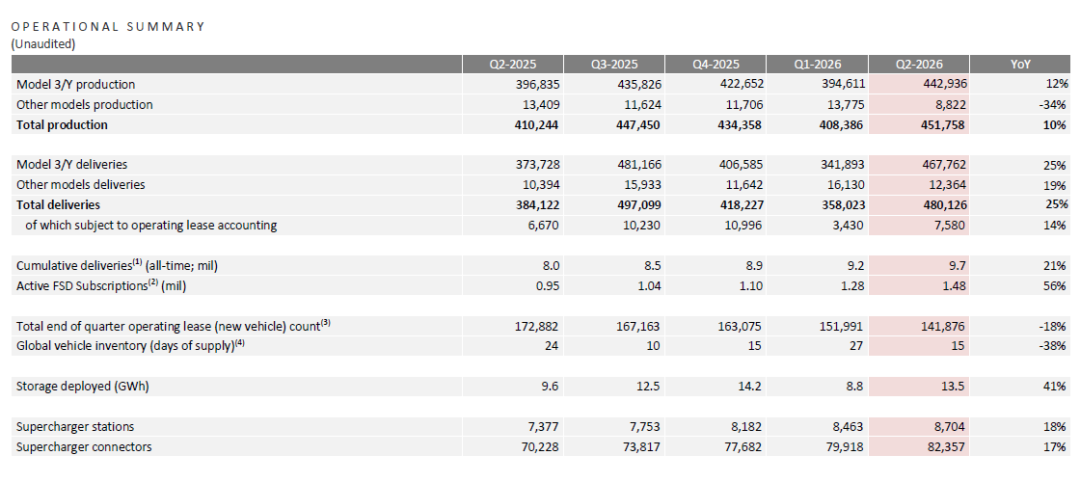
Battery production capacity remains the primary bottleneck hindering vehicle output growth. Tesla stated that it is continuously advancing battery capacity construction across various regions, with progress being made in new battery factories and battery material plants. The Berlin plant is ramping up capacity for vehicle power batteries, while Texas boasts 10 GWh of cathode material production and 30 GWh of lithium refining capacity. Nevada has achieved 7 GWh of lithium iron phosphate battery capacity for energy storage products.
The company is also boosting mass production capabilities for the 4680 large cylindrical battery to support production ramp-ups for the Cybercab and Tesla Semi, as well as increased Model Y output. Regarding new products, the Cybercab, specifically designed for robotaxi services, has commenced mass production at the Texas Gigafactory. This autonomous driving model, which lacks a steering wheel or pedals, is seen as the cornerstone of Tesla's future mobility services. However, Tesla has not provided a specific timeline for large-scale Cybercab production, with current output remaining limited.
The Tesla Semi is on track to begin production this year at the new Nevada factory. Additionally, Tesla's photovoltaic and semiconductor manufacturing businesses have made strides in site selection, site preparation, construction, and equipment procurement. The energy storage business returned to growth in Q2, but profitability took a sharp dive.
Revenue from the energy generation and storage segment totaled $3.139 billion, up 30% sequentially and 13% year-on-year. Energy storage installations rebounded to 13.5 GWh, up 41% year-on-year and 53% sequentially, just shy of the single-quarter record of 14.2 GWh set in Q4 2025.
While installations rebounded, the gross margin for the energy storage business plummeted from 39.5% in the first quarter to 20.39%, nearly halving. This became a major point of concern for the market. Tesla's CFO explained several reasons for the margin decline during the earnings call. A retroactive adjustment of $240 million in warranty expenses significantly impacted profits, due to issues with certain supplier cells used in early projects.
Additionally, around $200 million in tariff-related gains recognized in the first quarter did not recur in the second quarter, creating a sequential base difference. Beyond these one-time factors, intensified competition in the industrial energy storage market, leading to sustained declines in average product prices, was also a key contributor to the margin contraction. Despite the profit pressures, the energy business remains Tesla's highest-margin segment, outperforming the automotive business's 19.2% and the services business's 14.1%. From a demand perspective, the energy storage market has strong growth drivers. Besides traditional grid peak-shaving needs, demand for power stabilization and smoothing from AI data centers is emerging as a new growth source.
Musk has repeatedly highlighted that energy storage is critical infrastructure for scaling AI computing power, with vast long-term demand potential. Regionally, Tesla set historical highs for energy storage installations in Europe, the Middle East, and Africa in Q2, driven by rising capacity and shipments from the Shanghai Gigafactory. The Shanghai plant continues to ramp up production and serves as a key export base for Tesla's energy storage products. Meanwhile, construction of Tesla's new energy storage Gigafactory in Texas is nearing completion, with production slated to begin this year.
The facility will exclusively produce third-generation Megapack and Megablock products, with a designed annual capacity of around 50 GWh, further bolstering Tesla's energy storage supply capabilities in the North American market. The residential energy storage product line is also expanding. In Q2, Tesla launched the Powerwall 3P three-phase version in Germany.
Designed for three-phase power households, a single unit can meet full-home electricity needs. Its built-in native three-phase inverter further reduces energy storage system costs and enhances household power safety and reliability. Tesla stated it is working to introduce the Powerwall 3P to other markets as soon as possible.
The autonomous driving software business emerged as a bright spot in the financial report. In Q2, Tesla's FSD subscription user base reached approximately 1.5 million, up 56% year-on-year, setting a new record for new subscriptions. In North America, about 55% of new vehicle deliveries had FSD subscriptions activated, with this proportion continuing to rise.
Musk stated during the earnings call that many consumers now prioritize purchasing FSD over selecting a vehicle model, viewing the car as secondary to the software. However, it should be noted that FSD remains classified as Level 2 assisted driving in the U.S., requiring drivers to maintain constant attention. The robotaxi business is also accelerating its expansion.
As of the end of Q2, Tesla's Robotaxi service covered seven major U.S. metropolitan areas. Safety operator-free operations expanded from Austin to Dallas and Houston, with three additional Florida cities—Miami, Orlando, and Tampa—added in July. Vehicles in the San Francisco Bay Area still have safety drivers on board. Tesla reported that safety operator-free vehicles have accumulated over 380,000 miles without notable incidents.
Currently, the Robotaxi fleet size grows by over 10% weekly. Regarding the charging network, Tesla's charging ports increased to 82,000, and Superchargers to 8,704 by the end of Q2, continuously improving energy replenishment infrastructure. Overall, Tesla delivered a Q2 report card showing revenue growth but profit pressure. Record-high vehicle deliveries, a rebound in energy storage installations, and rapid growth in autonomous driving software users indicate the company's fundamental strength remains solid. However, declining gross margins, profit contraction, and cash consumption from large-scale capital expenditures have raised investor concerns over short-term profitability.
Tesla is in a critical phase of transforming from a traditional automaker into an AI and energy company, making substantial investments in future-oriented businesses. Whether these investments can translate into significant returns over the medium to long term will remain a focal point of market attention.
-
![]()
Is Design the Root of the Problem? The Lexus ES Dilemma: Despite New and Old Models Coexisting Post-Redesign, Sales Plummet by 40%
-
![]()
Are Japanese Automakers Now Taking Cues from China? A Perspective on Japan's Reversal in Learning
-
![]()
In the First Half of the Year, Car Companies’ Profit Margin Plummets to 3.8%! CPCA: Automakers Must Speed Up Battery Production Amid Upstream Pressures | MINGJING Pro
-
![]()
Tesla’s Q2 Revenue Rises, Yet Profitability Slips; Energy Storage Margins Take a Dive
-
Chinese Automakers Strike Gold Overseas: Prices Double?
-
![]()
Joint Ventures, Once Dismissed, Are Now Making a Comeback
-
![]()
Automotive Market News: Retail Penetration Rate of New Energy Vehicles Reaches 62.8%
-
![]()
Once a Sales Leader Among New Car Manufacturers, Now Selling Equipment at Bargain Prices