Automotive Market News: Retail Penetration Rate of New Energy Vehicles Reaches 62.8%
 07/28 2026
 512
512
☆ Stock Star
Weekly Report on the New Energy Vehicle Industry
According to Shanghai Metals Market, the spot price of lithium carbonate fluctuated within a narrow range this week. Market transactions followed a pattern where downstream buyers purchased on dips as needed, while upstream suppliers held firm on prices and were reluctant to sell.
Upstream lithium salt producers showed a clear reluctance to sell at lower prices, with weak willingness to ship goods and firm quotes, maintaining low inventory levels. Downstream material manufacturers continued their strategy of purchasing on dips as needed, increasing their buying when prices fell to relatively low levels, but large-scale restocking behavior has yet to emerge. Traders saw sustained inventory reductions due to downstream buyers purchasing as needed and lithium salt producers withholding goods. Overall, market inquiries and actual transactions remained relatively stable, with the basis continuing to strengthen.
01. Institutional Views
Dongwu Securities believes that the slow transition to electrification by overseas automakers provides Chinese automakers with only a window for product and technology advancement, not a guarantee of global market share.
The automotive industry is often integrated into frameworks of local industrial security, employment, and national capacity building. It is a capital-intensive, long-cycle, and heavily regulated industry where product competitiveness is merely an entry ticket. However, the overseas market is vast, and the penetration rate of electrification remains low. Chinese brands' global market share is still in its early stages, with significant room for growth.
Meanwhile, Chinese automakers are extensively collaborating with overseas counterparts through technology licensing, reverse joint ventures, contract manufacturing exports, and platform/software outputs (e.g., Stellantis' investment in Leapmotor, Volkswagen's cooperation with XPENG). These partnerships leverage foreign companies' existing channels and localization foundations to reduce the capital expenditure and policy resistance of going global, while directly monetizing their technological and cost capabilities.
As Chinese automakers continue to deepen their presence overseas, gradually localizing manufacturing, building brand trust, and enhancing systematic capabilities in automotive finance, distribution, and after-sales services, their global market share is expected to achieve sustainable expansion driven by industrial generational shifts.
02. Macro Events
① Ministry of Commerce: Over 6 Out of Every 10 New Vehicles Sold in China Are New Energy Vehicles
Yang Mu, Director-General of the Department of Consumption Promotion at the Ministry of Commerce, stated at a press conference held by the State Council Information Office on July 23 that the retail penetration rate of new energy vehicles in China reached 62.8% in June, meaning that over 6 out of every 10 new vehicles sold were new energy vehicles.
② 3.707 Million Vehicles Traded In Through Trade-In Programs in the First Half of 2026
On July 22, data from the Ministry of Commerce revealed that in the first half of 2026, trade-in programs for consumer goods cumulatively drove sales of related products worth 1.1 trillion yuan, benefiting 150 million people. Among these, 3.707 million vehicles were traded in; 63.266 million home appliances were traded in; 79.098 million digital and smart products were purchased; and 19 regions implemented subsidy policies for locally produced categories, driving sales of 992,000 related products.
③ Ministry of Industry and Information Technology: Continuously Implement New Round of Stabilization and Growth Plans for Industries Such as Machinery and Automotive to Expand High-Quality Supply and Effective Demand
On July 20, the State Council Information Office held a press conference to introduce industrial and information technology development in the first half of 2026. Wang Weiming, Chief Engineer of the Ministry of Industry and Information Technology, stated that the ministry would fully promote the transformation and upgrading of the equipment manufacturing industry in the next step.
First, it will drive steady industry growth by aligning with the 15th Five-Year Plan, implementing various coordinated deployments, promoting and implementing the 15th Five-Year Plan for the Development of the Intelligent Connected New Energy Vehicle Industry, and continuously implementing new rounds of stabilization and growth plans for industries such as machinery, automotive, and electrical equipment to expand high-quality supply and effective demand in all directions.
Second, it will accelerate breakthroughs in key core technologies, coordinating the promotion of industrial technology reengineering and major technological equipment research projects to continuously improve (continuously improve) the resilience and security levels of key industrial chains and supply chains.
Third, it will accelerate the promotion and application of domestically produced equipment, deeply implementing supply-demand docking in industries such as industrial mother machines, intelligent robots, and medical equipment, accelerating the promotion and application of major technological equipment for first-time use, organizing new energy vehicle promotion activities in rural areas, and continuously conducting pilot access and road testing for integrated applications of intelligent connected vehicles, vehicles, roads, and clouds to activate consumption potential in the commodity market.
④ Henan Province Offers Subsidies of Up to 20,000 Yuan for Vehicle Purchases, Unveiling New Policies to Stimulate Consumption and Stabilize Foreign Trade in the Second Half of the Year
The Information Office of the Henan Provincial Government recently held a press conference to introduce measures to further consolidate and expand the steady upward momentum of the economy in the second half of 2026. Song Yuzhe, Member of the Party Leadership Group and Deputy Director of the Henan Provincial Department of Commerce, stated that in the second half of the year, Henan would continue to implement trade-in programs for consumer goods. Subsidies of up to 20,000 yuan and 15,000 yuan would be provided to individual consumers for vehicle scrappage and replacement updates, respectively; up to 1,500 yuan for the purchase of six categories of home appliances within the subsidy scope, including refrigerators, washing machines, televisions, air conditioners, computers, and water heaters; and up to 500 yuan for four categories of digital and smart products, including mobile phones, tablets, smartwatches and bracelets, and smart glasses. It is estimated that this will benefit over 10 million consumers.
03. Industry News
① Retail Sales of Narrowly Defined Passenger Vehicles Expected to Reach 1.52 Million Units in July
On July 23, the China Passenger Car Association estimated, based on terminal performance, that the retail sales volume of narrowly defined passenger vehicles in July would be approximately 1.52 million units, a 5.1% decline month-on-month. Among these, new energy vehicle retail sales are expected to be around 980,000 units, remaining relatively stable with a slight decline month-on-month, and the penetration rate is expected to reach approximately 64.5%, further increasing.
② China Launches First Cross-Border Sea-Rail-Road "Single-Bill" Block Train
On July 21, a container block train X (Line) 80442, fully loaded with commercial vehicles and auto parts, departed from Yantai Port, marking the successful launch of China's first cross-border sea-rail-road "single-bill" block train. The train adopted a seamless intermodal transport model combining "sea transport + rail + road." Goods were shipped by sea from Incheon, South Korea, to Yantai Port, transported by rail directly to Kashgar, transferred to customs-supervised trailers for exit, and then transported by road to Bishkek, Kyrgyzstan. The entire journey took only 12 days, 5 days shorter than traditional transport models.
③ National Standard for Safety Requirements in New Energy Vehicle Maintenance Operations to Be Implemented from August 1
The national standard Safety Requirements for New Energy Vehicle Maintenance Operations (GB/T47439—2026) will be officially implemented from August 1. This standard primarily specifies requirements for personnel, sites, operation preparation, risk identification and handling, operation procedures, and operational safety in new energy vehicle maintenance. Focusing on the maintenance of high-voltage systems in new energy vehicles and hydrogen supply systems in hydrogen fuel cell vehicles, the standard proposes key operational requirements before, during, and after operations, emphasizing core content such as protective equipment and tool inspections, site environment confirmations, operational risk identifications, and maintenance of Class B voltage circuits.
04. Company News
① Musk: FSD Is the Core Driver of Demand for Tesla Vehicles
On July 23, Elon Musk, CEO of Tesla, stated during the second-quarter earnings call that as FSD functionality is approved in more regions, consumer demand for related features is increasing. Musk said that in markets where FSD is approved, some consumers are "essentially buying FSD with a car" rather than purchasing a car with FSD as an add-on, and believes that FSD will become a significant driver of demand for Tesla vehicles.
② Volkswagen Group and Horizon Robotics Deepen AI Cooperation for L3 Autonomous Driving Capabilities
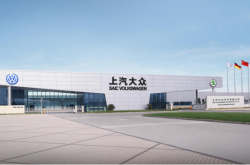
On July 22, Horizon Robotics and Volkswagen Group announced that through CARIAD's joint venture with Horizon Robotics, CARIZON, they would further deepen their technological cooperation in the field of AI foundational large models.
According to the agreement, CARIZON will independently develop and accelerate the construction of a unified AI driving solution for Volkswagen Group in China based on a white-box licensing model. Meanwhile, Horizon Robotics' AI foundational large model will collaborate with CARIZON's in-development system-on-chip C7H and the GAIA world model data platform to provide a technological foundation for future applications in passenger vehicles and Robotaxis.
It is reported that this technological system will be gradually introduced to seven new electrified models from Volkswagen's three joint ventures in China starting in the third quarter of this year and will be expanded to a broader CEA product matrix from next year.
③ Enjoy Travel Launches SAIC Robotaxi Mass Production Customized Vehicle Project
Recently, at the "Data and Intelligence Driving Model-Based Intelligent Mobility" High-Level Autonomous Driving Innovation and Development Forum during the 2026 World Artificial Intelligence Conference (WAIC), Enjoy Travel officially announced the launch of the SAIC Robotaxi mass production customized vehicle project, with the new vehicle planned to debut in 2027. It is reported that this Robotaxi customized vehicle will be Shanghai's first mass-produced, factory-installed, high-level autonomous driving vehicle. The project is jointly promoted by Enjoy Travel, SAIC Motor, and leading intelligent driving manufacturers.
05. Secondary Market
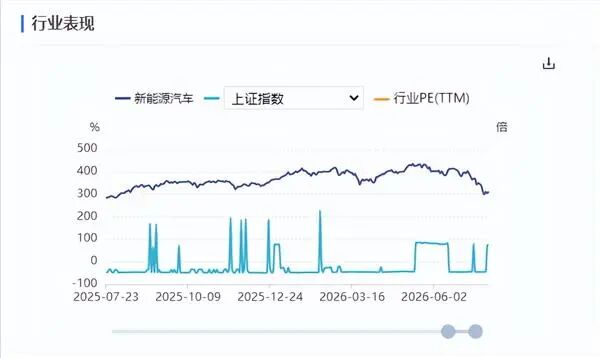
Industry Performance
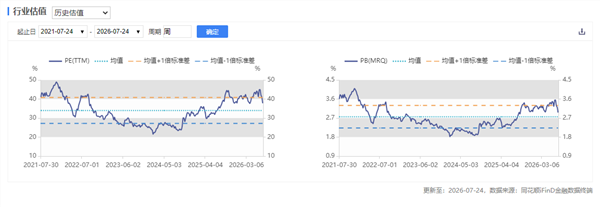
Industry Valuation
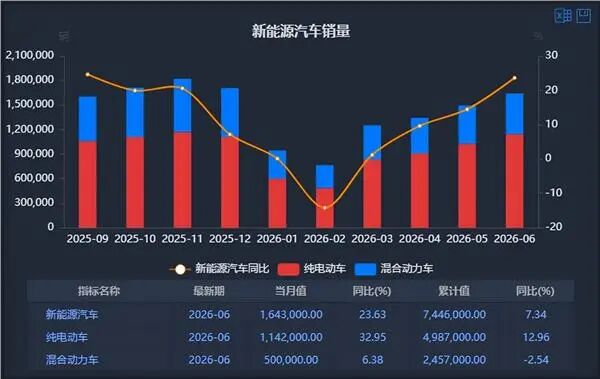
New Energy Vehicle Sales
 - End -
-
![]()
Is Design the Root of the Problem? The Lexus ES Dilemma: Despite New and Old Models Coexisting Post-Redesign, Sales Plummet by 40%
-
![]()
Are Japanese Automakers Now Taking Cues from China? A Perspective on Japan's Reversal in Learning
-
![]()
In the First Half of the Year, Car Companies’ Profit Margin Plummets to 3.8%! CPCA: Automakers Must Speed Up Battery Production Amid Upstream Pressures | MINGJING Pro
-
![]()
Tesla’s Q2 Revenue Rises, Yet Profitability Slips; Energy Storage Margins Take a Dive
-
Chinese Automakers Strike Gold Overseas: Prices Double?
-
![]()
Joint Ventures, Once Dismissed, Are Now Making a Comeback
-
![]()
Automotive Market News: Retail Penetration Rate of New Energy Vehicles Reaches 62.8%
-
![]()
Once a Sales Leader Among New Car Manufacturers, Now Selling Equipment at Bargain Prices