Chinese Automakers Strike Gold Overseas: Prices Double?
 07/28 2026
 451
451
Export Sales Hit New Highs in the First Half of the Year
Chinese-made vehicles are significantly more expensive overseas than domestically.
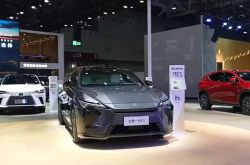
Take the XPeng MONA L03, unveiled in Munich, Germany, on July 16, as an example. The base price for the pure electric version in Germany starts at €35,600 (approximately RMB 276,000), while the extended-range version starts at €38,600 (approximately RMB 299,000). In contrast, the domestic market prices for the pure electric version range from RMB 123,800 to RMB 156,800, and the extended-range version ranges from RMB 123,800 to RMB 146,800. Overseas prices are nearly double those in China.
XPeng MONA L03's pricing strategy of 'affordable in China, premium overseas' reflects a broader trend in China's automotive industry as it advances globally. Previously, BYD's high-end brand, Denza Z, followed a similar pricing logic, with overseas prices ranging from £142,900 to £172,900 (approximately RMB 1.3 million to RMB 1.58 million), half of its domestic pre-sale prices. Other mainstay models, such as the Geely Galaxy E5, BYD Han EV, Zeekr X, and XPeng X9, also adopt a high-price strategy overseas while offering low-price, high-volume sales domestically.
Against the backdrop of intensifying domestic market competition, price wars becoming the norm, and overall industry profitability hitting new lows, expanding into overseas markets and earning global profits has become a crucial path for Chinese automakers to break through growth bottlenecks and repair operating profits.
Reshaping the Profit Landscape
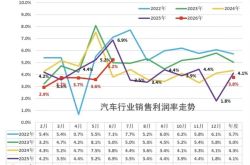
The domestic passenger vehicle market has been mired in intense competition over the past two years, with price wars and demand depletion driving down overall industry profitability. Data shows that from January to May 2026, the total profit of China's automotive industry was RMB 144 billion, with a sales profit margin of just 3.4%—a five-year low—indicating a state of 'increasing revenue but stagnant profits.'
In stark contrast, automakers have achieved profit growth in overseas markets. Currently, the average export price of Chinese NEVs has reached $29,800, surpassing $40,000 in premium European and U.S. markets, laying a solid foundation for profitability. Profit data reveals that the gross profit margins of overseas operations for leading Chinese automakers generally approach or exceed 20%. Institutions like Goldman Sachs estimate that the overall profitability of Chinese automakers' overseas exports is more than 40% higher than domestically, highlighting a significant profit gap.
Take industry leader BYD as an example. Its Q1 financial report shows that overseas revenue accounted for about 70% of total vehicle revenue. According to Citibank, BYD's net profit per exported vehicle in Q1 was approximately RMB 18,000. JPMorgan predicts that by 2030, its net profit per overseas vehicle will reach RMB 20,000, compared to about RMB 6,000 domestically. For reference, BYD's overseas revenue accounted for about 40% of total vehicle revenue in 2025.
Not just BYD, but mainstream Chinese automakers like Geely, Changan, and XPeng have leveraged high-margin overseas models to stabilize and enhance overall profitability, with overseas markets becoming a key profit engine.
Among overseas markets, Europe has emerged as the most profitable and largest core region for Chinese automakers. In 2025, China's automobile exports to Europe reached 1.511 million units, a significant 32% year-on-year increase, making it the first overseas region to surpass 1.5 million export units. In terms of market penetration, Chinese vehicles' market share in Europe rose from 9.5% in December 2025 to 10.7% in May 2026. AlixPartners predicts this figure will increase to 16% by 2030, reflecting growing influence for Chinese brands in the European market.
Accelerating Global Layout
The sustained release of profit dividends is driving Chinese automakers to accelerate their global layout , with automobile exports experiencing explosive growth and the industry achieving historic scale expansion.
According to the China Association of Automobile Manufacturers, in June, China's automobile exports exceeded 1 million units in a single month for the first time, reaching 1.037 million units, up 11.6% month-on-month and 75.1% year-on-year. In the first half of the year, exports surpassed 5 million units for the first time, totaling 5.096 million units, a 65.3% year-on-year increase. NEV exports reached 2.355 million units, doubling year-on-year, with NEV models becoming the core driver of export growth.
In terms of export destinations, China's automotive global market layout (layout) has become increasingly diversified, with strong breakthroughs in premium markets.
According to Cui Dongshu, Secretary-General of the China Passenger Car Association, among the top 10 countries for NEV exports from January to May 2026, half were European nations, including Belgium, the UK, Italy, Germany, and Spain. Combined with high-quality markets like Brazil and Australia, this forms a Collaborative efforts (synergistic) pattern between premium European and U.S. markets and emerging markets.
Meanwhile, the traditional logic of 'domestic first, overseas later' for vehicle launches has been upended. Global strategic models like the XPeng Mona L03 are now choosing Germany as their debut market. He Xiaopeng, Chairman and CEO of XPeng Group, stated that the company's European sales have grown significantly this year, and starting with this new model, XPeng will alter its global product launch plans to target international markets from the outset.
The sustained growth in overseas market demand is supported by favorable market conditions. Recently, average gasoline prices in major European countries surpassed €2 per liter, significantly increasing the operating costs of fuel vehicles and highlighting the economic advantages of NEVs.
Given these quantitative and profit-related dividends, U.S. consulting firm AlixPartners predicts that by 2026, China's automobile exports could reach 10 million units, making it the first country to surpass this milestone and equivalent to 2.5 times Japan's export volume.
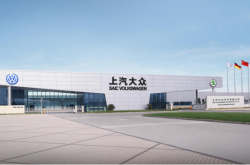
Notably, not just independent Chinese automakers but also joint ventures are leveraging the 'Made in China' advantage to accelerate reverse exports, upgrading their export businesses from secondary to core operations. Benefiting from China's complete NEV industrial chain, mature parts (component) supply systems, and low-cost manufacturing advantages, the global competitiveness of joint ventures in China continues to rise.
Data shows that over the past four years, Ford's exports from China have increased by 265%, with several domestically produced Lincoln models successfully entering the North American market. JMC Ford's single-model overseas annual sales exceeded 110,000 units. Kia Yueda (Yueda Kia) has established a diversified export matrix covering 89 countries and regions, with cumulative exports reaching $5.83 billion. In 2025, it achieved RMB 840 million in net profit through exports, turning losses into gains.
Challenges Remain
Despite the dual explosion in scale and profitability of China's automobile exports and the accelerated pace of globalization, rising overseas trade protectionism introduces significant uncertainties for the industry's long-term development. The automotive industry's global expansion has entered a new phase characterized by simultaneous scaled growth and compliance challenges. The EU, a core overseas market for Chinese automobiles, has recently introduced targeted trade policies, posing continued challenges for Chinese automotive exports.
According to Germany's Handelsblatt, the European Commission is planning to impose anti-subsidy tariffs on Chinese-made plug-in hybrid electric vehicles (PHEVs), affecting core exporters like BYD, Chery, and SAIC. This policy extends the EU's trade controls on Chinese NEV imports, following previous extra tariffs on battery electric vehicles (BEVs). The primary trigger is the 155% year-on-year surge in China's PHEV exports to the EU in 2025, far outpacing BEV growth, leading the EU to believe automakers are circumventing BEV tariff controls via PHEV exports. The policy is nearly finalized and will take effect after majority member state approval.
Previously, to balance local industry protection and trade friction risks, the EU introduced a 'price floor' commitment mechanism for NEVs, allowing automakers to avoid high tariffs by setting minimum prices. This served as a buffer for Sino-European automotive trade, reserving survival space for European automakers while maintaining a Compliance (compliant) export channel for Chinese firms, albeit at the cost of reduced pricing flexibility for domestic automakers.
Currently, domestic price wars are set to continue, and industry consolidation is ongoing. However, leading automakers, leveraging their technological, production, and supply chain advantages, are poised to solidify their competitive edge. While overseas markets, as a key profit driver, face challenges like trade barriers and geopolitical risks, the global trend toward new energy and China's manufacturing strengths remain unshakable. In the future, leading automakers like Chery and Geely will continue to strengthen their global market share through multi-powertrain models, overseas production, and localized partnerships, propelling China's automotive industry from 'export volume growth' to 'global profitability' in a new era of high-quality development.
-
![]()
Is Design the Root of the Problem? The Lexus ES Dilemma: Despite New and Old Models Coexisting Post-Redesign, Sales Plummet by 40%
-
![]()
Are Japanese Automakers Now Taking Cues from China? A Perspective on Japan's Reversal in Learning
-
![]()
In the First Half of the Year, Car Companies’ Profit Margin Plummets to 3.8%! CPCA: Automakers Must Speed Up Battery Production Amid Upstream Pressures | MINGJING Pro
-
![]()
Tesla’s Q2 Revenue Rises, Yet Profitability Slips; Energy Storage Margins Take a Dive
-
Chinese Automakers Strike Gold Overseas: Prices Double?
-
![]()
Joint Ventures, Once Dismissed, Are Now Making a Comeback
-
![]()
Automotive Market News: Retail Penetration Rate of New Energy Vehicles Reaches 62.8%
-
![]()
Once a Sales Leader Among New Car Manufacturers, Now Selling Equipment at Bargain Prices