Are Japanese Automakers Now Taking Cues from China? A Perspective on Japan's Reversal in Learning
 07/28 2026
 354
354
Since the initiation of reform and opening-up, it has been a prevalent narrative that China's automotive sector has looked to automobile-advanced nations like Japan for inspiration. However, recent developments suggest a twist: Japanese automakers are now turning to their Chinese counterparts for knowledge. How should we interpret this shift in learning dynamics?

I. Are Japanese Automakers Embracing Chinese Innovations?
According to a report by the Global Times, "Japanese automakers are striving to keep pace, with Honda and Toyota integrating Chinese electric vehicle (EV) technology." The Nikkei Asian Review highlighted on the 13th that Japanese EVs sold in China are increasingly reliant on Chinese components, thanks to the cost-effectiveness and efficient production capabilities of Chinese partners. The once-held belief among Japan's top automakers that "China will never catch up" has now dissipated.
In April this year, Toshihiro Mibe, President of Honda Motor Company, made a solo trip to Guangzhou, spending three days visiting several companies, including GAC Group. On May 14, following his China visit, Mibe announced that Honda would adopt "platforms provided by local partners" in China. This move reflects a broader trend: Japanese automakers, while maintaining their brand identity, are heavily incorporating Chinese technology and adopting more cost-effective and rapid production methods.
In fact, Honda had considered such measures three years ago but refrained due to various factors at the time. The report suggests that this "go-it-alone" approach backfired. As Chinese automakers continue to roll out EV models boasting high-tech features, consumer interest in Honda's premium models has waned. An executive from a Chinese component supplier noted, "Compared to Chinese EVs with equivalent or superior performance, Honda cars are priced 100,000 yuan or more higher."
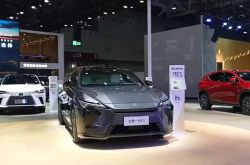
"Toyota is also drawing inspiration from China's automotive model," the report added. The bZ7 EV launched by Toyota in China in March incorporates technology from Chinese firms. Additionally, Toyota has established a wholly-owned subsidiary in Shanghai and plans to commence EV production under its luxury Lexus brand in 2027.
II. How Should We Interpret Japan's Reversal in Learning?
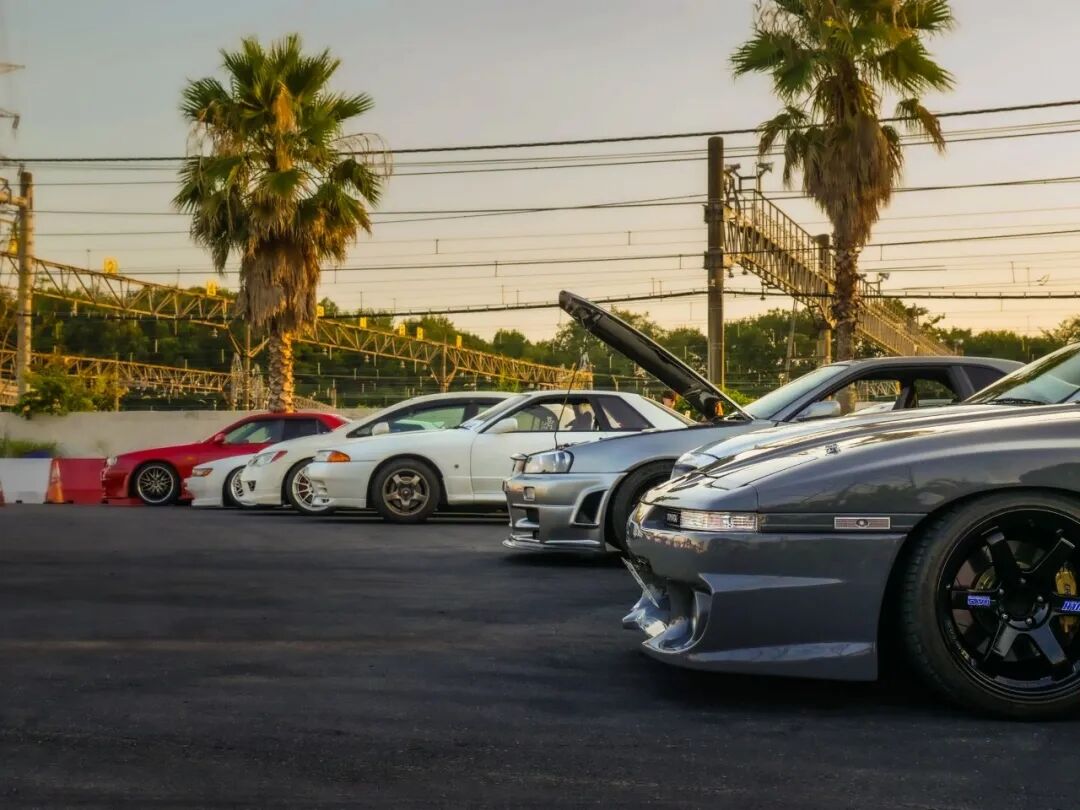
Over the past few decades, the domestic automotive market has been dominated by Japanese technology, lean production methods, and the manufacturing logic of fuel vehicles, with market discourse firmly in the hands of Toyota, Honda, and Nissan. However, in just a few years, the landscape has dramatically shifted, with Japanese automakers collectively initiating a reverse learning mode. What's behind this transformation?
Firstly, the seismic shift in the market landscape is the primary catalyst for Japanese automakers' humility. In the era of fuel vehicles, Japanese cars were global leaders, particularly in the Chinese market. Toyota, Honda, and Nissan established formidable competitive barriers with labels like fuel efficiency, durability, and value retention. However, the recent surge in China's new energy vehicle (NEV) penetration rate has eroded the market share once held by joint venture brands, especially Japanese cars. The once-dominant price range of 150,000 to 250,000 yuan, previously the stronghold of Japanese cars, has now been largely taken over by Chinese NEV automakers offering smarter, higher-configured, and more powerful products. When sales decline, 4S dealerships face high inventory levels, and some even close, merge, or pivot, the pain becomes palpable. It's no longer a distant warning but a real survival crisis.
Consequently, Japanese automakers have begun dissecting and studying Chinese cars. This isn't out of humility or eagerness to learn but rather a stress response when cornered, a rational choice under market pressure. They must decipher what attracts Chinese consumers away, how Chinese automakers achieve cost control, and why their technological iterations are so rapid. Without this understanding, they risk losing their foothold.
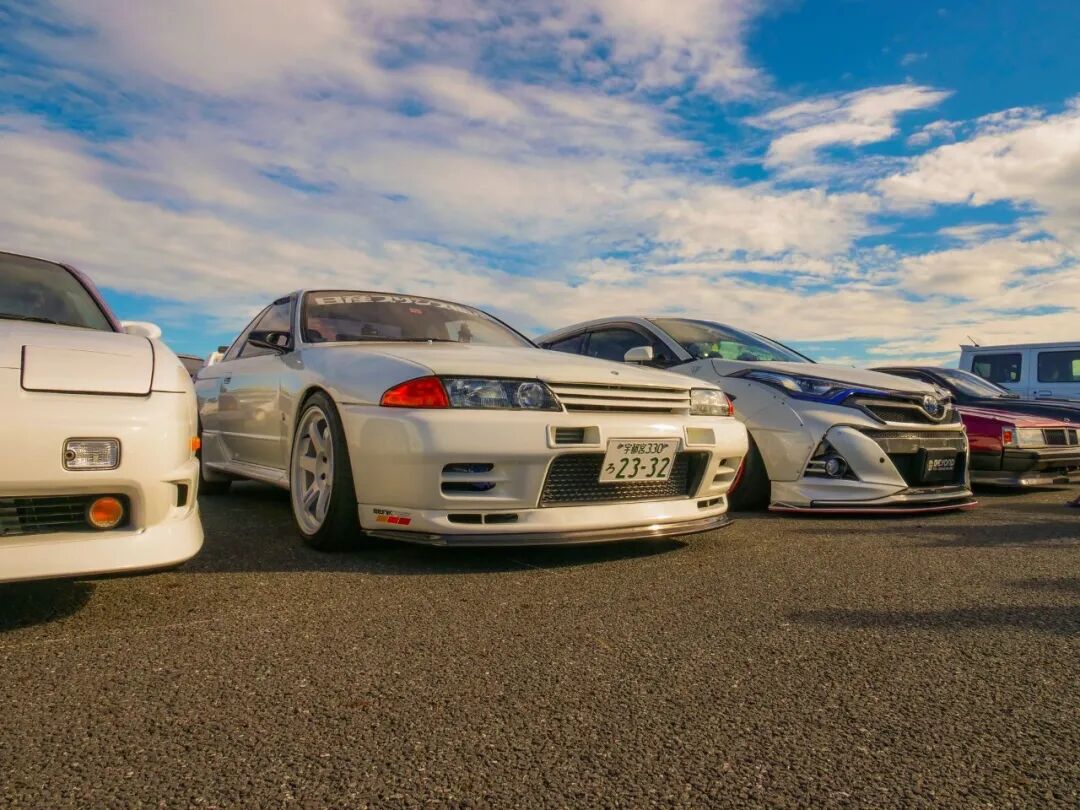
Secondly, while Japanese cars are learning, mastering these new approaches isn't straightforward. Despite lowering their posture, knowing and doing are two different things, and there are fundamental conflicts between the mindsets of two industrial civilizations. Chinese automakers approach car manufacturing not just as "building cars" but as "assembling a large-scale smart terminal." They integrate AI large models into the vehicle's infotainment system and treat the chassis as a digital platform upgradeable via OTA. Their research and development rhythm involves small, fast steps and rapid iteration, even changing versions every few months, carrying a strong internet flavor.
In contrast, Japanese automakers adhere to lean production, the principle of "slow and steady wins the race," and the intricate "keiretsu" system between component suppliers and automakers. Asking an engineer accustomed to verifying the torque of a screw over three years to suddenly embrace the rhythm of "software-defined vehicles," where code needs to be modified weekly, isn't just an increase in workload; it's a subversion of their entire career belief system.
More crucially, in the eyes of Chinese automakers, a car is a thinking, connected "mobile robot," while for most Japanese engineers, a car is first and foremost a "precision machine," with the electronic and electrical architecture merely an appendage to the mechanics. Resolving this philosophical conflict isn't as simple as buying a few sample cars for reverse engineering; it involves reshaping the entire organizational structure and talent pipeline.

Thirdly, facing this reverse learning, maintaining vigilance is crucial. Throughout Japan's modern development, every industrial leapfrog has been built on comprehensively absorbing advanced external experiences. In ancient times, Japan fully embraced the systems, handicrafts, and urban construction of the Tang and Song dynasties to develop its indigenous civilization. In modern times, the Meiji Restoration introduced British and American industrial technologies and economic systems, completing industrialization in just a few decades and propelling Japan into the ranks of world powers. Post-World War II, Japan learned from European and American automotive manufacturing and assembly line management to create a globally renowned automotive industry. Each learning experience wasn't a simple copy but a localization transformation combined with its own advantages, ultimately forming its unique industrial competitiveness.
This underlying logic of learning and transformation is now reappearing in the NEV sector. Although Japanese automakers are temporarily lagging, they possess global top-tier precision manufacturing, component supply chains, vehicle quality control systems, and mature overseas channel layouts—accumulations that are difficult for domestic automakers to fully compensate for in the short term. By actively learning Chinese electric and intelligent technologies, they are essentially filling their biggest gap. Once they complete technological integration and process restructuring, they will release extremely strong catch-up momentum.
Many industry observers easily fall into the misconception of short-term sales data, judging Japanese automakers as completely left behind based solely on their current domestic market share, ignoring Japan's characteristic of accumulating strength for a breakthrough. The competition in the NEV sector is a decades-long marathon, not a short-term victory in three to five years. Currently, we have the first-mover advantage on the track, but advantage doesn't equate to a permanent barrier. If we let our guard down and stop technological iteration, leaving Japanese automakers sufficient catch-up time, the existing market landscape could reverse at any time. There's never a one-time solution in industrial competition; the stronger our opponents' learning ability, the clearer-headed we must remain and eliminate complacency.
Fourthly, what should Chinese automakers do? The automotive industry is a highly competitive market where "a boat sailing against the current must forge ahead or be driven backward." The current advantages of Chinese automakers are by no means unbreakable. What we need to do is continuously build systematic long-term competitiveness. Our current advantages are largely based on the first-mover advantage of being at the forefront of the NEV sector, with a complete battery industry chain, a vibrant internet ecosystem, and a vast domestic market. However, moats are for defense; true offense relies on core competitiveness. In today's automotive market, technological iteration is too fast; today's leading technology may become standard tomorrow.
Chinese automakers must avoid falling into a state of "self-delusion." We must lucidly see that we still have gaps with established giants like Japanese and German automakers in terms of brand premium capability, global supply chain management capability, and especially localized operation capability in overseas markets. Although Japanese cars now have to learn from us, this precisely shows that they are adapting to new rules. Once they adapt, combined with their powerful global distribution network, their counterattack speed may exceed our imagination.
What Chinese automakers should do most now is not to keep an eye on Japanese cars but to focus on themselves. We must continuously increase R&D investment, not just in visible areas like smart cockpits but also in underlying areas like chips, operating systems, and even materials science to build moats. We need to transform these "point" innovation advantages into "area" industrial advantages through systematic integration.
Therefore, seeing Japanese cars start to learn from us, it's okay to feel happy for a moment. This proves that we are on the right path, but the road is still long, and it will only get tougher. What we need is not complacency but to remain clear-headed, maintain that pioneering innovative spirit, and turn our advantages from "temporary leadership" into "sustained leadership." This is the greatest respect for our opponents and the greatest responsibility to ourselves.
END
Daily Quote: "Don't define anyone around you because interests and human hearts are ever-changing. When you are weak, everyone around you seems bad; when you become strong, everyone around you seems good." Don't measure current people by past events; looking back, no one is the same as they used to be. When interests align, strangers become friends; when interests diverge, friends become strangers. It's natural for people to drift apart, but if they drift apart before even leaving, that's the harsh reality of the world. No matter who you interact with, don't just talk about favors without considering interests; without boundaries and limits, even the best relationships can be betrayed because human nature's goodness and evil are influenced by interests! Never try to maintain relationships with everyone because relationships are illusions; interests are the truth. ——"Blossoms Shanghai"
Follow Jiang Han's Vision for more insights.
-
![]()
Is Design the Root of the Problem? The Lexus ES Dilemma: Despite New and Old Models Coexisting Post-Redesign, Sales Plummet by 40%
-
![]()
Are Japanese Automakers Now Taking Cues from China? A Perspective on Japan's Reversal in Learning
-
![]()
In the First Half of the Year, Car Companies’ Profit Margin Plummets to 3.8%! CPCA: Automakers Must Speed Up Battery Production Amid Upstream Pressures | MINGJING Pro
-
![]()
Tesla’s Q2 Revenue Rises, Yet Profitability Slips; Energy Storage Margins Take a Dive
-
Chinese Automakers Strike Gold Overseas: Prices Double?
-
![]()
Joint Ventures, Once Dismissed, Are Now Making a Comeback
-
![]()
Automotive Market News: Retail Penetration Rate of New Energy Vehicles Reaches 62.8%
-
![]()
Once a Sales Leader Among New Car Manufacturers, Now Selling Equipment at Bargain Prices