Marching into the Heart of the Japanese Auto Market: BYD’s K-Car Racco Makes Its Debut, Offering Customized Solutions in Its Second Phase of Overseas Growth
 07/29 2026
 391
391
BYD is evolving into a truly global automotive powerhouse.
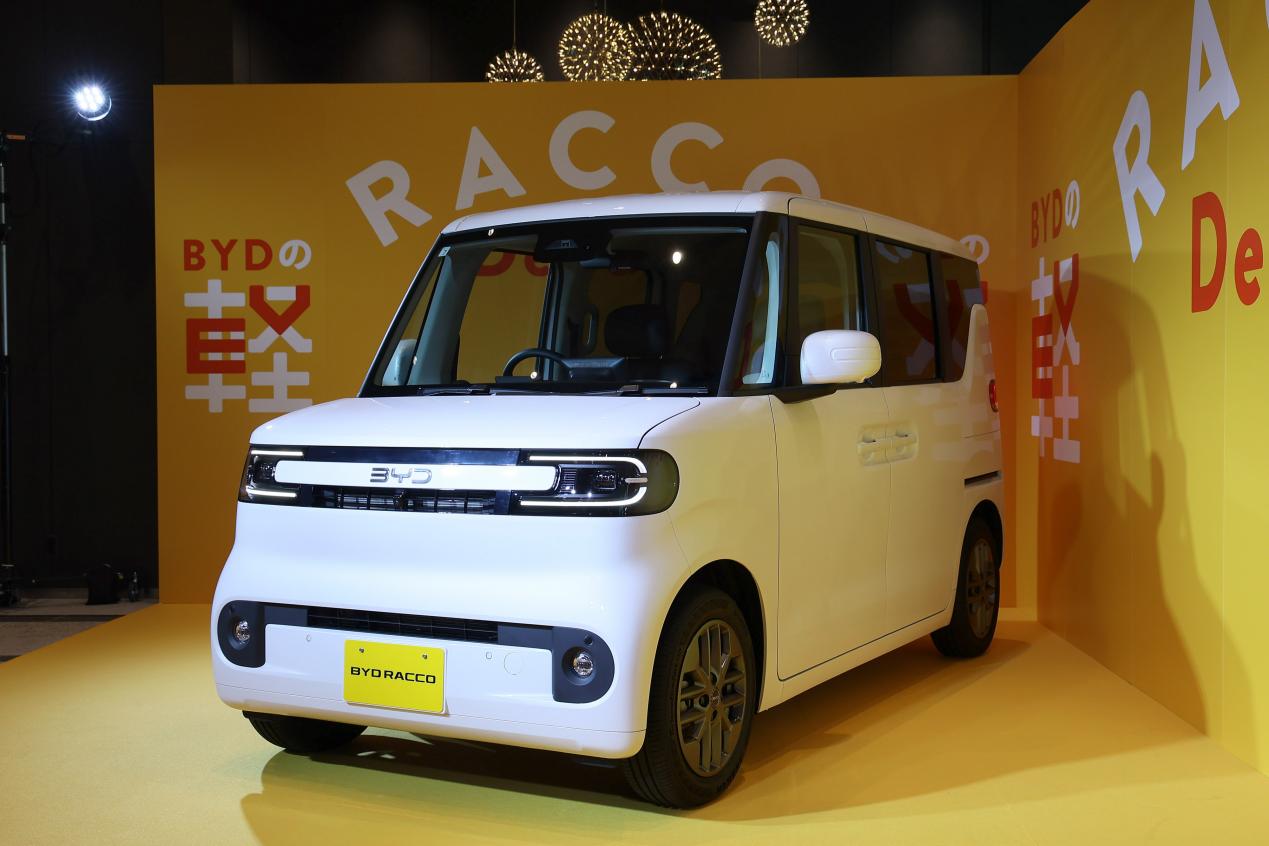
Today marks the market launch of BYD’s K-Car, specifically designed for the Japanese market.
(Image source: BYD)
The new model, named RACCO and translated as Hai Ta (Otter) in Chinese, is available in three variants with the following prices:
RACCO 200: 2,145,000 yen (approximately 88,700 RMB);
RACCO 300: 2,398,000 yen (approximately 99,100 RMB);
RACCO 300 Premium: 2,497,000 yen (approximately 103,100 RMB).
Additionally, the Racco qualifies for a 150,000 yen new energy subsidy, bringing the lowest subsidized price to 1,995,000 yen (approximately 82,400 RMB).
For BYD, the launch of the Racco marks a new chapter in its overseas expansion, focusing on developing entirely new model categories tailored to the unique needs of target markets.
Today, let’s delve into BYD’s new phase of global growth.
The introduction of the Racco is poised to significantly impact the Japanese automotive market.
Firstly, in terms of pricing and specifications, the Racco can be directly compared to Japan’s domestic all-electric K-Car, the Sakura. The Racco’s starting price before subsidies is 2,145,000 yen, which is lower than Nissan’s all-electric Sakura at 2,448,600 yen.
However, due to varying subsidy levels for different brands in Japan, BYD’s subsidy amounts to only 150,000 yen. After subsidies, the Racco’s starting price is 1,995,000 yen, slightly higher than Nissan’s Sakura.
(Image source: BYD)
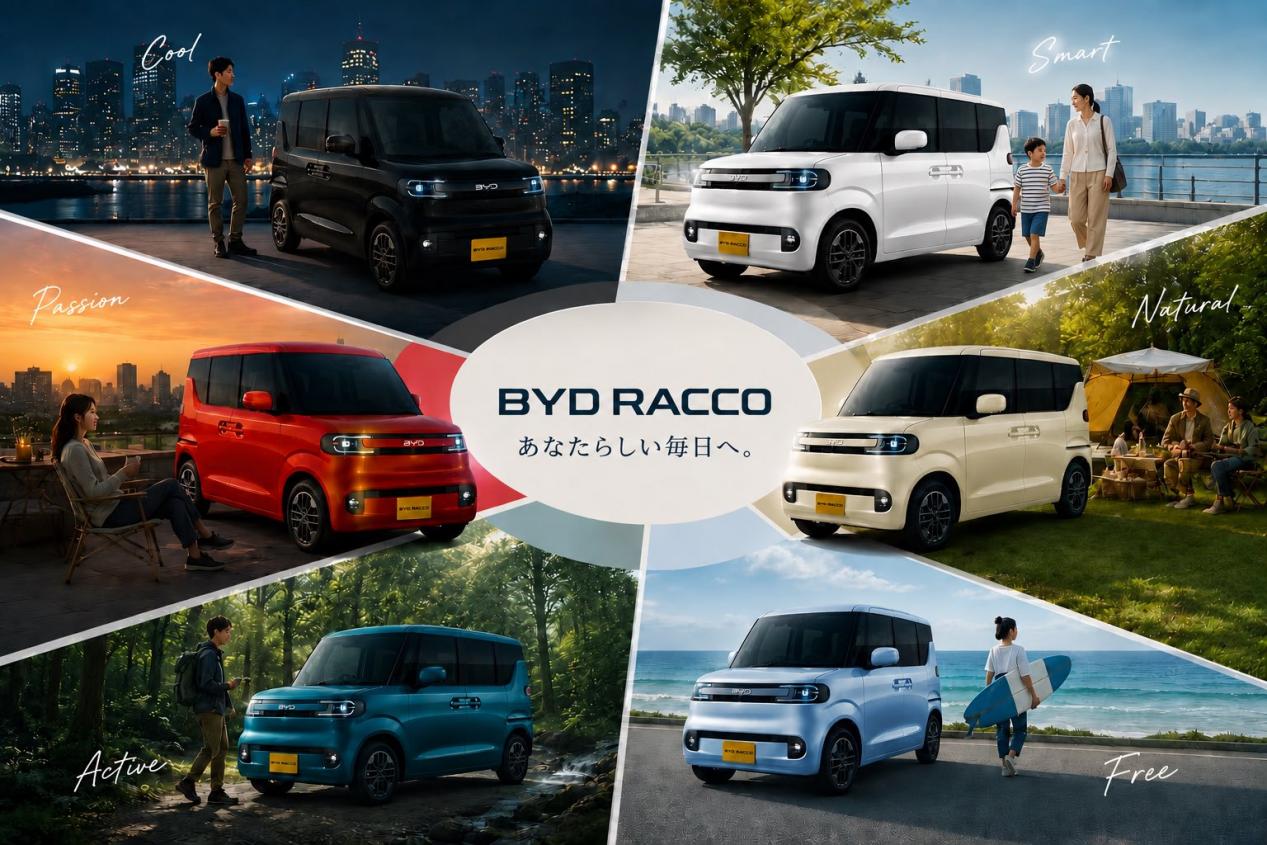
In terms of specifications, the Racco offers WLTC ranges of 200km and 300km, making it the first K-Car in Japan to exceed a WLTC range of 300km. In contrast, the recently mid-cycle refreshed Sakura has a WLTC range of only 180km.
Furthermore, the Racco features dual electric sliding doors, six airbags, and supports external power discharge.
This means that, despite a slightly higher final price compared to Japan’s domestic all-electric K-Car, the Racco offers superior product competitiveness in the Japanese market.
Another key aspect is BYD’s approach to the Japanese market.
A quick look at Japan’s K-Car market reveals that, prior to the launch of BYD’s Racco, the segment was almost exclusively dominated by Japanese domestic brands. No overseas brand had specifically targeted the Japanese market by developing K-Car models that comply with local standards.
K-Cars are essentially a protected segment for Japanese domestic automakers, with virtually no competition from foreign brands and guided by specific policies. Japanese domestic brands have flourished in this niche.
However, with the arrival of BYD’s Racco, the landscape has changed dramatically. BYD is the first brand willing to tackle the challenging K-Car segment and successfully launch a product, demonstrating its commitment to the Japanese market and its determination to expand sales there.
In the Japanese market, BYD is not merely selling global models like the Seal and Yuan PLUS (ATTO 3). Instead, it is developing models tailored to local needs and standards, exerting significant pressure on major Japanese brands.
From the global sales data for 2025, among the three major Japanese brands—Toyota, Honda, and Nissan—only Toyota has shown continuous growth, albeit at a slower pace, while Honda and Nissan have experienced sales declines.
Therefore, at a time when Japanese brands are struggling, BYD’s entry into their domestic market, while not as extreme as "striking while the iron is hot," has certainly created a sense of crisis among Japanese automakers.
The launch of the Racco in Japan signifies that BYD is no longer relying solely on a one-size-fits-all approach in its passenger car segment for overseas expansion. Instead, it is developing different models based on the unique characteristics of each market.
In addition to the Japanese market, BYD has also begun developing new models tailored to the needs of the European market this year.
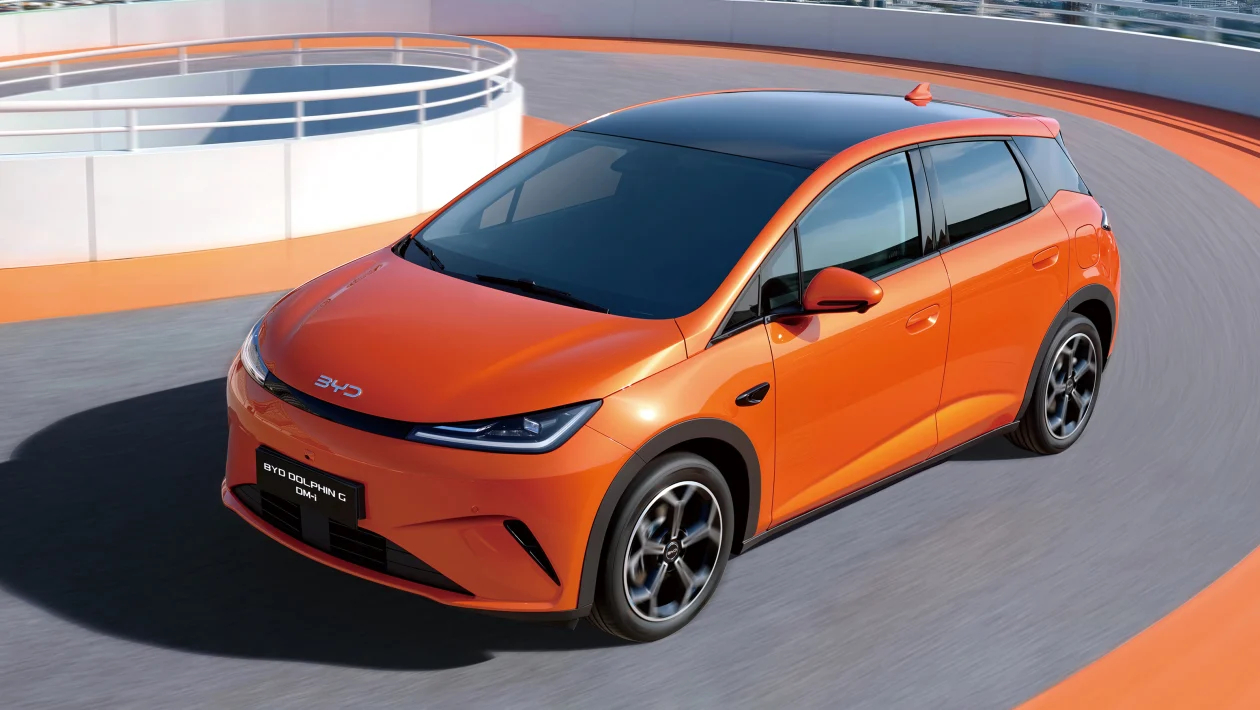
Firstly, the Dolphin G DM-i, developed specifically for the European market.
(Image source: BYD)
This model is positioned as a compact plug-in hybrid sedan, priced at less than £24,000 (approximately 216,100 RMB) in the UK. With dimensions of 4160*1825*1575mm and a wheelbase of 2610mm, it is equipped with a 1.5L engine and two electric motor options: 129kW and 156kW. It comes with two battery options: 7.42kWh and 18.3kWh, offering pure electric ranges of 40km and 105km, respectively.
From the specifications, it is clear that the Dolphin G differs significantly from the domestic models in terms of both size and pure electric range. With a length of 4160mm, it is smaller than the domestic Dolphin and Yuan PLUS, approaching the size of the NIO Firefly and slightly larger than the Volkswagen Polo. The Dolphin G targets users of models like the Polo and Golf in the European market.
Considering the relatively low penetration rate of new energy vehicles in the European market at present, BYD has adopted a small-battery plug-in hybrid approach, commonly used in early domestic plug-in hybrid models. This not only reduces the purchase cost for local users but also helps them become accustomed to new energy vehicles and rely on pure electric mode.
Another model specifically developed for the UK market is the Dolphin Cargo e-Van, a cargo version of the Dolphin, priced at £29,300 (approximately 263,800 RMB) including tax.
This model was developed based on the market demand in Europe for using passenger cars to develop small vans. It removes the rear seats of the original Dolphin and adds a partition behind the front seats, creating a connected cargo area from the original rear seats and trunk to meet the needs of urban transportation scenarios.
This includes the BYD Shark pickup truck, previously developed for markets such as Australia and Mexico and later "re-imported" to the domestic market (declared as Fangchengbao Shark/Fangchengbao Leopard Shark in China), which is also a successful overseas-specific model.
From the Racco and the aforementioned "special" models, it is evident that BYD is steadily transforming into a global automaker.
Previously, BYD’s overseas models were mostly adjustments of versions sold in mainland China to meet local regulatory requirements and user needs, representing an earlier form of overseas expansion.
However, BYD can now develop models or even entire model categories tailored to specific automotive markets, more closely resembling the business models of renowned multinational automakers like Volkswagen and Toyota. In other words, BYD has entered a new phase of overseas expansion.
This path is somewhat similar to BYD’s approach to overseas expansion in the bus segment.
In the early years, BYD’s bus exports were primarily based on the domestic K9 model, with adjustments in appearance and configuration to meet the market demands of various countries and regions.
In recent years, BYD has developed new energy buses of different specifications tailored to the needs of different markets. For example, the K9UD for the European market, the BD11 for London’s double-decker bus needs, and the K12A for South America’s BRT systems...
It is clear that BYD’s commercial vehicles have entered a new phase of overseas expansion earlier than its passenger vehicles. However, the prospects for passenger vehicle exports are broader.
Nowadays, Chinese automakers are continuously advancing their overseas businesses. However, the globalization process of many automakers still remains at the earlier stage of selling the same models domestically abroad.
BYD, on the other hand, serves as a model for other automakers expanding overseas.
In addition to BYD, Chery, which has been deeply involved in overseas markets for many years, is also developing models tailored to the specific needs of overseas markets.
For example, the diesel plug-in hybrid pickup Stockman developed for the Australian market and the DELIVAN brand for the European commercial vehicle market...
Therefore, Dianchetong (ID: dianchetong233) believes that the model of developing specific models for specific markets, as adopted by BYD and Chery, is the path to becoming a global automaker.
This path has been taken by Toyota, Volkswagen, and General Motors, and is now being followed by brands like BYD and Chery.
We look forward to a future where more Chinese brands embark on this path, increasing the internationalization of Chinese automobiles.
On July 31, ChinaJoy 2026, themed "Exploring with AI," kicked off with a bang.
-
![]()
“Stock King” Changxin Propels Hefei into the Elite “Beijing-Shanghai-Shenzhen-Hefei” League, Securing Fourth Place!
-
![]()
Final Verdict: Strategies to Counter the Trend of Oversized and Overweight New Energy Vehicles
-
![]()
Two Key Chinese Shareholders Involved, Mercedes-Benz Faces Potential U.S. Sales Ban! CEO Issues Urgent Statement: Committed to Adjustments to Safeguard U.S. Market Presence
-
![]()
Marching into the Heart of the Japanese Auto Market: BYD’s K-Car Racco Makes Its Debut, Offering Customized Solutions in Its Second Phase of Overseas Growth
-
![]()
Growth Stalls, Formidable Rivals Enter: Insta360 Faces New Challenges in the Gimbal Camera Market
-
![]()
Growth Stalls Amid Strong Competition: Insta360 Faces New Challenges in the Gimbal Camera Market
-
![]()
139 Institutions Conduct Research as Robotec Promptly Secures a Major Order Worth 129 Million Yuan!
-
![]()
Zeiss Boosts Investment to Expand 25,000-sqm Optical Plant, Elevating Its Exclusive EUV Optical Manufacturing Capabilities!