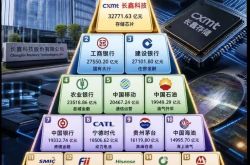
“Stock King” Changxin Propels Hefei into the Elite “Beijing-Shanghai-Shenzhen-Hefei” League, Securing Fourth Place!
 07/29 2026
 416
416
The narrative of China's regional economic resurgence has undergone a transformation: Success no longer hinges solely on policy incentives or resource accumulation; instead, it is the presence of cutting-edge tech giants that propels provinces and municipalities forward.
Two recent financial milestones have formed a seamless closed loop: Anhui's GDP has unexpectedly surpassed Hunan's in the first half of the year, propelling it into the national top 10; Changxin Technology's debut on the Science and Technology Innovation Board has crowned it as the new "Stock King" on the A-share market. In essence, Changxin Storage alone has propelled Anhui's economic standing and reshaped Hefei's national capital status, joining the ranks of "Beijing-Shanghai-Shenzhen-Hefei" as the fourth-largest capital city.
01、RMB 33.6 Billion Triumph! Changxin Propels Anhui into the Top 10 GDP Echelon
China's top 10 provincial GDP rankings have traditionally been a rigidly structured "ironclad formation," with a significant gap between the leaders and little room for surprises. Over the past five years, only Sichuan and Henan have swapped fifth and sixth places slightly, with minimal chances of reversal for other provinces. However, in the first half of 2026, Anhui shattered the long-standing economic pattern in central China.
Official data reveals that Anhui's GDP reached RMB 2.737 trillion in the first half of 2026, growing by 5.6%, surpassing Hunan's RMB 2.7034 trillion (2.7% growth) by a narrow margin of RMB 33.6 billion, thus breaking into the national top 10 GDP provinces.
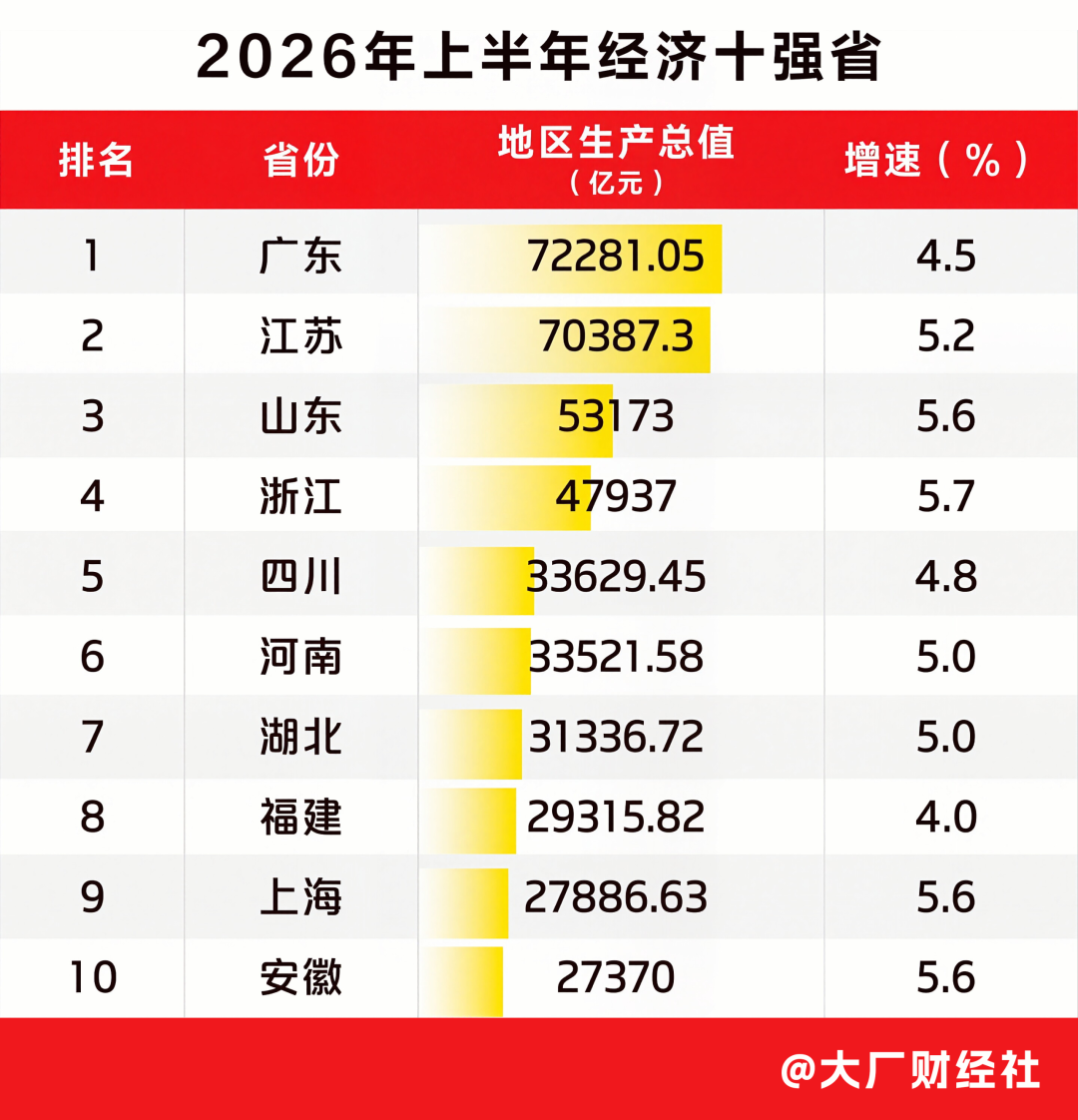 Source: Dachang Finance Society
While the RMB 30+ billion difference may appear insignificant, it marks a significant milestone in Anhui's industrial transformation. The primary contributor to this resurgence is Changxin Storage. Many confuse stock market valuation with real GDP: Changxin's RMB 1 trillion valuation is a capital market estimate, but its impact in the first half of the year drove nearly RMB 100 billion in real industrial growth, along with downstream support, employment, and tax revenue—the solid foundation supporting Anhui's economic breakthrough. Without Changxin and its supply chain, Anhui could not have surpassed Hunan.
More valuable than the total GDP surpass is the doubled growth rate gap between the two provinces, centered on manufacturing. Anhui's secondary industry added value reached RMB 1.0661 trillion (6.7% growth), while Hunan's reached only RMB 949.94 billion (1.1% growth)—Anhui's industrial scale exceeds Hunan's by RMB 116.16 billion. Anhui's emerging industries are expanding rapidly, while Hunan's traditional sectors are stagnating, officially forming the economic divide in central China.
This is the core outcome of Anhui's "Three Lands, One Zone" strategy: no hype, no short-term pursuits, but a deep commitment to cultivating science and technology innovation and emerging industries. Hefei's eight key sectors—"chips, displays, autos, AI; emergency, lifelong learning, health, intelligence"—are Anhui's trump cards, with Changxin as the game-changer in the "chip" sector.
With the leading enterprise effect, Anhui's emerging industries are flourishing. In 2024, Hefei produced 1.371 million new energy vehicles, ranking first nationally and building a world-class auto cluster. Meanwhile, Anhui has expanded beyond Hefei's solo growth, creating a province-wide industrial matrix: Wuhu focuses on vehicles and high-end equipment, Bengbu on silicon-based new materials, Chuzhou on auto parts, and Ma'anshan-Tongling on specialty new materials—a high-barrier, full-chain provincial emerging industry belt has taken shape.
In contrast, Hunan's industrial weaknesses are stark. Its economy relies heavily on traditional sectors like construction machinery, with leaders like Sany Heavy Industry experiencing sustained fatigue. As infrastructure and real estate dividends fade, traditional manufacturing peaks while emerging industries lag in cultivation and deployment, creating a mismatch between old and new drivers. The economic gap between Anhui and Hunan will continue to widen.
Focusing on capital city rivalry, Hefei still had a RMB 150 billion GDP gap with Changsha in 2025, but its secondary industry gap narrowed to RMB 28 billion, achieving a full reversal with shortfalls in tertiary sectors. At current growth and investment rates, Hefei could conservatively catch up by 2030 and optimistically surpass Changsha by 2028, with hard tech dividends still being released.
02、Stock King's Debut Marks Success! A Single Firm Elevates a City by 15 Ranks
If Anhui's GDP surpass is the culmination of long-term industrial cultivation, Changxin Technology's listing marks Hefei's leap in capital market stature.
On July 27, 2026, Changxin Technology listed on the Science and Technology Innovation Board, setting multiple A-share records: an issuance price of RMB 8.66, a peak intra-day gain of 535.45%; a single-day turnover of RMB 141.187 billion, a new A-share record; and a closing market cap of RMB 3.28 trillion, crowning it as the new A-share market cap leader.
This rare scenario of "one firm changing a city's ranking": excluding Changxin, Hefei's remaining A-share firms total RMB 1.27 trillion in market cap, ranking 19th nationally; including Changxin, Hefei's total A-share market cap exceeds RMB 4.55 trillion. In one stroke, Hefei surpassed 15 economic powerhouses like Suzhou, Hangzhou, Chengdu, and Guangzhou, becoming China's fourth-largest capital city after Beijing, Shanghai, and Shenzhen.
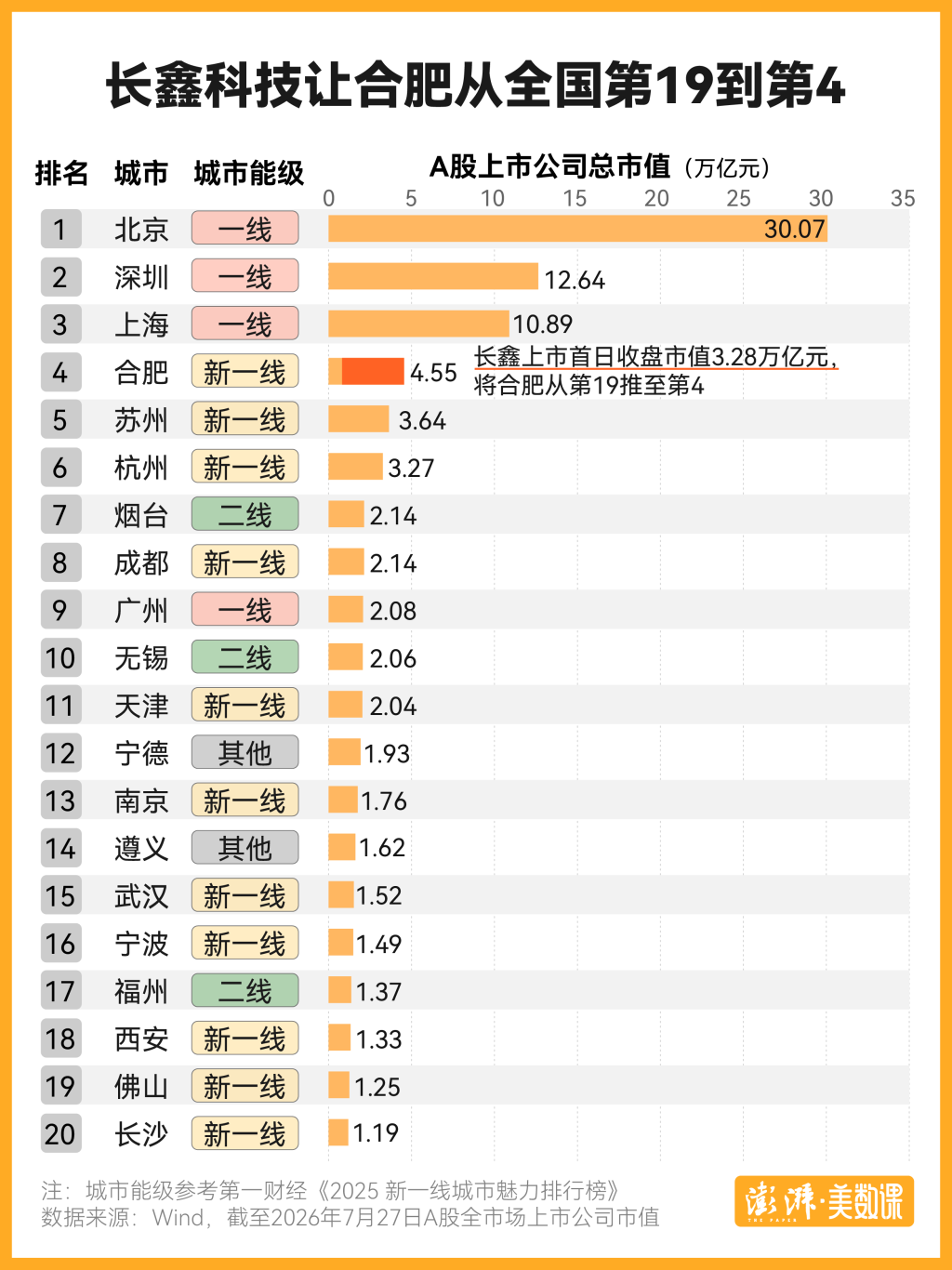 Source: The Paper
Hefei's rise is no short-term fluke. Since 2019, even excluding Changxin's valuation, Hefei's A-share market cap has doubled, rising from 26th to 19th place, solidifying its capital strength. Nationally, capital trends have reversed: from 2019–2026, first-tier cities' market cap expanded 1.76x, while new first-tier cities surged 2.84x. Beijing-Shanghai-Shenzhen's market cap share dropped from 50.2% to 43.4%, with the lost capital flowing to cities like Hefei that focus on hardcore manufacturing and tech innovation.
Within new first-tier cities, Hefei stands out as the dark horse: in six years, its A-share market cap soared from RMB 432.3 billion to RMB 4.5 trillion, expanding 10x and jumping 22 ranks. Compared to mainstream cities' wealth creation paths—Foshan relies on traditional consumer leaders, Dongguan on single hardware firms, Suzhou on listed firm quantity—only Hefei has achieved a full industrial base upgrade.
In 2019, Hefei's capital market leaders were securities and software firms, propped up by finance and light assets; by 2026, leaders shifted to Sungrow, Nexchip, and Changxin Technology, with semiconductors, new energy, and high-end hardware taking over the city's industrial foundation, completing a full energy shift.
Not just Hefei, cities achieving tier jumps nationwide follow the same logic: hard tech breaks traditional administrative barriers. Huizhou leverages its electronics chain, Ningde its power batteries, and Chaozhou its mechanical hardware, all achieving market cap and city ranking surges. Today's city competition no longer focuses on housing prices, population, or consumption—owning core industrial chain nodes and hardcore tech revalues cities in capital markets.
03、A Decade of Long-Termism: Hard Tech Has No Overnight Success
Changxin's RMB 1 trillion market cap highlight may seem sudden, but it's the result of Hefei's decade-long hard tech cultivation, with no luck involved.
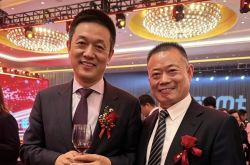
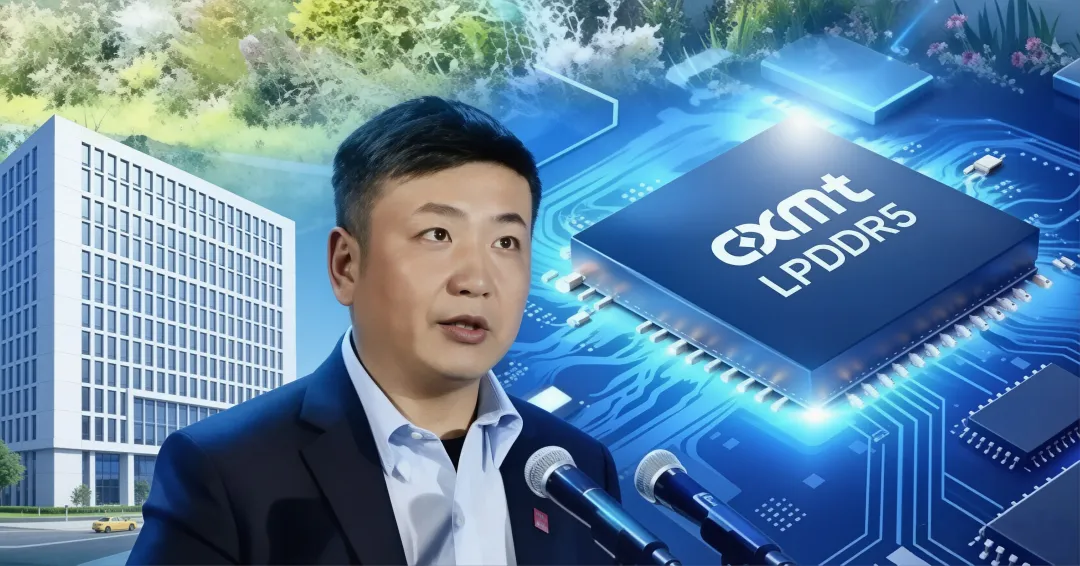 Zhu Yiming, Changxin Technology Chairman Source: Weibo
Semiconductors and new displays are typical capital-intensive, long-cycle, high-barrier sectors requiring over a decade of sustained investment to achieve profitability. BOE's founder once stated that such hardcore tech industries must be valued over decade-long cycles. Hefei's core strength lies in rejecting quick profits and short-term plays, instead heavily investing in strategic hard tech sectors.
From early layout with BOE in new displays to later projects like Nexchip, Chipmore, NIO, and Changxin Storage, Hefei Construction Investment has made nearly RMB 140 billion in industrial investments, creating a virtuous cycle of "fundraising-investment-nurturing-exit-reinvestment." By recouping capital through listings, it continuously funds local emerging tech innovations, nurturing high-quality projects—this is Hefei's core reversal password.
National policies also strongly endorse this model: explicitly supporting venture capital to "invest early, invest small, invest long-term, invest in hard tech," and pushing state-owned enterprises to prioritize long-term industrial value and supply chain completion over short-term profits.
However, we must rationally view industry realities: Changxin's 2026 profit surge mainly stems from cyclical DRAM price hikes, not purely from core technological breakthroughs. Currently, its DDR5 unit cost remains over 30% higher than the top three global firms. Listing marks the start, not the end, of domestic storage development—the next decade will decide true global competitiveness for domestic hard tech.
04、Regional Ultimate Law: Leaders Define the Landscape, Industry Defines the Tier
Understanding Changxin's synergy with Anhui and Hefei reveals China's regional economic ultimate logic: a region's development ceiling is always defined by its top local enterprises.
Alibaba supports Hangzhou's digital economy, Huawei and Tencent solidify Shenzhen's tech leadership, and Kweichow Moutai stabilizes Guizhou's economy. Today, Changxin Storage officially becomes Anhui's new top industrial icon.
With RMB 100+ billion in real industrial growth, it propels Anhui into the national GDP top 10 and reshapes central China's economic landscape; with RMB 1 trillion in capital market valuation, it elevates Hefei into the national capital elite. This is not just a firm's breakthrough—it's a triple victory for Hefei's state capital long-termism, Anhui's emerging industry transformation, and domestic hard tech rise.
Short-term, it's provincial and municipal ranking upgrades; mid-term, it's the crushing of old and new industrial structures; long-term, it's the steady formation of local hardcore tech barriers. Hefei has proven a replicable, actionable hard tech breakthrough template—as more hardcore leaders emerge, central China's economic landscape will continue to reshape.
Anhui and Hefei's hard tech golden age has just begun.
Interactive Topic
1、Can Anhui solidly hold its national top 10 seat with this strong comeback?
2、Can Hefei's "state capital heavy investment in hard tech" model replicate nationwide?
Welcome to discuss in the comments!
Disclaimer: This article is solely a Dachang Finance commentary and does not constitute investment advice. All enterprise data and regulatory events cited are from public information, for reference only, with official releases prevailing. Images sourced online; contact for copyright removal if needed.
-
![]()
"Meituan Retreats into the Background of AI", "Meituan, AI, API, local services, business strategy", "Meituan has announced a partnership with Tencent Yuanbao, enabling users to place takeout orders t
-
![]()
Analysis of the Reputation Index for Vehicle Body Electrics in the First Half of 2026
-
![]()
The New King of A-shares, Are You Ready to Work for Auto Companies?
-
![]()
Jensen Huang Forges Alliance with Nearly All AI Circle Members, Leaving One Dissenter Out
-
![]()
Battery Makers Outshine Car Manufacturers
-
![]()
What! Are New Energy Vehicles Impacting the Summer Tourism Industry?
-
![]()
Overnight Paper Gain of 1 Trillion Yuan: Hefei's 18-Year Gambit——【The Hefei Model: Uncopyable】Series
-
![]()
A 'Play' by Blume and Volkswagen's Grand Strategy