Final Verdict: Strategies to Counter the Trend of Oversized and Overweight New Energy Vehicles
 07/29 2026
 516
516
On May 18th, Final Verdict released an article titled "Promoting Lightweighting of New Energy Vehicles Through Economic Measures." The article emphasizes that new energy vehicles (NEVs) should not be designed to be larger and heavier. Lightweighting is a pivotal direction not only for traditional fuel vehicles but also for the advancement of NEVs. For China, a nation that has already embraced an automotive society, vehicle lightweighting is a significant strategy for conserving energy, reducing emissions, promoting green transportation, and fostering a conservation-minded society.
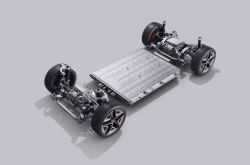
Chinese consumers exhibit a preference for spacious vehicles, and sales of large vehicles remain robust. Consequently, the domestic new energy passenger vehicle market is increasingly trending towards larger and heavier models. Automakers capitalize on this by stacking large-capacity batteries, luxurious features, and oversized bodies to command product premiums, leading to a pervasive issue of industry-wide weight inflation. 
In the first four months of 2026, the average weight of domestic new energy passenger vehicles surged by 27.5% compared to 2020, generally exceeding 2 tons. The vicious cycle of "heavier vehicles consuming more electricity, necessitating the stacking of more batteries" undermines the environmental benefits of NEVs and exacerbates wear on tires and braking systems. The trend towards larger NEVs does not signify consumption upgrading but rather deviates from the original intent of green and efficient development.
Analysts argue that only by employing market-oriented and institutionalized economic measures to establish an interest-driven model where "increased weight leads to higher costs and lightweighting yields benefits" can we fundamentally curb the trend of oversized and overweight vehicles and foster high-quality industry development.
Firstly, implement a tiered fiscal and taxation constraint system linked to vehicle weight to increase costs for overweight models.
Traditionally, fuel vehicles were taxed based on engine displacement, which made automakers cautious about building large vehicles. However, for NEVs, taxes are decoupled from size and weight, removing constraints and incentivizing automakers to build larger, more profitable vehicles. 
For NEVs, it is essential to transition from the traditional single taxation model based on displacement and price to a differentiated fiscal and taxation system centered on vehicle curb weight. This will align vehicle weight with tax burdens, effectively countering automakers' motives for weight-based premiums and consumers' preferences for large and overweight models.
Overweight models should be disqualified from purchase tax exemptions and ineligible for energy efficiency compliance waivers. Simultaneously, strict enforcement of mandatory energy consumption limits for overweight models should be implemented. Only overweight vehicles meeting stringent energy-saving standards should be allowed to enter the market, thereby curbing blind weight increases from both taxation and market access perspectives.
Gradually transition the consumption tax on new energy passenger vehicles from a price-based model to a composite model primarily based on vehicle weight, supplemented by price. This replicates the logic of fuel taxes driving industrial upgrading. Pricing should reflect the damage costs vehicles impose on roads and energy, making overweight models bear corresponding public resource consumption costs. Increase vehicle and vessel tax standards, road tolls, and inspection and maintenance costs for overweight models, forming a comprehensive lifecycle tax burden constraint on vehicle use.
Secondly, restructure industry and evaluation priorities to incentivize lightweighting technology iteration.
Shift away from the past focus on "prioritizing range over lightweighting" and redirect policy benefits from the extensive model of "stacking batteries and configurations" to precise support for lightweighting technologies and energy-efficient models. This will guide automakers to voluntarily abandon weight-based competition. 
Thirdly, establish a market-based cost transmission mechanism to suppress terminal demand for overweight vehicles.
Dispel consumer misconceptions that "larger vehicles are more valuable and heavier vehicles are safer" from the user end. Guide consumers to prioritize lightweight and compact NEV models through market-based differences in vehicle use costs, driving supply-side reform from the demand side. For overweight models exceeding curb weight standards, appropriately increase public charging unit prices and peak-hour electricity price surcharges. Implement tiered electricity price increases for overweight vehicles with annual energy consumption far exceeding the industry average, making high-energy-consuming heavy vehicles bear higher energy costs. Encourage auto insurance companies to establish a "vehicle weight-risk-premium" linkage mechanism. Heavier vehicles pose higher road risks, longer braking distances, and greater accident damage, warranting moderate increases in compulsory traffic insurance and commercial insurance premiums. Through differentiated premiums, the usage risk costs of overweight models are intuitively reflected, weakening consumer willingness to choose large and overweight models.
Fourthly, regulate terminal marketing premium chaos. Utilize market-based means such as industry guidance prices and consumer supervision to constrain automakers' deliberate hyping of marketing tactics focusing on "large size, heavy weight, and long range." Strictly prohibit raising product premiums through excessive configuration stacking and blind weight increases. Guide the market to form a value evaluation system centered on "lightweighting, high energy efficiency, and high safety," squeezing the terminal premium space for overweight models. 
Fifthly, strengthen financial and capacity constraints to strictly control the extensive expansion of overweight models.
Employ economic measures such as financial credit and capacity regulation to constrain enterprises' blind layout of production capacity for large and overweight NEV models, forcing industrial resources to shift towards lightweight and refined products, and optimizing the industrial supply structure.
The crux of curbing the trend of oversized and overweight new energy passenger vehicles lies in reshaping the industry's cost and value system through economic measures and achieving "survival of the fittest" through market-based mechanisms. By imposing fiscal and taxation constraints to raise production and terminal use costs for overweight models and incentivizing lightweighting technology innovation through financial measures, we can suppress extensive weight increases from the supply side and guide rational consumption from the demand side. This will address the industry's weight inflation chaos, reduce energy consumption and infrastructure damage, and promote the high-quality upgrading of the NEV industry towards lightweighting, high-endization, and low-carbonization, supporting the realization of dual carbon goals. (End)
-
![]()
"Meituan Retreats into the Background of AI", "Meituan, AI, API, local services, business strategy", "Meituan has announced a partnership with Tencent Yuanbao, enabling users to place takeout orders t
-
![]()
The New King of A-shares, Are You Ready to Work for Auto Companies?
-
![]()
Battery Makers Outshine Car Manufacturers
-
![]()
What! Are New Energy Vehicles Impacting the Summer Tourism Industry?
-
![]()
Overnight Paper Gain of 1 Trillion Yuan: Hefei's 18-Year Gambit——【The Hefei Model: Uncopyable】Series
-
![]()
A 'Play' by Blume and Volkswagen's Grand Strategy
-
![]()
“Stock King” Changxin Propels Hefei into the Elite “Beijing-Shanghai-Shenzhen-Hefei” League, Securing Fourth Place!
-
![]()
Final Verdict: Strategies to Counter the Trend of Oversized and Overweight New Energy Vehicles