Growth Stalls, Formidable Rivals Enter: Insta360 Faces New Challenges in the Gimbal Camera Market
 07/29 2026
 365
365
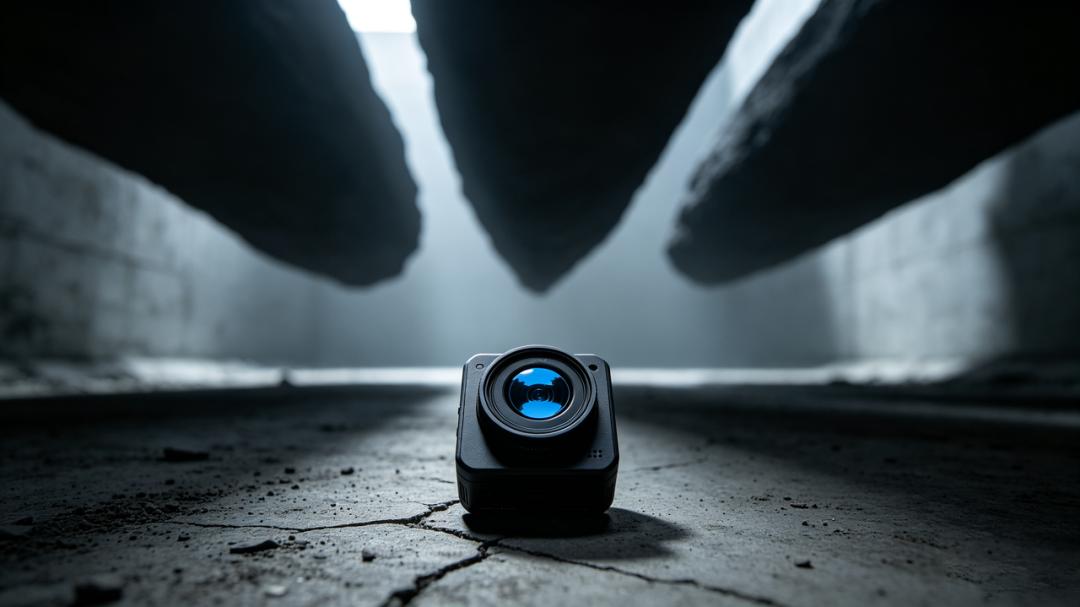
The stock price of Insta360 Innovation has taken a nosedive, plummeting from a peak of RMB 377.77 in September 2025 to around RMB 130, resulting in a more than 60% erosion of its market capitalization.
This 10-month decline has triggered a wave of investor discontent, with complaints and grievances dominating the top comments on Liu Jingkang's Weibo post, which shared an IDC report.
The market's perception of Insta360 is undergoing a seismic shift. Investors keep posing the same critical question: Is Insta360 merely a hardware company stuck in a niche market, or is it an intelligent imaging platform with the potential to continually explore new markets? These two distinct definitions carry vastly different valuation implications.
To position itself as an "intelligent imaging platform," Insta360 must consistently roll out blockbuster products to sustain performance growth and bolster its market value. Its latest offering, the handheld gimbal camera Luna Ultra, was launched in June.
The Luna Ultra's initial performance was indeed eye-catching: it sold out within five minutes of its release and topped the charts on four major platforms—Douyin, JD.com, Tmall, and Amazon's U.S. site—on its debut day. However, its market introduction was not without controversy. Some consumers raised questions about whether its national subsidy pricing involved "price hikes before subsidies" and sparked discussions about its bundled sales strategy.
In retrospect, the Luna Ultra only managed to temporarily decelerate the downward trend in stock prices rather than completely reversing it. So, can gimbal cameras become the next growth engine for Insta360 Innovation?
Compared to smartphones, gimbal cameras offer superior stability and image quality; compared to mirrorless cameras, they are more portable and cost-effective. Thus, precisely positioned between smartphones and professional cameras, gimbal cameras have emerged as one of the fastest-growing segments in the consumer camera market in recent years.
According to a recent report by Jiuqian, the global gimbal camera market experienced a compound annual growth rate of 46% from 2021 to 2025. However, it is projected to significantly decelerate to 16.8% under optimistic scenarios and merely 6.3% under neutral scenarios by 2029.
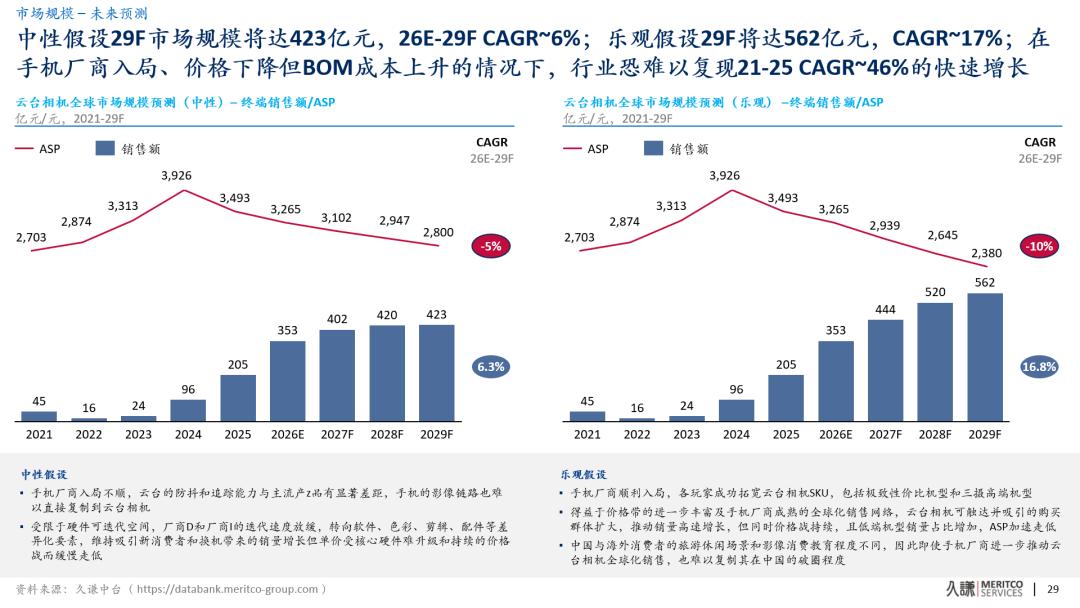
Behind this growth slowdown lies the market penetration rate of the category nearing saturation among the initial wave of core users.
Subsequent growth must hinge on penetrating a broader base of mass-market users, necessitating a shift in product definition logic from "catering to the needs of professional creators" to "balancing the diverse needs of different user groups."
Insta360 has successfully navigated this path with its panoramic cameras. The development trajectory of panoramic cameras involved first establishing category recognition with a flagship product and then solidifying a foothold in both professional and consumer markets through vertical and horizontal expansion of the product line. The success of panoramic cameras has validated the feasibility of transitioning from a single blockbuster product to a matrix expansion strategy in the imaging hardware sector.
When Insta360 ventured into the panoramic camera market, brands like GoPro and Ricoh had already made inroads but had not prioritized panoramic imaging as a core strategy. They failed to address the experience and safety issues faced by the core user group—sports enthusiasts—when capturing footage on the move. Thus, it was a segment with unmet functional needs. Insta360 combined panoramic technology with sports cameras, transforming "usable" into "user-friendly" and "easy-to-use" through differentiated solutions, gradually broadening its audience.
However, the external environment for gimbal cameras is markedly different. This is a mature market that has been thoroughly validated, with early entrants already occupying user mindshare.
Insta360 initially filled a gap where demand existed but was not fully met. Now, it is redefining better solutions in a market with established offerings, a significantly more challenging task because the criteria for a "good solution" vary among different user groups and may even conflict.
An outdoor hiking Vlogger might prioritize portability and battery life; an indoor interview creator might care more about image quality and audio recording; a live-streaming e-commerce host might have completely different needs regarding accessory ecosystems and monitoring screens. Casual users seeking hassle-free experiences hope for "plug-and-play" functionality, while professional creators might be more willing to invest in accessory systems and post-production workflows.
This implies that a single product cannot simultaneously meet everyone's needs. To truly cover a sufficiently large market, a product matrix must be constructed, with different SKUs undertaking their most proficient core tasks. The broader the matrix, the greater the coverage opportunities.
Currently, Insta360 has not yet formed such a matrix in the gimbal camera category. The Luna Ultra, released in June with a domestic launch price of RMB 3,999, equipped with dual Leica lenses and 8K video capabilities, is a flagship product targeting the mid-to-high-end professional creation market. The anticipated lower-priced Luna Pro has not yet been launched.
This positioning is not inherently flawed, but the coverage radius of a single flagship product is limited. The RMB 3,999 price point has already screened out a significant portion of price-sensitive potential users.
However, whether Insta360 can cover a broader price range and more diverse user groups with a multi-SKU matrix does not solely depend on its own determination but also on the remaining window of opportunity.
The timeline set by smartphone manufacturers is already ticking down.
OPPO officially commenced the development of a handheld gimbal camera in September 2025, code-named "Fuyao," expected to launch in the fourth quarter of 2026. Vivo internally initiated the development of a Vlog camera at the end of 2025, deploying a team of nearly 100 people and also targeting a fourth-quarter release, with media reports suggesting an expected inventory of around one million units.
Honor, on the other hand, has chosen to integrate gimbal technology into smartphone bodies, attempting to cover both the smartphone and professional imaging markets with its new Robot Phone category. Currently, the Robot Phone has opened for pre-orders across all channels and is expected to be officially released in August.
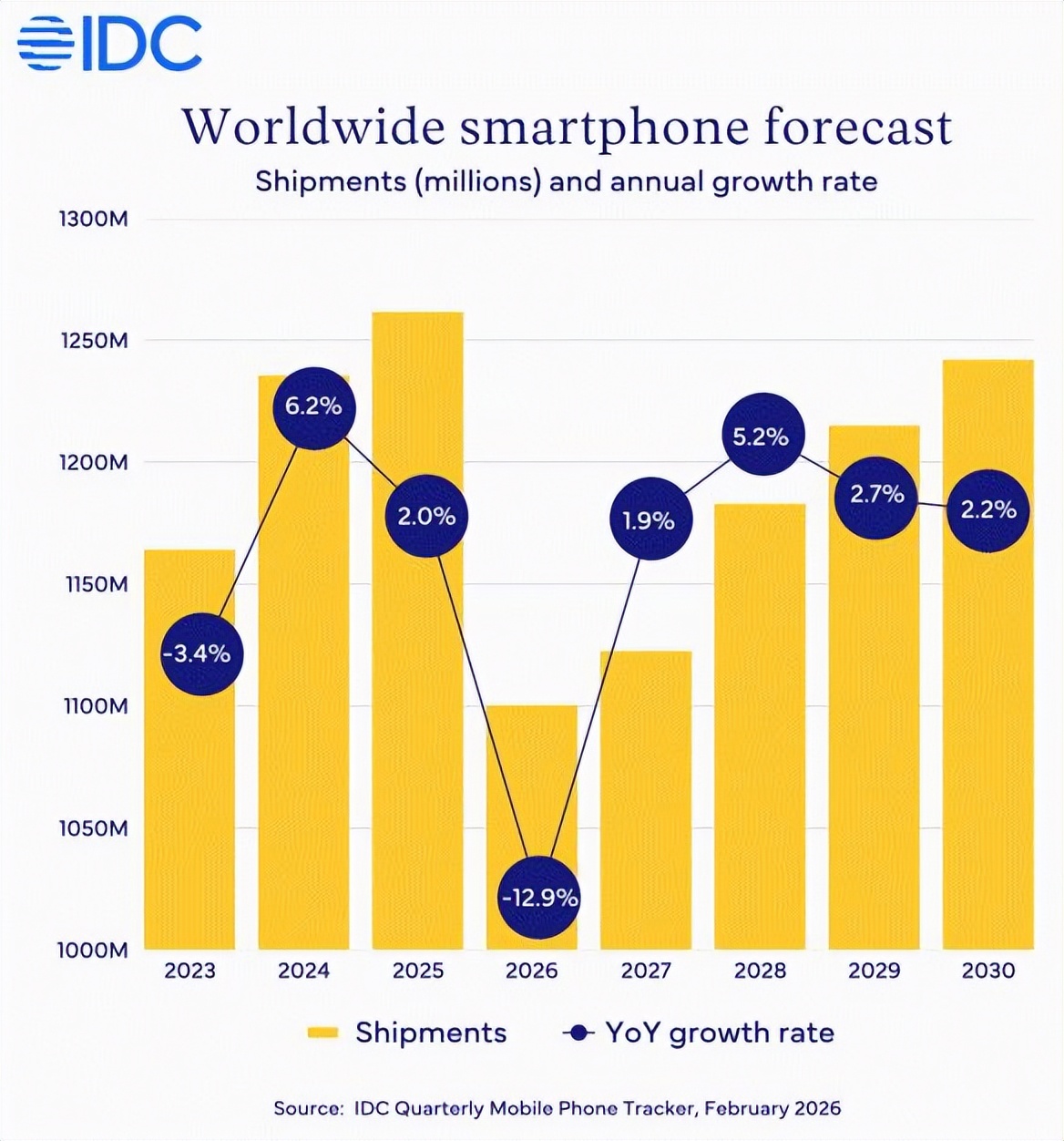
The entry logic of smartphone manufacturers is straightforward: the global smartphone market growth has plateaued, with IDC projecting a 12.9% year-over-year decline in shipments in 2026, marking the largest historical drop. Smartphone manufacturers urgently need to explore new hardware growth opportunities.
Entering the gimbal camera market, smartphone manufacturers also possess certain advantages: technologies such as imaging algorithms and sensor tuning are highly reusable, the supply chain can be shared, existing distribution channels are readily available, and multi-device interconnection between smartphones and cameras can be achieved. Thus, it is logical for gimbal cameras to become a new growth pillar for smartphone manufacturers.
Furthermore, "covering the full price range with multiple SKUs" is a strategy at which smartphone manufacturers excel. If they replicate the approach of "volume sales for entry-level models and benchmark-setting for flagship models" to gimbal cameras, the market will undoubtedly expand, as presumed in the optimistic scenario mentioned earlier. However, Insta360 will also face pressure from multiple directions.
On one hand, the entry of smartphone manufacturers will inevitably further squeeze prices and profit margins. Prior to this, gimbal cameras had already shown signs of "trading volume for price."
Jiuqian data indicates that although quarterly sales of gimbal cameras have maintained year-over-year growth since Q1 2024, the average selling price (ASP) in Q4 2025 experienced a significant month-over-month decline, with subsequent quarterly sales growth rates lagging behind volume growth rates. IDC also explicitly pointed out that the average unit price in Q1 2026 was RMB 2,840, a 12.5% year-over-year decrease.
On the other hand, rising material costs will also strain gross margins.
Global chips are experiencing significant price hikes, especially memory chips. According to UBS estimates, due to increases in SoC, DSP, and DRAM chip prices, Insta360's bill of materials (BOM) cost will rise by 9% year-over-year, dragging down gross margins by approximately 4 percentage points.
More importantly, before AI investment significantly cools down, the situation of "high prices and tight supply" in the DRAM and enterprise storage markets is unlikely to change in the short term. Guotai Haitong Securities mentioned that the price hike trend is expected to continue until 2027.
Compared to the tens of millions in procurement volumes of server and smartphone manufacturers, the demand scale of camera manufacturers like Insta360 is relatively small. During supply shortages, it is industry practice for upstream suppliers to prioritize large customers. This disparity in scale puts Insta360 at a disadvantage in procurement price negotiations.
Therefore, while smartphone manufacturers have buffer space to cope with cost increases, it is more challenging for Insta360 to maintain stable gross margins.
Due to Insta360's continuous expansion into new categories, coupled with rising storage costs, its cash flow has begun to feel the strain.
Due to increased procurement of storage components, materials for innovative categories, and inventory for overseas production lines, Insta360 Innovation's operating cash flow turned negative in the first quarter of 2026, with a net outflow of RMB 1.471 billion. Meanwhile, inventory at the end of the quarter increased by approximately RMB 880 million compared to the end of 2025.
On July 22, Insta360 announced a bond issuance plan of up to RMB 2 billion, with proceeds to be used for R&D investment, supplementing working capital, and early debt repayment. At a juncture where gross margins are under pressure and storage price hikes show no sign of abating, this financing is not only a necessary move under cash flow pressure but also implies that Insta360 is about to face fiercer and more prolonged competition.
-
![]()
“Stock King” Changxin Propels Hefei into the Elite “Beijing-Shanghai-Shenzhen-Hefei” League, Securing Fourth Place!
-
![]()
Final Verdict: Strategies to Counter the Trend of Oversized and Overweight New Energy Vehicles
-
![]()
Two Key Chinese Shareholders Involved, Mercedes-Benz Faces Potential U.S. Sales Ban! CEO Issues Urgent Statement: Committed to Adjustments to Safeguard U.S. Market Presence
-
![]()
Marching into the Heart of the Japanese Auto Market: BYD’s K-Car Racco Makes Its Debut, Offering Customized Solutions in Its Second Phase of Overseas Growth
-
![]()
Growth Stalls, Formidable Rivals Enter: Insta360 Faces New Challenges in the Gimbal Camera Market
-
![]()
Growth Stalls Amid Strong Competition: Insta360 Faces New Challenges in the Gimbal Camera Market
-
![]()
139 Institutions Conduct Research as Robotec Promptly Secures a Major Order Worth 129 Million Yuan!
-
![]()
Zeiss Boosts Investment to Expand 25,000-sqm Optical Plant, Elevating Its Exclusive EUV Optical Manufacturing Capabilities!