The US Wants to Strangle Chinese Automakers, but Mercedes-Benz Becomes the First 'Sitting Duck'
 07/29 2026
 411
411
Behind the bill, which 'unites foes but displeases allies,' lies a more severe reality.
Recently, the US has started another round of troublemaking.
The Senate Commerce Committee slammed down the 'Connected Vehicle Safety Act of 2026' and set a 'red line.' Within this bill, the 15% Chinese ownership threshold acts like a knife pointed at automakers from 'China.'
The bill's implementation timeline is clear: restrictions on vehicles and software will be enforced first in 2027, extending to hardware by 2030. The US government claims to be generous, offering automakers until 2030 to comply.
However, no one expected that the first 'sitting duck' would be a European automaker.
The First Cut: Mercedes-Benz
According to media reports, the bill's text specifies that ownership is not assessed by individual shareholders but by aggregating the stakes of all Chinese entities. Based on this rule, Mercedes-Benz could become the 'first' target.
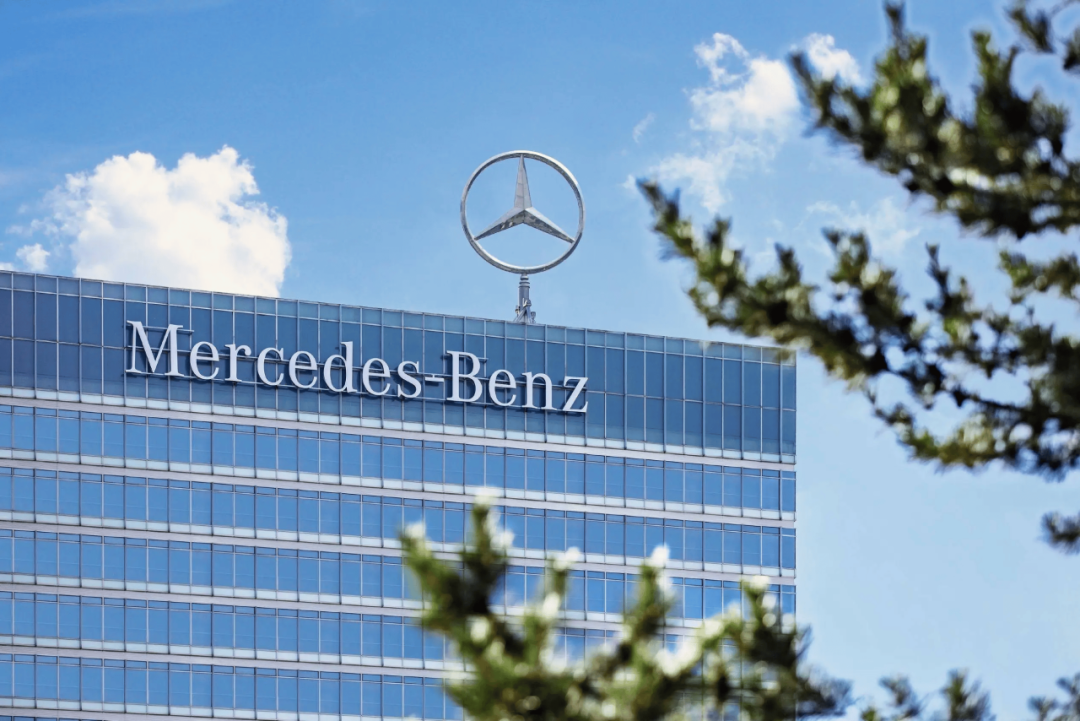
In Mercedes-Benz's shareholding structure, BAIC Group holds 9.98%, and Geely holds 9.69%. Together, these two major Chinese shareholders hold nearly 20%, directly surpassing the threshold set by the bill. Although both are financial investors without board seats, the US claims to 'only look at the numbers.'
Who Will Speak Up for Mercedes-Benz?
In the US market, Mercedes-Benz is not just there to 'sell' cars. Data shows that in 2025, Mercedes-Benz sold over 343,000 vehicles in the US, making it a crucial pillar of global sales. Based on this, Mercedes-Benz views the US as a core production base, establishing a deep layout centered on localized manufacturing, electrification transformation, and regional headquarters operations.
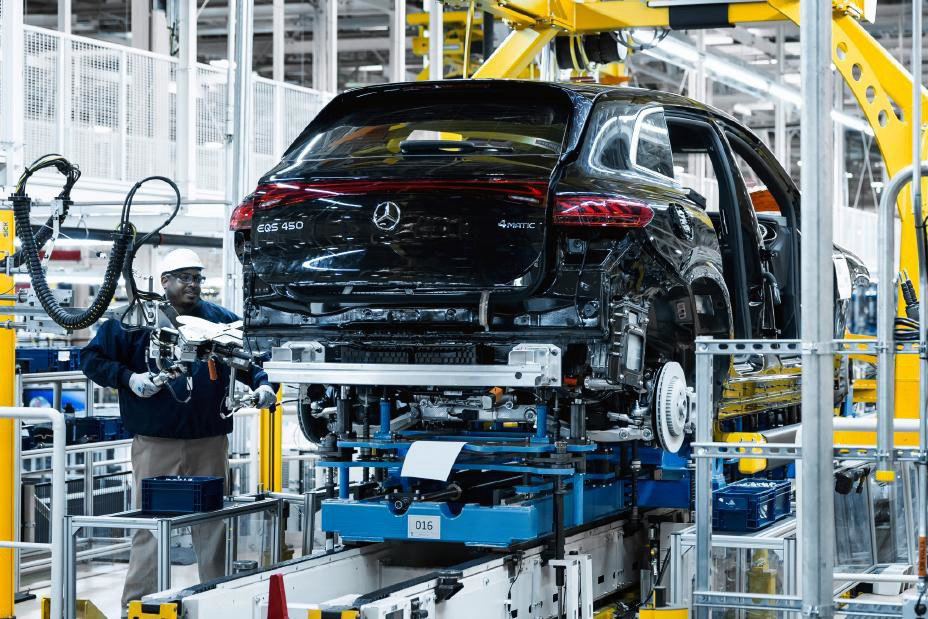
Among these, the Tuscaloosa plant in Alabama is the core of Mercedes-Benz's vehicle manufacturing in the US, directly employing over 10,000 people and supporting more than 160,000 jobs through its business and dealer network. In March of this year, Mercedes-Benz announced an additional $4 billion investment in the plant by 2030 to expand SUV production capacity and transfer the GLC model, previously produced in Germany, to this site to cope with high import tariffs.
It can be said that Mercedes-Benz has invested significant effort into the US market. This time, it may be blocked from entering the US by a single bill. If the bill is implemented unchanged, Mercedes-Benz will directly lose its core North American market, turning the rules of the game into a life-and-death struggle.
The lack of distinction between financial investment and actual control has left a German automaker with deep investments in the US potentially facing a complete sales ban. Mercedes-Benz feels wronged, and rightly so.
However, Mercedes-Benz is not planning to sit idly by.
According to Bloomberg, Mercedes-Benz's current lobbying efforts aim to push for modifying the 15% hard threshold, seeking to raise it to 25%. Another proposal is to abandon the simple shareholding ratio and instead assess whether foreign investors have actual control or data access rights.
Of course, Mercedes-Benz is not the only one affected. Volvo, Lotus Cars, and Polestar are also on the list. However, the situations vary.
Under the current bill, connected vehicle models from brands like Volvo and Lotus would theoretically be unable to enter the US market. However, the US government's refusal to allow Polestar to continue selling new cars has led Polestar to decide not to fight to stay, officially announcing its exit from the US in 2027 and planning a phased withdrawal after clearing inventory. Volvo, relying on investments and employment commitments at its South Carolina plant, has reluctantly (barely) secured temporary access on the condition that all vehicle data is stored independently.
However, other German automakers like Volkswagen, BMW, and Audi cannot remain uninvolved. China supplies 70% of the world's battery materials and 60% of power batteries. Battery materials, modules, thermal management, and electric drive components have formed deep ties through years of business accumulation.
Some say this is forcing automakers to make a 'choose one' decision between the Chinese and US markets. On one side is the 'extortion' of the bill's red line, and on the other is the decades-long supply chain, sales network, and user base built in China—a difficult choice.
Moreover, according to the bill, a 'full-chain' severance may be required, directly increasing manufacturing costs by over 30%, which European automakers cannot afford.
Behind this bill, which 'unites foes but displeases allies,' lies a more severe reality: the transformation situation for US domestic automakers is not optimistic.
Is the US Building Barriers to the Global Auto Market?
For this bill, which has not yet been implemented, the global automaker currently most affected is Mercedes-Benz. Moreover, in the battle over the bill's implementation, General Motors (GM) has openly taken a stance, praising the bill for helping to 'protect and strengthen US manufacturing and the global competitiveness of US automakers.'
The implication is clear—no need to pretend anymore.
After all, Cadillac and Mercedes-Benz compete directly in the US luxury car market. If Mercedes-Benz is restricted, who will benefit from the resulting dividends?
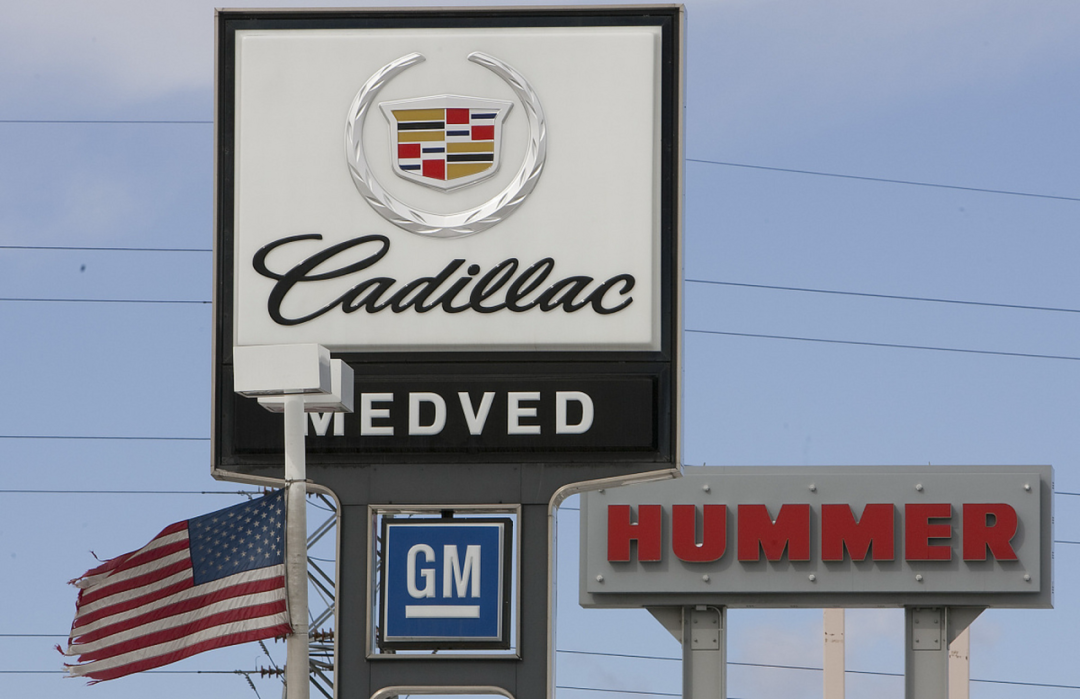
Senate Commerce Committee Chair Ted Cruz is well aware of this. He initially strongly opposed the bill. 'If the 15% Chinese ownership red line remains unchanged, this bill will ultimately fail to become law.'
He then directly named General Motors, suggesting that its push for the 15% cap seems to be making room for Cadillac while suppressing Mercedes-Benz, even being described as retaliation by the United Auto Workers against Mercedes-Benz. This is because, in 2024, employees at Mercedes-Benz's Alabama plant voted to reject joining the union.
It seems Mercedes-Benz is facing both new and old grievances.
However, behind these tactics lie reasons and purposes. The reason is the difficulty of transforming the US auto market, and the purpose is to block the impact of competitors, buying time for transformation. The US also wants to control the software, hardware, and data chains.
Under the Multiple dilemmas (multiple dilemmas) of policy instability, strategic misjudgments, cost overruns, and intensifying external competition, GM, Ford, and Stellantis are undergoing unprecedented transformation pressures. Since their employment peak in the 2020s, these three companies have cumulatively cut over 20,000 salaried jobs in the US, accounting for 19% of their total salaried workforce.

In addition to layoffs, these three automakers have collectively experienced 'strategic contraction' and even abandoned some electrification projects. One reason for the shift from aggressive to conservative strategies is policy instability, which has undermined the stable expectations of automakers' four-year R&D plans, resulting in wasted investments.
Because the Detroit Three carry the burden of massive fuel-powered vehicle (internal combustion engine vehicle) production chains and labor systems, every step of transformation requires breaking existing interest patterns and incurring significant costs. This is also unacceptable to some investors and the US government.
Overall, the Detroit Three are losing competitiveness in the era of intelligent competition, which the US government does not want to see. Data shows that the US government still places high importance on the automotive industry, which remains a crucial pillar of the US economy, accounting for approximately 4.8% of US GDP.
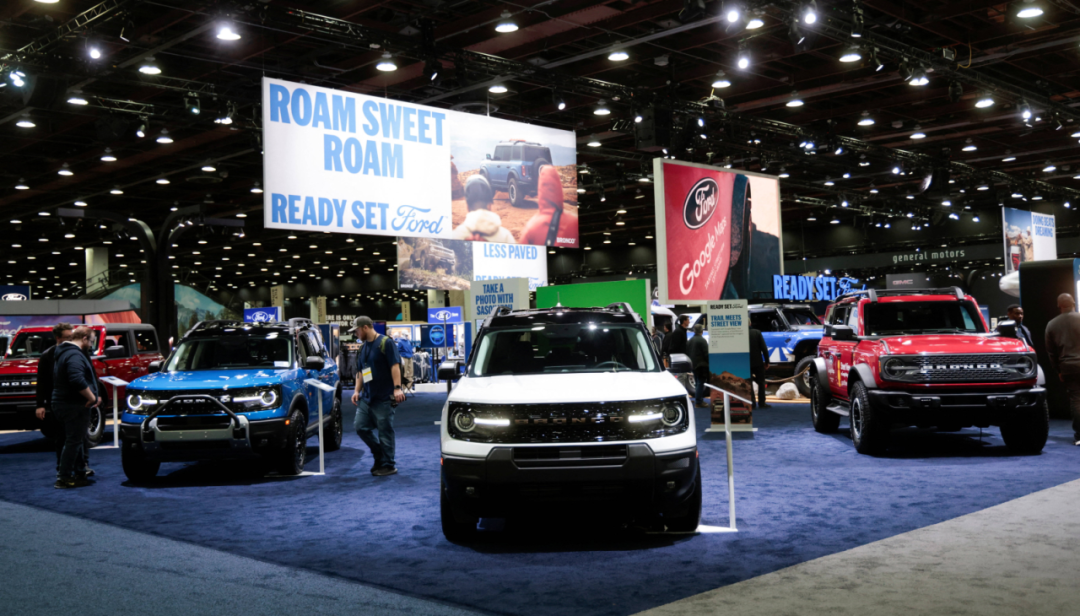
This bill aims to more thoroughly block Chinese automobiles, which are more competitive and impactful in the intelligent era, from the US market. However, in the era of globalization, achieving 'chain decoupling' is not something that can be accomplished overnight.
If the US truly welds shut the market door, it may not only keep out Chinese cars but also harm Ford first.
Currently, Ford has applied to the US Department of Commerce to continue importing the Lincoln Nautilus SUV produced in China. The reason is that although the software was developed in the US, the vehicle assembly and software pre-installation were completed in China. To continue selling, government approval is required.
However, Ford has agreed to relocate production of some Lincoln models made in China back to the US. Additionally, GM, which supports the bill, plans to transfer production of the Chinese-made Buick Envision to the US starting with the 2028 model year, fulfilling Trump's statement, 'We want Americans to buy cars made in America.'
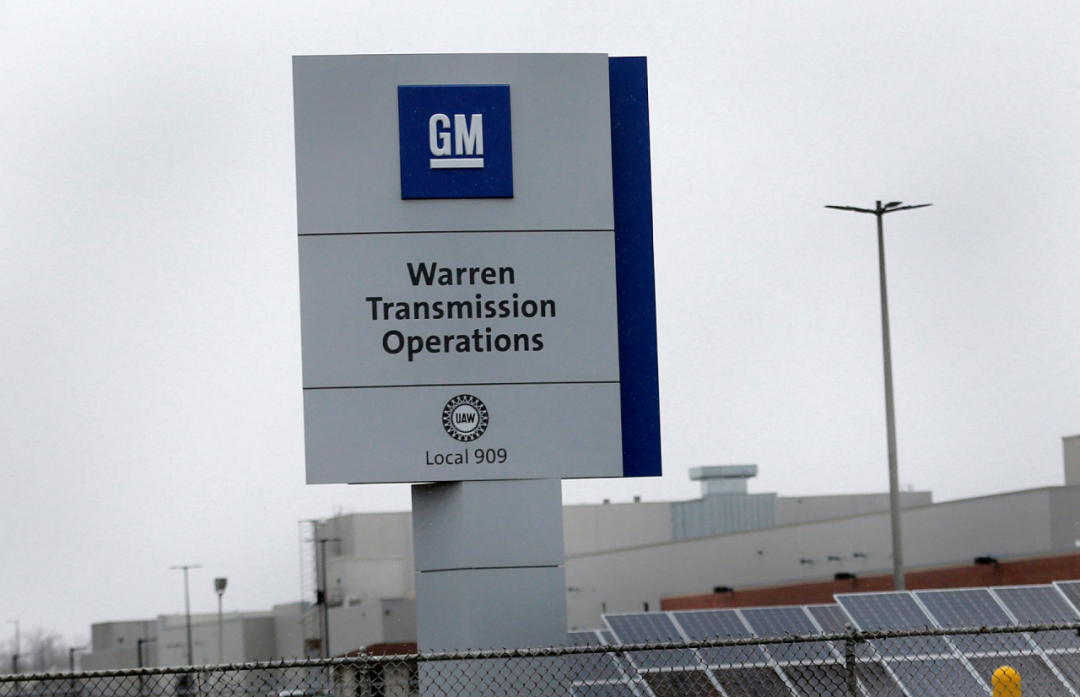
This may seem like a strong endorsement of 'US manufacturing reshoring.' However, in a survey, while 47% of CEOs last year expressed 'high confidence' in achieving acceptable ROI from reshoring or nearshoring layouts, this figure has dropped to 18% this year.
The decline is due to policy instability. One CEO stated, 'Our manufacturing system is basically ready, but we still need a more stable and clear direction.'
However, at a time when technological capabilities are being redefined as part of national sovereignty, the US's 'isolated' blockade, cutting off the entire chain from equity to software and data, is pushing the global automotive industry toward an unprecedented crossroads.
A dangerous, closed crossroads.
Note: Some images are sourced from the internet. If there is any infringement, please contact us for removal.
-END-

-
![]()
McKinsey 2026 Mobility Report: Consumers Are Redefining What Makes a 'Good Car'
-
![]()
Duan Jianjun Spearheads Premium Project as Volvo Sets Sights on Rivaling Zunjie with New Flagship Model
-
![]()
Absent from New Energy Vehicle Rural Promotion, Leapmotor Turns Its Gaze Overseas
-
![]()
Reclaiming Global Dominance! Apple’s Market Cap Surges to $5 Trillion in Cook’s Epic Finale
-
![]()
Sales Soar: Has Ora Staged a Remarkable Comeback?
-
![]()
What Kind of AI Phones Do We Actually Need?
-
![]()
DingTalk, Feishu, and WeCom's Silent 'March Eastward'
-
![]()
Is 'Data Scarcity' More Fatal Than 'Computing Power Shortage'? Is It Bringing Disaster?