Embarrassing Meta: Promises Made, Money Invested, but No 'Fruits' Yet
 07/30 2026
 350
350
Hello everyone, I'm Dolphin you !
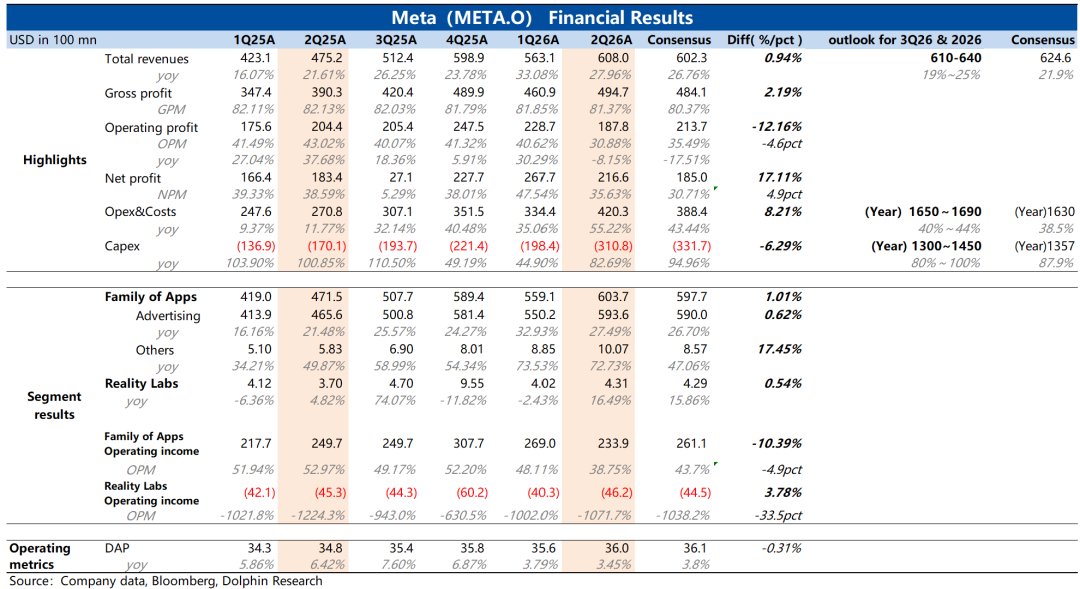
As the catalyst for the narrative of 'excess computing power and peak industry chain' in this round, Meta delivered a report card that likely left all parties unhappy:
For Meta investors, both the Q2 current and next quarter's revenue growth guidance fell short of expectations. Opex increased instead of decreased due to litigation costs, putting pressure on profits and rapidly depleting free cash flow and net cash.
For industry chain investors, the full-year Capex guidance was only raised at the lower end of the range, significantly below the aggressive market expectations. Despite Zuckerberg still stating that computing power is in short supply and that short-term capacity expansion will be pursued as much as possible, it is difficult to allay concerns that the period of excess computing power will arrive earlier than expected.
Without further ado, let's dive in:
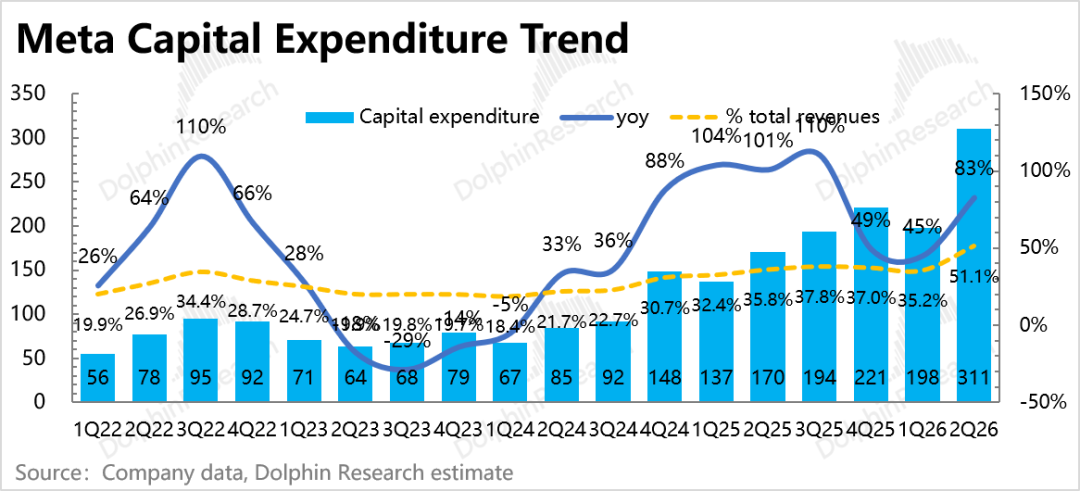
1. Capex Only Slightly Raised: Despite Meta's loud proclamations about entering the cloud business over the past month, raising computing power capacity targets, and signing a $10 billion computing power contract with Anthropic, Meta only raised its 2026 Capex by $5 billion at the lower end of the range, with a full-year budget of $130-145 billion.
However, given upstream price increases, the market itself expected a Capex increase of around $10 billion. Buy-side funds also set their expectations high, directly targeting the upper limit of the $145 billion range. Therefore, management's adjustment to Capex did not meet the psychological expectations of industry chain funds.
Before the earnings report, market expectations for next year's Capex remained high at $225-250 billion, with aggressive funds continuing to double down. However, this quarter, management did not provide quantitative guidance for 2027 (typically given in the second half or Q4), stating that adjustments would be made flexibly based on industry changes.
In qualitative terms, Zuckerberg continued to repeat that computing power is currently in short supply and that capacity expansion will be pursued as much as possible in the next two years to support business growth after 2028. While long-term computing power capacity is uncertain, short-term plans can be made, hence the two-year expansion plan.
2. Revenue Guidance Mediocre: Current revenue reached $60.8 billion, up 28% YoY, including a 1-point tailwind from foreign exchange. However, next quarter will see a 1-point headwind from foreign exchange, coupled with a high base, the company guided for $61-64 billion, slowing growth to 19%-25%. The median of the guidance range only met sell-side expectations but fell short of buy-side expectations of $63.5 billion.
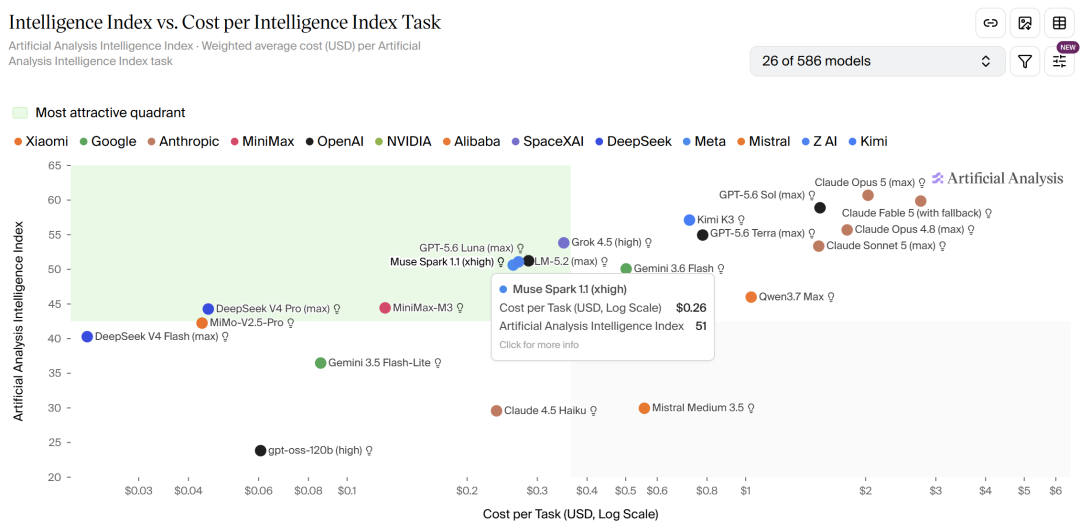
Currently, this guidance may not include much expectation for the cloud business. Meta is likely to continue selling computing power primarily through model APIs (currently, Muse Spark is priced significantly lower than peers despite being in a similar tier) rather than directly leasing bare computing power. Therefore, there will be a time lag between Indent Order (intent orders) and revenue recognition.
3. Advertising Core Business Stable: Revenue growth is still driven by advertising (accounting for 98%), with growth driven by both volume and price. QoQ, advertising price growth remained stable in Q2, while impression growth slowed down due to a high base. Overall, this reflects the resilience of macro consumption and Meta's relatively stable competitive position in the advertising industry.
4. Full-Year Opex Increases Instead of Decreases: Management raised the lower end of the full-year Opex range due to an additional $2.4 billion in legal litigation costs. This caused Q2's operating profit margin for the Family of Apps segment to significantly miss expectations. After adjustment, the expectation gap narrowed, but the segment's profit margin still declined YoY and QoQ due to AI investment recognition.
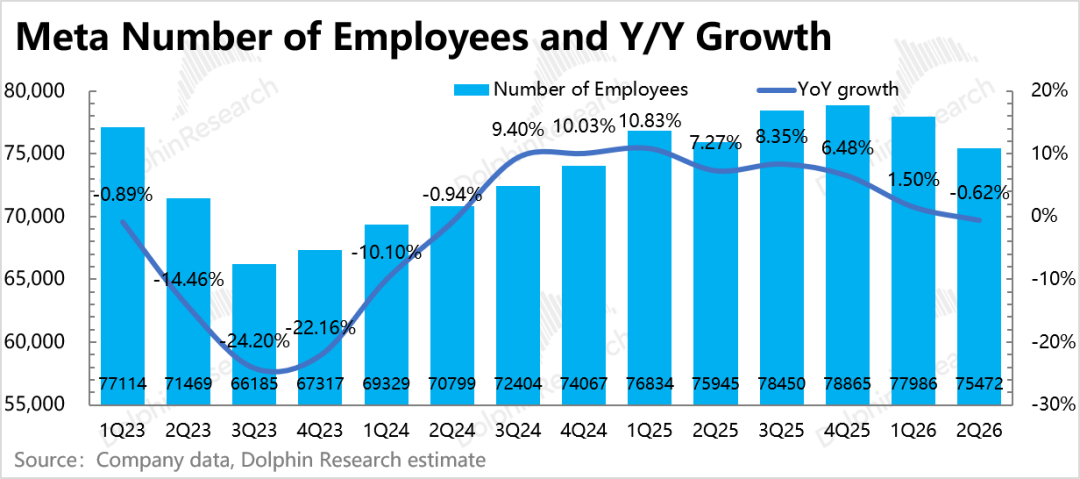
The market originally expected that after significant layoffs (Q2 headcount decreased by 2,500 YoY), full-year operating expenses would be adjusted downward. Therefore, profit pressure is undoubtedly high this year.
With short-term revenue growth slowing, costs and R&D expenses are expected to accelerate in the second half of the year due to depreciation, model training costs, and cloud business team-building costs. The turning point lies in the advancement of cloud computing power. Currently, the main announcements are about intent orders. Zuckerberg has been saying that there is a lot of inquiry demand, but Meta's own team also needs to be fully established.
5. Rapid Cash Flow Depletion: Q2 free cash flow nearly bottomed out and is likely to turn negative in the second half of the year before large-scale cloud business revenue recognition. If high Capex investments continue next year as the market expects, pressure will remain significant. While there is still room for debt borrowing or off-balance-sheet financing methods like the recently announced partnership with BlackRock, the best scenario is still for the cloud business to drive cash flow growth.
In terms of net cash, although $25 billion in long-term debt was issued last quarter, investments also increased. Additionally, due to special cooperation models like with Blue Owl, the portion of restricted cash increased (to be confirmed with complete 10-Q financial report information), leading to a significant QoQ decline in short-term net cash to $36 billion.
6. Performance Metrics Overview
Dolphin you 's View
In times of low confidence and fragile sentiment, funds are most eager to see a 'version answer' for soft tech—where AI directly monetizes while maintaining or achieving higher growth under controlled investments (current revenue recognition and backlog representing future revenue), such as Microsoft. Secondly, they prefer a scenario like Google's, where AI monetization exceeds expectations with high growth, but investments are also increasing.
The market's reaction to Meta's report card is likely to be lukewarm. The reason is that while investments have not decreased, the growth rate of the original core business has slowed, and AI monetization is still on the way. Dolphin you believes that for giants, the certainty of AI investment return trajectories is crucial. With certainty, funds are more willing to assign valuations, but when trajectories are unclear or still in the storytelling stage, valuations will continue to be discounted.
Applying this to Meta, we see that despite Meta already facing valuation pressure compared to its Big Tech peers and being below its historical average, funds are still not keen on picking up bargains. Unless the trajectory of AI investment returns becomes clear, funds reacted positively when Meta announced its entry into the cloud business.
However, Q2 earnings did not further disclose detailed progress in the cloud business, especially regarding orders. Management also did not provide a relatively clear outlook or growth vision, leading funds to price in the 'clearly visible' slowdown in advertising revenue growth first.
We recommend viewing this issue from a developmental perspective. Before Meta announced its entry into the cloud platform and released Muse Spark 1.1, Dolphin you 's view on Meta this year was that opportunities were scarce, with at most a rebound in a oversold market and long-term holding opportunities having relatively high opportunity costs.
However, after Meta released a large model with TOP 10 intelligence and a price of only 30% of the leading models, Dolphin you believes that its model APIs, combined with computing power, are competitive. Compared to before, there is demand for Meta AI to directly monetize, but realization also depends on Meta's team-building and actual delivery.
Therefore, in terms of business revenue generation, it may still be too early for Meta to stand alone (significant contribution to EPS will take time), but from the perspective of certainty and trajectory clarity, Meta should deserve a valuation repair within a bottom range.
The following is a detailed analysis:
I. Mediocre Guidance, Advancing Cloud Business is Key
In Q2, Meta's revenue reached $60.8 billion, up 28% YoY, but the growth rate slowed QoQ. Foreign exchange provided a 1-point tailwind, but its impact will reverse in the second half of the year, with Q3 expected to see a 1-point headwind.
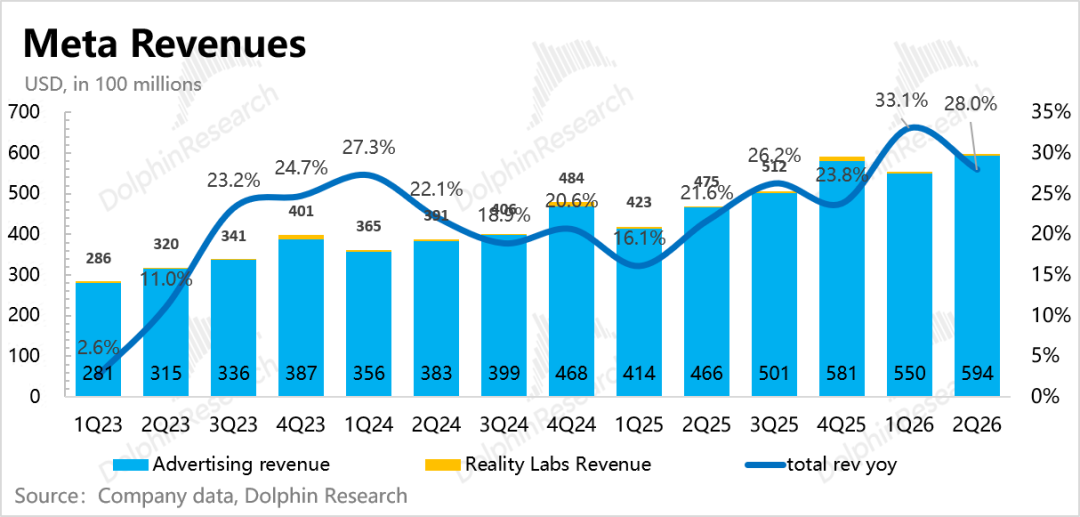
Q3 Revenue Guidance: Meta management expects total revenue of $61-64 billion in Q3 2026, representing YoY growth of 19%-25%, including a 1-point tailwind from foreign exchange. The guidance meets sell-side expectations but reflects slowing growth, with buy-side expectations being higher.
While slowing growth due to a high base seems excusable, it indirectly reflects that without direct AI monetization, the market will also consider how high the original core business needs to grow from a cash flow perspective to avoid awkward financing situations due to cash flow depletion, which would be unfavorable to shareholders.
Breaking it down by business:
1. Advertising Business: Macro and Competitive Stability
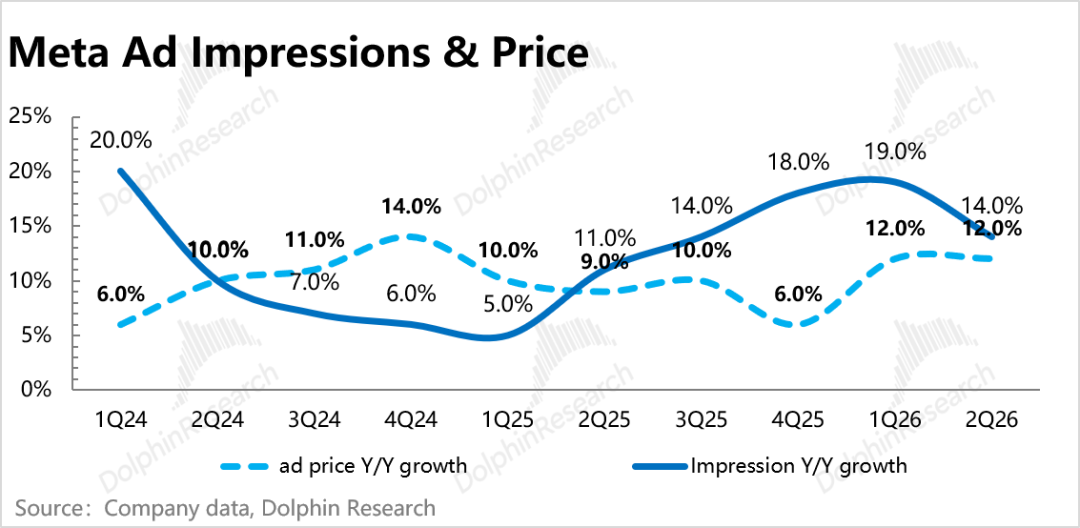
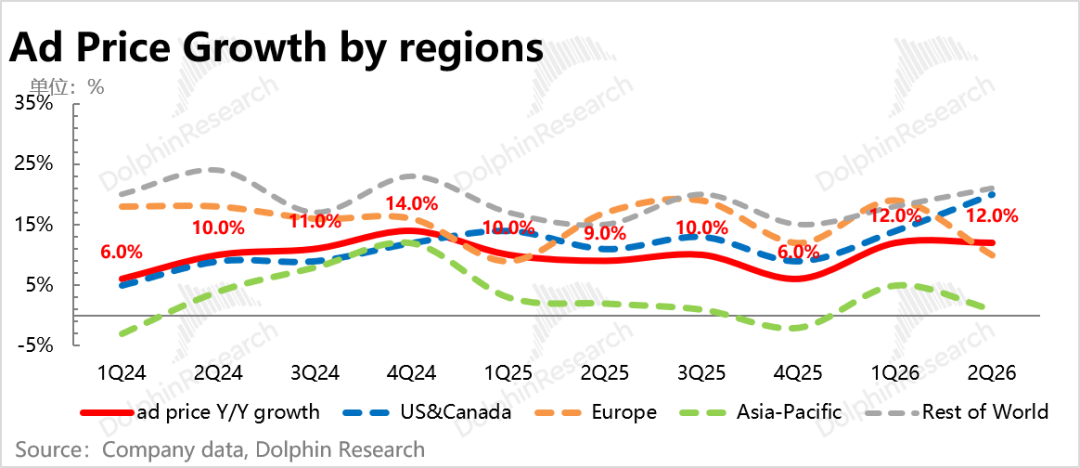
For the advertising business, Dolphin you prefers to analyze the current trends in volume and price growth to better understand the current macro environment and competitive issues. As shown below:
1) Advertising Impressions
In Q2, advertising impression growth slowed to 14%, partly due to a high base. Further analysis suggests that this may be mainly related to the slowdown in MAP user growth from 5-7% to 3-4% since the beginning of the year. After two quarters, without a significant increase in ad load, this would indeed start to affect impressions.
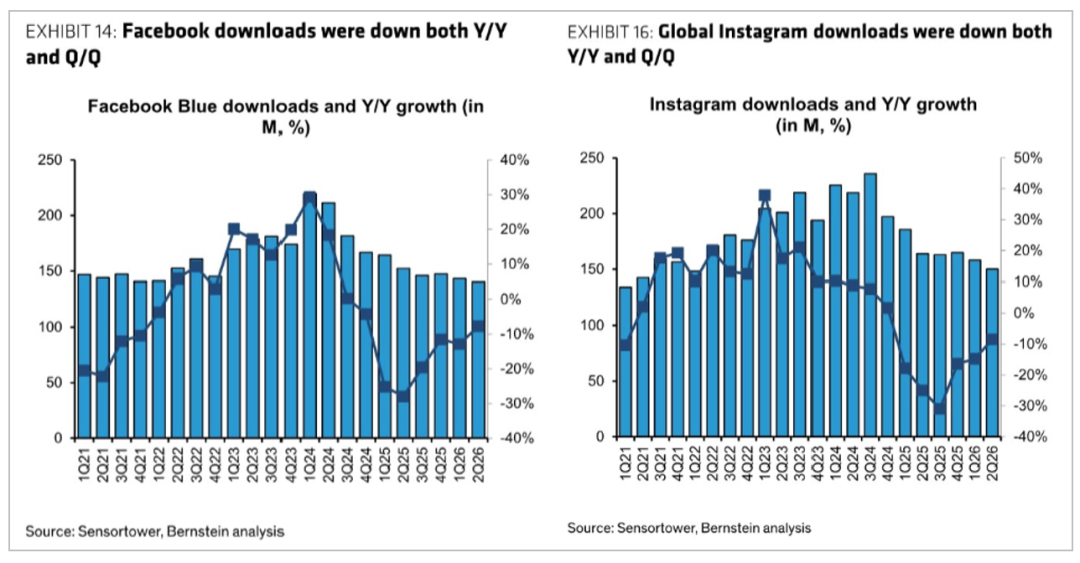
Regulatory scrutiny of Meta's handling of teenage users in the EU and some regions may also have some impact. Additionally, social platforms like FB and Instagram, driven by Reels, have been thriving for three to four years, but overall user growth has slowed (SensorTower shows a decline in absolute user downloads in the past two quarters), possibly indicating that user expansion has also hit a plateau.
However, the company still stated on the earnings call that Instagram's usage time continues to grow by over 10% driven by Reels and large model recommendations.
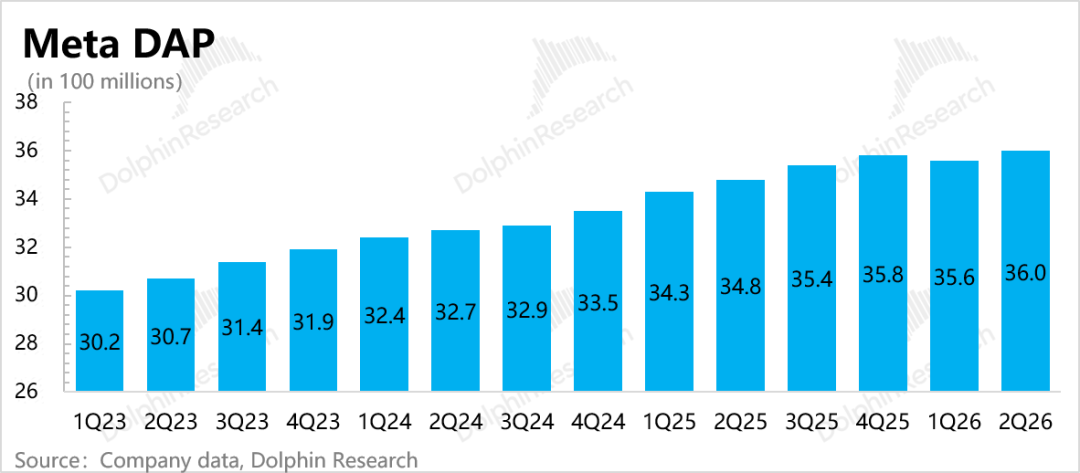
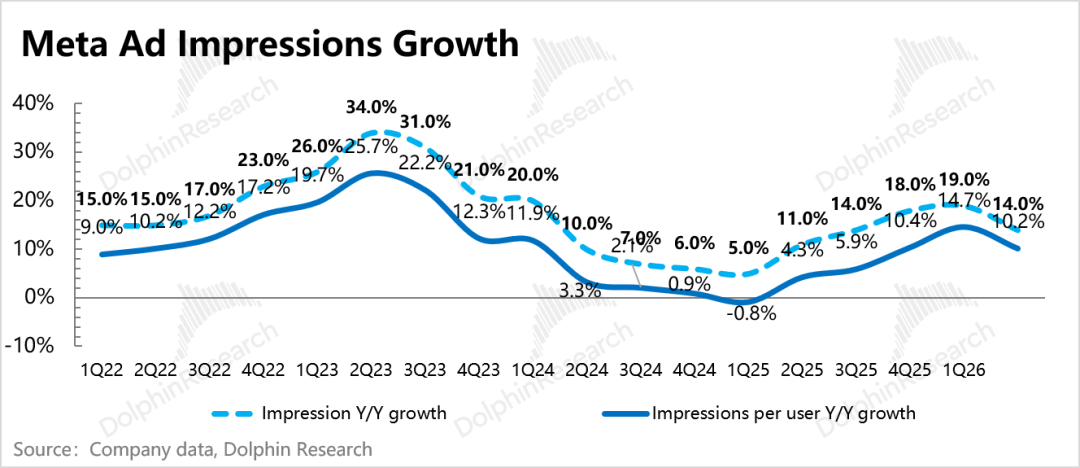
Advertising price growth was 12% in Q2, flat QoQ, reflecting the resilience of North American macro consumption and Meta's relatively stable competitive position in the advertising industry. Last quarter, Reels' eCPM continued to rise, narrowing the price gap with traditional Feed and Story formats. As Reels content consumption penetration increases, this is less likely to drag down overall ad prices.
Meanwhile, Advantage+ continues to optimize conversion rates, with an annualized revenue run rate exceeding $75 billion. As advertisers using multiple tools can achieve compounding effects, adoption is deepening.
For example, an Indian online apparel brand previously had to manually set up each ad campaign on Facebook and Instagram. After adopting Advantage+ sales ads and stacking audience targeting and budget optimization, purchase volume increased by 13% and add-to-cart conversions by 16%.
Additionally, in terms of new product monetization: Threads now has 500 million MAUs, with ongoing commercialization. AI's contribution to the group is mainly reflected in Advantage+'s annualized revenue exceeding $75 billion.
2. VR/AR: Continuing Contraction
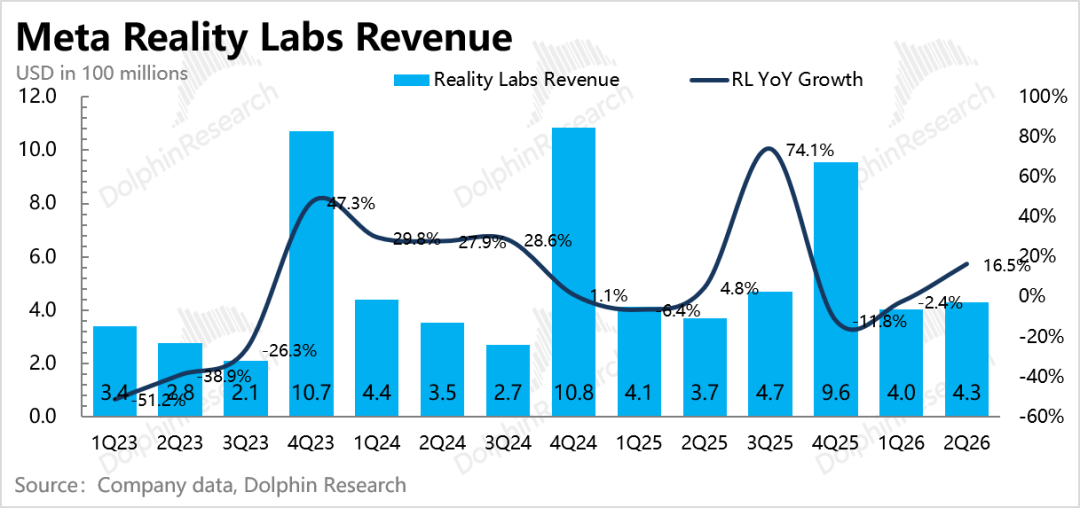
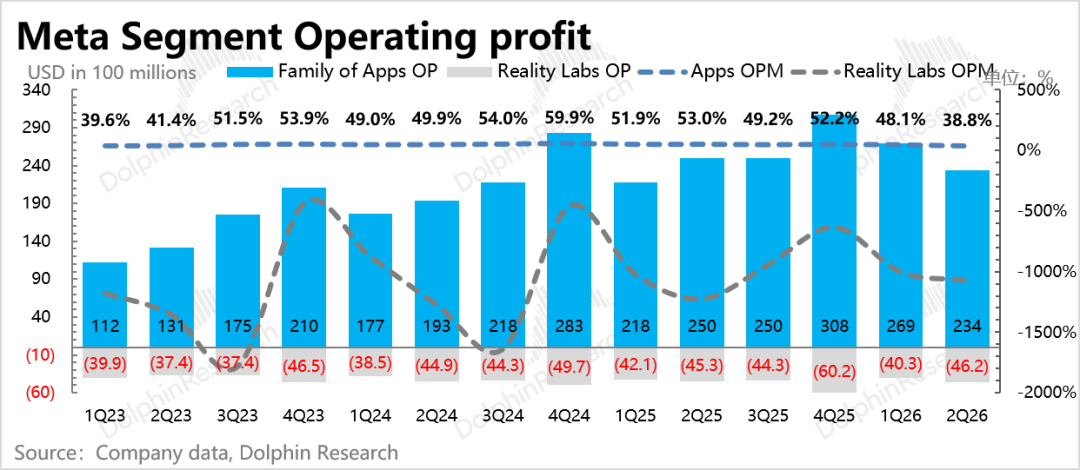
In Q2, Reality Labs' total revenue was $430 million, up 16% YoY, driven by the three AI glasses released in June.
Regarding the VR/AR business, Meta sold 7 million units last year and is expected to see more AI glasses launched and delivered this year. However, overall departmental investments are likely to continue contracting to control losses (last year's guidance was to cut $3 billion in spending by 2026) and make way for AI model and application development.
II. Layoff Rumors Swirl, AI Investments Increase Instead of Decrease
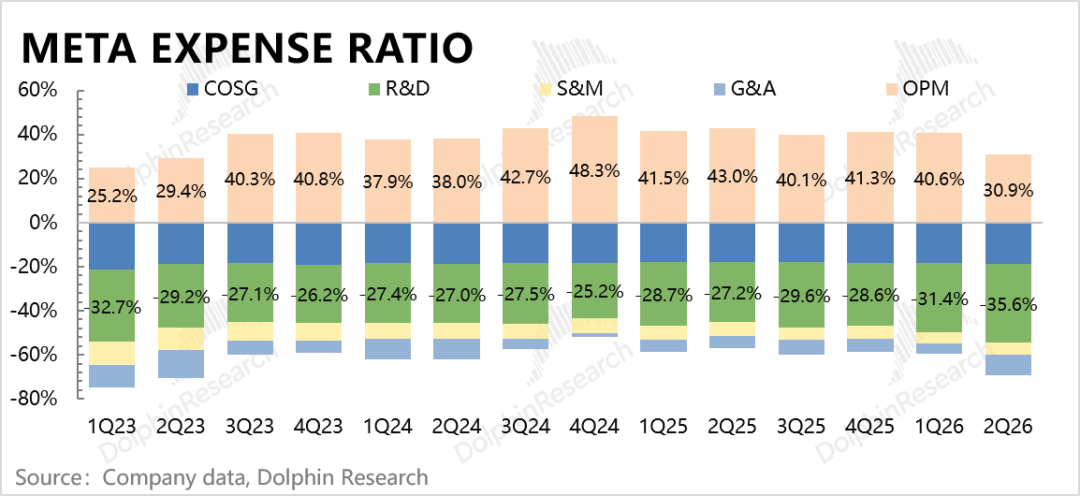
Total operating expenses increased by 65% in Q2, including $2.4 billion in litigation costs and $1.2 billion in layoff compensation, temporarily pushing up expenses. Additionally, increased AI investment recognition also somewhat affected profitability.
Headcount decreased by 2,500 QoQ in Q1, leading the market to expect a slight decline in expenses. However, due to the $2.5 billion litigation fee, full-year Opex increased instead of decreased.
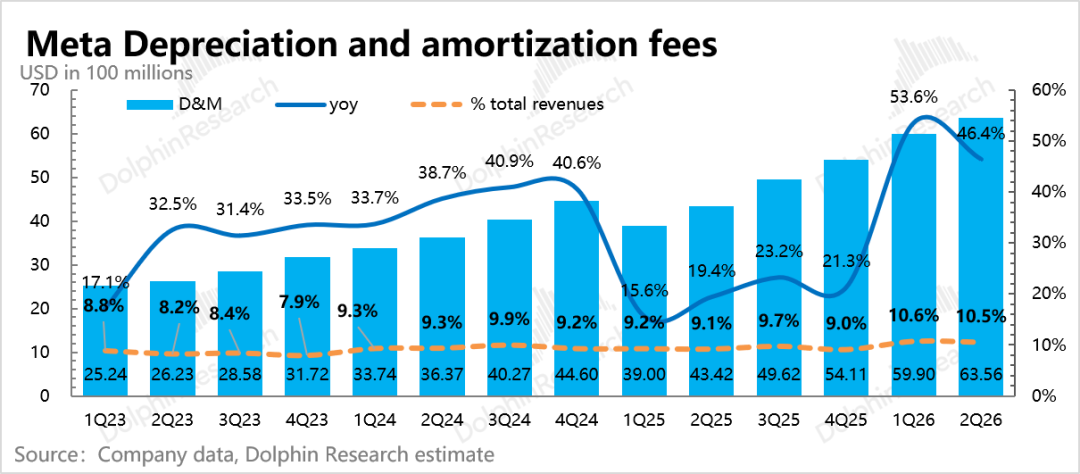
Specifically, R & D expenses increased by 67%, administrative expenses increased by 111%, and selling expenses increased slightly by 15%. Even excluding litigation costs and layoff compensation, the overall profit margin still declined quarter-on-quarter. Currently, layoff compensation, litigation costs, and AI computing power costs are all included in the FoA section, resulting in a relatively low profit margin for FoA this quarter, which decreased by 10 percentage points quarter-on-quarter.
In the second quarter, capital expenditures reached 31.1 billion, a significant increase of over 10 billion quarter-on-quarter. The company's guidance for full-year 2026 capital expenditures is between 130-145 billion, with only a slight increase in the lower limit due to rising material costs.
- END -
// Reprint Authorization
This article is an original piece from Dolphin Research. Reprinting is only allowed with authorization.
// Disclaimer and General Disclosure Notice
This report is intended solely for general comprehensive data purposes, designed for general viewing and data reference by users of Dolphin Research and its affiliated entities. It does not take into account the specific investment objectives, investment product preferences, risk tolerance, financial situation, or particular needs of any individual receiving this report. Investors must consult with an independent professional advisor before making any investment decisions based on this report. Any person making investment decisions using or referring to the content or information mentioned in this report does so at their own risk. Dolphin Research shall not be liable for any direct or indirect responsibility or loss that may arise from the use of the data contained in this report. The information and data contained in this report are based on publicly available sources and are for reference purposes only. Dolphin Research strives to ensure, but does not guarantee, the reliability, accuracy, and completeness of the relevant information and data.
The information mentioned or the views expressed in this report shall not, under any jurisdiction, be regarded or construed as an offer to sell securities or an invitation to buy or sell securities, nor shall they constitute advice, solicitation, or recommendation regarding relevant securities or related financial instruments. The information, tools, and materials contained in this report are not intended for distribution to, or use by, any person in any jurisdiction where such distribution, publication, provision, or use would be contrary to applicable laws or regulations or would subject Dolphin Research and/or its subsidiaries or affiliated companies to any registration or licensing requirements in that jurisdiction.
This report only reflects the personal views, insights, and analytical methods of the relevant creators and does not represent the stance of Dolphin Research and/or its affiliated entities.
This report is produced by Dolphin Research, and the copyright is solely owned by Dolphin Research. Without the prior written consent of Dolphin Research, no institution or individual may (i) make, copy, reproduce, duplicate, forward, or create any form of copies or reproductions in any manner, and/or (ii) directly or indirectly redistribute or transfer them to other unauthorized persons. Dolphin Research reserves all related rights.
-
33,473 X9 Vehicles Recalled: Xpeng's Three Major Challenges
-
![]()
Initiation of Control over Access for Intelligent Driving's 'Little Blue Lights'
-
![]()
Is the Intelligent Driving Blue Light, a Source of Pride for Lixiang and AITO Owners, Facing a Ban?
-
![]()
Embarrassing Meta: Promises Made, Money Invested, but No 'Fruits' Yet
-
![]()
BMW Announces Thousands of Job Cuts via 'Voluntary Exit Scheme'
-
![]()
Official Announcement: Intelligent Driving Blue Light Banned Due to Safety Concerns; Automakers React Swiftly | Mirror Pro
-
Each Truck Can Cut Fuel Costs by 200,000 Yuan Annually! Why Are New Energy Vehicles Scarce in the Booming Electric Heavy Truck Market Led by CNHTC, Sany, and Dongfeng?
-
![]()
Kingsoft Office Triples Performance Amidst Trust Controversy