Initiation of Control over Access for Intelligent Driving's 'Little Blue Lights'
 07/30 2026
 480
480
This marks the 100th original article from the Thinking AI Community.
The full text comprises approximately 1886 words, with an estimated reading time of 6 minutes.
Yesterday, a relatively minor yet significant news item surfaced in the automotive sector: the iconic little blue light (ADS status indicator) on intelligent driving vehicles has been suspended.
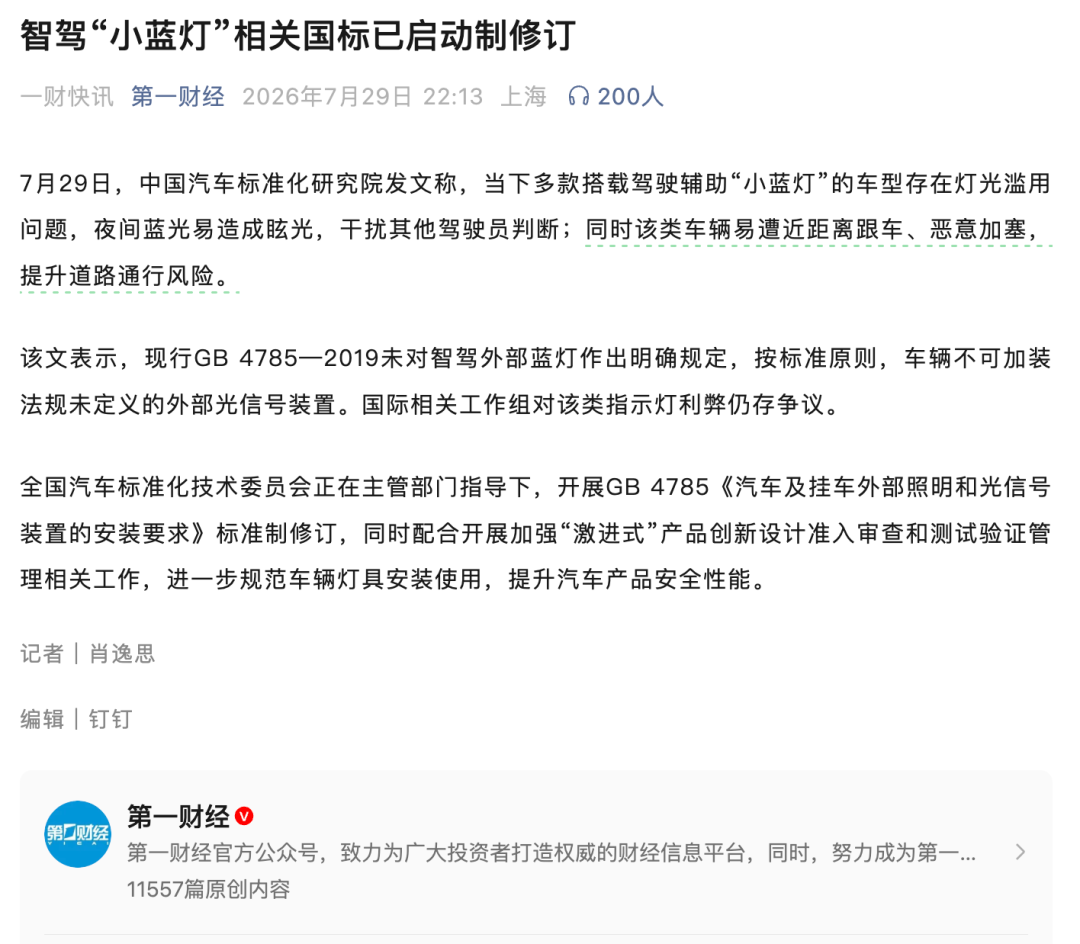
The news initially circulated within automotive companies: starting from the 410th batch of new vehicle announcement filings by the Ministry of Industry and Information Technology (MIIT) on July 27th, any prototype vehicles equipped with little blue lights will be directly rejected and excluded from the announcement list.
Automakers such as Geely and Changan have confirmed receipt of this notice. Although no official document has been issued yet, enforcement has already commenced.
Many people's initial reaction was surprise: 'What? Is the little blue light illegal? I always thought it was a standard feature.'
The Little Blue Light: Non-Compliant from the Outset
In reality, the little blue light has been non-compliant since its inception.
The current mandatory national standard, GB 4785-2019, titled 'Installation Requirements for External Lighting and Light Signalling Devices of Motor Vehicles and Their Trailers,' imposes two stringent regulations on external vehicle lighting. Firstly, the colors are restricted to white, yellow/amber, or red; blue is exclusively reserved for special vehicles like police cars and ambulances and is not permitted for civilian vehicles.
Secondly, the standard only recognizes 26 types of vehicle lights, including headlights, turn signals, brake lights, and position lights. There is no mention of an 'assisted driving indicator light.'
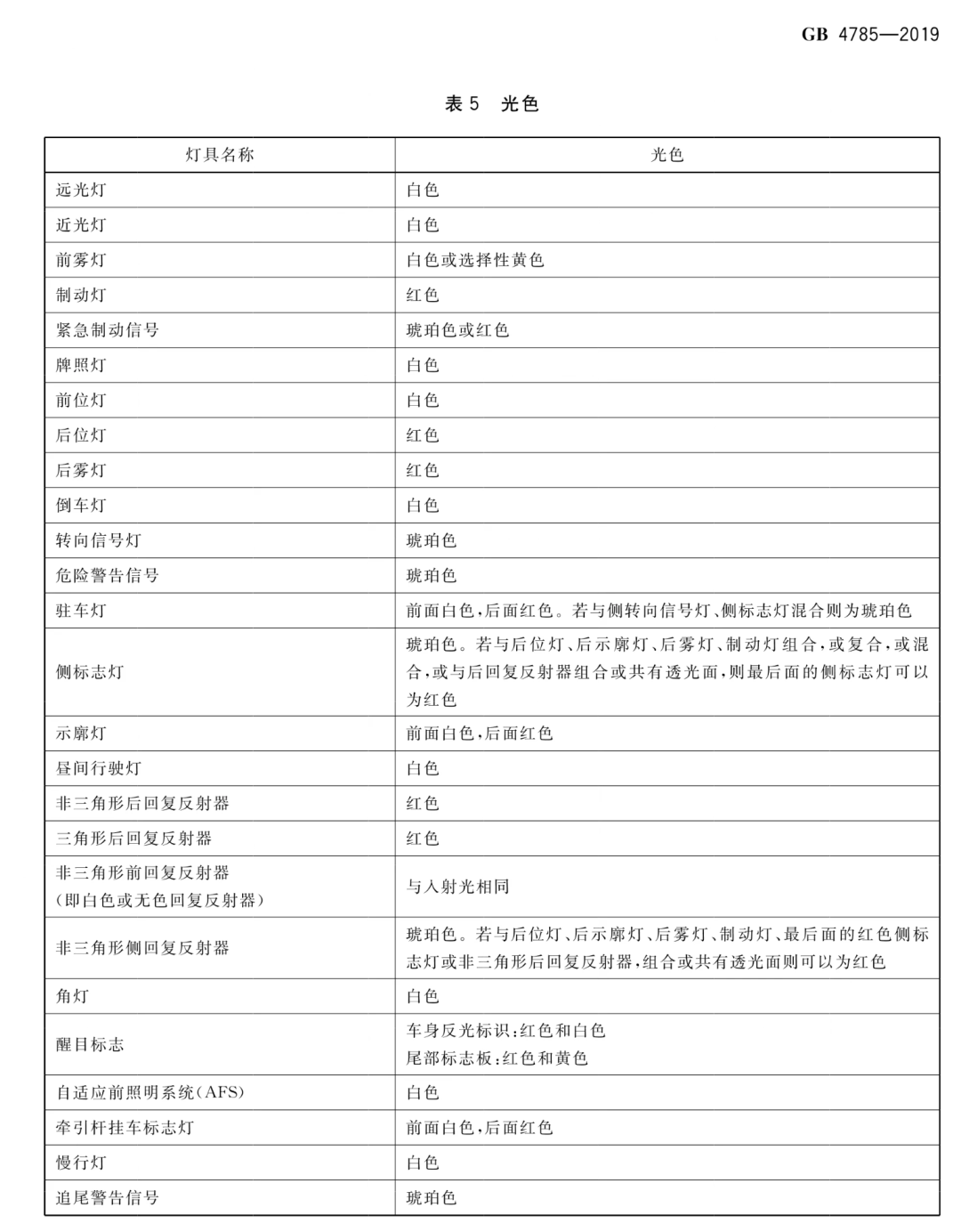
Domestic vehicle lighting follows the principle of 'prohibition unless permitted by law.' Therefore, strictly speaking, all vehicles currently on the road equipped with little blue lights are non-compliant.
So, why did automakers dare to install them? There's a backstory to this.
In 2021, the MIIT issued a draft for comments suggesting that L3-level and above autonomous vehicles could be equipped with cyan ADS indicator lights.
Automakers interpreted this as a directive and proceeded accordingly. However, in the formally released GB 5920-2024 in 2024, this clause was entirely omitted.
The door was closed, but automakers had already embarked on this path and couldn't easily reverse course.
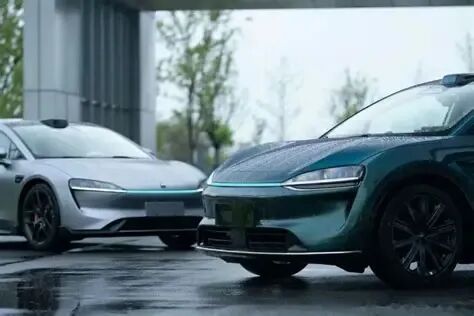
Ideal was the first to install the little blue light on the L9 in 2022, featuring five blue lights on the front and rear that illuminated during intelligent driving, exuding a strong sense of technological sophistication.
Subsequently, Seres, XPeng, NIO, BYD, Xiaomi, Geely, and others followed suit.
L3 autonomous driving hasn't arrived yet, but the little blue light has already become widespread. A feature originally intended for true L3 autonomous driving has been prematurely rolled out across the industry to L2 assisted driving, becoming a marketing symbol for 'my car is very intelligent.'
Why the Suspension?
To be frank, the little blue light does require regulation.
The first reason is excessive glare.
Anyone who has driven at night can relate to this issue. Some automakers, in an attempt to emphasize a technological feel, have set the brightness of the little blue light to an absurdly high level, with penetration stronger than fog lights. At night, following such a vehicle leaves a blue glow in the rearview mirror, causing eye strain.
Some describe it as a 'road flashbang,' which is no exaggeration. Blue light inherently causes strong visual interference at night, and with inconsistent brightness, positions, and shapes among different vehicles—some on the rearview mirror, some at the rear, some on the roof—drivers of following vehicles cannot form stable expectations, effectively increasing driving risks.
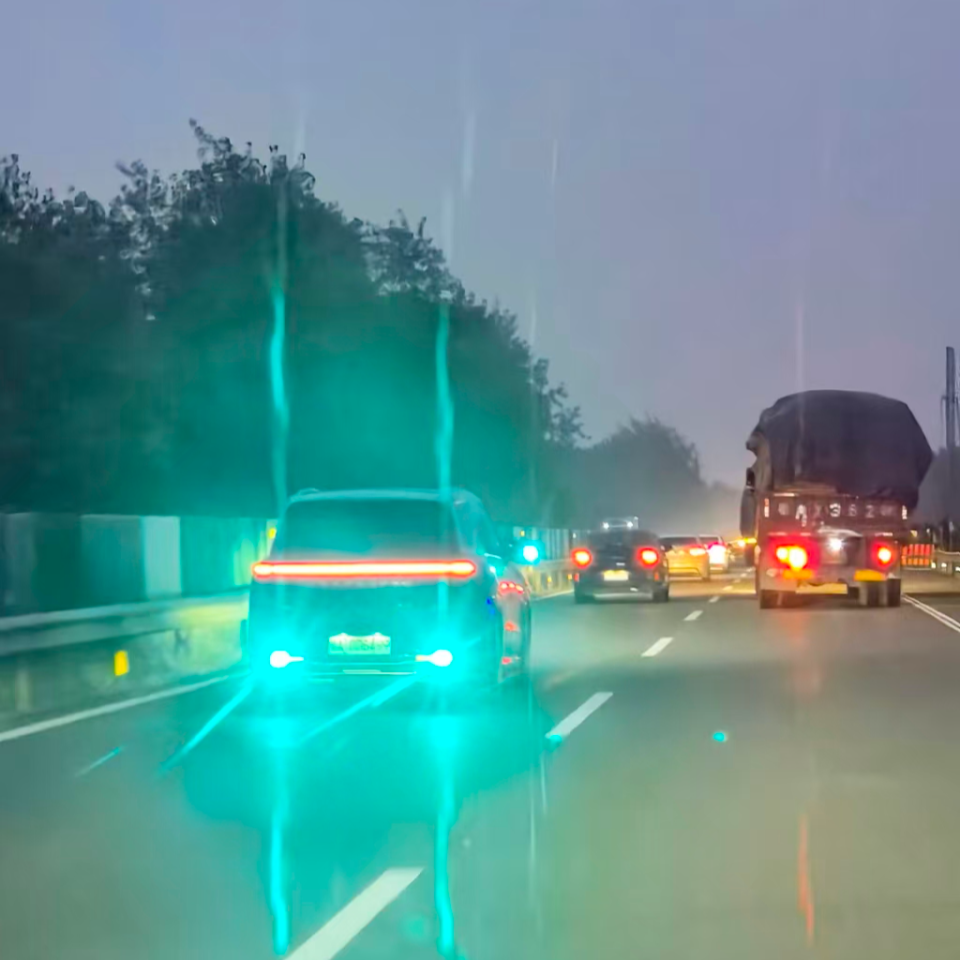
The second reason is that the little blue light has become a 'cut-in target.'
Originally designed to inform surrounding vehicles, 'I'm in intelligent driving mode, please be considerate,' the reality has been the opposite. Once the little blue light is on, surrounding vehicles know this car drives conservatively and will yield, so they specifically target blue-light vehicles for cut-ins and aggressive maneuvers.
Many owners report that when driving in intelligent driving mode through congested roads, they can be cut in front of by four or five vehicles in a row. Turning off the little blue light significantly improves the situation.
A safety indicator has become a signal inducing dangerous driving—it's quite ironic.
The third reason, and the most fundamental one, is that it's misleading.
All vehicles currently on the road with little blue lights are L2-level assisted driving, for which drivers are legally responsible at all times.
But what impression does the little blue light give? 'This car is driving itself.' Ordinary consumers cannot distinguish between L2 and L3, and seeing the blue light, they assume it's autonomous driving, relaxing their vigilance and even using their phones.
Automakers proclaim, 'The driver must remain engaged at all times,' while equipping L2 vehicles with an 'identity marker' only suitable for L3—isn't this blurring boundaries and misleading users?
An entirely non-compliant feature in terms of both color and category, one whose actual effects contradict its design intent, and one used as a marketing gimmick—its ban is well-deserved.
Current Regulations Aim for Better Future Use
Many ask, 'What about existing vehicles? Do I need to remove the little blue light from my car?'
Currently, the approach is to strictly control new vehicle filings while not retroactively targeting sold vehicles.
Industry insiders generally predict that the most likely solution is to disable the constantly-on blue light via OTA (Over-The-Air) updates, rather than requiring physical removal by owners. After all, most little blue lights are software-controlled, and OTA updates can easily handle this.
But a deeper question arises: without the little blue light, how will intelligent driving vehicles 'communicate' with surrounding traffic participants?
Currently, no alternative solution has been provided. The National Automobile Standardization Technical Committee is working on supplementary requirements for GB 4785, which is also undergoing revision (initiated in April this year, with a 16-month cycle), and formal standards are expected after 2027.
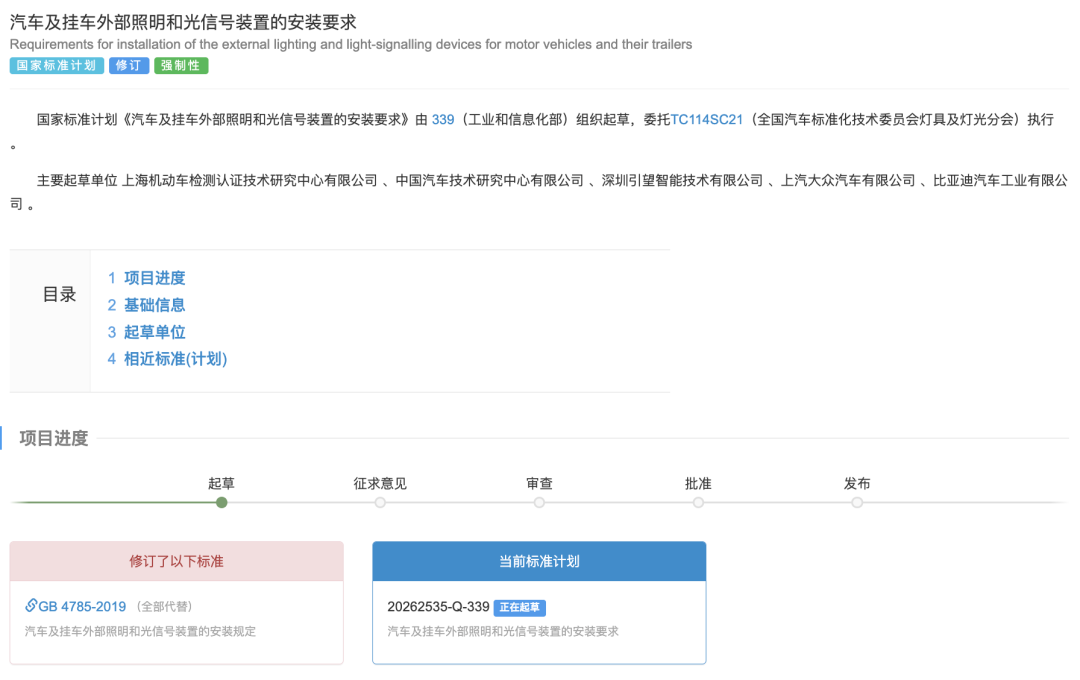
By then, the likely scenario is that only true L3 and above autonomous vehicles will be eligible to use compliant dedicated indicator lights—with restricted colors, brightness, positions, and blinking frequencies under unified standards. L2 assisted driving will likely bid farewell to external indicators.
As for how L2 vehicles will alert drivers? In-car prompts are sufficient: dashboard icons, HUD (Head-Up Display) displays, voice alerts, steering wheel vibrations... all are compliant and do not affect other road users. Automakers, losing an external 'gimmick,' can instead focus their efforts on improving algorithms.
Looking back, the rise and fall of the little blue light epitomize the rapid advancement of intelligent driving in China in recent years.
Technology has outpaced regulations, and automakers, eager to capture market share and mindshare, have prematurely mass-produced and widely deployed a concept still under planning, creating a fait accompli. Then regulators stepped in to correct course, and the industry returned to the right track.
Have we seen such stories often in the past few years? From debates over assisted driving naming conventions to regulations on autonomous driving promotional terminology, to today's little blue light ban—each time, the pattern has been wild growth followed by regulatory catch-up.
The extinction of the little blue light does not signify a regression in intelligent driving but rather a necessary step toward industry maturity.
The core competitiveness of intelligent driving has never been how bright or flashy a light is, but rather the stability of algorithms and the robustness of safety.
Put away the showmanship and focus on internal skills.

All content in the article is sourced from publicly available information and represents only the author's personal views.
-
33,473 X9 Vehicles Recalled: Xpeng's Three Major Challenges
-
![]()
Initiation of Control over Access for Intelligent Driving's 'Little Blue Lights'
-
![]()
Is the Intelligent Driving Blue Light, a Source of Pride for Lixiang and AITO Owners, Facing a Ban?
-
![]()
Embarrassing Meta: Promises Made, Money Invested, but No 'Fruits' Yet
-
![]()
BMW Announces Thousands of Job Cuts via 'Voluntary Exit Scheme'
-
![]()
Official Announcement: Intelligent Driving Blue Light Banned Due to Safety Concerns; Automakers React Swiftly | Mirror Pro
-
Each Truck Can Cut Fuel Costs by 200,000 Yuan Annually! Why Are New Energy Vehicles Scarce in the Booming Electric Heavy Truck Market Led by CNHTC, Sany, and Dongfeng?
-
![]()
Kingsoft Office Triples Performance Amidst Trust Controversy