BMW Announces Thousands of Job Cuts via 'Voluntary Exit Scheme'
 07/30 2026
 507
507
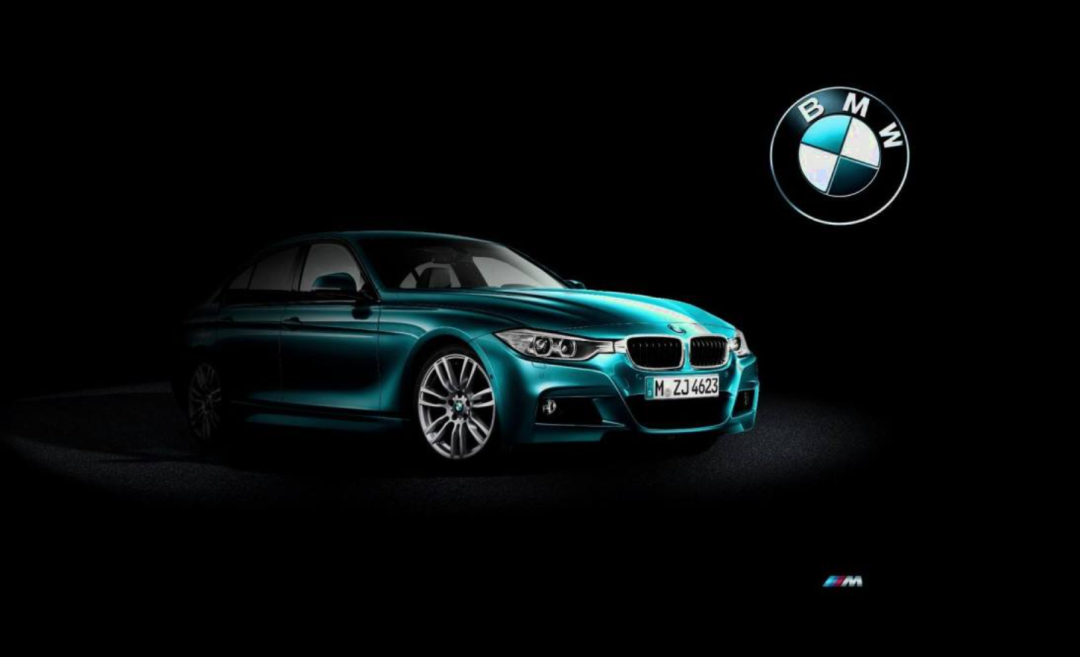
On July 29, 2026, BMW Group sent shockwaves through the automotive sector with its announcement of plans to slash thousands of jobs in Germany by the end of 2027, through a voluntary exit scheme.
Globally, the job cuts are expected to affect around 8,000 positions, with the majority concentrated in Germany, primarily in R&D, product planning, and other corporate functions. Production line workers are, for the time being, not affected. The scheme is set to roll out in October and continue through 2027.
While 'voluntary exit' may sound like a respectable approach, the underlying reality is clear to all.
BMW's 2026 annual report hinted at a slight reduction in workforce numbers, defining 'slight' as a decrease of up to 5% of the total staff. Given that BMW currently employs approximately 150,000 people worldwide, the loss of 8,000 jobs represents about 5.3%—hardly a trivial reduction.

What's Ailing BMW?
Let's examine the figures.
In 2025, BMW Group reported a revenue of €133.453 billion, a 6.3% decrease year-on-year; a pre-tax profit of €10.236 billion, down 6.7%; and a net profit of €7.451 billion, down 3.0%. Sales remained relatively stable, with 2.4637 million vehicles delivered globally, marking a 0.5% increase. However, the Chinese market sounded alarm bells, with sales plummeting 12.5% year-on-year.
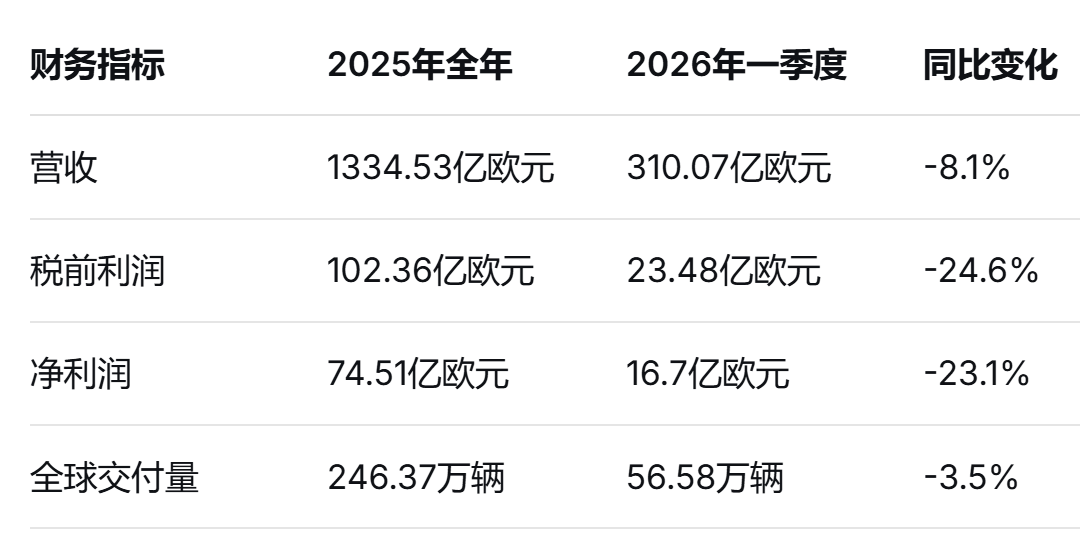
In 2026, the situation deteriorated sharply. First-quarter revenue was €31.007 billion, an 8.1% decrease year-on-year; pre-tax profit was €2.348 billion, down 24.6%; and net profit was €1.67 billion, down 23.1%. Global deliveries fell 3.5% to 565,800 units. Chinese market deliveries dropped 10% to 144,000 units in the first quarter.
In June, BMW revised its full-year outlook downward. The automotive segment's EBIT margin was reduced from 4-6% to 1-3%. Delivery expectations shifted from 'stable year-on-year' to 'slight decline.' Pre-tax profit is projected to fall by more than 15%. This marks the third consecutive year of downgraded profit forecasts. Deutsche Bank analysts noted that the new guidance implies a €3 billion reduction in operating profit expectations.
Data source: BMW Group's 2025 financial report and Q1 2026 results
China: BMW's Aching Wound
The second-quarter figures were even more distressing. BMW delivered 591,000 vehicles globally, a 4.9% decrease year-on-year. Europe and the U.S. saw growth of 7.6% and 9.5%, respectively, while Germany rose 9.4%. China, however, experienced a staggering 30.2% decline to 117,800 units. First-half deliveries in China fell 20.4% to 261,800 units.
China's share of BMW's global sales dropped from a peak of 33.5% to 25.5%. By the second quarter, it further declined to approximately 20%, with Europe officially surpassing China as BMW's largest regional market.
More concerning than the sales decline is the structural mismatch. In the first quarter of 2026, China's NEV market penetration reached 54.1%, surging to a record 62.8% by June. BMW's NEV penetration in China? A mere 6.2%—a nearly tenfold gap.
BMW initially adopted an 'ICE-EV coexistence' strategy, with its CLAR platform allowing both fuel-powered vehicles and EVs to share a body architecture. The advantage was flexibility and cost control; the downside was that EVs were always compromised by ICE structures. Battery layouts were restricted, cabin floors raised, electronic architecture bandwidth insufficient, and the 400V platform lagged behind the 800V mainstream.
Among the BBA trio, BMW was the slowest to transition from ICE-EV coexistence to a dedicated BEV platform. Mercedes launched the EQC in 2019 and its EVA platform in 2021; Audi released the Q6L e-tron in 2024 (based on PPE) for a 2025 launch.
BMW's 'Neue Klasse' BEV platform will only commence mass production of its first model, the iX3, in the fourth quarter of 2026. The architecture was announced in 2021—a five-year gap before the first vehicle launch. Compared to Chinese EV startups, this pace is glacial.
More awkwardly, in July 2026, BMW halted domestic production of the CLAR-based i3 and iX1 in China, while i5 production paused. The Neue Klasse iX3 long-wheelbase version won't be delivered until the fourth quarter. During this gap, BMW is effectively 'invisible' in China's BEV market.
Cost-Cutting: A Necessity, Not a Choice
BMW is not alone in its struggles. In 2026, global automakers are collectively 'trimming the fat.'
Volkswagen Group plans to cut 19,000 jobs in Germany by the end of 2026 and 50,000 by 2030, affecting Volkswagen, Audi, Porsche, and software subsidiary CARIAD. Porsche announced an additional ~5,000 cuts in the coming years, totaling ~8,900 positions. Mercedes-Benz is also initiating cost-cutting negotiations. In June, Toyota canceled its electric flagship sedan, while Nissan halted the all-electric Qashqai.
Every CEO is preaching the same mantra: cost-cutting. Trim models, slash capacity, reduce headcount—cut anything that doesn't generate profit.
BMW's new CEO, Milan Nedeljković, put it bluntly: The company needs to restructure its organization to adapt to 'sharp market declines'; BMW must 'significantly strengthen and accelerate our measures. Everything is about speed and efficiency.' The former production chief took over from Oliver Zipse in June. Less than two months into the job, he initiated layoffs, indicating that the problems are worse than he imagined.
Is 'Neue Klasse' the Cure or the Curse?
BMW is pinning all its hopes on the 'Neue Klasse' (New Class).
The platform's battery, e-drive, and electronic architecture are all redesigned for BEVs, no longer sharing bodies with ICE vehicles. The first model, the Neue Klasse iX3 long-wheelbase, will commence mass production in the fourth quarter of 2026. BMW plans to launch over 40 new or upgraded models by 2027.
It sounds promising, but the question remains: Is there enough time?
The Neue Klasse architecture was announced in 2021, with the first model arriving in 2026. In five years, China's NEV market has undergone a transformation. NIO, Li Auto, and AITO have solidified their positions in the RMB 300,000-600,000 price range. BMW slashed prices on 31 models in the first quarter, with the i7 flagship dropping over RMB 300,000. Trading volume for price erodes brand premium, while dealer profitability strains.
BMW states its next mission is to bring its long-accumulated brand advantages into the intelligent connected vehicle era, achieving new expression through the 'Neue Klasse.' However, whether brand equity can transfer to a wholly new tech platform remains uncertain.
The Dignity and Harsh Reality of 'Voluntary Exit'
Returning to the layoffs.
BMW opted for 'voluntary exit' over forced cuts, preserving dignity for employees and flexibility for the company. The scheme targets R&D, product planning, and other functions, sparing production workers for now. This suggests BMW aims to cut 'brains' not 'hands'—reducing strategic redundancy, not manufacturing capacity.
But behind 'voluntary' lies the reality for 8,000 families needing new income sources. In Germany, where the automotive industry is an economic pillar and BMW a Munich symbol, this cut impacts not just spreadsheets but countless lives.
BMW already reduced its workforce by 2,944 in 2025. The 2026 plan to cut 8,000 is nearly triple last year's scale. The trend is clear: This century-old automaker is undergoing a difficult but necessary 'downsizing.'
Final Thoughts
BMW's predicament is essentially a dilemma of era-shift. Brand momentum, tech accumulation, and manufacturing systems built in the ICE era are being repriced amid electrification and intelligence waves.
The Chinese market waits for no one. With NEV penetration exceeding 60%, local brands entrenched in the RMB 300,000-600,000 segment, and consumers voting with their feet for superior intelligent experiences—BMW's 'luxury' label is losing its old magic.
The 8,000 layoffs are the price BMW pays for strategic hesitation in recent years. But the critical questions are: Can Neue Klasse models deliver on time in the fourth quarter of 2026? Will their product strength impress? Can intelligence keep pace with China's market rhythm?
These issues matter more than the layoff figure itself.
After all, cutting 8,000 jobs is easy; winning back 80 million Chinese consumers' hearts is hard.
What's your take on BMW's layoffs? Share your civil and rational insights in the comments.
Disclaimer: This analysis is for financial hot topics only, citing publicly available data, company announcements, and Tonghuashun IFinD. Views are for reference only and do not constitute investment or consumption advice.
#FinancialHotTopics #InDepthAnalysis #BusinessFinance #InvestmentBankingCircle #ListedCompanies #PrimaryMarket #IPO #BMWChina #BMW #BMWLayoffs
Thanks for reading. Feel free to click 'Like.'
-
33,473 X9 Vehicles Recalled: Xpeng's Three Major Challenges
-
![]()
Initiation of Control over Access for Intelligent Driving's 'Little Blue Lights'
-
![]()
Is the Intelligent Driving Blue Light, a Source of Pride for Lixiang and AITO Owners, Facing a Ban?
-
![]()
Embarrassing Meta: Promises Made, Money Invested, but No 'Fruits' Yet
-
![]()
BMW Announces Thousands of Job Cuts via 'Voluntary Exit Scheme'
-
![]()
Official Announcement: Intelligent Driving Blue Light Banned Due to Safety Concerns; Automakers React Swiftly | Mirror Pro
-
Each Truck Can Cut Fuel Costs by 200,000 Yuan Annually! Why Are New Energy Vehicles Scarce in the Booming Electric Heavy Truck Market Led by CNHTC, Sany, and Dongfeng?
-
![]()
Kingsoft Office Triples Performance Amidst Trust Controversy