Kingsoft Office Triples Performance Amidst Trust Controversy
 07/30 2026
 350
350

Despite lingering controversies over betraying user trust, Kingsoft Office has showcased its impressive "profit-generating ability," with a performance forecast indicating a surge of over 200%.
Naturally, this substantial increase in performance did not originate from a significant breakthrough in its core business. Rather, it resulted from the dividends generated by the concentrated realization of external equity investments.
While short-term performance growth driven by investment returns may thrill investors, the damage to user reputation due to controversies surrounding the commercialization of the core business demands greater vigilance.

Capital Dividends Propel Performance to New Heights
In China, it is nearly impossible to avoid using Kingsoft Office for text processing. Even users in over 200 countries and regions worldwide depend on Kingsoft Office's software and services.
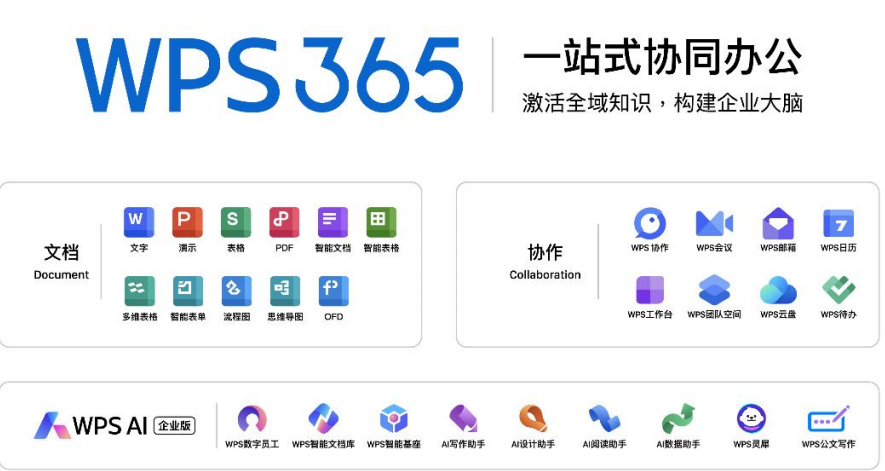
Through its WPS product suite, including WPS Office, WPS 365, and WPS AI, Kingsoft Office (688111.SH) caters to individual and government-enterprise users, generating revenue in the process.
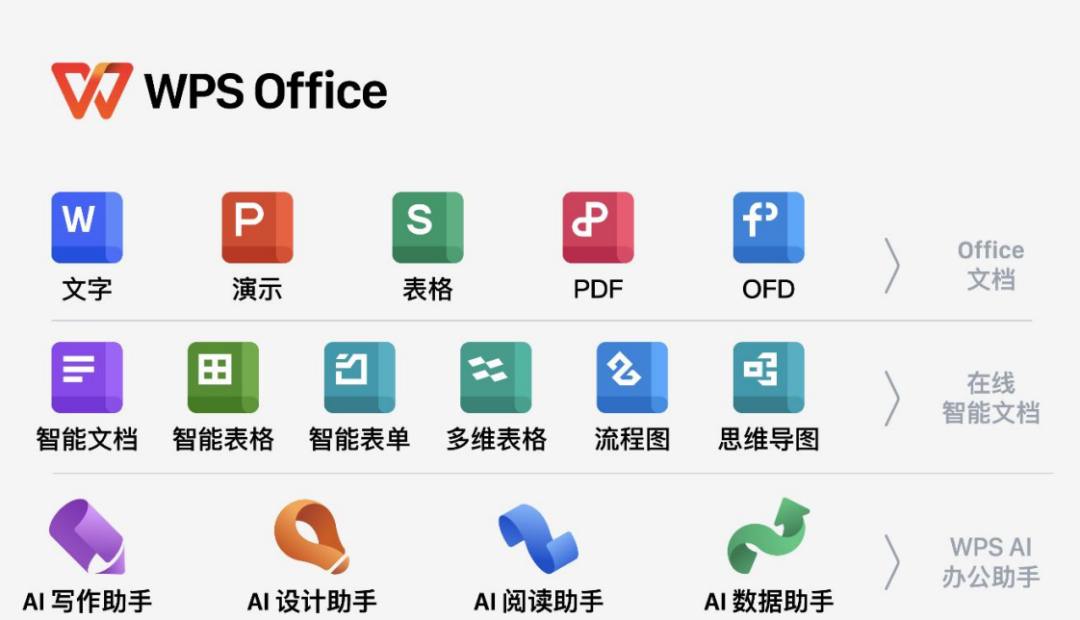
According to its annual report, as of the end of 2025, WPS boasted 678 million monthly active devices globally, positioning it as one of the few domestic office software solutions capable of competing with and even replacing Microsoft Office.
Beyond its vast user base, Kingsoft Office is closely associated with Lei Jun. This is where Lei Jun truly laid his groundwork and found his most steadfast support for subsequent entrepreneurial endeavors.
In its early days, the domestic office software market was dominated by Microsoft. Lei Jun led his team to develop WPS and eventually captured the domestic market, which had long been monopolized by Microsoft, through a freemium model.
Today, Lei Jun remains the actual controller and honorary chairman of Kingsoft Office. Although he does not engage in daily operations, the company's numerous businesses are still influenced by him. The company's performance surge in the first half of this year is closely linked to Lei Jun's Shunwei Capital.
The latest performance forecast reveals that in the first half of 2026, Kingsoft Office anticipates revenue of RMB 3.214 billion to RMB 3.413 billion, marking a year-on-year increase of 20.95% to 28.43%. Net profit attributable to the parent company is expected to soar to RMB 2.316 billion to RMB 2.719 billion, representing a year-on-year surge of 209.98% to 263.89%.
However, the announcement clarifies that this performance growth is primarily attributable to favorable investment returns from some external investment fund projects. After excluding share-based payments and gains related to fund investments, the adjusted net profit attributable to the parent company for the period is projected to be RMB 1.00 billion to RMB 1.174 billion, indicating a year-on-year increase of 18.03% to 38.55%.
Kingsoft Office disclosed in its 2025 annual report that it participated as an LP in Shenzhen Shunying and Beijing Shunjin Shunying. As of the end of that year, it had invested RMB 500 million and RMB 700 million, respectively, with ownership stakes of 58.8235% and 99.9986%. The GP of these two private equity funds is Shunwei Capital, a firm under Lei Jun's purview.
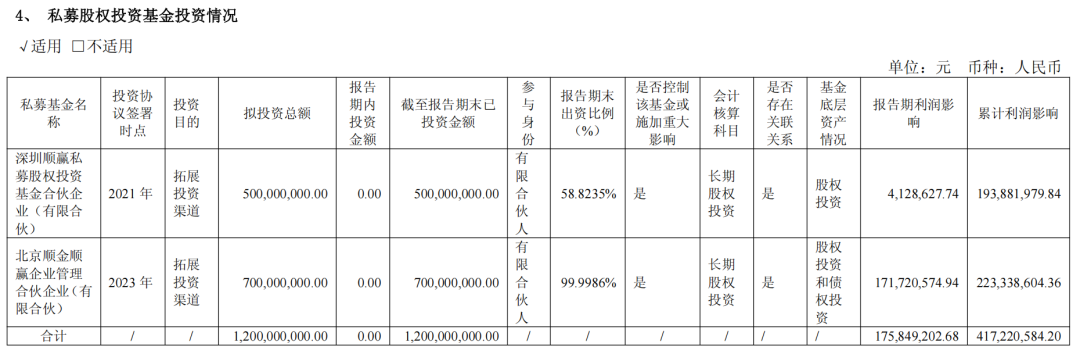
Over the years, the external investments of these two private equity funds have finally reached their harvest period.
In January of this year, Zhipu (02513.HK), dubbed the "first global large language model stock," went public on the Hong Kong Stock Exchange. Beijing Shunying, in which Beijing Shunjin Shunying and Shenzhen Shunying hold 33.3175% and 8.4883% stakes, respectively, is one of its major shareholders.
In August 2024, Beijing Shunying invested RMB 150 million in Zhipu's Series B financing, acquiring approximately 5.2114 million shares. Based on the current stock price, the equity corresponds to a market value of approximately HK$5.383 billion.
In March of this year, Fourier (03625.HK), known as the "first AI audio chip stock," successfully listed on the Hong Kong Stock Exchange. Shenzhen Shunying invested RMB 12.3591 million in the company's Series C+ financing in 2022, acquiring approximately 747,100 shares, which currently correspond to a market value of approximately HK$55.28 million.
Kingsoft Office specifically cautions investors in its performance announcement that the valuations of the portfolio companies in the funds are subject to multiple factors, including the macroeconomic environment, capital market conditions, industry cycles, and the companies' own operating performance, introducing significant uncertainty.

Mired in Commercialization Controversies
While reaping substantial gains in the capital market, Kingsoft Office's user reputation is facing significant pressure.
In the first half of 2026, WPS encountered multiple rounds of public opinion backlash, with issues related to product design and commercialization drawing concentrated criticism.
The most impactful controversy during this period was the "C-Drive Assassin" issue, which triggered user complaints. Numerous users reported that WPS, by default, stored cache and cloud backup files on the system's C drive, occupying significant storage space over time. Additionally, residual files remained even after uninstallation, consuming device resources.
Rumors quickly spread online claiming that users had to pay to clear the cache, further fueling dissatisfaction. Some users believed that the unreasonable storage path design was intended to pressure them into subscribing to premium membership through product rules.
After the controversy escalated, WPS optimized its storage logic through version updates, enabling users to customize storage paths and utilize a one-click cleanup feature.
While a single public opinion incident can be addressed through technical fixes, issues with the membership system continue to plague users. WPS's membership system is complex, with nested layers of regular membership, Rice Member, Super Membership, and AI-specific paid services, along with fragmented benefit divisions that degrade the user experience.
Many users reported online that even after subscribing to higher-tier memberships, they still could not access core AI office features without additional payments. This pricing model has been widely criticized by long-time users as a disguised infringement of consumer rights.
Data from the Heimao Complaints Platform reveals that WPS-related complaints remained high in the first half of the year, focusing on issues such as automatic renewals, excessive pop-ups, arbitrary adjustments to membership benefits, and opaque pricing rules.
Facing sustained public pressure, Kingsoft Office issued a statement denying allegations of excessive fees and betraying user trust. It also pledged: Free basic features will never be charged or downgraded; membership benefits will never be shifted upward or reduced.
These measures have somewhat alleviated user sentiment but have not fundamentally resolved the conflict between commercialization and user experience.
The freemium model of attracting users with free services and monetizing through paid features is a common business approach for tool software. In recent years, Kingsoft Office has accelerated its commercialization pace, driving sustained performance growth. At this juncture, user reputation may be more crucial than performance growth itself.
-
33,473 X9 Vehicles Recalled: Xpeng's Three Major Challenges
-
![]()
Initiation of Control over Access for Intelligent Driving's 'Little Blue Lights'
-
![]()
Is the Intelligent Driving Blue Light, a Source of Pride for Lixiang and AITO Owners, Facing a Ban?
-
![]()
Embarrassing Meta: Promises Made, Money Invested, but No 'Fruits' Yet
-
![]()
BMW Announces Thousands of Job Cuts via 'Voluntary Exit Scheme'
-
![]()
Official Announcement: Intelligent Driving Blue Light Banned Due to Safety Concerns; Automakers React Swiftly | Mirror Pro
-
Each Truck Can Cut Fuel Costs by 200,000 Yuan Annually! Why Are New Energy Vehicles Scarce in the Booming Electric Heavy Truck Market Led by CNHTC, Sany, and Dongfeng?
-
![]()
Kingsoft Office Triples Performance Amidst Trust Controversy