Final Ruling: Fuel-Powered Vehicles Are Far from Being Phased Out and Still Exhibit Robust Vitality
 07/31 2026
 343
343
I stumbled upon an article on Xiaohongshu entitled 'The Demise of Fuel-Powered Vehicles.' It asserted that with the skyrocketing adoption rate of New Energy Vehicles (NEVs), fuel-powered vehicles have utterly crumbled. If you own a fuel-powered car, should you genuinely fret about where to have it serviced or fueled?
Such assertions are nothing more than baseless anxieties and sensationalist talk. As an owner of both fuel-powered and new energy vehicles, I am not in the least bit worried about issues related to repairs or refueling.
Despite the swift ascent of NEVs, fuel-powered vehicles continue to dominate the global and Chinese automotive markets by a wide margin. By 2025, fuel-powered vehicles (inclusive of hybrids) are expected to represent over 70% of global car sales, with pure fuel-powered vehicles alone constituting around 50%. 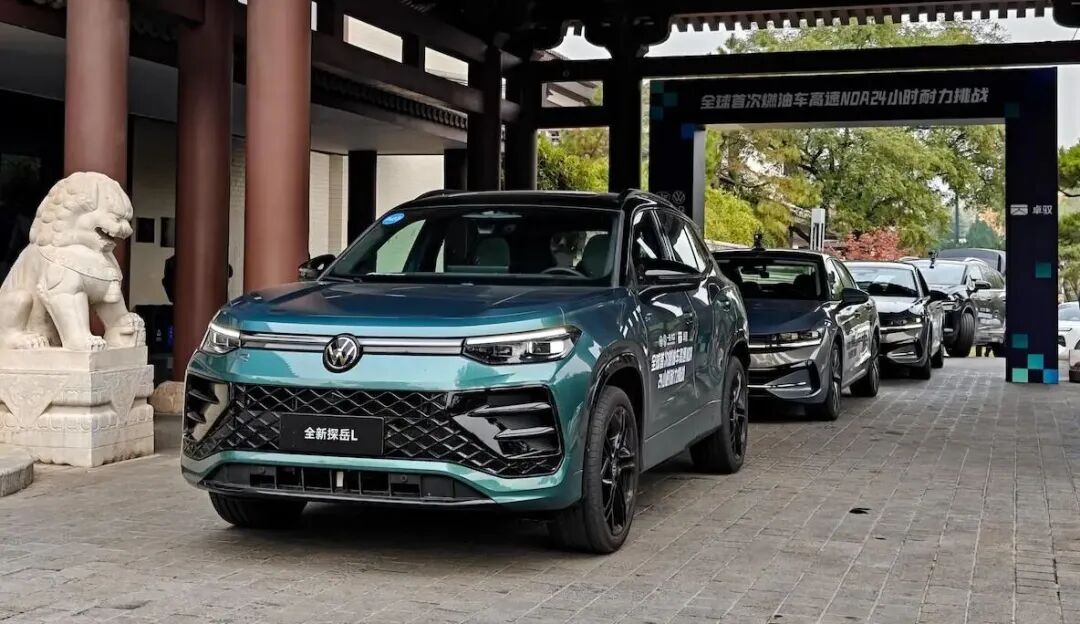
In the first half of this year, the penetration rate of NEVs in the Chinese market surpassed 50%, yet fuel-powered vehicles still make up over 80% of the current vehicle population. In simpler terms, the majority of cars on the road are still powered by fuel.
Data released by the Traffic Management Bureau of the Ministry of Public Security indicates that as of the end of June this year, the total number of passenger vehicles in China stood at 371 million, with NEVs accounting for 48.97 million, or 13.19% of the total. This implies that there are still over 300 million fuel-powered vehicles on the roads.
Figures from the China Association of Automobile Manufacturers show that in the first half of this year, pure electric vehicles made up two-thirds of NEV sales in China, while plug-in hybrids and extended-range models accounted for one-third. These two categories of vehicles, which are equipped with fuel engines, are essentially 'enhanced versions' of fuel-powered cars rather than replacements. The combined sales of fuel-powered vehicles and plug-in hybrid/extended-range models in the domestic market reached approximately 5.3 million units, accounting for about 64% of the total passenger vehicle sales of 8.288 million units during the same period. 
From the viewpoints of the industrial supply chain, the existing vehicle population, and application scenarios, fuel-powered vehicles and NEVs are set to coexist globally for an extended period and will not fade from the historical scene.
This remains true even in the Chinese market, where NEVs are advancing at the swiftest pace. Fuel-powered vehicles, with a history exceeding a century, have forged a comprehensive industrial chain. This chain includes automotive component supply, vehicle production, sales and maintenance systems, automotive finance, petroleum refining, gas stations, car washing, parking, vehicle modification, and motorsports, involving millions of jobs and trillions of yuan in output value. It is implausible for NEVs to supplant this entrenched system. Fuel-powered vehicles will continue to possess irreplaceable value for a significant period in the future.
For car buyers, the century-old sounds, vibrations, and handling characteristics of internal combustion engines offer a sensory delight to driving aficionados. Especially in motorsports, the thunderous fuel-powered race cars on the track are what truly get people's hearts racing. 
While the operational costs of fuel-powered vehicles are higher than those of electric vehicles, they still offer certain advantages in terms of overall costs, particularly in terms of higher resale value. From a lifespan perspective, the natural end-of-life cycle of fuel-powered vehicles is generally 10-15 years, notably longer than that of electric vehicles.
Amidst the trend of vehicle electrification and intelligence, fuel-powered vehicles must also evolve with the times. In Western countries such as Europe, the United States, and Japan, the 'hybridization' of fuel-powered vehicles has become a prevailing trend. Hybrid electric vehicles (HEVs), which do not require external charging and offer substantial energy savings and environmental benefits, are gaining an increasing market share. Meanwhile, technological pathways such as synthetic fuels (e-fuels) and hydrogen internal combustion engines are also advancing rapidly, suggesting that fuel-powered vehicles in the future may not be confined to burning gasoline and diesel. (The End)
-
![]()
Lei Jun Disrupts the Market: Xiaomi Unveils N70/N90 Dual Models, Zeroing in on Two Leading Extended-Range Rivals
-
![]()
Sales Champion Leapmotor's Quest for Scale
-
![]()
SAIC-GM and SAIC Passenger Vehicles Announce Leadership Shifts on the Same Day: 'Technical Talents' Step Forward to Steer the Course
-
![]()
BMW's Turnaround Starts with the Easy Part
-
Tesla's Q2 Operating Profit Plummets, 'Cash-Guzzling' Expansion Drains Free Cash Flow
-
![]()
Volkswagen's Strategic Shifts: Cutting Back and Expanding
-
![]()
Unraveling the Decline of the Imported Car Market
-
![]()
Interpretation of the European + UK Automobile Market in the First Half of 2026: Electrification Surpasses Critical Point, Chinese Brands Experience Collective Growth in Sales