BMW's Turnaround Starts with the Easy Part
 07/31 2026
 472
472
The Most BMW-like Car is No Longer BMW's Most Important Model
Autopix (ID: autopix) Original
BMW received both its best and worst news almost simultaneously.
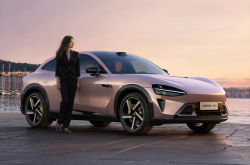
In late July, BMW reached a milestone in Debrecen, Hungary. The group's first dedicated battery electric vehicle (BEV) factory rolled off its 50,000th unit of the new-generation iX3.
Orders surged even faster than production. It took just nine months from the start of production to the 50,000th unit rollout, with iX3 orders in Europe nearing 100,000. BMW revealed that one in every three new BEV orders in Europe is for the iX3.
To meet demand, the Debrecen factory added a second shift ahead of schedule and brought in hundreds of employees from Chinese factories for support.
In the first half of 2026, the iX3 won both World Car of the Year and World Electric Vehicle awards.
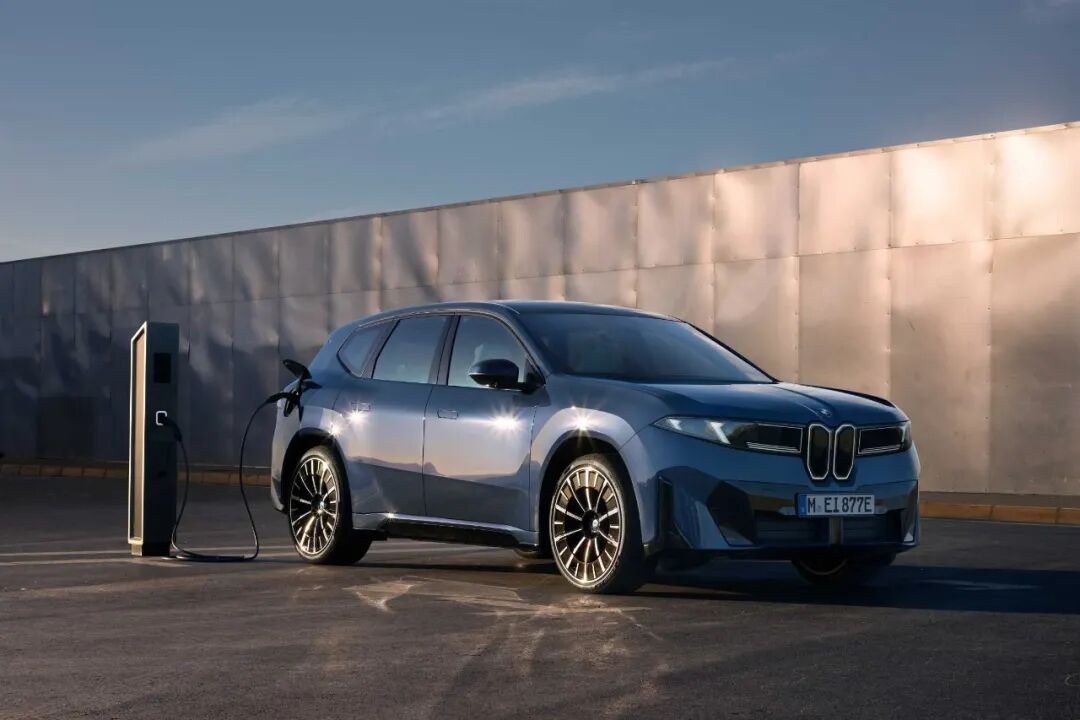
This marks BMW's best new product launch in a decade. However, several other events unfolded during the same period.
On July 29, BMW reached an agreement with its labor council to launch a voluntary exit program starting in October, cutting about 8,000 jobs globally by the end of 2027—5.2% of its 154,500 employees. The cuts will primarily affect R&D, planning, and administrative departments in Germany, eliminating one-fifth of BMW's white-collar positions there.
On July 30, BMW released its H1 2026 financial results. Net profit attributable to shareholders fell 25.75% to €2.858 billion. Q2 pre-tax profit dropped 35.1% year-on-year to €1.7 billion.
Automotive business operating margin more than halved year-on-year, and free cash flow fell 73.4%. These factors contributed to a nearly 39% decline in BMW's stock price year-to-date, with shares hitting a 52-week low in late July.
The primary drag on BMW's performance is China. H1 sales in China fell 20.4% year-on-year, with Q2 declining further to 30.2%. As sales continued to slump, China's 12-year reign as BMW's largest single market ended, with its share of global sales dropping from a peak of 33.5% to 25.5%.
Yet in China—the most critical market for validating BMW's new energy transition—the new model arrived latest. The domestically produced iX3 will not launch until Q4 this year.
Thus, while strong European sales mark a good start, they do not yet prove success. The old market is slumping, while the new anchor point has not yet passed its toughest test.
01 BMW Once Needed Only One Model
The last time BMW used the "Neue Klasse" (New Class) name was in 1962. That move saved the company.
By then, BMW teetered on the brink of acquisition. Daimler-Benz had proposed a takeover and restructuring plan, and the deal seemed inevitable before the December 1959 shareholders' meeting—until minority shareholders and employee representatives objected on the spot, narrowly preserving BMW's independence.
Its product lineup was nearly severed in the middle. On one end were cheap microcars like the Isetta and motorcycles; on the other, expensive V8 sedans like the 501 and 502. Missing was a mainstream model that could deliver both scale and profit.
Marketing chief Paul Hahnemann spotted this gap: a high-quality, sporty family sedan with a 1.5–2.0-liter displacement.
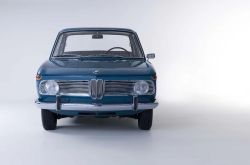
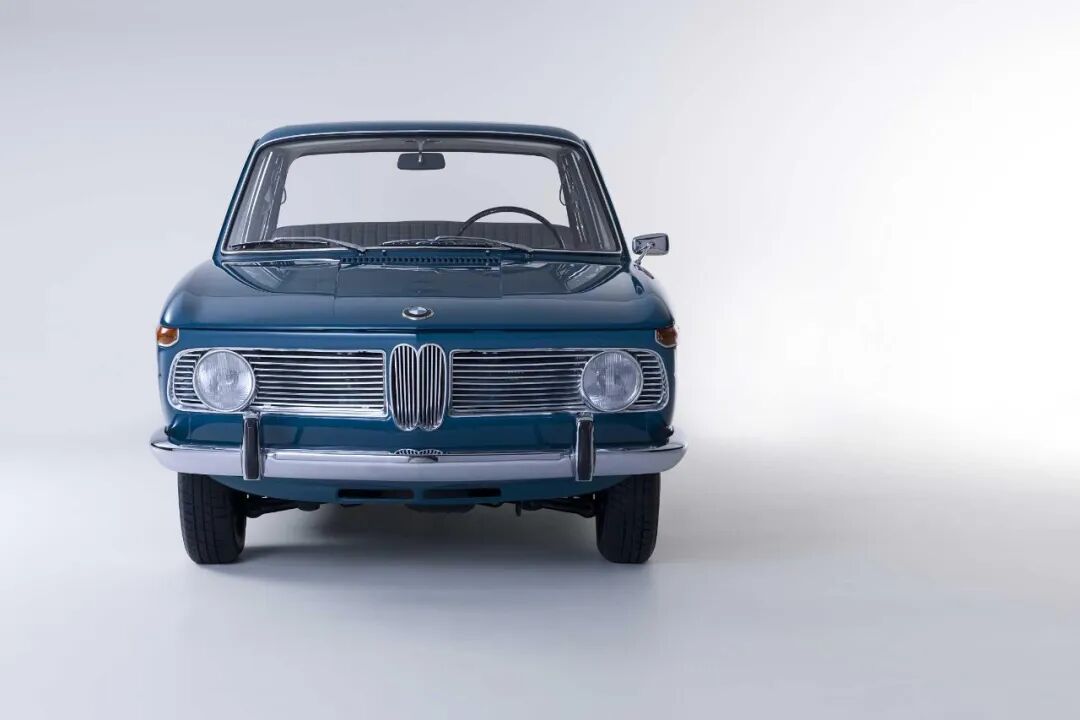
The BMW 1500 debuted at the 1961 Frankfurt Motor Show, launching the "Neue Klasse" series.
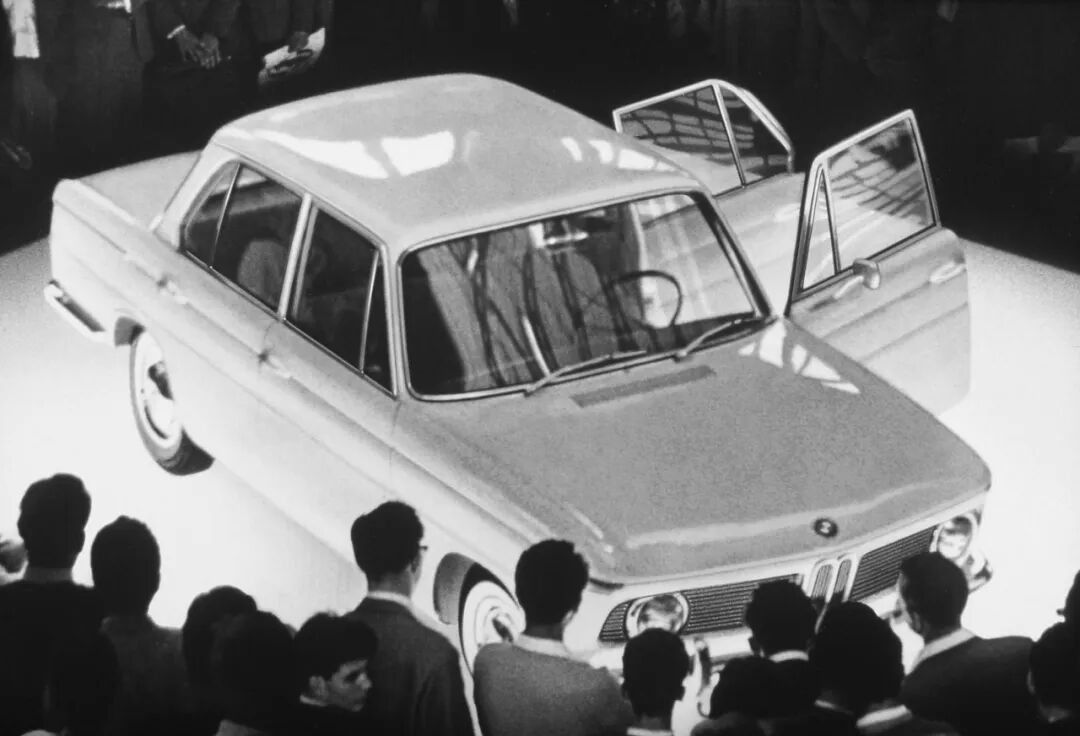 ▍BMW 1500 at the 1961 Frankfurt Motor Show
The four-door design abandoned the 501's ornate styling for a more restrained, functional approach. Von Falkenhausen developed the M10 engine, persuading management to increase displacement from the planned 1.3 liters to 1.5 liters while reserving space for expansion to 2.0 liters.
At the rear, the C-pillar's connection to the body introduced the "Hofmeister kink"—a forward-folding crease that became a BMW signature.
However, these now-iconic BMW elements did not immediately translate to sales success. The 1500 was produced for just over two years, with total lifecycle sales of 23,800 units. What truly transformed BMW's fate was the product template it provided. The four-door Neue Klasse models Cumulative (totaled) 339,800 units, while the shortened, simplified 02 Series sold over 820,000 units.
BMW's sales tripled and revenue grew sevenfold between 1960 and 1970. In 1963, BMW resumed dividend payments to shareholders after nearly two decades.
The M10 engine remained in production until 1988, with over 3.5 million units built, later spawning the M12 and M13 turbocharged variants for F1 racing. In 1966, a BMW model lapped the Nürburgring Nordschleife in under 10 minutes.
That same year, BMW compressed the Neue Klasse's technology and sporty character into a more compact, affordable model: the 02 Series. In 1975, its successor debuted under a new name: the 3 Series.
Since 1975, the 3 Series has sold over 16 million units, making it BMW's best-selling model. Luxury midsize sedans have long been benchmarked against the 3 Series, with rivals like the Audi A4, Mercedes-Benz C-Class, Lexus IS, and even the NIO ET5 targeting it as their imaginary enemy (presumed rival).
More importantly, the 3 Series established sportiness as a replicable product philosophy for BMW.
BMW's official positioning of the 3 Series has remained clear. In 2024, it stated that for nearly 50 years, the 3 Series has represented the core of the BMW brand; in 2022, it called it the heart of the brand; and in 2026, with the new i3's launch, it emphasized the 3 Series as the essence of the brand.
These are not mere rhetorical flourishes. Over decades, many of BMW's key technologies and product philosophies first materialized in the 3 Series before spreading to other models.
In 1985, the second-generation 3 Series (E30) introduced the 325iX, BMW's first all-wheel-drive sedan, laying the groundwork for the xDrive system used across its lineup.
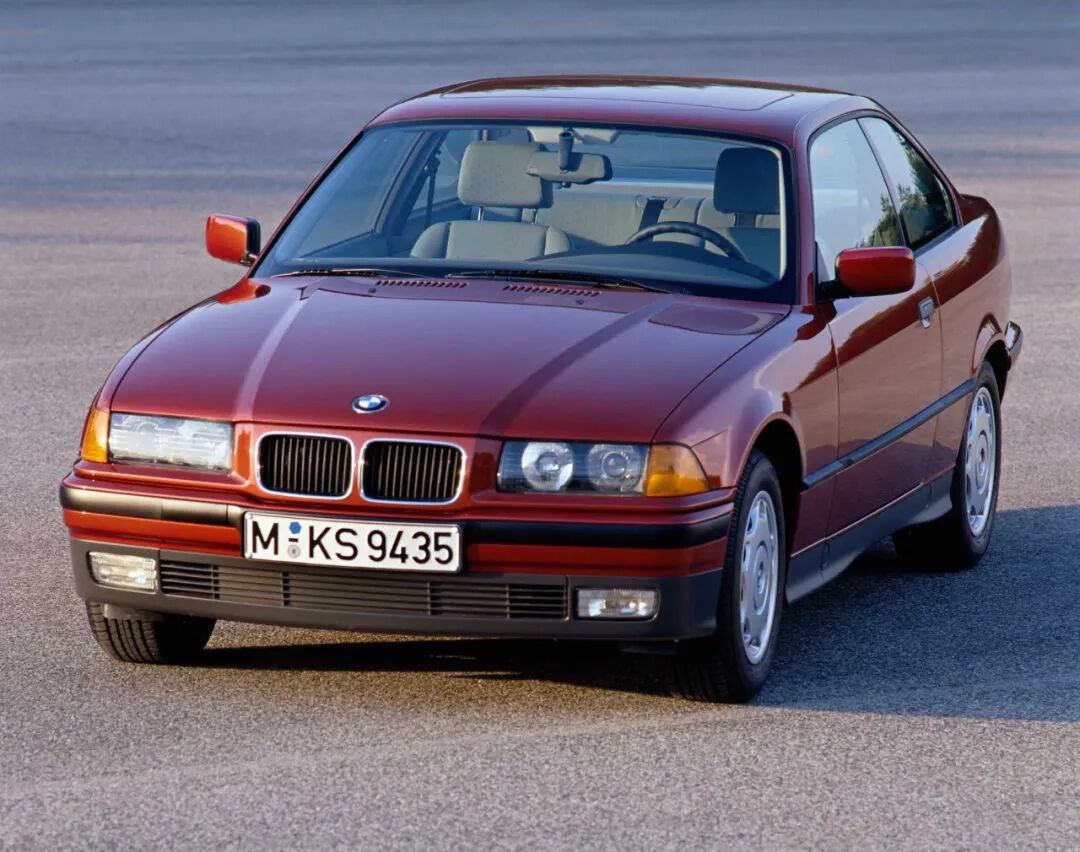 ▍Third-generation 3 Series (1990–1998)
The third-generation 3 Series (E36) further defined BMW's driving philosophy. Its Z-shaped multi-link rear suspension was adopted across sedan, coupe, and wagon variants, while the cockpit noticeably tilted toward the driver. "Driver-centric" design became a replicable cabin layout.
For six decades, BMW's approach to expanding its product lineup essentially involved replicating the 3 Series: scaling it up into the 5 and 7 Series, down into the 1 Series, and upward into the X3 and X5. As long as the 3 Series succeeded, BMW's product lineup succeeded.
But in the new energy era, BMW took the "Neue Klasse" First release right (launch rights) from the 3 Series, along with the power to define the next generation of BMW models.
02 The Next Generation of BMW No Longer Starts with the 3 Series
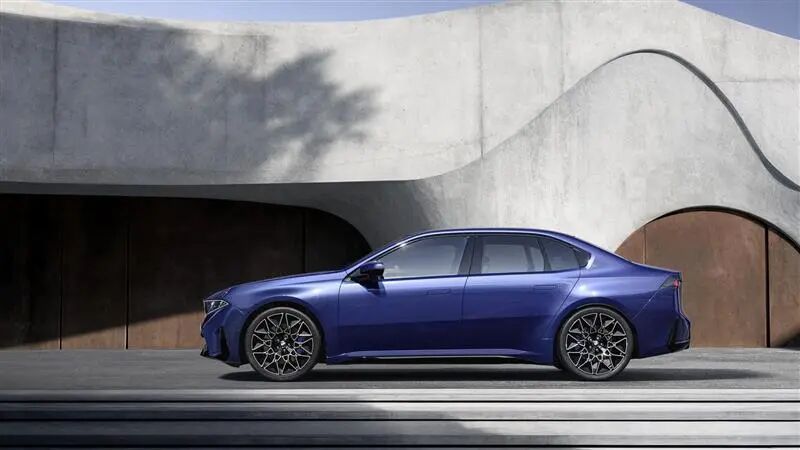
In September 2025, BMW revived the "Neue Klasse" naming at the Munich IAA. However, the first model was not the i3 but the iX3. The i3, released six months later, was officially dubbed the "second Neue Klasse model."
Technology launch rights were also shifted. BMW's most differentiated driving control system, the Heart of Joy, along with the sixth-generation electric drivetrain, large cylindrical battery cells, and Panoramic iDrive, all debuted first in the iX3.
The i3, set to launch next year, will inherit technologies already introduced in the iX3.
Even in wording, a shift in status is evident. For instance, the iX3 is described as offering "BMW's smoothest-ever parking experience," while the i3 is framed as providing "the 3 Series' smoothest-ever parking experience"—a deliberate narrowing of scope.
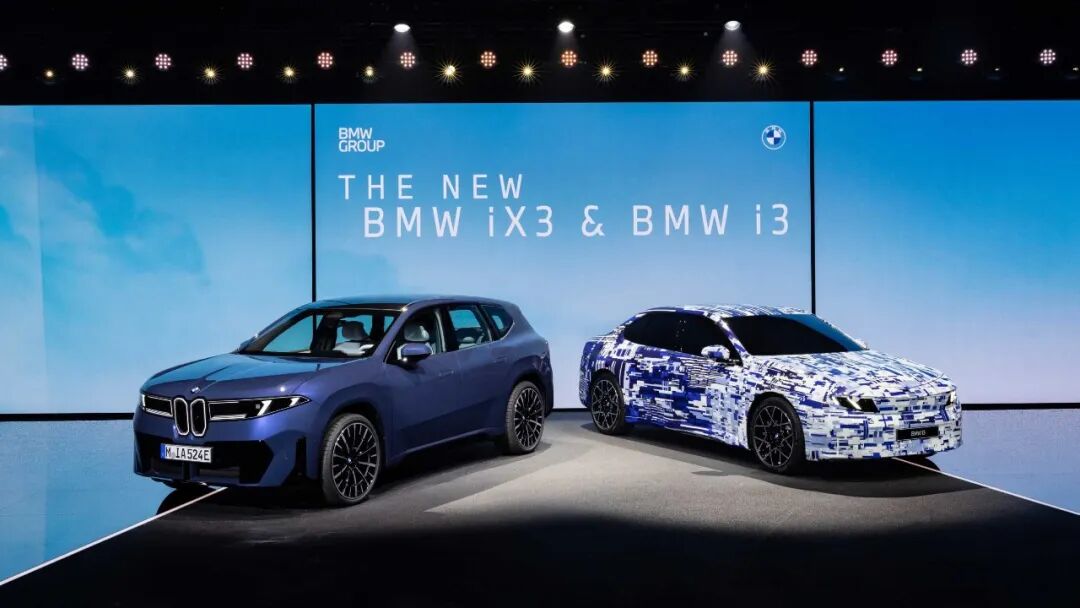
In Q1 2026, global deliveries of the 3 and 4 Series fell 11.8% year-on-year to 103,800 units, while X3 sales grew 18.5%, with a significant portion coming from the iX3. Some analysts believe the iX3 could propel the X3 family to the top of BMW's sales rankings by late 2026.
BMW now defines the i3 as "continuing the 3 Series DNA" rather than "defining the entire lineup," with the task of shaping next-generation products handed to SUVs.
BMW is not the first automaker to take this approach.
Tesla launched the Model 3 sedan in 2017 and the Model Y SUV in 2020, but the Model Y became the anchor point for Tesla's product strategy. Not only is it Tesla's best-selling model globally, but it also serves as the foundation for future products like the Cybercab.
Li Auto has gone even further by refraining from launching any sedans to date.
Behind these moves lies engineering reality. BEV platforms, with their ~10 cm-thick floor-mounted batteries, naturally suit taller SUVs better. Batteries grant SUVs the low center of gravity once exclusive to sedans, while sedans do not gain the space advantages of SUVs. As a result, mainstream new energy vehicle (NEV) configurations increasingly favor SUVs.
More critically, the "driving dynamics" symbolized by sedans could almost single-handedly define BMW's value proposition in the fuel (internal combustion engine) era. In the new energy era, while still important, driving dynamics represent just one layer of product capability. SUVs more easily integrate space, comfort, and cabin experiences into a cohesive package.
This means the 3 Series can no longer represent the new era of BMW. However, the 3 Series' abdication does not equate to the iX3's successful ascension.
Beyond driving dynamics, intelligence, cabin technology, and ecosystems—critical factors for success in China's NEV market—rely heavily on public suppliers. The Chinese version of the iX3 uses Momenta's intelligent driving system, which also supplies Mercedes-Benz, Audi, and IM Motors. On capabilities most valued by consumers, BMW competes on equal footing with rivals.
To differentiate itself, BMW nearly rewrote the domestically produced iX3 from scratch. Chinese teams rewrote 70% of the operating system's code, jointly redeveloped intelligent driving systems, and integrated cabin technologies from Alibaba, DeepSeek, Huawei, and AutoNavi.
The trade-off was time. While overseas versions began deliveries in March, the domestic model will not launch until Q4.
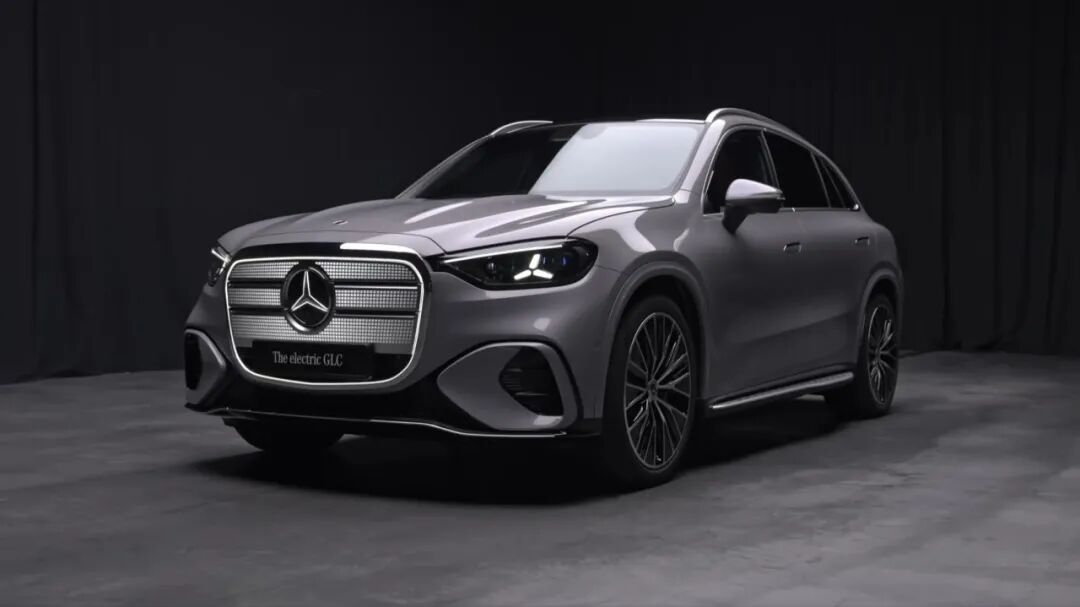
Ironically, BMW's most troubled market will receive its newest product latest. Mercedes-Benz has already priced its electric GLC at RMB 299,900, while Chinese NEV startups have completed multiple iterations in the same price segment.
Meanwhile, since July 2026, domestic production of the i3 and iX1 has ceased, while i5 production has been paused. BMW cleared its previous-generation BEV lineup to free up production lines and resources for new-generation models.
This left BMW with almost no domestically produced BEVs for sale. Its NEV penetration rate in China stood at just ~6% in Q1, compared to over 50% for the overall Chinese market.
Thus, the iX3 has not yet taken its most crucial exam. Its European success proves BMW can build a competent vehicle but not that it can serve as the anchor point for the next generation of BMW models in the world's most competitive and cutting-edge NEV market.
03 The iX3 Is Not Yet the New Anchor
In 2020, BMW also produced an iX3.
Rolled off at Shenyang Dadong Factory, it was Brilliance BMW's first truly global model. All iX3s sold worldwide came from the same factory and were identical.
Six years later, the new-generation iX3 comes in two versions. The standard-wheelbase model, produced in Debrecen, Hungary, supplies Europe and the U.S.; the long-wheelbase version, built in Shenyang, serves China, India, Thailand, Indonesia, and Malaysia.
Under one name, what was once a single global model now splits into two distinct products.
During the internal combustion era, domestically produced BMWs also featured longer wheelbases. However, these variants shared core technologies with their standard-wheelbase counterparts, differing only in size. Now, operating systems, intelligent driving solutions, AI engines, and ecosystems diverge along regional lines.
A more fundamental divergence lies in demand. The 3 Series achieved global uniformity because markets shared consistent demand for well-driving midsize sedans. In the NEV market, where the iX3 competes, Chinese and European demands now differ significantly, with the Chinese market prioritizing intelligence, rear-seat experience, and ecological connectivity.
This raises a deeper question: Can a model envisioned as a global anchor truly represent the world if it must be rewritten for the most competitive market?
Moreover, the iX3's European success may offer limited breathing room.
In April 2026, Chinese brands accounted for over 15% of European BEV sales for the first time, with their overall market share rising to 9.8%. In May, Chinese automakers' monthly new vehicle registrations in Europe surpassed those of Japanese brands for the first time. Q1 2026 Chinese BEV exports to Europe reached 438,400 units, up 84.7% year-on-year.
Tariffs remain the primary barrier for Chinese automakers in Europe. Some Chinese NEVs face combined European tariffs of up to 45.3%. Even with these duties, BYD's Dolphin Surf (the European version of the Dolphin) remains cheaper than the comparable Renault 5 in Germany.
However, this barrier is being circumvented. BYD, Chery, and Geely are building factories in Europe or repurposing existing capacity, transforming tariffs from a long-term obstacle into a transitional cost.
Critically, the iX3 is not merely absent from an ordinary market but from the global NEV competition's early adopter stage. Demand shifts occurring in China today may well preview trends in other markets in the coming years.
This consolidation has already begun. Geely's G-ASD has become the first Chinese advanced driver-assistance system to receive EU certification; Xpeng has also introduced intelligent technology to Europe as a key competitive edge for the future.
They are betting on the next phase in Europe, where, after electrification, competition will continue to shift towards intelligence, gradually approaching the state of today's China.
This means that the China-specific iX3 is not just BMW's make-up lesson for a regional market but also a test for it to validate the answers for the next round of global competition. The problem is that this validation has not yet begun, and the time and profit margins available to BMW are already tightening simultaneously.
The interim results released on July 30 maintained the automotive business profit margin guidance of 1% to 3%, a range that had already been significantly lowered from 4% to 6% in June.
BMW's 'voluntary separation program' will run from October this year until the end of 2027, with a real improvement in profitability not expected until 2028. However, the product war that will decide the outcome will begin in the fourth quarter of 2026.
BMW is not without the conditions to make long-term decisions. In 1962, Herbert Quandt dared to bet the entire company on a new direction, relying on a governance structure characterized by stable family control that allowed the company to make cross-cycle bets. This structure still exists, and the Quandt family still holds about half of BMW's shares to this day.
But there are also changes.
In 1962, BMW had just emerged from the brink of acquisition, and the new era that year represented its all-or-nothing direction.
In 2025, BMW delivered approximately 2.17 million vehicles globally, with the iX3 being just the first of forty future new-era products.
Today's BMW can no longer rely on a single vehicle, a single market, or a single set of answers to complete its transformation. This is where BMW is safer than in 1962, but also where it faces greater challenges.

This article is original content from AutoPix and may not be reproduced without authorization.
-
![]()
Lei Jun Disrupts the Market: Xiaomi Unveils N70/N90 Dual Models, Zeroing in on Two Leading Extended-Range Rivals
-
![]()
Sales Champion Leapmotor's Quest for Scale
-
![]()
SAIC-GM and SAIC Passenger Vehicles Announce Leadership Shifts on the Same Day: 'Technical Talents' Step Forward to Steer the Course
-
![]()
BMW's Turnaround Starts with the Easy Part
-
Tesla's Q2 Operating Profit Plummets, 'Cash-Guzzling' Expansion Drains Free Cash Flow
-
![]()
Volkswagen's Strategic Shifts: Cutting Back and Expanding
-
![]()
Unraveling the Decline of the Imported Car Market
-
![]()
Interpretation of the European + UK Automobile Market in the First Half of 2026: Electrification Surpasses Critical Point, Chinese Brands Experience Collective Growth in Sales