Volkswagen's Strategic Shifts: Cutting Back and Expanding
 07/31 2026
 372
372
On July 9, Volkswagen Group's Management Board presented a future plan to the Supervisory Board, outlining 12 action plans and its '2030 Goals'. According to the official statement from the group, this core business transformation plan was proposed by management to tackle the "increasingly fierce global market challenges": the number of models will be slashed by up to half, optional configuration combinations will be reduced by three-quarters, and annual production capacity will be adjusted from approximately 12 million units before the pandemic to around 9 million units.
Financially, Volkswagen has struck a deal to sell a majority stake in drive system manufacturer Everllence (formerly MAN Energy Solutions), anticipated to generate approximately €7.4 billion in cash inflows to support its ongoing transformation. Management stressed that despite progress in prior performance improvement projects, the company still needs to fundamentally revamp its business model in response to geopolitical shifts and cost pressures. This will involve coordinating vehicle platforms and software ecosystems for Eastern and Western hemisphere markets, minimizing redundant development, and boosting R&D efficiency through digitalization and artificial intelligence. Board Chairman Oliver Blume further stated that by 2030, Volkswagen aims to become the "world's most appealing automotive company" by leveraging its robust brand portfolio and solid financial performance.
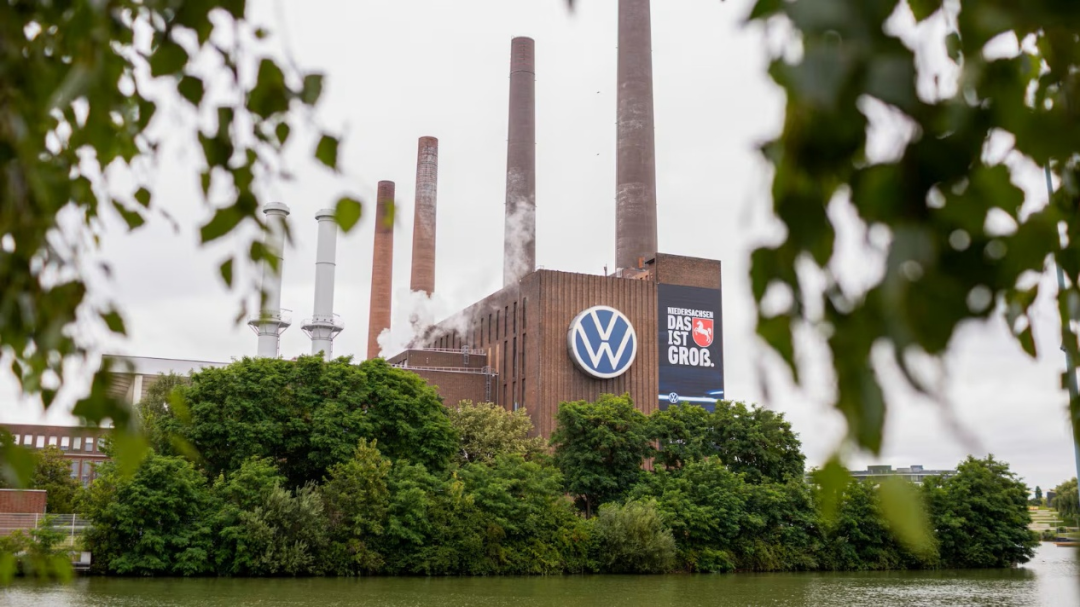
Volkswagen's press release did not mention factory closures or layoff numbers, which have been the subject of intense public scrutiny. However, Reuters, citing informed sources, reported that the Supervisory Board voted on the management's proposal that evening, with a majority opposing it. If accurate, this suggests the overall proposal was not actually approved by the Supervisory Board, and only the relatively moderate, less contentious parts—such as the general descriptions of model streamlining and production capacity adjustments—were publicly disclosed.
It's worth noting that Volkswagen has neither confirmed nor denied the reported vote outcome. Germany's ZDF television also reported that evening that the management's post-meeting statement only revealed general figures regarding models and production capacity, while remaining silent on the most externally concerning issues of factory closures and layoffs.
This situation quickly sparked various reactions. Olaf Lies, Prime Minister of Lower Saxony (whose state government holds a seat on the Supervisory Board), stated after the meeting that "factory closures are not Volkswagen's future strategy," emphasizing that any sustainable solution must be reached jointly with employees. IG Metall union chair Daniela Cavallo took an even firmer stance: "Factory closures are non-negotiable; layoffs can only occur on a voluntary basis with social security protections."
The industry and capital markets also expressed skepticism. Ferdinand Dudenhöffer, Director of the Center for Automotive Research (CAR-Institut) at the University of Duisburg-Essen, argued that the lack of direct responses to factory and job issues "creates uncertainty that benefits neither customers, employees, nor investors." Bernstein analyst Stephen Reitman commented that Blume "talks a lot about vision but doesn't clarify how to achieve it."
Regardless of which interpretation ultimately prevails, this meeting underscored a key focus: over the past few months, Volkswagen has been continuously scaling back its traditional core business while simultaneously advancing seemingly contradictory actions by expanding into certain new businesses and regions. Compared to whether a specific proposal was approved at the meeting, these two parallel strategic thrusts may better explain the transformation underway at this automotive giant.
Cutting Back: Not Just Volkswagen's Choice
On June 16 this year, BMW lowered its full-year performance expectations for the third time in two years, sharply reducing its automotive business EBIT margin guidance from 4%-6% to 1%-3% and its return on capital employed (ROCE) expectation from 6%-10% to 1%-5%. According to MarkLines, citing BMW's official statement, this adjustment directly resulted from weakening demand in China and the Asia-Pacific region in the second quarter, intensified industry price competition, rising energy costs driven by Middle East tensions, and suppressed global consumer confidence. New CEO Oliver Zipse's statement nearly echoed Blume's: existing organizational structures and processes must be adjusted to adapt to rapidly changing market conditions, where "everything is about speed and efficiency."
Mercedes-Benz faces similar pressure in China. As of its 2026 first-quarter results, net profit fell 17.2% year-on-year to €1.43 billion, with operating profit down 16.8%; global deliveries in the first half totaled 837,200 units, a 7% year-on-year decline. Mercedes subsequently announced plans to streamline its product lineup, focus on premium models, and advance a voluntary departure program for German employees to optimize global production capacity. This aligns logically with Volkswagen's proposal to "halve its models."
When these scenarios and data are viewed together, they point to the same structural backdrop: slowing growth in the Chinese market, persistent deepening of local new energy brands in the price band above ¥300,000, and escalating tariff pressures from the U.S. and EU are becoming common external challenges for German automakers.
According to Reuters' March report citing BMW's calculations, combined U.S. tariffs and EU counter-tariffs on Chinese electric vehicles could reduce its automotive business profit margin by approximately 1.25 percentage points; Mercedes also listed tariff barriers as a core variable affecting future performance during its earnings call. Meanwhile, China's new energy vehicle (NEV) penetration rate has consistently remained above 50%, while BMW's NEV sales in China account for just about 6.2% of its total.
Against this backdrop, the three German automakers nearly simultaneously lowered performance expectations, streamlined product lineups, and advanced organizational and personnel optimizations. This suggests that Volkswagen's current "cutbacks" resemble a collective response by the entire German automotive industry under the same industrial cycle pressures, rather than an isolated incident of mismanagement at one company. Given Volkswagen's largest scale, most complex governance structure, and highest number of stakeholders, its every contraction draws particular attention.
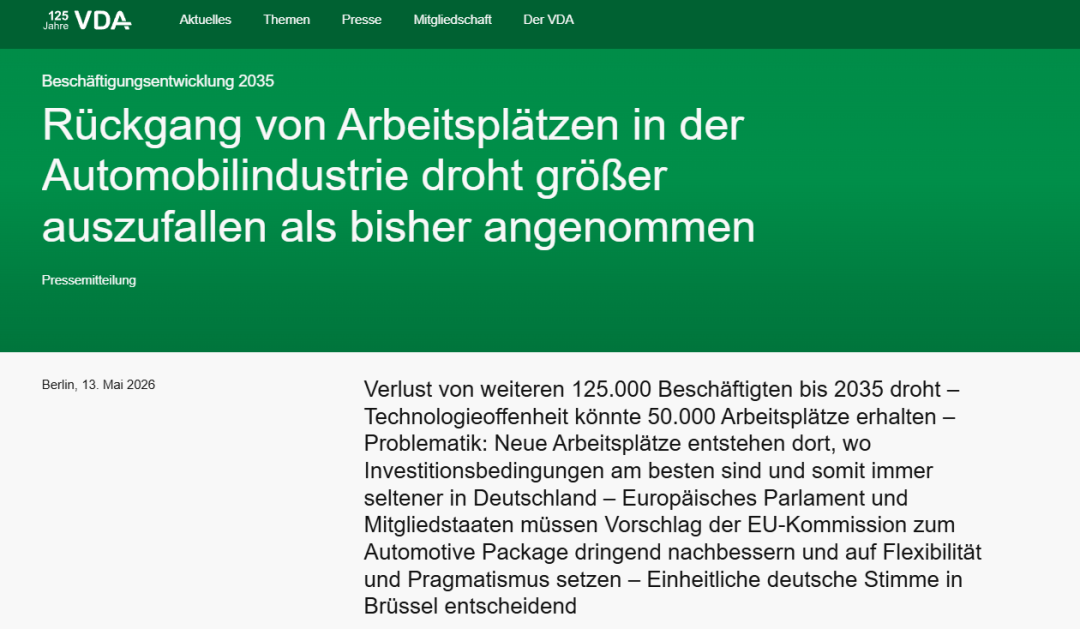
The German Automotive Industry Association (VDA)'s May assessment further confirms this trend: by 2035, Germany's automotive sector may lose another 125,000 jobs, with employment prospects over the next decade becoming more severe than previously forecast. This implies that regardless of how Volkswagen's current restructuring ultimately unfolds, job contractions are likely to become a reality across Germany's automotive industry, rather than a choice any single company can avoid.
However, compared to BMW and Mercedes, Volkswagen faces an additional layer of structural costs. A powerful labor union, the Volkswagen Law—which grants Lower Saxony special veto rights—and co-determination systems collectively create far higher institutional resistance for Volkswagen than its peers when implementing layoffs and factory closures. Meanwhile, Germany's relatively high domestic energy and labor costs leave Volkswagen's manufacturing efficiency significantly lagging behind some competitors. According to management calculations, approximately 500,000 units of production capacity in Germany are currently surplus, equivalent to two full-scale vehicle plants operating below capacity long-term. This means that while BMW and Mercedes can relatively flexibly adjust product mixes and production layouts amid industry-wide profit declines, Volkswagen must first overcome institutional barriers with every contraction.
Behind these institutional constraints lies a broader industrial environment shift. Facing escalating U.S.-EU tariff barriers, prolonged geopolitical friction, and increasingly stringent carbon emission regulations, Volkswagen and the entire German automotive industry must retreat from the global expansion model that previously relied on economies of scale to dilute costs, transitioning from "scale first" to "profit first." This explains why Blume repeatedly emphasizes target return rates of 8%-10%: as industry incremental dividends fade, maintaining profitability has become more critical than preserving sales volume rankings.
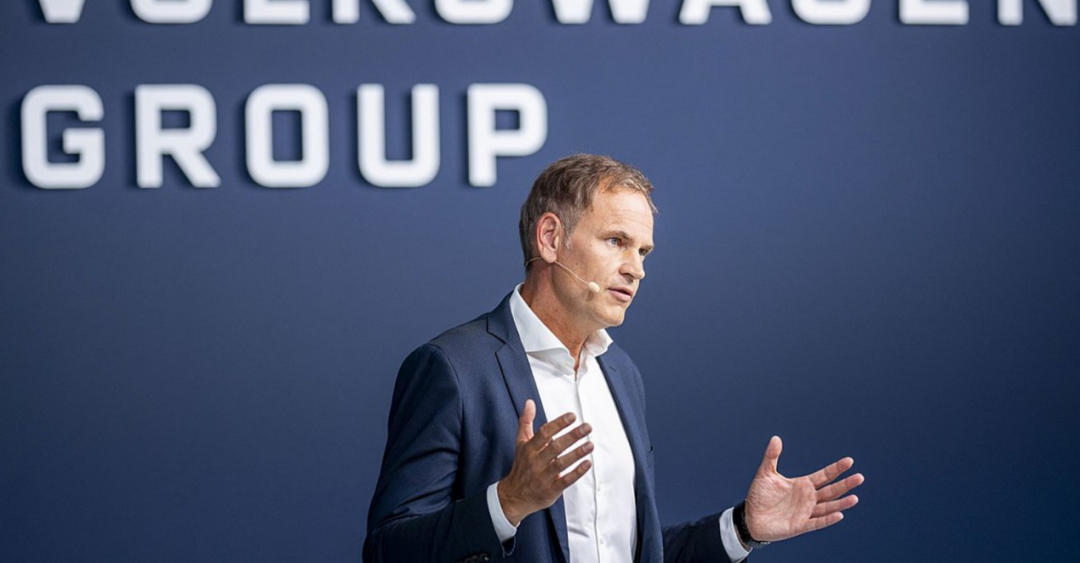
Consequently, facing strong resistance within the Supervisory Board, Blume's recent public statements have shifted subtly. In mid-July interviews with German media, he suggested that "smarter solutions exist" beyond direct factory closures and emphasized that Volkswagen has already reduced German plant costs by about 20% on average over the past year, with initial success in domestic cost-cutting projects. These remarks did not negate the broad direction of layoffs and production adjustments but returned the highly scrutinized "factory closure list" to ambiguity. In a sense, Volkswagen's ability to navigate this transformation hinges more on whether it can find enough "smarter solutions" beyond contracting existing business to fill the gaps left by contractions.
This statement itself offers no answers but points to a direction: solutions may not emerge from headquarters or Germany. Over the past year, CARIAD's software route adjustments and Volkswagen China's local R&D and export initiatives demonstrate from technical and regional perspectives what these "smarter solutions" might look like.
From Independent R&D to Open Integration
If "cutting back" reflects Volkswagen's contraction in existing business, its software and technology route adjustments reveal how the company reorganizes innovation resources after acknowledging its limitations.
Volkswagen's software subsidiary CARIAD formed an "Autonomous Driving Alliance" with Bosch in 2022, deploying over 1,000 engineers and approximately €1.5 billion to independently develop an assisted driving software stack covering all Group brands. In early July this year, both sides confirmed the alliance had "completed" its mission, with the jointly developed L2-level combined driving assistance technology to be applied in their respective future products: Volkswagen plans to deploy it in the ID.EVERY1 entry-level electric vehicle slated for 2027 mass production, while multiple German media outlets reported that Volkswagen is also evaluating procurement of higher-level assisted driving solutions from external suppliers like Mobileye.
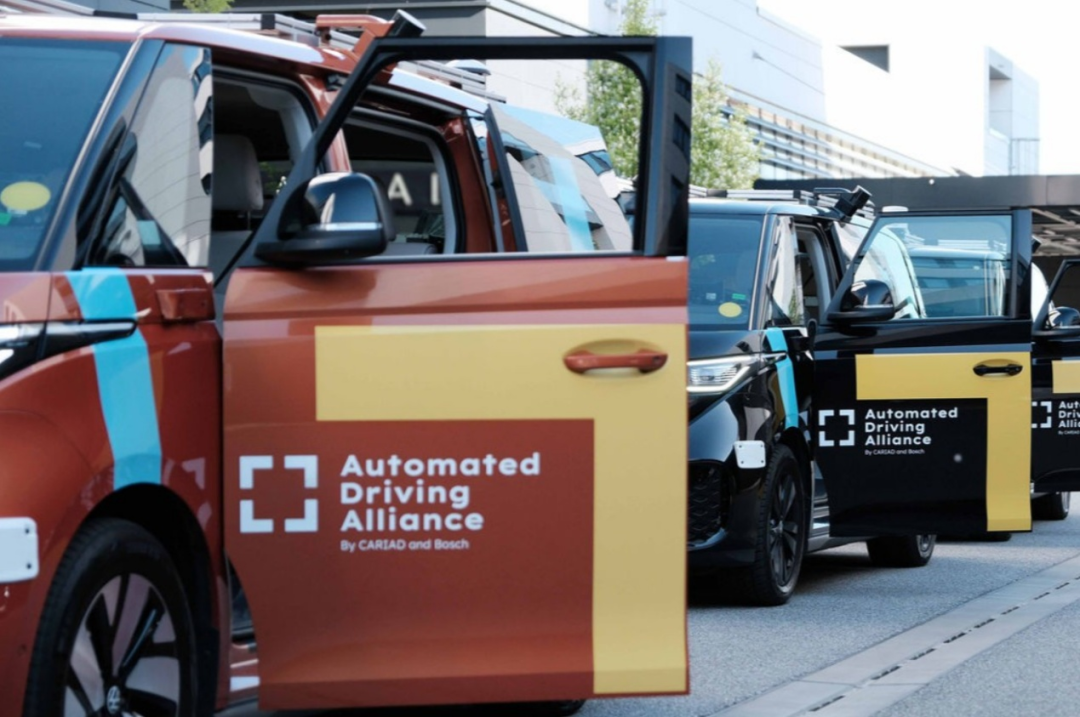
This adjustment was not without controversy. CARIAD employee representatives publicly warned management that introducing external mature solutions would erode years of accumulated independent intellectual property and R&D capabilities. However, the final outcome adopted a relatively smooth conclusion: both sides will jointly hold IP developed during the alliance and continue independent development rather than simply terminating cooperation and writing off sunk costs. Official statements indicate that the jointly developed AI-assisted driving software stack has completed fleet testing in Europe, Japan, and North America, covering models from compact to premium segments and compatible with both internal combustion and pure electric platforms. This means past investments have not fully sunk but become technical assets for subsequent R&D.
This change signals that a traditional automaker accustomed to multi-year technology roadmaps is now "reviewing" how its organizational rhythm can no longer keep pace with the rapid iteration of software-defined vehicles and is beginning to address this gap through more open collaboration models.
The separation from Bosch was not CARIAD's first technology route adjustment. In the same year as the Bosch alliance, CARIAD had already explored a parallel path in China. In November 2025, CARIAD and Chinese intelligent driving company Horizon Robotics established a joint venture, CARIZON, which announced plans to independently design the system-on-chip C7H using a 3-4nm process with approximately 500-700 TOPS of computing power for mass production within three to five years, supporting L2+ and higher-level assisted driving capabilities. This chip will deeply integrate with the CEA electronic/electrical architecture jointly developed by Volkswagen and Xpeng, with CARIZON becoming Volkswagen Group's unified supplier of advanced assisted driving solutions in China. Viewed over this longer timeline, the conclusion of the Bosch alliance and CARIZON's sustained progress in China represent two sides of the same strategic correction: one acknowledges lagging independent R&D in Europe and shifts to open collaboration; the other, in China's fastest-iterating market, achieves the same route switch earlier through a joint venture.
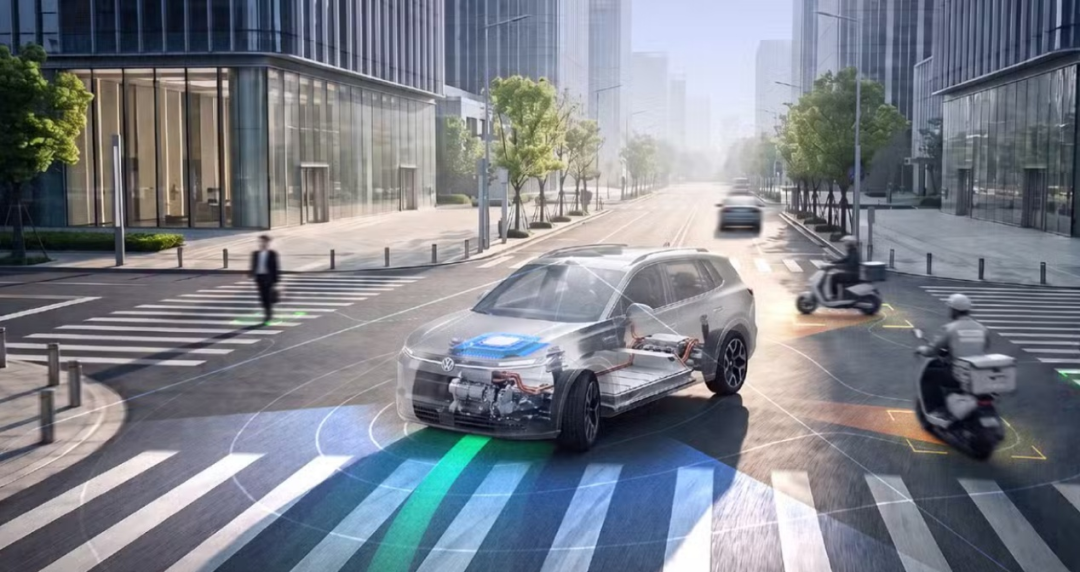
Similar adjustments are occurring at Bosch itself. The world's largest automotive supplier has recently divested some assisted driving business assets to further focus on core competencies. This indicates that re-evaluating R&D boundaries is not unique to Volkswagen but a reality facing the entire German automotive engineering system. When Chinese suppliers can deliver mature intelligent driving solutions with faster R&D cycles and lower costs, traditional European engineering systems' long-held "from-scratch" independent R&D model is being reassessed by more German automakers.
Autonomous Growth of China's Strategic Node
Compared to software route adjustments, a clearer "expansion" is occurring in Volkswagen China's overall layout.
For instance, CARIAD China's software engineering team, comprising over 1,000 members stationed in Beijing, Shanghai, and Hefei, supports local technology collaborations such as CARIZON. This localized R&D framework has established a comprehensive technical ecosystem encompassing intelligent driving, intelligent cockpits, and digital design.
Another notable development unfolded in June this year when Volkswagen and Jetta brands made their debut in the Uzbekistan market. This marked the first instance where Volkswagen China fully managed the export of China-developed and China-manufactured models to an overseas emerging market. Volkswagen China has outlined subsequent evaluation priorities, including ASEAN countries, the Commonwealth of Independent States region, and South American markets. The global leadership of Volkswagen Passenger Cars has also explicitly incorporated China as an export hub within its strategic assessment, covering Southeast Asia, Mexico, North Africa, and South America.
These developments underscore a gradual yet definitive transformation in roles: the China team is transitioning from a mere regional subsidiary executing headquarters' directives to a strategic hub endowed with localized R&D capabilities, independent decision-making authority, and global technology and product export potential. According to Volkswagen China's strategic blueprint, this localized intelligent driving system will facilitate the launch of approximately 30 NEV models in China by 2027, expanding to around 50 by 2030. Simultaneously, it aims to elevate China's market share from the current 11% to 15% and restore annual sales to approximately 4 million units. This signifies that the China team now shoulders not only cost-optimization responsibilities for the headquarters but also serves as a pivotal pillar for Volkswagen's 2030 strategic ambitions.
This shift starkly contrasts with the ongoing streamlining efforts at the headquarters level. While the headquarters focuses on optimizing existing operations and enhancing efficiency, regional nodes like China are entrusted with incremental responsibilities, including nurturing new technologies, developing innovative products, and exploring untapped markets. Collectively, these endeavors represent two complementary facets of Volkswagen's transformation.
Indeed, this trend of 'nodalization' is not exclusive to Volkswagen. Joint ventures, such as SAIC Volkswagen, have also recently embarked on 'reverse export' initiatives, essentially striving to cultivate export capabilities targeting global emerging markets.
What distinguishes Volkswagen China is its expansion of this role upgrade beyond manufacturing to encompass core technological domains like chips and software. Media reports indicate that over 70% of the Coretech team holds master's degrees or higher, with more than 90% engaged in R&D activities. Furthermore, 60% of its key personnel hail from local tech firms. The company also successfully delivered an L2-level highway pilot assistance system to the Volkswagen Group within an 18-month development cycle. This talent composition and delivery efficiency underscore Volkswagen China's evolution from a regional entity catering to the local market to an innovation node within Volkswagen's global technology ecosystem.
Can These 'Subtractions' and 'Additions' Coalesce into a Unified Transformation?
The controversy sparked by the Supervisory Board meeting is, in a sense, merely a microcosm of Volkswagen's ongoing transformation. Whether the management's proposals are progressing smoothly or encountering intense governance-level conflicts remains indeterminate for outsiders. What is certain, however, is that any contraction of Volkswagen's existing operations, regardless of the final approach, will necessitate protracted internal consultations, and its progress may not adhere to the management's envisioned timeline. Focusing solely on this meeting risks overlooking another equally significant transformation: technologically, there is a gradual shift from independent R&D to open integration; regionally, markets like China are evolving from mere executors of headquarters' strategies to entities with enhanced independent R&D and decision-making capabilities.
From a broader industry perspective, Volkswagen's distinctiveness lies not solely in its adopted measures but also in its unique governance structure, which demands more public and intricate interest coordination at every reform stage. This not only renders Volkswagen's transformation appear slower than its peers but also subjects its negotiations over sensitive issues like layoffs and plant closures to continuous public scrutiny.
What merits ongoing observation is whether these 'subtractions' and 'additions' can ultimately converge into a unified transformation. Over the coming months, several key milestones warrant attention: whether the Supervisory Board will revisit related proposals in September; which new partner CARIAD ultimately selects for assisted driving; whether Coretech's independently developed C7H chip progresses as planned; and whether Volkswagen can replicate its 'China-developed, China-manufactured, China-exported' model in additional emerging markets, commencing with Uzbekistan. These developments currently lack definitive answers, and there is no necessity to presume their directional outcomes. However, these milestones may offer deeper insights into the trajectory of Volkswagen's transformation—a process characterized by simultaneous 'subtraction' and 'addition'—than any conclusions drawn from this meeting alone.

Image: Sourced from the Internet
Article: Auto Review
Layout: Auto Review
-
![]()
Lei Jun Disrupts the Market: Xiaomi Unveils N70/N90 Dual Models, Zeroing in on Two Leading Extended-Range Rivals
-
![]()
Sales Champion Leapmotor's Quest for Scale
-
![]()
SAIC-GM and SAIC Passenger Vehicles Announce Leadership Shifts on the Same Day: 'Technical Talents' Step Forward to Steer the Course
-
![]()
BMW's Turnaround Starts with the Easy Part
-
Tesla's Q2 Operating Profit Plummets, 'Cash-Guzzling' Expansion Drains Free Cash Flow
-
![]()
Volkswagen's Strategic Shifts: Cutting Back and Expanding
-
![]()
Unraveling the Decline of the Imported Car Market
-
![]()
Interpretation of the European + UK Automobile Market in the First Half of 2026: Electrification Surpasses Critical Point, Chinese Brands Experience Collective Growth in Sales