Unraveling the Decline of the Imported Car Market
 07/31 2026
 450
450

Lead-in
Introduction
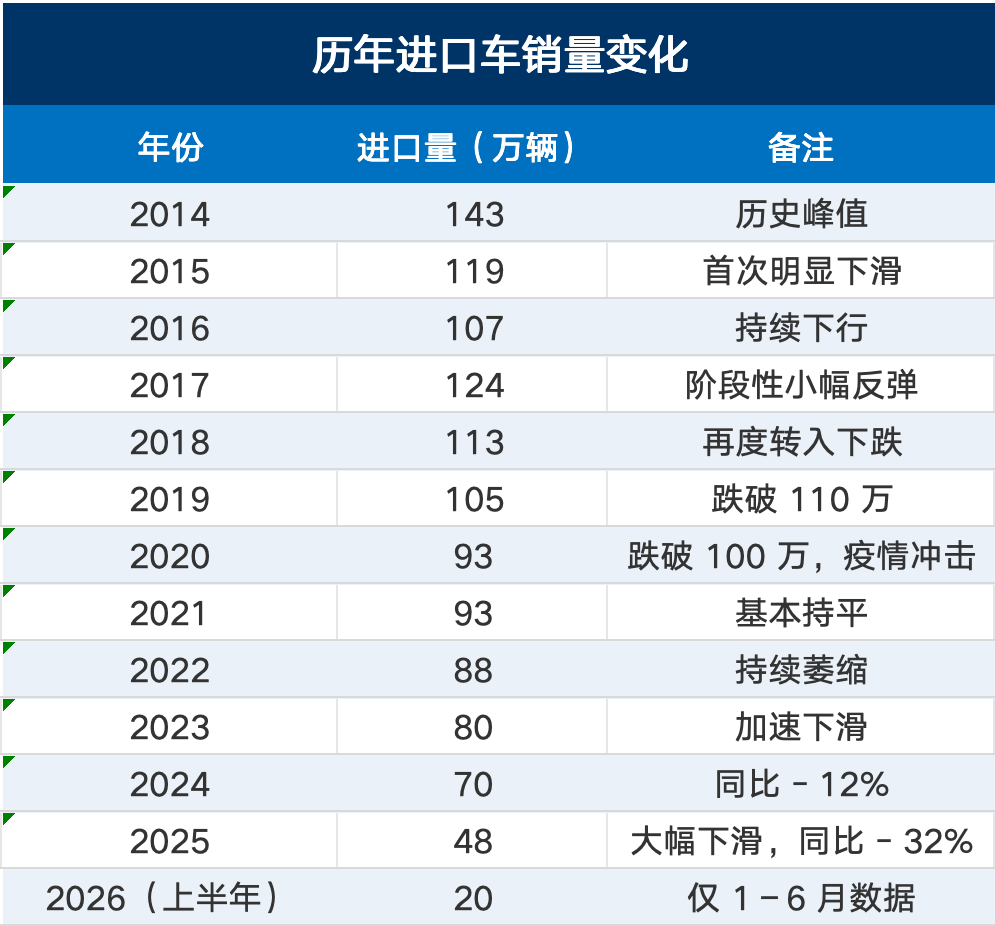
From a zenith of 1.43 million units sold to a mere 200,000 in just six months, the imported car market is undeniably facing a sales slump.
In recent years, imported cars have encountered significant challenges in the Chinese market.
In 2024, sales of imported cars in China plummeted to 700,000 units, marking an 11.7% year-on-year decrease. The downward spiral continued in 2025, with sales further dropping to 480,000 units, a staggering 32% decline. As we entered 2026, this downward trend showed no signs of abating, with only 200,000 imported cars sold in the first half of the year, an 11% year-on-year decrease, and retail performance deteriorating further.
It's worth noting that 12 years ago, in 2014, imported cars reached a historic peak of 1.43 million units, symbolizing the dream car for all buyers. Even non-target consumer groups aspired to own one. At that time, imported cars epitomized luxury, quality, and status, with price hikes and long waiting lists for popular models being the norm.
However, over a decade later, the volume of imported cars has dwindled to a fraction of its former glory, reflecting the rise and fall of a category. This transition also mirrors the shift in the Chinese automotive market from reliance on imports to the ascent of domestic brands.
01 Declining Sales: A Grim Scenario
According to data from the China Passenger Car Association, 38,000 imported cars were sold in June, down 11% year-on-year. In the first half of the year, a total of 200,000 units were imported, also down 11% year-on-year, maintaining a negative growth trend for several consecutive months. Compared to nearly 700,000 units imported in the first half of 2014, the current scale is merely one-third, highlighting a stark contrast.
Retail performance offers a more accurate reflection of true market demand. In the first half of the year, only 190,000 imported cars were sold at retail, down 29% year-on-year, with just 30,000 units sold in June alone, a 39% decrease. This indicates that even if vehicles have arrived domestically, they struggle to reach consumers, leading to increased inventory pressure.
Notably, the decline in import value far outpaces the decline in sales volume. According to data from the China Association of Automobile Manufacturers, from January to May 2026, the import value of automobiles was $7.54 billion, down 19.2% year-on-year, nearly double the decline in sales volume. This indicates a continuous decline in the average price of imported cars and a rapid erosion of their former premium pricing power.
Against the backdrop of an overall market downturn, the performance of imported car brands varies, with most facing difficulties and only a few barely holding on.
Among them, Lexus has emerged as a rare bright spot in the imported luxury market, with 70,600 units sold in the first half of the year, down 10% year-on-year, but still maintaining its position as the top imported luxury brand. Its flagship model, the ES, saw over 44,000 units insured in the first half, relying on its fully imported status and relatively stable product strength to retain some market share.
In contrast, German luxury brands have experienced significant setbacks. Mercedes-Benz sold 35,900 units in the first half, down 4% year-on-year; BMW sold 22,700 units, down 15%; and Audi sold only 8,000 units, a 43% decline.
Ultra-luxury brands are also under severe pressure. Bentley, Ferrari, and Rolls-Royce all saw year-on-year declines of over 30%, with Maserati facing the most dire situation, with an 80% year-on-year drop in imports in May. Some models saw price cuts of up to 40% still failing to boost sales, leading to a continuous decline in brand influence.
02 Why Are Imported Cars No Longer in Vogue?
There are numerous reasons for the sluggish sales of imported cars.
Firstly, with the passage of time and industrial progress, consumers have become less enamored with imported cars.
For a long time in the past, imported cars symbolized luxury and status. Consumers often prioritized brand premium, overseas manufacturing processes, and imported status when purchasing a car, willing to pay a premium for this sentiment and prestige. Scenes of price hikes and long waiting lists for popular models were common, and imported car companies easily profited in the Chinese market with this advantage.
But now, with mature consumer attitudes, brand loyalty has gradually waned, and car-buying decisions have shifted from "focusing on brand and status" to "focusing on experience and practicality," with greater emphasis on a vehicle's product strength, intelligence level, and ownership costs.
Many young consumers frankly say that they cannot justify paying a premium for the imported status of luxury brands like BBA, as domestic models at the same or even lower price points can offer a superior driving experience, richer intelligent features, and more affordable prices. Brand halo is no longer the core driver of car purchases.
At the same time, the overall collapse of the fuel-powered vehicle market has squeezed the living space of imported cars, becoming a significant driver of their sales decline.
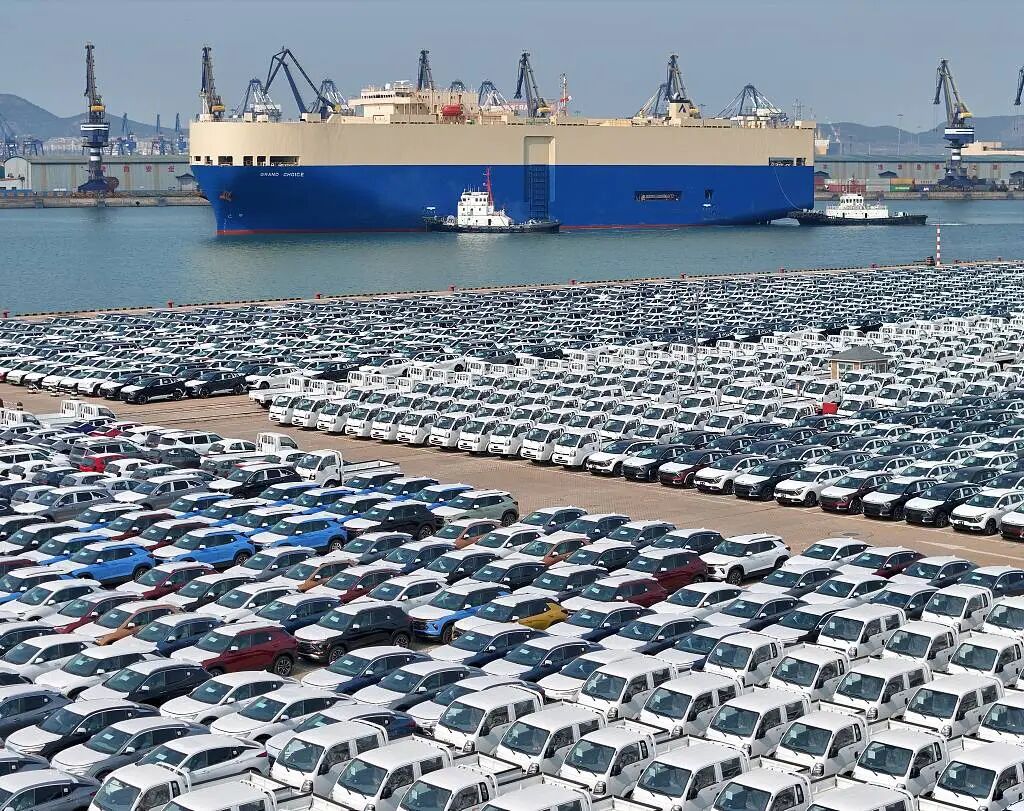
In the first half of 2026, the domestic fuel-powered vehicle market continued to shrink, with a significant year-on-year decline at retail. Meanwhile, imported cars are still dominated by fuel-powered models, with new energy accounting for only 2%, including a 36% decline in pure electric imported models and a 58% decline in plug-in hybrids. With new energy becoming the mainstream in the market, the product mix of imported cars has lagged behind market trends.
Meanwhile, the market share of domestic brands continues to rise, reaching 71.8% in the first half of the year, siphoning off the core customer base that once belonged to imported cars, especially the loss of consumers in the mid-to-high-end market being particularly evident.
The rise of domestic high-end new energy vehicles has directly impacted the advantages of imported cars, with domestic models achieving generational leadership in areas such as intelligent cockpits, advanced intelligent driving assistance, 800V high-voltage platforms, and battery technology. This has broken down the market advantages that imported cars once relied on through technological barriers, gradually widening the product strength gap.
The gap in product strength has robbed imported cars of much of their competitiveness, causing brand premium to quickly evaporate in the face of tangible product strength.
Configurations such as air suspension, lidar, zero-gravity seats, and high-end intelligent cockpits, which once required million-dollar imported cars, are now standard in 300,000-yuan domestic new energy vehicles. In some segments, domestic models offer far superior configurations and experiences compared to imported models at the same price point.
The mechanical quality that imported cars once prided themselves on is also gradually losing its advantage amid the rapid pursuit of domestic cars. Domestic brands are continuously breaking through in areas such as chassis tuning and overall vehicle workmanship, gradually narrowing the gap with imported cars and even surpassing them in some areas.
Additionally, with foreign brands like Volkswagen and BMW accelerating the localization of their main models, models that once required imports can now be produced domestically at lower costs and with configurations more tailored to domestic user needs. This has completely eliminated the rationale for pure imports and further compressed the market space for imported cars.
Based on this, imported cars are now gradually retreating from being a mainstream high-end choice to a niche supplementary market, undergoing a fundamental shift in market positioning.
Looking ahead, imported cars are unlikely to completely disappear, but their scale will never return to its peak. Only ultra-luxury custom models, large-displacement nostalgic vehicles, and certain Japanese models with specific rigid demand (such as the Alphard) will have some room for survival, primarily serving the ultra-luxury, personalized, and niche nostalgia markets.
Meanwhile, in stark contrast to the decline of imported cars, Chinese car exports have ushered in a golden era.
In the first half of 2026, Chinese car exports reached 5.096 million units, up 65.3% year-on-year, with monthly exports exceeding one million units for the first time in June. Full-year exports are expected to surpass 10 million units, with new energy vehicle exports accounting for more than half.
In this ebb and flow, the global market dynamics between Chinese cars and overseas automotive giants have shifted, with the Chinese automotive industry transitioning from an importer to an exporter, occupying an increasingly important position in the global market.
Editor-in-Chief: Du Yuxin Editor: He Zengrong

THE END
-
![]()
Lei Jun Disrupts the Market: Xiaomi Unveils N70/N90 Dual Models, Zeroing in on Two Leading Extended-Range Rivals
-
![]()
Sales Champion Leapmotor's Quest for Scale
-
![]()
SAIC-GM and SAIC Passenger Vehicles Announce Leadership Shifts on the Same Day: 'Technical Talents' Step Forward to Steer the Course
-
![]()
BMW's Turnaround Starts with the Easy Part
-
Tesla's Q2 Operating Profit Plummets, 'Cash-Guzzling' Expansion Drains Free Cash Flow
-
![]()
Volkswagen's Strategic Shifts: Cutting Back and Expanding
-
![]()
Unraveling the Decline of the Imported Car Market
-
![]()
Interpretation of the European + UK Automobile Market in the First Half of 2026: Electrification Surpasses Critical Point, Chinese Brands Experience Collective Growth in Sales