Why Might Musk Sell Tesla's China Business? Behind Tesla × SpaceX, a Super-Ambitious Gamble on the Future of AI
 07/31 2026
 482
482
On July 31, 2026, a piece of news shook both the global automotive and tech industries simultaneously.
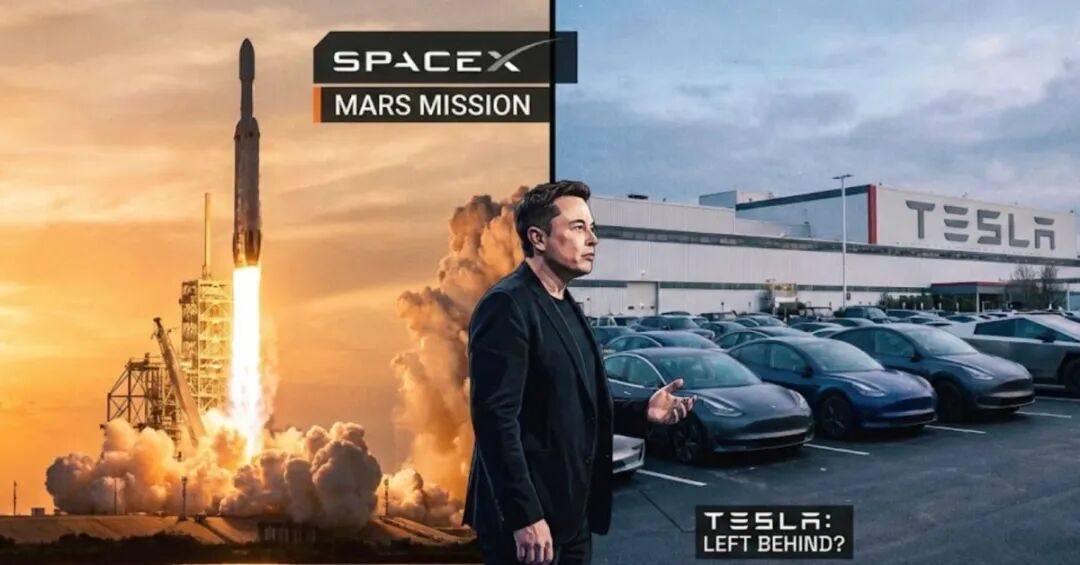
According to The Wall Street Journal, Tesla is considering selling its China business to clear the way for a potential future merger with SpaceX.
Of course, as of now, the news itself has not been officially confirmed by Tesla, and related discussions are still in their early stages. However, if this plan ultimately moves forward, it could represent the most significant strategic shift in Tesla's history.
Because this time, Musk is not facing the question of 'how to sell more cars.'
Rather, it is:
Should Tesla become an automotive company or an AI infrastructure company that controls the real world over the next decade?
Additionally, having Tesla's automotive and robotics businesses serve as a backup for SpaceX's stock price.
1. Why Might the China Business, Which Once Saved Tesla, Now Become a Variable?
Many in the digital new energy vehicle industry know that Tesla's current global standing owes much to China.
In 2019, the Shanghai Gigafactory officially began production.
This was the most critical step in Tesla's globalization process.
Prior to this, Tesla faced a persistent issue:
Orders were plentiful, but production couldn't keep up.
The demand for the Model 3 surged, and the U.S. factory's capacity became the biggest bottleneck.
The Shanghai factory changed everything.
China's complete new energy vehicle industrial chain provided Tesla with globally leading manufacturing efficiency and supply chain capabilities:
Battery suppliers;
Automotive electronics companies;
Component systems;
Skilled industrial workers.
The Shanghai factory not only met Chinese market demand but also became an important base for Tesla's exports to Europe and Asia.
In a sense, China helped Tesla complete its transformation from a 'niche tech company' to a 'global automotive giant.'
But today, things are changing.
The issue is not that the value of the China business is declining.
Quite the opposite:
China remains one of Tesla's most important manufacturing bases.
What has truly changed is Musk's vision for the future.
Tesla's past goal was to:
Build more cars.
But now, Musk sees:
Cars as merely the starting point and gateway for AI to enter the real world.
2. Musk Is Redefining Tesla: From an Automotive Company to an AI Company
For decades, the core of competition in the automotive industry was:
Engines;
Transmissions;
Manufacturing scale.
In the new energy era, it shifted to batteries, electric drives, and chips.
But in the era of intelligent AI, the rules of competition are changing again.
The greatest value of future cars may not lie in four wheels but in:
Data.
Millions of Tesla vehicles worldwide generate vast amounts of real-world data daily:
Road environments;
Driving behaviors;
Traffic scenarios;
Complex road conditions.
This data trains Tesla's FSD autonomous driving system.
This is why Tesla has consistently emphasized:
That its future lies not as an automotive company but as an artificial intelligence company.
Because autonomous driving is just the first step.
The next step is robots.
For more on Tesla's product roadmap, refer to our previous article .
3. Why Might Optimus Be More Important Than Cars?
If FSD trains cars to understand the world, then Optimus trains robots to understand the world.
Robots entering homes and factories face highly similar challenges to autonomous driving:
How to perceive the environment?
How to understand tasks?
How to execute actions?
How to continuously learn in the real world?
And Tesla already possesses the three things robots need most:
First, large-scale real-world data;
Second, AI training capabilities;
Third, large-scale hardware manufacturing capabilities.
More importantly, Musk has developed a methodology and process for integrating these three elements through FSD.
This is why Musk believes:
That the largest future market may not be cars but robots.
4. Why Might SpaceX Become a Crucial Piece in Tesla's Future?
If Tesla represents 'ground intelligence,' then SpaceX represents 'space infrastructure.'
On the surface, the two companies' businesses are entirely different:
Tesla builds cars;
SpaceX builds rockets.
But in the AI era, they are increasingly intersecting.
Future AI competition requires more than just models.
It also needs:
Computing power;
Energy;
Communication;
Infrastructure.
SpaceX possesses:
Starlink satellite internet;
Advanced rocket technology;
Aerospace manufacturing capabilities.
Tesla possesses:
AI algorithms;
Robot platforms;
Global real-world data.
If the two companies combine, the result may not be a traditional conglomerate.
Instead, it could be a data intelligence system covering:
Ground equipment;
Robots;
Energy;
Communication;
Space infrastructure.
5. Why Might the China Business Become the Biggest Obstacle to the Merger?
The core issue is not commercial but regulatory.
In fact, SpaceX is not an ordinary tech company.
It undertakes numerous U.S. government and aerospace-related projects involving national security.
If Tesla and SpaceX merge, U.S. regulators may focus on:
Whether China's manufacturing operations affect SpaceX's security reviews;
Whether supply chains pose risks of sensitive technology leakage;
How data and intellectual property are managed.
Meanwhile, Chinese regulators may also be concerned about:
Whether a company deeply tied to the U.S. aerospace industry should continue controlling critical manufacturing assets in China.
Thus, the China business becomes a complex variable.
Selling it may reduce resistance to future transactions.
6. But Is Giving Up Chinese Manufacturing an Easy Decision?
The answer is clearly no.
Because China is not just an important market for Tesla.
It is the global hub for new energy vehicle manufacturing.
China boasts:
The world's largest battery industrial chain;
The most mature new energy supply system;
The fastest-iterating smart vehicle ecosystem.
Future robotics industries will also require these capabilities.
So, if Tesla sells its China business, it is essentially making a massive trade-off:
Sacrificing today's manufacturing advantages
For future AI strategic flexibility.
7. Musk's Real Bet Is on the Next Decade
Over the past 20 years, Musk has transformed two industries.
Tesla revolutionized automotive.
SpaceX revolutionized commercial spaceflight.
But his next gamble may be even bigger.
Over the next decade, he aims to connect:
Autonomous vehicles;
Humanoid robots;
AI models;
Energy networks;
Satellite communications;
Aerospace infrastructure.
Ultimately forming a new tech empire:
Cars collect real-world data;
Robots execute real-world tasks;
AI handles understanding and decision-making;
Energy and communications provide foundational capabilities.
Conclusion: How Will AI and Manufacturing Integrate in the AI Era?
If Tesla and SpaceX do proceed with a merger, it could rank among the most ambitious strategic realignments in tech history.
But the biggest contradiction is also clear:
Is it worth sacrificing today's most successful manufacturing assets for a future AI empire?
How far can AI go without the foundation of manufacturing supply chains? Can U.S. manufacturing reshoring quickly support the prosperity of U.S. digital AI?
And selling the China business may be the most critical move in this super-ambitious gamble.
However, Vehicle's final point is that globalization is effectively dead. Chinese industries going global and foreign industries entering China—whether in automotive or robotics—will all require new theories and methodologies.
-
![]()
Mobile Phone Manufacturers Bet on AI: A New Game of 'Who Controls the Users'
-
![]()
US Space Force Shells Out $1.6 Billion: SpaceX Clinches 18 Falcon 9 Launch Contracts Once Again
-
![]()
Five to six hundred new car models flood into a shrinking market every half year, leaving many automakers crying out amidst fierce internal competition.
-
![]()
German Media: Will Volkswagen Be Taken Over by Chinese Automakers?
-
![]()
"High Installation Costs" and "Rising Mobile Phone Prices": Do Huaqiangbei's Counters Hold the Answers?
-
![]()
From Luna Ultra to See Insta360's Gimbal Strategy: Profit or Growth?
-
![]()
GPT-5.6 Announces Price Reductions! Save Up to 80%!
-
![]()
Memory Price Surge Fuels Apple’s 27% Profit Jump, With Chinese Consumers Propelling 22% Revenue Growth