Will Traditional Algorithm Engineers Be Rendered Obsolete by VLA? Fact or Fiction?
 08/03 2026
 331
331
As we reach the midpoint of 2026, the debate surrounding technical approaches within the autonomous driving sector has intensified notably. From the widespread adoption of end-to-end large models in vehicles in 2025 to the public escalation of discussions around the VLA (Vision-Language-Action model) and world model paradigms in 2026, the pace of technological advancement has outstripped the expectations of many. At NVIDIA's GTC conference, Li Chuanhai, CTO of Geely Group, and Cao Xudong, CEO of Momenta, publicly voiced skepticism about VLA. Meanwhile, Jin Yuzhi, CEO of Huawei's Automotive BU, directly labeled VLA as a shortcut approach. Conversely, companies such as Li Auto, XPENG, and Yuanrong Qixing are steadfastly advancing the mass production and implementation of VLA architectures.
The overall trajectory of industry development has a profound impact on the individuals working within it. For traditional algorithm engineers, who have dedicated years to this field, a pertinent question arises: when rule-based code is supplanted by large model parameters and if-else statements are replaced by end-to-end training, can their technical expertise still be leveraged?
01 What Exactly Is VLA, and What Challenges Does It Address?
Traditional autonomous driving systems employ a modular architecture, with perception, decision-making, planning, and control functions operating independently. Each module is overseen by a dedicated engineering team, and data is exchanged between modules through predefined interfaces. The perception module outputs the positions and categories of obstacles, the decision-making module makes judgments based on preset rules (e.g., slowing down and stopping when a pedestrian is detected ahead), the planning module generates trajectories, and the control module executes instructions. The advantage of this approach lies in its transparency, interpretability, and ease of debugging. However, its limitations are also apparent: rules can never account for every possible scenario. When confronted with complex urban driving conditions and rare events, preset rules often prove inadequate.
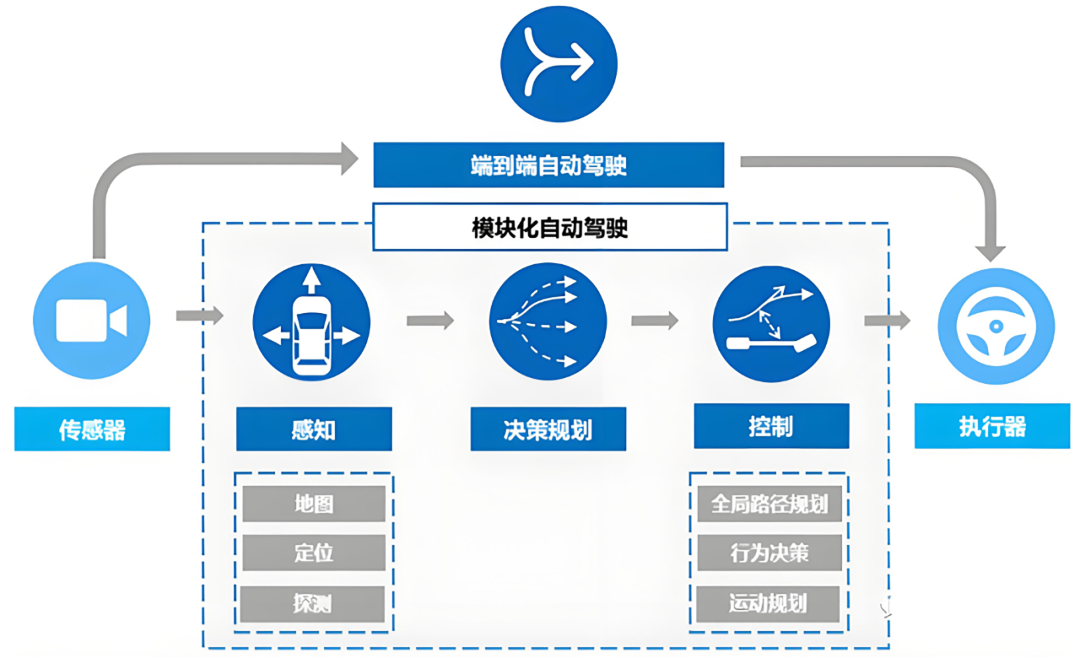
Image Source: Internet
End-to-end solutions (such as Tesla's FSD V12) replace manual rules with neural networks, directly mapping sensor inputs to driving outputs. However, pure vision-based end-to-end models are essentially intuitive decision-making systems. They can recognize obstacles and lane markings but lack the ability to comprehend the underlying semantic logic.
VLA introduces a crucial intermediate layer—language—into the end-to-end framework. This language does not enable the vehicle to communicate verbally but leverages the reasoning capabilities of large language models for driving decisions. The VLA model comprises three core components: a visual encoder transforms multi-view images captured by cameras into high-dimensional feature vectors; a large language model backbone serves as the decision-making center, utilizing pre-trained world knowledge to logically process visual features; and an action decoder converts these reasoning results into specific physical actions, such as steering angle and acceleration/deceleration.
This architecture endows VLA with capabilities that traditional approaches lack. It can not only perceive what is on the road but also understand the relationships between these elements and the intentions behind them. When encountering a construction zone, for instance, the model can simultaneously identify traffic cones, textual warning signs, and temporary lane markings, generating a safe detour path based on the context.
02 What Are the Fundamental Differences Between VLA and Traditional Algorithms?
Now that we understand the capabilities of VLA, what exactly distinguishes it from traditional algorithms? In essence, VLA brings not just performance enhancements to autonomous driving but a complete overhaul of the technology stack. In traditional modular approaches, perception, decision-making, planning, and control are independently optimized. Engineers in each module focus solely on their specific domain—for example, perception engineers prioritize detection accuracy, planning engineers focus on trajectory smoothness, and control engineers emphasize response latency. Additionally, interfaces between modules are fixed, and data flows unidirectionally.
VLA, in contrast, is a unified model trained end-to-end, where vision, language, and actions are aligned within the same semantic space. This means the system's behavior is no longer dictated by manually written rules but is autonomously learned by the model from data. Consequently, engineers' work methods will also evolve, shifting from writing rules and tuning parameters to designing model architectures, constructing training datasets, analyzing problematic cases, and optimizing training strategies.
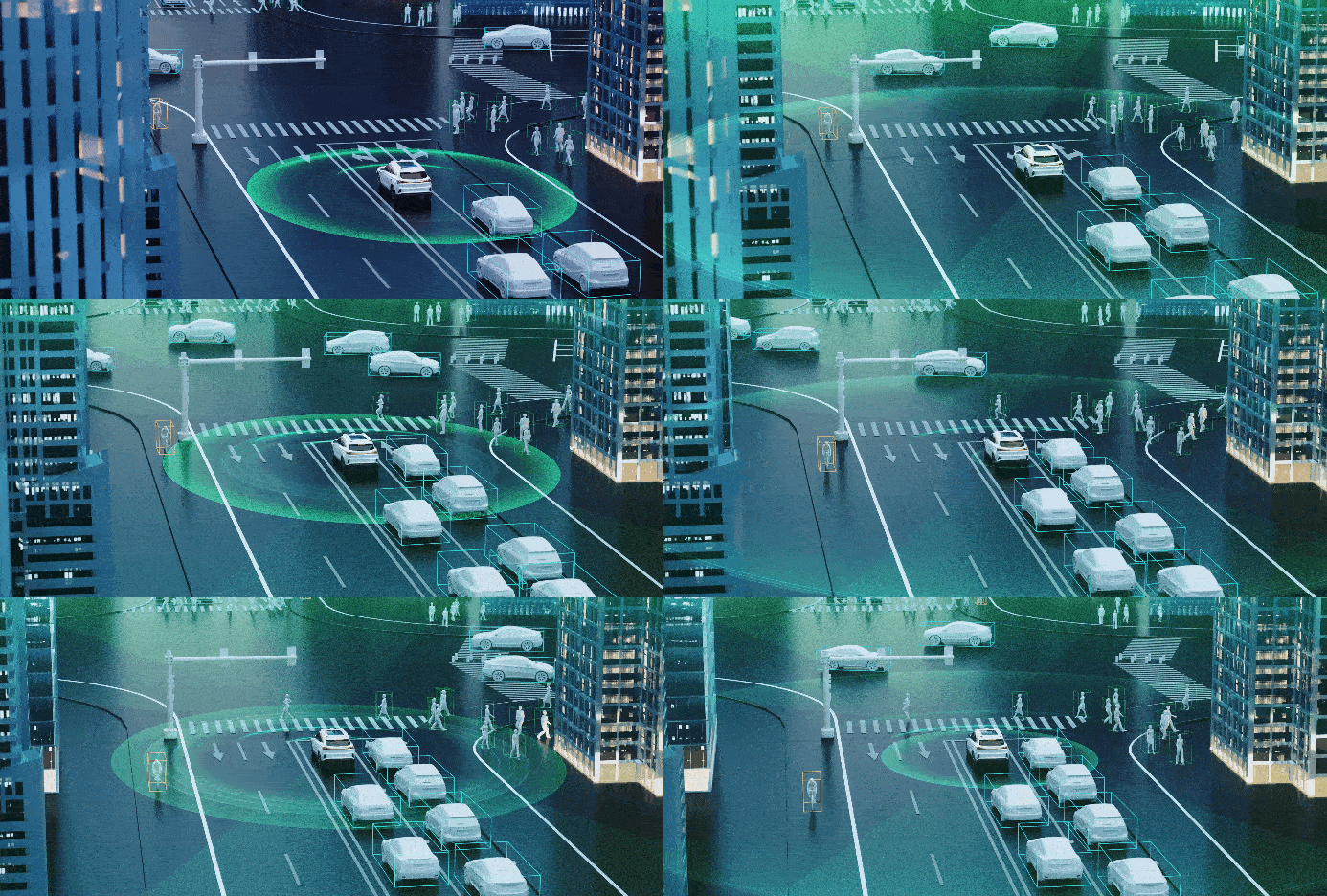
Image Source: Internet
The difference between traditional approaches and VLA is also evident in interpretability. Every decision in traditional systems can be traced back to a specific code rule, making it straightforward to locate problems. In contrast, VLA is a black-box model, making it challenging to explain why it chose to turn left instead of going straight at a particular intersection. This poses significant challenges for safety verification and regulatory approval.
Currently, a hybrid approach has emerged in the industry, where VLA models dominate driving decisions while a layer of rules provides a safety fallback. Many Level 2+ systems adopt this path, benefiting from the generalization capabilities of large models while maintaining the safety baseline of rule-based systems.
03 What Changes Are Occurring in the Industry?
The integration of VLA into the autonomous driving field is progressing faster than many anticipated. In January 2026, NVIDIA released the open-source inference VLA model Alpamayo 1, featuring a 10-billion-parameter architecture. At the launch event, Jensen Huang stated, "The ChatGPT moment for physical AI has arrived. Machines are beginning to understand, reason, and act in the real world."
Domestic automakers are also intensively deploying VLA strategies. In January 2026, Li Auto restructured its autonomous driving team, with senior algorithm expert Zhan Kun taking charge of VLA foundation model research and overall technical team integration. XPENG unveiled the X-Mind technical framework at CVPR 2026, with the core idea of enabling explicit spatiotemporal reasoning before the model outputs actions, instantiating visual chains of thought. Experimental data shows that X-Mind significantly reduces lateral and longitudinal trajectory prediction errors compared to traditional VLA models, with notable improvements in safety and compliance, especially in rare scenarios. Xiaomi recruited Chen Long, formerly of Wayve, as the technical leader for assisted driving VLA.
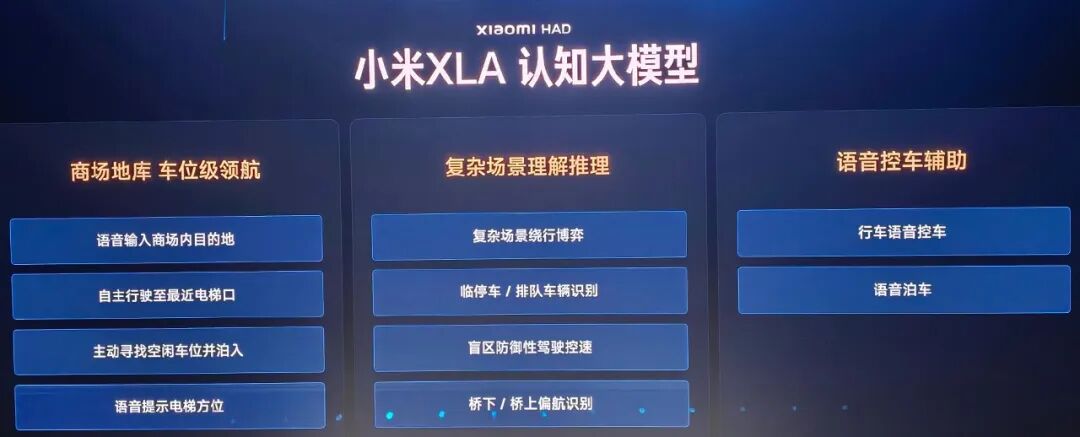
Image Source: Internet
Market data reveals that in February 2026, the penetration rate of Level 2 and above autonomous driving in China's passenger vehicle industry reached 30.4%, a year-on-year increase of 14.2 percentage points. Highway NOA penetration stood at 32.3%, while urban NOA penetration was 17.8%. The global market for VLA-assisted driving large models was approximately $601 million in 2025 and is expected to reach $2.362 billion by 2032, with a compound annual growth rate of 21.6%.
Of course, the debate between VLA and world models is also intensifying at this stage. VLA centers on linguistic intelligence, using textual tokens to describe and reason about the three-dimensional physical world. World models, on the other hand, focus on spatial intelligence, directly modeling physical laws and causal relationships in continuous state spaces. The former describes the world, while the latter simulates it. However, these two routes are not mutually exclusive. Li Auto's MindVLA-o1 incorporates a predictive latent space model within the VLA framework, while XPENG's second-generation VLA is defined as both an action generation model and a physical world model capable of understanding and reasoning. A growing consensus in the intelligent driving industry is that VLA is responsible for perceiving the current environment, understanding semantics, and deciding the next action, while world models predict how scenarios will evolve over the next 5 to 10 seconds.
04 Can Traditional Algorithm Engineers Adapt?
For autonomous driving engineers, what should they do at this crossroads of technological change? Can traditional algorithm engineers still adapt?
If adapting means continuing to do things the old way, the answer is probably a definite no. At this stage, algorithm positions focused on single modules are visibly declining. A perception algorithm engineer reported to Intelligent Driving Frontier that during job hunting in 2025, they found that organizational structures where perception, decision-making, and planning operated independently were being replaced by foundation model teams. Demand for traditional rule-based engineers is shrinking, while demand for algorithm engineers with multimodal large model experience is surging.
In the first quarter of 2026, algorithm engineers ranked among the top 4 most in-demand functions in the new energy vehicle industry. However, this demand is conditional—companies are not looking for traditional algorithm engineers but those who can understand large models and train end-to-end architectures. Data shows that new job openings in the intelligent driving field have skyrocketed 28-fold year-on-year, with a significant concentration in end-to-end large models, VLA, and reinforcement learning. While traditional single-module perception and control positions are still being recruited, their growth rate lags far behind emerging fields.
If adapting means finding one's place amid new technological developments, opportunities still exist. VLA did not emerge out of thin air; it is built on a foundation of substantial basic technologies. Experience in areas such as Transformer architectures, large-scale distributed training, data loops, and model evaluation and iteration remains valuable. Traditional algorithm engineers' understanding of driving scenarios, awareness of safety boundaries, and grasp of system bottlenecks cannot be replaced by model parameters.
What truly differentiates technical capabilities is an understanding of driving scenarios themselves—knowing which scenarios are challenging and under what conditions models are prone to failure. This experience can only be accumulated through repeated model training and analysis of problematic samples. Experience in large-scale distributed training, data loop construction, and methodologies for model evaluation and iteration remain core skills in the VLA era.
McKinsey pointed out in a report that autonomous driving is transforming from an automotive engineering problem into an AI infrastructure issue. The explosive computational demands brought by end-to-end architectures have elevated chips from mere automotive components to core variables determining competitiveness. The global market for ADAS and autonomous driving semiconductors was approximately $5.6 billion in 2025 and is expected to swell to over $46 billion by 2035. This means the industry needs not just algorithm experts but also professionals who understand chips, systems, and data infrastructure.
According to Career International's 2026 Talent Market Insights and Salary Guide, the AI industry has long moved beyond the first half of single-point breakthroughs. Technical scarcity, scenario implementation capabilities, and cross-disciplinary integration have become new benchmarks for measuring talent value. Companies are building complete business closed loops around model capabilities, engineering deployment, scenario implementation, and commercialization. Talent requirements have upgraded from a single technical focus to a new paradigm emphasizing algorithmic depth, engineering capabilities, industry understanding, and productization thinking. Compared to traditional T-shaped talents (specialized in a single field), π-shaped talents (proficient in two or more fields and capable of cross-disciplinary integration) have become the core scarce resources in the 2026 talent market.
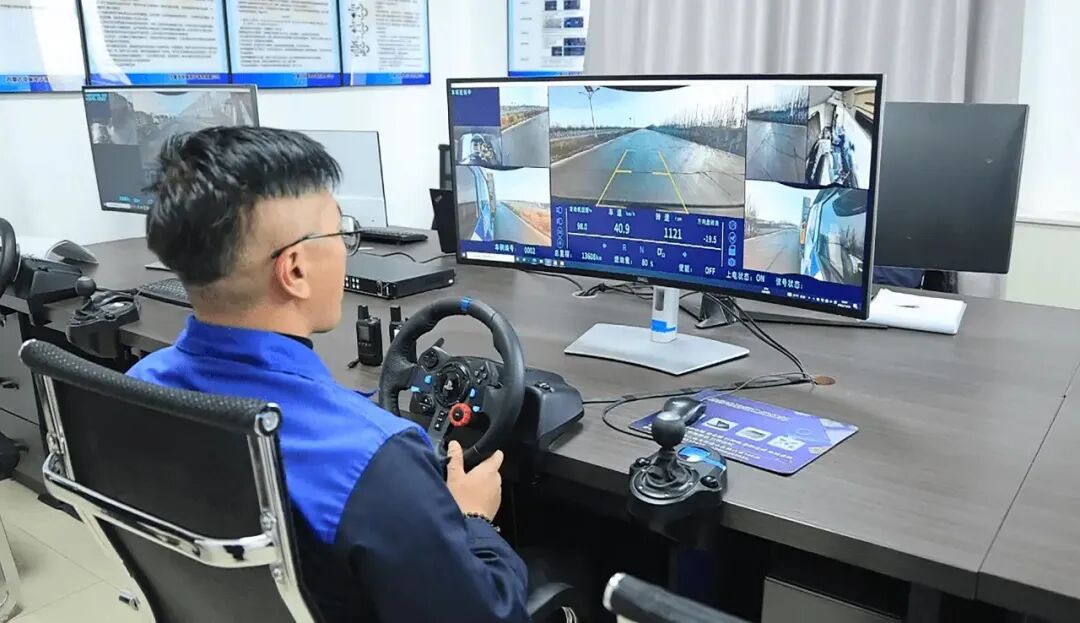
Image Source: Internet
For traditional algorithm engineers looking to continue deepening their expertise in autonomous driving, they need to understand how large language models work, master distributed training toolchains, and adapt to the mindset shift from writing rules to training models. As the industry shifts from competing on functionality to competing on trust, with all-weather, long-cycle stable operation and safety capabilities becoming core tests, engineers who understand both driving scenarios and systems engineering may become the most scarce resources.
Of course, in the field of autonomous driving, VLA is not the endpoint. The industry is already discussing the next technological paradigm after VLA. Technology is always evolving, but the ability to solve problems never becomes obsolete. For engineers, the real concern should not be whether a specific technology will render them obsolete but whether they can continuously learn and adapt.
From end-to-end to VLA, technical routes change annually. However, without sufficient passion for autonomous driving and a willingness to engage in continuous, high-intensity learning while keeping up with technological trends, one might need to carefully consider whether to remain in this field. At this stage, the focus of competition in the autonomous driving industry has shifted from whether it can drive to how well it can drive. This escalation means technological iteration will not slow down. Scenario understanding, systems thinking, and engineering experience—the capabilities held by traditional algorithm engineers—are the things that truly cannot be replaced by model parameters.
#AutonomousDriving #VLA #AlgorithmEngineers
-
![]()
Microsoft: Has the Tide Turned in Favor of the Old Guard?
-
![]()
Amazon: AWS Soars, Catching Up with Competitors at Last!
-
![]()
Acknowledging Task Incompletion: Neither Shameful Nor Daunting
-
![]()
How to Efficiently Manage and Control Street Lights in Industrial Parks? The Smart Street Light Control System Solution for Parks Offers Insights
-
![]()
Only One of Its Kind in the Country! Shenzhen's 'Five-Party Collaborative Operation' Pilot for Unmanned Delivery Takes Off, Steering Autonomous Driving Away from 'Money-Burning Competition' into the E
-
![]()
Qwen Still Sees Value in Open Source Initiatives
-
![]()
Qwen Still Sees the Merits of Open Source
-
![]()
A Complete Retrospective of the Thailand Campaign: A Detailed Review of the First 'Complete Model' for Chinese Automobiles Going Global