How to Efficiently Manage and Control Street Lights in Industrial Parks? The Smart Street Light Control System Solution for Parks Offers Insights
 08/03 2026
 364
364
As industrial parks undergo rapid development, traditional street light management models are encountering significant challenges. Issues like inefficient manual inspections, delayed responses to faults, and substantial energy waste have become bottlenecks that hinder refined management within parks. These problems not only drive up operational costs but also fall short of meeting the modern park's demand for green, intelligent, and efficient lighting solutions.
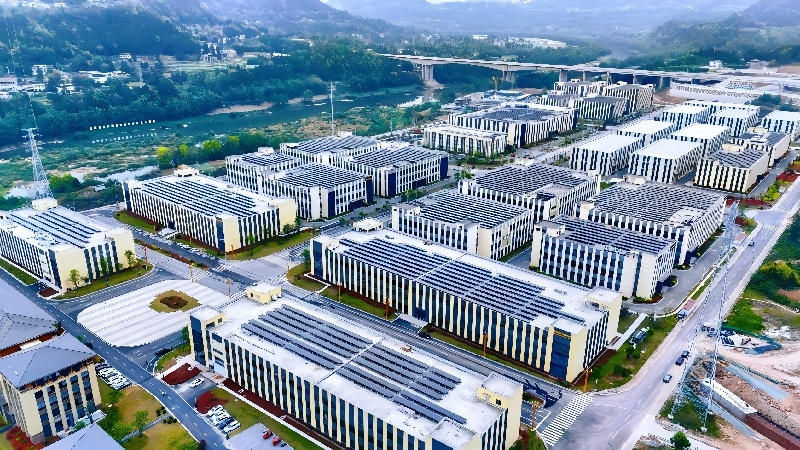
To tackle these industry-wide pain points, Yunqi Intelligent Control has introduced a smart lighting control system solution tailored for parks, centered around intelligent lighting controllers. Leveraging cutting-edge technologies such as the Internet of Things (IoT) and cloud computing, this solution enables remote centralized management, intelligent strategy execution, and refined operation and maintenance of park street lights. It sets a new standard for efficient, energy-saving, and reliable smart lighting management in industrial parks.
This solution aims to establish a comprehensive smart lighting management system for industrial parks that integrates 'sensing, transmission, platform, and application' components. With intelligent lighting controllers serving as on-site execution terminals, the system connects to the Yunqi Smart Platform via communication methods like 4G/Ethernet. This setup allows for remote monitoring, strategy distribution, fault alarms, and energy consumption analysis of all street lights in the park. The core objective is to enhance management efficiency, reduce energy consumption, ensure lighting safety, and ultimately achieve intelligent and digital upgrades for park lighting.
The system design adheres to national and industry-related standards to ensure advanced, reliable, and scalable performance. Key reference standards include:
Urban Road Lighting Design Standards, Intelligent Building Design Standards, Electrical Design Code for Civil Buildings, and IoT-related communication protocol standards.
The system employs a hierarchical distributed architecture, comprising the terminal sensing layer, network transmission layer, platform layer, and application layer from bottom to top. Data interaction between these layers is facilitated through standard interfaces, ensuring system stability and efficiency.
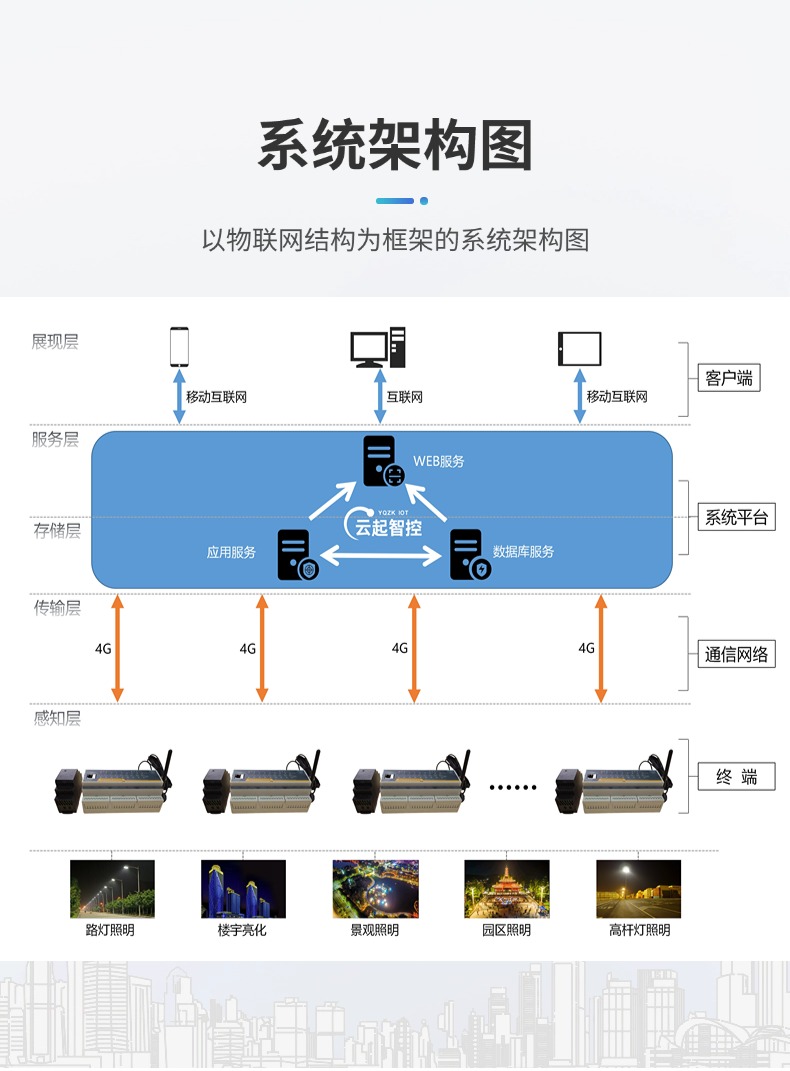
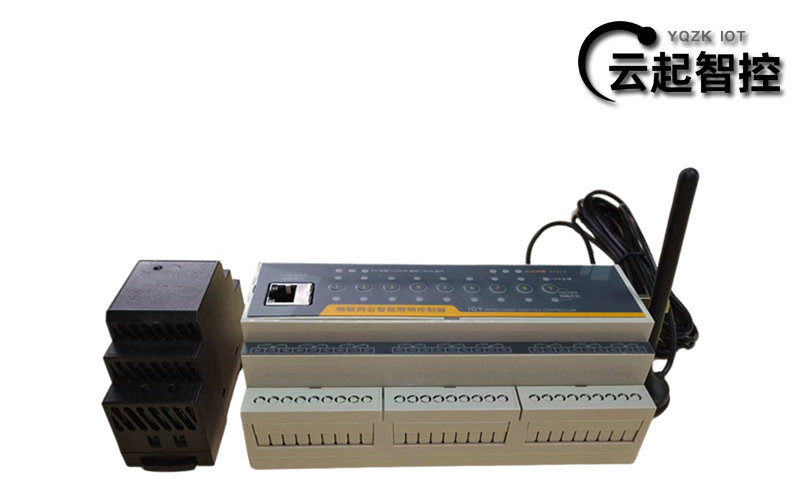
Terminal Sensing Layer: Composed of intelligent lighting controllers (Model YQ-SLCC901) installed in distribution boxes throughout the park. These devices integrate industrial-grade 32-bit ARM chips and embedded Linux operating systems, featuring 9 independent relay outputs for direct contactor control and 12 switch inputs for status feedback. They execute control instructions from the platform and collect real-time data on circuit switch status, current, and voltage.
Network Transmission Layer: The controllers are equipped with built-in GPRS/4G wireless communication modules and RJ45 Ethernet interfaces, supporting both wired and wireless dual-mode communication. Data is securely and stably transmitted to the cloud platform via operator networks or park local area networks using the lightweight MQTT protocol, ensuring reliable communication links.
Platform Layer: The Yunqi Smart Platform serves as the system's 'brain,' responsible for massive device access, data storage, logical operations, and strategy management. The platform features high concurrent processing capabilities, supports remote device upgrades, encrypted data transmission, and provides open API interfaces for future integration with other park management systems (e.g., security, energy management).
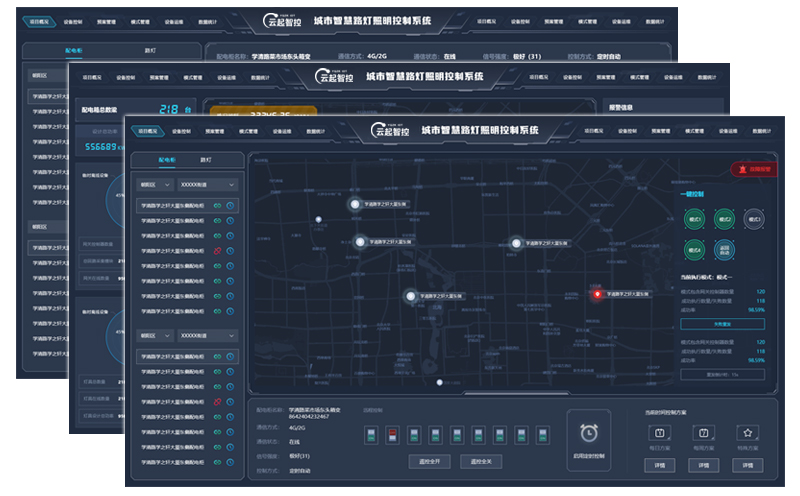
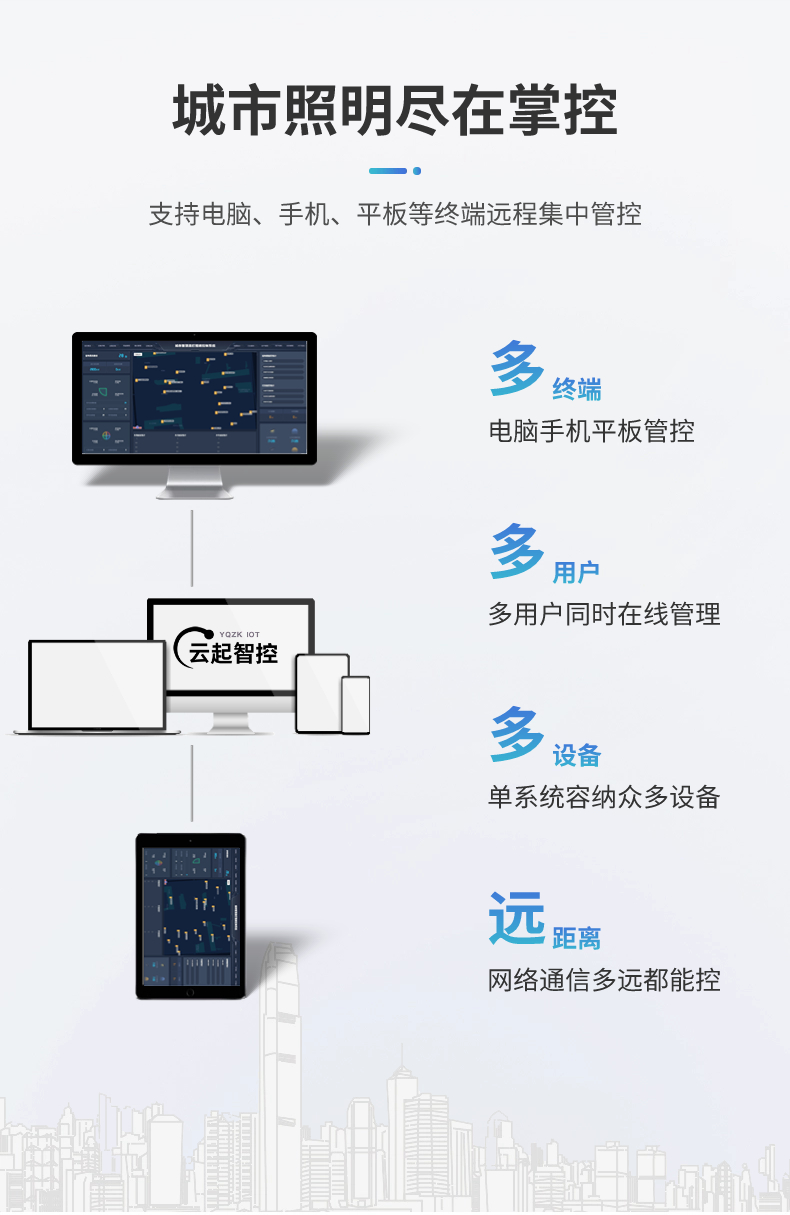
Application Layer: Offers two access methods for users: computer-based (B/S architecture) and mobile app. Managers can view device status, issue control instructions, configure timing plans, query alarm information, and generate energy consumption reports anytime, anywhere, through browsers or mobile devices, enabling truly unattended management.
Energy-saving Advantages: Supports various strategies such as astronomical clock (latitude/longitude) control, multi-period timing, and dimming control. Lighting plans can be automatically adjusted based on seasons, weather, and pedestrian/vehicle traffic, avoiding 'always-on' lights and achieving an estimated 30%-60% energy savings.
Intelligent Advantages: Features 'automatic time synchronization' to ensure precise device clocks; supports 'relay delayed startup' to prevent grid impact from simultaneous multi-load activation; and includes 'memory function' to retain parameters after power outages.
Operation and Maintenance Advantages: The system automatically monitors and reports dozens of faults, including contactor failures, daytime lighting, nighttime outages, phase loss, voltage/current abnormalities, and circuit breaker trips, precisely locating fault points and shifting from 'passive repair' to 'proactive maintenance,' significantly reducing inspection costs.
Scalability Advantages: The device provides 2 independent RS485 interfaces, allowing easy expansion to connect devices such as electricity meters, illuminance sensors, and dimming controllers to meet future functional upgrade needs.
Remote Control: Enables remote switching of any or all circuits via computer or mobile phone with rapid response.
Intelligent Operation and Maintenance: The system automatically generates operation and maintenance work orders, records fault types, occurrence times, and locations, tracks repair progress, and forms a closed-loop operation and maintenance process.
Fault Monitoring: Real-time monitoring of safety events such as mains power outages and abnormal distribution box openings, with notifications sent to on-duty personnel via APP or SMS.
Energy Consumption Statistics: The platform analyzes and displays electricity usage, power, and other data for the entire park or individual distribution boxes on a daily, weekly, monthly, or annual basis, presenting the information visually through charts.
Automatic Strategies: Supports combined use of daily, weekly, and holiday plans with customizable priority (holidays > weekly > daily) to meet automated control needs in complex scenarios.
Safety Monitoring: Through switch input interfaces, sensors such as door contacts and water immersion detectors can be connected to monitor the safety of distribution cabinet operating environments.
Daily Mode: On weekdays, a 'timing + dimming' strategy is used, such as full brightness in the evening and automatic dimming to 50% during late-night hours with low pedestrian/vehicle traffic.
Holiday Mode: On public holidays, the system automatically switches to a 'holiday plan,' extending lighting hours or activating landscape lighting modes to create a festive atmosphere.
Emergency Mode: In severe weather or emergencies, managers can activate a 'full-on' scenario with one click to ensure adequate road lighting in the park.
Maintenance Mode: The device supports local button control and 'offline independent operation,' continuing to work according to preset strategies during network outages to ensure basic lighting.
Energy Consumption Reduction: Effectively eliminates energy waste through refined and intelligent control strategies, significantly reducing lighting electricity expenses in the park.
Lower Operation and Maintenance Costs: Automated fault alarms and precise fault location reduce manual inspection workload by over 80%, improving repair efficiency and lowering labor and vehicle costs.
Improved Lighting Quality: Ensures high lighting availability, promptly detects and addresses faulty lights, providing a stable and comfortable lighting environment in the park while enhancing its image and safety.
In summary, Yunqi Intelligent Control's smart lighting control system solution for parks offers a comprehensive, efficient, and intelligent lighting management solution through an 'end-edge-cloud' collaborative architecture. It not only addresses the pain points of traditional management models but also creates significant value in energy conservation, intelligent operation and maintenance, and safety assurance. This solution is particularly suitable for various industrial parks, technology parks, logistics parks, and other customer groups with high demands for management efficiency, energy consumption costs, and safety reliability. It is an ideal choice for parks seeking digital and green transformations.
Q: Can this system really save electricity? How much can it save?
A: Yes, energy conservation is one of the core advantages of this system. Intelligent strategies such as astronomical clocks, multi-period timing, and dimming can avoid unnecessary 'always-on' lights. Based on past project experience, the comprehensive energy-saving rate typically reaches 30%-60% compared to traditional control methods, with specific values depending on the original lighting plan and management level.
Q: If the park's network goes down, will the street lights lose control?
A: No. Our intelligent lighting controller (YQ-SLCC901) supports 'offline independent operation.' Equipped with a high-precision clock and storage chip, the device automatically continues working according to the previously issued timing plan during network outages, ensuring uninterrupted lighting. Data is automatically resynchronized once the network is restored.
Q: How many street lights can one controller manage? Can the system detect if a light fails?
A: The controller has 9 independent relay outputs, with each output controlling one contactor. One contactor can manage multiple street lights in a circuit. The system monitors the status of each circuit in real-time. If abnormalities such as 'no current when lights are on' (possibly indicating a faulty light or circuit breaker trip) or 'current when lights are off' (possibly indicating contactor adhesion) occur, the platform immediately generates an alarm and precisely locates the affected circuit.
Q: Is the system complicated to operate? Our managers are older; can they learn to use it?
A: The system design emphasizes ease of use. The computer-based interface features intuitive graphics, while the mobile app is as simple to operate as using WeChat. Key functions such as remote switching, status viewing, and alarm reception can be mastered with minimal training. We also provide accounts with different permission levels, with administrators responsible for setup and operators executing simple commands.
-
![]()
Microsoft: Has the Tide Turned in Favor of the Old Guard?
-
![]()
Amazon: AWS Soars, Catching Up with Competitors at Last!
-
![]()
Acknowledging Task Incompletion: Neither Shameful Nor Daunting
-
![]()
How to Efficiently Manage and Control Street Lights in Industrial Parks? The Smart Street Light Control System Solution for Parks Offers Insights
-
![]()
Only One of Its Kind in the Country! Shenzhen's 'Five-Party Collaborative Operation' Pilot for Unmanned Delivery Takes Off, Steering Autonomous Driving Away from 'Money-Burning Competition' into the E
-
![]()
Qwen Still Sees Value in Open Source Initiatives
-
![]()
Qwen Still Sees the Merits of Open Source
-
![]()
A Complete Retrospective of the Thailand Campaign: A Detailed Review of the First 'Complete Model' for Chinese Automobiles Going Global